
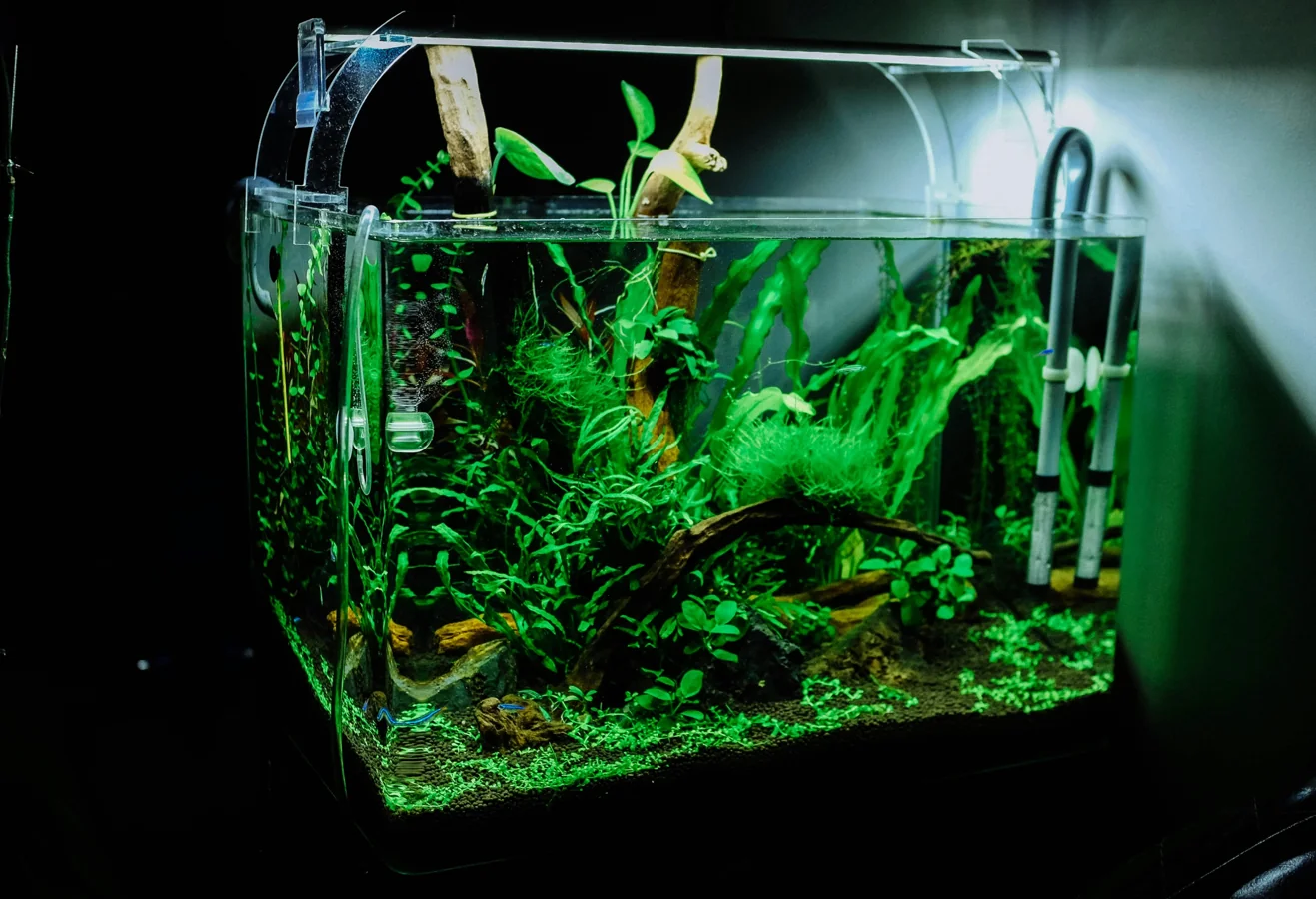
Aquascaping is not just planting a few stems and hoping for the best. It’s the deliberate composition of hardscape (rocks, wood) and softscape (plants) to create a miniature landscape — a “nature aquarium” that evokes mountains, forests, or riverbeds. And you don’t need a $1000 setup to begin.
The Golden Rules of Aquascaping
Three design principles will instantly improve your layout:
- The Rule of Thirds: Divide your tank into nine equal rectangles (two horizontal lines, two vertical lines). Place focal points (the largest rock, the main piece of wood) at the intersections, not in the centre.
- Negative space: Leave open areas without plants or hardscape. This gives the eye a place to rest and makes the planted areas look more intentional.
- Focal depth: Use larger hardscape pieces in the front and smaller ones in the back to create perspective. A path of light gravel winding from the front to the back also enhances depth.
Hardscape 101: Rocks and Wood
Common rocks for aquascaping: Seiryu stone (blue‑grey with white veins), Dragon stone (pockmarked, brownish), Ohko stone (soft, layered), and River pebbles. Always clean rocks by scrubbing and boiling (if safe) to remove dirt and potential pathogens. Wood: Spiderwood (branchy, great for nano tanks), Malaysian driftwood (dark, heavy, sinks instantly), Manzanita (thin, intricate). Soak wood for 1–2 weeks before use to reduce tannins (brown water) and waterlogging.
Plant Selection for Beginners
Start with easy, low‑light plants that don’t need CO2:
- Foreground: Marsilea hirsuta (mini clover), Cryptocoryne parva, Staurogyne repens (slow carpet).
- Midground: Anubias nana (attach to wood), Bucephalandra, Java fern (narrow leaf), Cryptocoryne wendtii.
- Background: Rotala rotundifolia (stems), Hydrocotyle tripartita, Hygrophila polysperma.
- Floating: Salvinia minima, Red root floaters (adds texture and shade).
Arrange plants in layers: tall in back, medium in middle, low in front. Group the same species in clusters of 5–7 stems for a natural look.
Lighting and Fertilizers for Beginners
For a low‑tech scape, an LED light rated for plants (6500K–7000K) running 6–8 hours is sufficient. Use a timer for consistency. Liquid fertilizer like Seachem Flourish or APT 1 dosed weekly covers most nutrient needs. If you notice yellow leaves or poor growth, consider adding root tabs for root feeders (Crypts, Swords).
The Dry Start Method (DSM)
For carpeting plants like Monte Carlo or Dwarf baby tears, the DSM is a cheat code. Plant them in damp aquasoil, cover the tank with plastic wrap, and mist daily for 4–6 weeks. The plants grow in humid air without algae competition. When you finally flood the tank, the carpet is already established and can outcompete algae.
Common Beginner Mistakes to Avoid
Planting too densely from the start — plants need room to grow. Leave 1–2 inches between stems.
Using aquarium soil without capping — some soils leach ammonia; always follow manufacturer instructions.
Ignoring maintenance — a scape needs trimming, water changes, and algae management. Plan to spend 30 minutes per week.
Adding fish too early — let the plants establish for at least 2 weeks before adding livestock. This prevents uprooting and gives the filter time to adjust.
Inspiration and Resources
Browse r/PlantedTank on Reddit, the AGA Aquascaping Contest galleries, and YouTube channels like Green Aqua or Jurijs Jutjajevs. Start by copying a layout you like — imitation is the best way to learn. Your first scape won’t be contest‑worthy, but the process is deeply satisfying. And when you post your before/after photos, don’t be surprised if they go viral.