
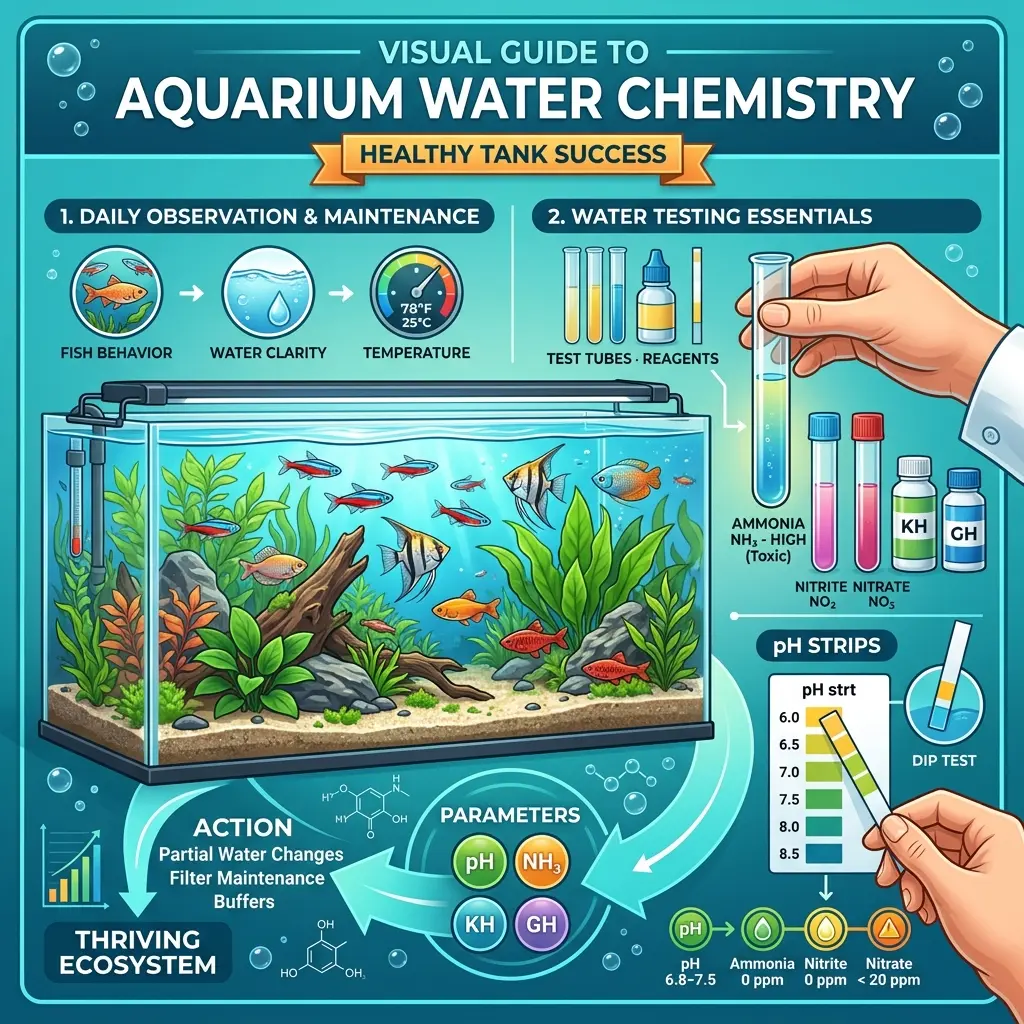
Ammonia
NH3 (un-ionized) / NH4+ (ionized) — Inorganic nitrogenous compound
Ammonia (NH3/NH4+) is the most toxic compound in the aquarium nitrogen cycle, produced by fish waste and decaying organic matter, and safe only at a reading of 0 ppm.
Master the chemical processes that keep your aquarium fish healthy and thriving, from the nitrogen cycle to pH management and water hardness.
NH3 (un-ionized) / NH4+ (ionized) — Inorganic nitrogenous compound
Ammonia (NH3/NH4+) is the most toxic compound in the aquarium nitrogen cycle, produced by fish waste and decaying organic matter, and safe only at a reading of 0 ppm.
NO2- — Inorganic nitrogen ion, second stage of the nitrogen cycle
Nitrite (NO2-) is the second, often more persistent, toxic stage of the aquarium nitrogen cycle, causing 'brown blood disease' by blocking oxygen transport in fish.
pH = -log10[H+] — Measurement of hydrogen ion concentration (logarithmic scale, 0-14)
pH measures how acidic or alkaline aquarium water is on a 0-14 scale; stability and its effect on ammonia toxicity matter more than hitting one 'ideal' number.
Learn about the safe ranges and toxicity of chloride in aquarium water chemistry.
Learn about the safe ranges and importance of Carbonate Hardness (KH) in aquarium water chemistry.
See safe nitrate ppm ranges by fish type and step-by-step ways to bring high nitrate down fast.