
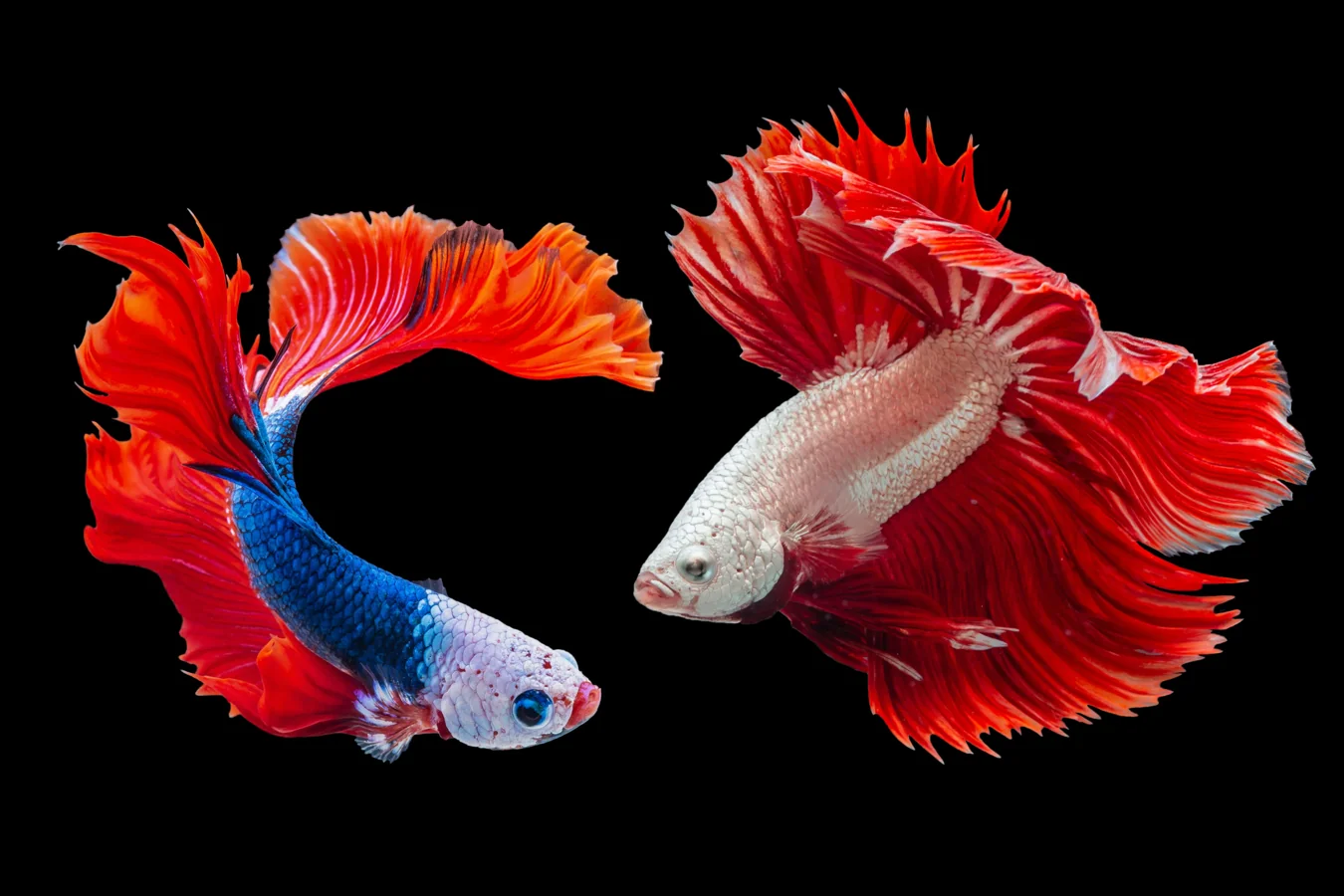
A betta is one of the easiest fish to buy and one of the easiest to keep badly. This guide gives the tank size, heat, filtration, feeding and health information you need for a betta that lives its full lifespan, with notes for Indian climates.
Betta care sheet at a glance
| Parameter | Ideal | Tolerated | Notes |
|---|---|---|---|
| Temperature | 24-27°C (76-80°F) | About 22-29°C for short periods | Sources differ (some list 20-30°C). Sustained heat above about 30°C stresses bettas. Use a heater in cool weather and cool the tank in hot weather. |
| pH | 6.5-7.5 | 6.0-8.0 | Stability matters more than chasing an exact number. |
| Hardness (GH) | About 5-15 dGH | Roughly 3-20 dGH | Bettas accept soft to moderately hard water; test your tap water. |
| Ammonia / nitrite | 0 ppm | None; any reading is a warning | A cycled, filtered tank keeps both at zero. |
| Nitrate | Under 20 ppm | Up to about 40 ppm | Control with water changes and live plants. |
| Tank size | 5-10 US gal (19-38 L) or larger | Smaller only for short-term quarantine | RSPCA Australia lists 10 litres as an absolute minimum and 20 litres or more as ideal; rounded up, use 3 US gallons (11.4 litres) as a minimum reference and about 5 US gallons (19 litres) as a practical target. |
| Flow | Gentle, low-flow filter | Moderate flow with a baffle or plants breaking it | Long fins and weak swimming make strong currents stressful. |
| Diet | Carnivore: quality pellets plus frozen foods | Occasional live or freeze-dried treats | Small portions, once or twice a day. |
| Lifespan | 3-5 years | 2-3 years to 5+ | Depends on genetics, age when bought and care. |
What size tank does a betta need?
Use a heated, filtered tank of roughly 5 gallons (about 19-20 litres) as a solid minimum, and 10 gallons if you can. A larger volume stays stable when you overfeed or miss a water change, gives room to swim and explore, and lets you keep the temperature steady.
The bowl myth
Many people still believe bettas thrive in a flower vase or a half-gallon bowl because they can breathe air and survive poor water. Surviving is not thriving: small unfiltered containers cool fast, spike in ammonia, and offer nothing to do. A tropical fish from warm, shallow waters in Southeast Asia needs warmth, clean water and space.
Heater and filter
Fit an adjustable heater sized for the tank (about 25 W for 5 gallons in a typical room, more in cold rooms) and a low-flow filter such as an air-driven sponge filter. Use a thermometer. Bettas also breathe at the surface, so keep a gap between floating plants and the lid and never seal the surface. Our tank volume and heater-wattage calculators can help you size equipment.
Gallons vs litres
5 US gallons is about 19 litres and 10 US gallons about 38 litres. A UK (imperial) gallon is larger: 5 UK gallons is about 23 litres.
How to set up a betta tank, step by step
- Choose the tank and spot. A 5-10 gallon rimless or standard tank with a lid (bettas jump), away from direct sun and drafts.
- Add the equipment. Heater, thermometer and a gentle filter.
- Add substrate and hardscape. Fine sand or small smooth gravel, and smooth driftwood and rounded stones. Nothing sharp that could tear fins, and avoid rough plastic plants.
- Plant it. Anubias nana (tied to wood), java fern, Cryptocoryne, and floating plants such as frogbit or salvinia where legal, so the betta has places to rest.
- Fill and condition. Use a dechlorinator that also handles chloramine, and match the water temperature.
- Cycle the tank. Establish the nitrogen cycle before adding the fish so ammonia and nitrite read zero (see our guide to the nitrogen cycle).
- Acclimate and add the betta. Float the bag, add tank water slowly, then release the fish.
Lighting
Keep lighting gentle, on a steady day and night cycle of about 6-8 hours, with plenty of floating plant cover so the betta can escape glare. Lighting does not change a betta's colour, so choose light for the plants and for comfort.
Heat management in Indian summers and winter
- Summer: Many rooms exceed 30°C. Unplug the heater, keep the tank out of the sun, run a fan across the water surface, leave part of the lid open for evaporation, shade the tank with floating plants and reduce lighting hours. A sealed bottle of ice in the water can cool the tank in an emergency, but avoid temperature drops of more than 1-2°C per hour.
- Winter: In cooler regions and nights, run a thermostat-controlled heater and check the thermometer daily. Keep the tank away from windows and cold drafts.
- Power cuts: A battery air pump and wrapping the tank in insulation can help you ride out outages.
Setup cost in rupees and dollars
These are rough estimates. Prices vary by city, brand and season.
| Item | Approx. cost (₹) | Approx. cost ($) |
|---|---|---|
| 5-10 gallon tank with lid | ₹1,500-3,000 | $17-35 |
| Heater (25-50 W) and thermometer | ₹600-1,500 | $7-17 |
| Sponge or low-flow filter with air pump | ₹500-1,200 | $6-14 |
| Substrate, wood and live plants | ₹800-2,000 | $9-23 |
| Water test kit | ₹600-1,500 | $7-17 |
| Dechlorinator | ₹150-400 | $2-5 |
| Rough total (excluding the fish) | ₹4,000-9,500 | $45-110 |
What to feed a betta and how much
Bettas are carnivores. Use a high-quality betta pellet (for example Fluval Bug Bites or New Life Spectrum) as the staple, and add variety with frozen or live foods such as bloodworms, daphnia and brine shrimp. Feed a few small pellets once or twice a day, only what is eaten in about two minutes; a betta's stomach is small, so overfeeding is common and causes constipation and poor water. Many keepers fast their betta one day a week, which is optional.
- Avoid: flakes as the only food, human food, bread, large dry freeze-dried bloodworms (soak them first), and uneaten food left to rot.
- Variety helps: rotate two or three foods for better nutrition.
Betta tank mates
Male bettas should live alone with other bettas. In a 10-gallon or larger, planted tank, some peaceful tank mates can work, but individual bettas vary, so always have a backup plan.
| Species | Risk | Conditions | Notes |
|---|---|---|---|
| Nerite snails | Low | Any tank of 5 gal or more | A common, safe first choice; they need algae and biofilm. |
| Malaysian trumpet snails | Low | Any tank with sand or fine substrate | Can multiply quickly. |
| Corydoras (Sterbai, pygmy) | Low to moderate | 10 gal+ with sand; group of 6+ | Match temperature; Sterbai like warm water. |
| Ember tetras | Low to moderate | 10-20 gal, planted, group of 8+ | Small and peaceful; choose calm bettas. |
| Harlequin or chili rasboras | Low to moderate | 10-20 gal, planted | Fast, non-nippy schooling fish. |
| Otocinclus | Low to moderate | Mature, algae-rich tank | Can starve in new tanks. |
| Cherry or Amano shrimp | Moderate to high | Dense plants and moss for cover | Many bettas hunt shrimp; treat shrimp as a gamble. |
| Neon tetras | Moderate | 20 gal, gentle bettas only | Prefer cooler water and can be nipped. |
| Guppies and other fancy livebearers | High | Avoid | Bright colours and long fins often trigger attacks. |
| Gouramis, angelfish, cichlids | High | Avoid | Territorial or fin-grabbing clashes. |
| Tiger barbs and other fin-nippers | Very high | Avoid | They shred long fins. |
| Other male bettas | Very high | Never together | Males fight, sometimes to the death. |
Common betta diseases: fin rot, ich, velvet, swim bladder
This table is a general guide only and is not a substitute for an aquatic veterinarian or an experienced fish health professional. Most betta illness starts with poor water quality or wrong temperature, so test the water first.
| Symptom | Likely cause | First action | When it's serious |
|---|---|---|---|
| Ragged, shrinking fins with dark or whitish edges (fin rot) | Bacterial infection, usually linked to poor water or fin damage | Test water, do a 25-50% water change, remove sharp decor, keep water clean | Rot reaches the body, the fish stops eating or clamps its fins: seek help and consider an antibacterial medication |
| Small white salt-like spots (ich) | Parasite (Ichthyophthirius) | Follow the label of an ich treatment; carbon out of the filter; keep water clean | Spots spread, gasping, or no improvement in days |
| Fine gold or rust dust, clamped fins, scratching (velvet) | Parasite (Oodinium) | Dim the light and treat in a hospital tank with a suitable medication per label | Fast decline, breathing trouble; velvet can be fatal if untreated |
| Cotton-like tufts on body or fins (fungal) | Fungus, often secondary to injury or poor water | Improve water quality; use an antifungal treatment per label | Growth spreads or the fish weakens |
| Floating sideways, sinking or struggling to swim (swim bladder problems) | Constipation, overfeeding, chill or infection | Check temperature, fast 24-48 hours, then offer small portions | Bloating with raised scales, or no improvement after a week |
How long do betta fish live? Signs of a healthy betta
Bettas commonly live 3-5 years, and sometimes longer, when kept warm, in clean water and fed well. A healthy betta is alert, has intact fins that are held open, eats readily, and shows clear eyes and even colour. Warning signs include clamped fins, hiding, refusing food, white spots, and fins that shrink or blacken.
Where you buy matters too. Cup bettas in stores are often stressed and sold young, and some strains bred for extreme fins or thick scales can face swimming or vision problems. Buying from a good breeder, or adopting, helps.
Betta behaviour: flaring, bubble nests, resting
Bettas are curious and often approach the glass. Flaring is a display to a rival or reflection, and constant flaring is stressful, so avoid mirrors and reflections. Bubble nests are normal male behaviour, and are not proof of happiness. Bettas also rest on leaves, in hammocks or near the bottom, which is normal unless combined with other symptoms.
FAQ
Do betta fish need a heater?
Yes, in most homes. Bettas are tropical fish that do best at about 24-27°C (76-80°F). In hot Indian summers your room may already be warm enough, but in cooler months and in cool regions a heater is essential.
What is the betta temperature range?
Aim for 24-27°C (76-80°F). Short periods between about 22 and 29°C are tolerated, and sustained heat above about 30°C stresses the fish.
What is the minimum tank size for a betta fish?
A heated, filtered 5-gallon tank (about 19-20 litres) is a solid minimum for one betta. Smaller tanks swing quickly in temperature and ammonia, and leave no room for enrichment. A 10-gallon gives more stability and space for compatible tank mates.
How often should I feed my betta fish?
Feed a few small, high-quality pellets once or twice a day, only what the fish eats in about two minutes, and vary the diet with frozen foods. Do not overfeed.
Do betta fish need a filter in their tank?
A filter is strongly recommended because it houses the bacteria that convert ammonia to less harmful compounds. Choose a gentle, low-flow filter such as a sponge filter, or baffle a hang-on-back outflow so the current does not batter the long fins.
Can a betta live with shrimp?
Sometimes. Many bettas ignore adult shrimp, but others hunt them, so add dense plants and moss and be ready to separate them if needed. Shrimp babies are especially at risk.
Why is my betta not eating?
Common causes are cold water, poor water quality, stress from a new tank, constipation or illness. Check the temperature and test ammonia and nitrite first, try a different food such as frozen bloodworms or daphnia, and seek help if there are other symptoms or it lasts more than about a week.
How long do betta fish live?
Commonly 3-5 years in good conditions, and sometimes longer. Fish bought from poor conditions may live shorter lives.