
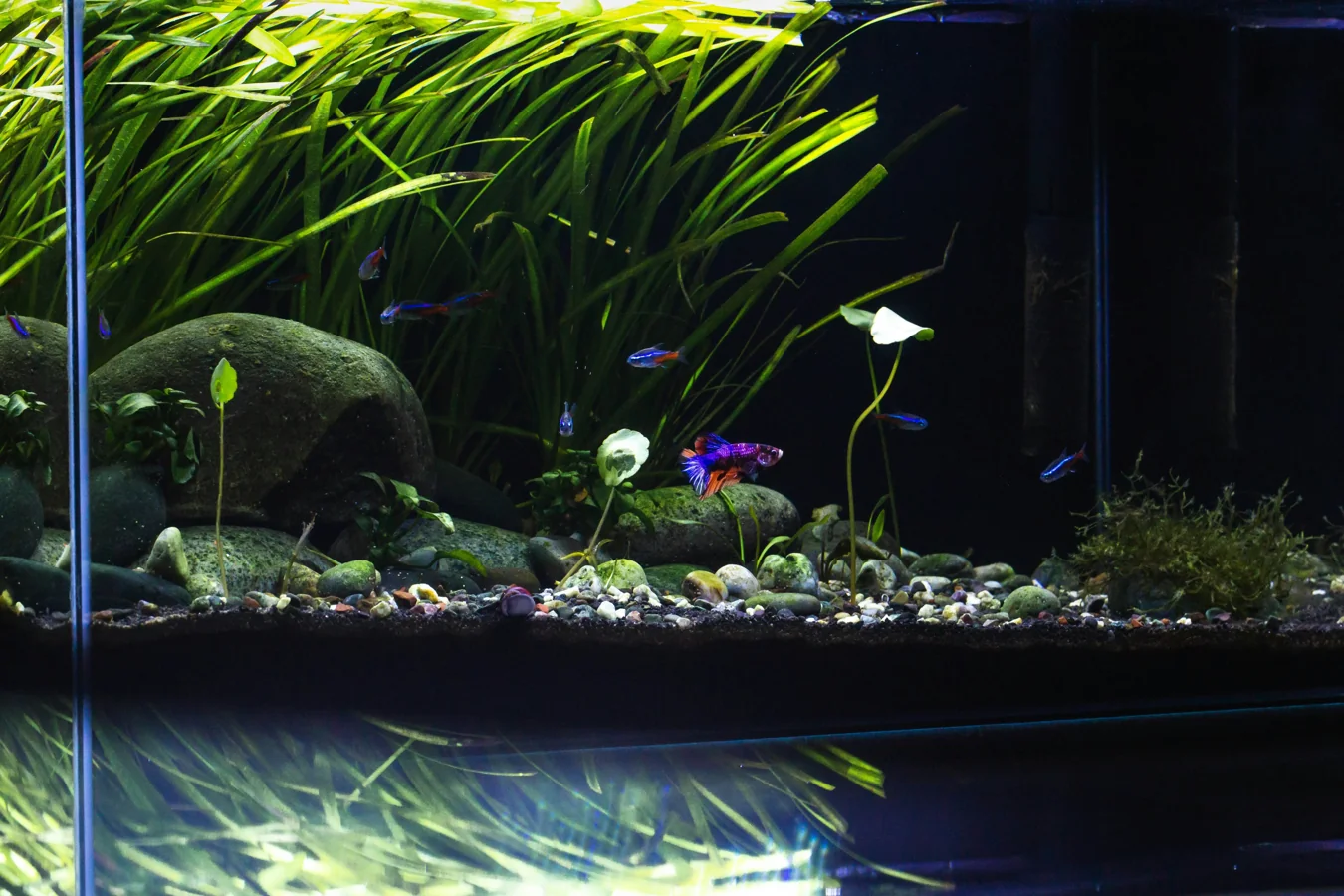
Aquascaping is art – biotope aquariums are science. While a nature aquarium prioritizes aesthetics, a biotope aims to replicate the exact water chemistry, flora, and fauna of a specific geographic location. The goal is functional authenticity: fish behave more naturally, plants thrive, and you create a mini‑ecosystem that mirrors the wild. Biotope aquascaping is one of the most exciting trends of 2026.
What Defines a Biotope Aquarium?
A true biotope must match three elements:
- Water parameters: pH, GH, KH, temperature, and conductivity of the source habitat.
- Biotic community: Every fish, plant, and invertebrate must naturally occur together.
- Substrate and hardscape: Rock types, sand grain size, leaf litter, and wood must match the original site.
This is much stricter than a general “Amazon” or “Asian” theme – it specifies a single river, stream, or lake (e.g., Rio Guaporé blackwater, Lake Tanganyika rocky shallows, Mekong River floodplain).
Choosing Your Biotope – Popular Options for Beginners
- Rio Negro (Amazon) blackwater biotope: Dark, tannin‑stained water, pH 5.0‑6.0, very low GH. Plants: minimal (leaf litter, rotting wood). Fish: cardinal tetras, angelfish, discus, hatchetfish, corydoras. Substrate: fine sand with leaf litter and seed pods.
- Lake Tanganyika rocky shoreline: Hard, alkaline water (pH 8.0‑9.0), high GH/KH. Plants: none – algae on rocks. Fish: shell dwellers, julidochromis, rock‑dwelling cichlids. Substrate: aragonite sand, limestone rocks.
- Lake Malawi mbuna biotope: Alkaline (pH 7.8‑8.6), high mineral content. Fish: mbuna cichlids. Substrate: crushed coral, lava rock. Many plants won’t survive.
- Southeast Asian blackwater stream (Sumatra/Borneo): Soft, acidic (pH 5.5‑6.5), stained by peat. Fish: rasboras, gouramis, loaches. Plants: Cryptocoryne, floating plants.
- Indian native biotope (Western Ghats stream): Neutral pH (6.8‑7.4), moderate hardness. Fish: zebra danios, rasboras, gobies. Plants: Vallisneria, Hygrophila.
Research – The Most Important Step
Don’t guess – research. Study scientific papers, biotope aquarium forums (Biotope Aquarium Project), and YouTube videos documenting specific habitats. Record exact water parameters from field reports. Note the precise species list found at that location. For Indian species, publications like “Freshwater Ornamental Fishes of India: Sustainable Management and Conservation” provide detailed locality data.
Selecting Fish and Plants
Choose fish that are wild‑caught or F1 (first generation captive‑bred) for the most authentic behavior. However, captive‑bred is acceptable – just ensure the species originates from your chosen biotope.
Example: A Rio Negro biotope might include cardinal tetras (Paracheirodon axelrodi), one species of corydoras (Corydoras julii), angelfish (Pterophyllum scalare), and hatchetfish (Carnegiella strigata). Add no fish that aren’t found there naturally.
For plants, many biotopes have sparse vegetation – don’t be tempted to overplant. Use correct species: Vallisneria for some Asian biotopes, Echinodorus (Amazon sword) for Amazon, no plants for African Rift Lake biotopes.
Water Chemistry – Recreating the Exact Parameters
- Blackwater (Amazon, SE Asia): Use RO (reverse osmosis) water remineralized to target GH/KH. Add Indian almond leaves, alder cones, and peat to achieve tea‑colored water and lower pH.
- Rift Lake (Africa): Use tap water with added Rift Lake buffer salt or crushed coral substrate.
- Indian streams: Dechlorinated tap water often works as is – but test first.
Hardscape and Substrate
Collect data on the exact bottom structure – is it sandy, rocky, muddy? Use the right substrate. For hardscape, source rocks and wood that resemble those found in the original habitat. For Amazon biotopes, use smooth river stones and twisted branches. For Lake Tanganyika, use porous limestone or granite.
For leaf litter, use dry Indian almond leaves (available easily), oak, or beech leaves – never use toxic leaves (walnut, eucalyptus).
Maintaining a Biotope Aquarium
Biotopes often have extreme water parameters (very low pH, very high hardness) that are unstable if not managed carefully. Use reliable monitoring equipment. Perform smaller, more frequent water changes – 15‑20% every 3‑4 days rather than 50% weekly. Keep a log of changes in coloration, behavior, and breeding success – these are your indicators of authenticity.
Resources for Biotope Builders
- Biotope Aquarium Project website – over 500 verified biotope examples with exact parameters.
- SeriouslyFish.com – detailed species‑specific habitat data.
- Fishbase.org – scientific occurrence records.
- iNaturalist – recent field observations with photos.
Biotope aquariums are not for everyone – they require discipline and research. But for keepers who value ecological accuracy over design, they offer a uniquely rewarding connection to the natural world.