Aquarium Setup 5 min read

Desk Aquariums Are Trending — Build the Perfect Nano Tank for Your Workspace

By James Liu ·

Working from home has never been so calming. Desk aquariums are the hottest office accessory — here’s how to build a nano tank that fits your workspace and your life.

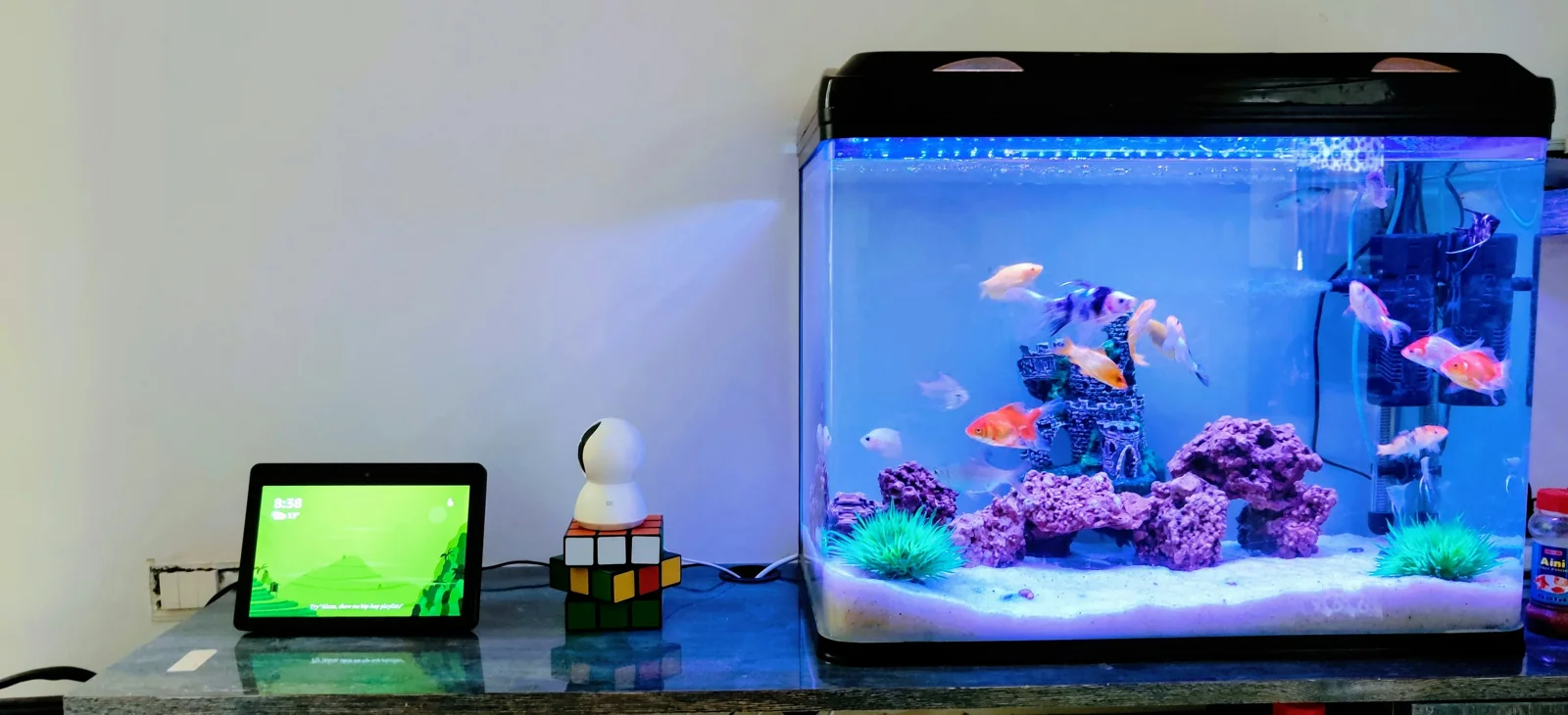
A sleek rimless nano tank on a wooden desk next to a laptop

Quick Answer

A desk aquarium of 5–10 gallons is the optimal size for a workspace environment, providing visual stress relief without requiring daily maintenance interventions. Nano tanks cycling fully in 2–4 weeks using bottled beneficial bacteria can be stocked with shrimp, nano fish like Chili Rasboras, or a single male betta at a ratio of 1 inch of fish per 2 gallons. Keep the tank within 3 feet of a power outlet and away from direct sunlight to prevent temperature swings above 4°F.

The line between home office and personal sanctuary has blurred. What used to be a coffee mug and a stack of Post‑its is now being replaced by a miniature underwater world. Desk aquariums — typically 2.5 to 10 gallons — have become a productivity hack, a conversation starter, and a daily dose of tranquility.

Why Put a Tank on Your Desk?

Studies show that watching fish reduces stress, lowers blood pressure, and can even improve concentration. Having a small aquarium in your field of view during Zoom calls offers a natural fidget‑reliever (those shrimp are endlessly entertaining). Plus, a well‑designed nano tank signals to colleagues and clients that you value detail and life — not a bad subliminal message.

Choosing the Right Tank

Form factor matters. Long, shallow tanks (e.g., UNS 45S, ADA 30‑C) fit neatly in front of a keyboard without blocking monitors. All‑in‑one kits like the Fluval Spec V or Waterbox Mini Cube hide the heater and filter, preserving clean desk lines. Avoid tall, narrow designs — they are harder to light and difficult to clean.

Low‑Tech vs. High‑Tech

For most desk setups, low‑tech is the way to go. CO2 cylinders are too bulky, and the noise of a solenoid clicking on/off can be annoying. Instead, choose plants that thrive without injected CO2: Anubias nana, Java fern, Cryptocoryne wendtii, and floating plants like Salvinia. A simple NICREW or ONF Flat Nano LED on a timer (6–8 hours) will suffice.

Livestock for a Desk Aquarium

Your tank will be watched constantly, so choose active, day‑active species. Excellent options:
Neocaridina shrimp (Cherry, Blue Dream, etc.) – they graze all day and breed readily.
Small rasboras (Chili, Phoenix, Strawberry) – 8–10 in a 10‑gal.
Single Betta – interactive, breathes air, and watches you back.
Least Killifish (Heterandria formosa) – tiny livebearers, very active.
Avoid any fish that hides all day (some Corydoras species) or is extremely sensitive to vibrations (e.g., pencilfish).

Managing Noise and Evaporation

Office tanks must be silent. Choose a sponge filter driven by an ultra‑quiet air pump (USB air pumps are great) or a HOB filter with a pre‑filter sponge to silence water fall. Top off evaporated water every morning with a small bottle of RO or dechlorinated water — this prevents mineral buildup (TDS creep) that stresses shrimp and fish.

Maintenance While Working

Keep a dedicated “desk tank kit” under your monitor riser: a small siphon (Python Nano), a bottle of dechlorinator, and a algae scraper. A 20% water change takes less than 10 minutes. Schedule it for the end of your workday — it becomes a ritual that signals “done for the day.”

Lighting and Glare

Position your tank so that the light does not reflect directly into your eyes or onto your screen. Many nano LEDs have adjustable goosenecks or dimmers. For a desk that faces a window, consider a background cover to reduce backlighting glare. A simple black vinyl sheet on the back glass works wonders.

Knowledge Journey

Move from reading to action with related calculators, fish profiles, and quiz-based recommendations.

Calculator

Aquarium Light Duration & Photoperiod Calculator

Dial in the perfect photoperiod for your aquarium. Enter your tank type, plant density, and viewing schedule to calculate the optimal daily light duration that fuels plant growth, suppresses nuisance algae, and gives your fish a healthy day/night cycle — without guesswork.

Calculator

Fish Growth Rate Estimator

Most fish are sold as tiny 1-inch juveniles that look harmless in the store — but some will reach 12, 18, or even 24 inches within a year. Enter your fish's species category and current size to visualize exactly how fast it will grow, when it will outgrow your tank, and what size aquarium it will actually need as an adult.

Calculator

Annual Fish Keeping Cost Calculator

Estimate the true annual cost of your aquarium by entering tank volume, heater wattage, filter and light power, heater runtime, and local electricity rate. Get a practical itemized breakdown for heating, filtration, lighting, water, and routine consumables before you set up, upgrade, or troubleshoot a tank.

Quiz

Fish Compatibility Quiz

Find beginner-friendly fish that match your tank size, setup, and experience level.

Quiz

Fish Quiz Hub

Choose a guided quiz and get personalized fish care next steps.

Calculator

Ammonia Toxicity Calculator (Free NH3)

Enter your test kit reading (TAN), pH, and temperature — get an instant SAFE or LETHAL verdict for Free Ammonia (NH3). Built for API Master Kit users, cichlid tanks, reef setups, and fish breeders.

Frequently Asked Questions

What is the best size for a desk nano tank?
A 5 to 10-gallon tank is ideal. It is small enough to fit on a desk but holds enough water volume to maintain stable parameters easily.
How often do you clean a nano tank?
Nano tanks require weekly maintenance because their small water volume can fluctuate rapidly. A weekly 20% water change is recommended.
Can I put neon tetras in a 3-gallon tank?
No, neon tetras are active swimmers and need a school of at least 6, which requires a minimum tank size of 10 gallons to thrive.
What are the best low-maintenance plants for a desk aquarium?
The best options are slow-growing epiphytes like Anubias Nana Petite, Java Fern, and various mosses (like Christmas moss). These plants do not require soil, grow very slowly, need minimal pruning, and thrive under basic desk lamp lighting without CO2.