Aquarium Trends 5 min read

Nano Tanks Are the New Big Thing — The 5–10 Gallon Revolution

By Maya Chen ·

Bigger isn’t always better. Nano tanks have taken the aquarium world by storm, proving that a small, carefully crafted ecosystem can be more rewarding than a massive setup.

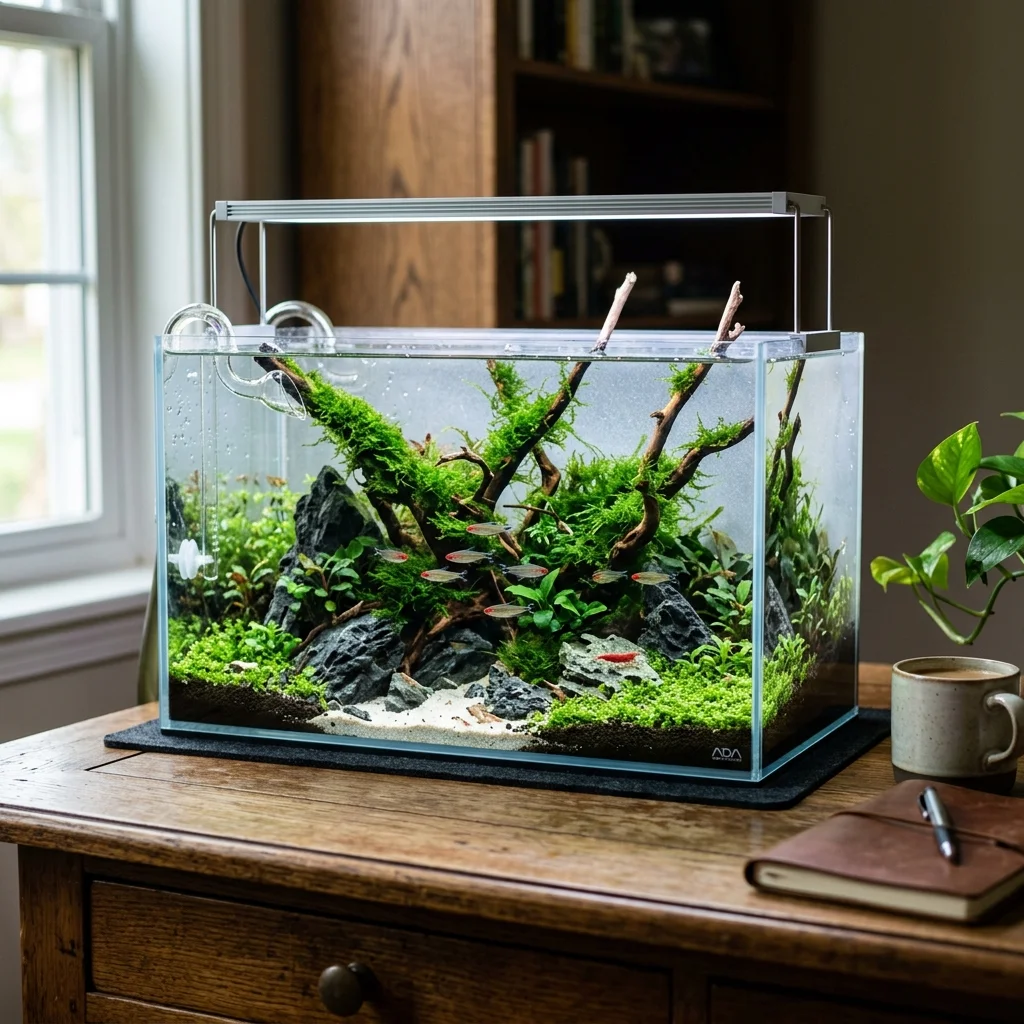
A beautifully aquascaped 6-gallon nano tank on a white desk

Quick Answer

Nano aquariums of 5–10 gallons have become the fastest-growing aquarium segment globally, appealing to apartment dwellers and office environments where space is limited. Modern all-in-one nano tanks include integrated filtration and LED lighting capable of supporting low-tech planted layouts with 0 additional equipment. A fully cycled, planted 10-gallon nano tank can sustain 6–8 nano fish species and a cleanup crew of 5–10 shrimp indefinitely with weekly 20–30% water changes.

For decades, the mantra was “bigger is better” — larger water volumes mean more stability, more fish, more room for error. But in 2025, the aquarium hobby has flipped the script. Nano tanks (5–10 gallons) are not just accepted; they’re celebrated. Social media feeds are filled with breathtaking micro‑scapes that prove you can create a self‑sustaining work of art on a bookshelf.

Why Nano Tanks Captured the Hobby

The shift is partly practical: renters, dorm dwellers, and office workers can’t install a 100‑gallon tank. But it’s also aesthetic. A nano tank demands precision — every plant, rock, and fish must earn its place. The result is a hyper‑detailed “jewel box” that feels more curated than a larger, sparsely decorated aquarium. On Instagram and Pinterest, these miniature worlds get more likes per square inch than any monster tank.

Equipment for Success

Small tanks heat up and cool down fast, so a reliable, adjustable heater (25–50 watts) is non‑negotiable. Filtration should be gentle — a sponge filter or small hang‑on‑back with adjustable flow prevents fish from being blown around. LED lighting designed for nano tanks (e.g., ONF Flat Nano, Twinstar 30B) provides the intensity needed for plants without overheating the water.

Best Fish for a Nano Aquarium

Stocking a 5‑gallon requires discipline. Excellent choices include:
Betta splendens (one male or a sorority of females in 10+ gal)
Chili Rasboras (8–10 in a 10‑gal)
Ember Tetras (8–10 in a 10‑gal)
Clown Killifish (6–8 in a 10‑gal)
Dwarf Shrimp (Neocaridina or Caridina – up to 50 in a planted 5‑gal)
Snails (Nerite, Ramshorn, Malaysian Trumpet)
Avoid any fish that grows over 1.5 inches or needs a school of 10+ — those belong in larger tanks.

Aquascaping a Nano Tank

Use small‑grained aquasoil and miniature hardscape pieces (seiryu stone, mini dragon stone, or small driftwood). Stick to foreground and epiphyte plants: Anubias nana petite, Bucephalandra, Java moss, Cryptocoryne parva, and Marsilea hirsuta. Avoid fast‑growing stem plants that will require weekly trimming in such a small space.

Maintenance Is Key

Contrary to myth, nano tanks are not “low maintenance.” A 20% water change twice a week is often needed because waste builds up quickly. Use a turkey baster to spot‑clean debris, and top off evaporated water daily with RO or dechlorinated tap to prevent salinity swings (in freshwater, TDS creep can stress fish). A small digital thermometer and a drop checker (if using CO2) are your best friends.

The Rise of Desktop and Wall‑Mounted Nanos

The trend has spawned all‑in‑one kits designed specifically for small spaces — from rimless cubes to vertical wall‑hung tanks (see our separate article). Some hobbyists are even converting old Macintosh computers or IKEA cabinets into functioning nano aquariums, proving that creativity trumps size every time.

Knowledge Journey

Move from reading to action with related calculators, fish profiles, and quiz-based recommendations.

Calculator

Aquarium Heater Wattage Calculator

Prevent underpowering or overheating your tank by calculating the ideal heater wattage based on your actual temperature delta – the difference between room temperature and target tank temperature. Get a safe wattage recommendation and learn why two smaller heaters are safer than one large one.

Calculator

Fish Growth Rate Estimator

Most fish are sold as tiny 1-inch juveniles that look harmless in the store — but some will reach 12, 18, or even 24 inches within a year. Enter your fish's species category and current size to visualize exactly how fast it will grow, when it will outgrow your tank, and what size aquarium it will actually need as an adult.

Calculator

Aquarium Quarantine Duration & Protocol Calculator

One sick fish can crash an entire display tank in days. This calculator generates a personalized quarantine timeline and prophylactic medication schedule based on where you bought your fish, what species they are, and what symptoms — if any — are already visible. Know exactly what to treat, when to treat it, and when it is genuinely safe to move your new fish into your main tank.

Quiz

Fish Compatibility Quiz

Find beginner-friendly fish that match your tank size, setup, and experience level.

Quiz

Fish Quiz Hub

Choose a guided quiz and get personalized fish care next steps.

Calculator

Ammonia Toxicity Calculator (Free NH3)

Enter your test kit reading (TAN), pH, and temperature — get an instant SAFE or LETHAL verdict for Free Ammonia (NH3). Built for API Master Kit users, cichlid tanks, reef setups, and fish breeders.

Frequently Asked Questions

Why are nano tanks so popular?
They require less physical space, are highly aesthetic, cost less to set up initially, and fit perfectly on work desks or home countertops.
Is a nano tank harder to keep than a large tank?
Yes, because the small water volume means chemical imbalances or temperature spikes happen rapidly, leaving less room for error margin.
What equipment is essential for a nano reef tank?
A reliable filter, a small heater, high-quality LED light layout, and an Auto Top Off (ATO) system to prevent salinity swings from evaporation.
What is the main challenge of maintaining a nano aquarium?
Water parameter stability. Because the total water volume is small, minor mistakes (like overfeeding or a dead snail) cause immediate, toxic ammonia spikes. Similarly, water evaporation rapidly raises salinity and mineral concentration, requiring diligent topping off with fresh water.