
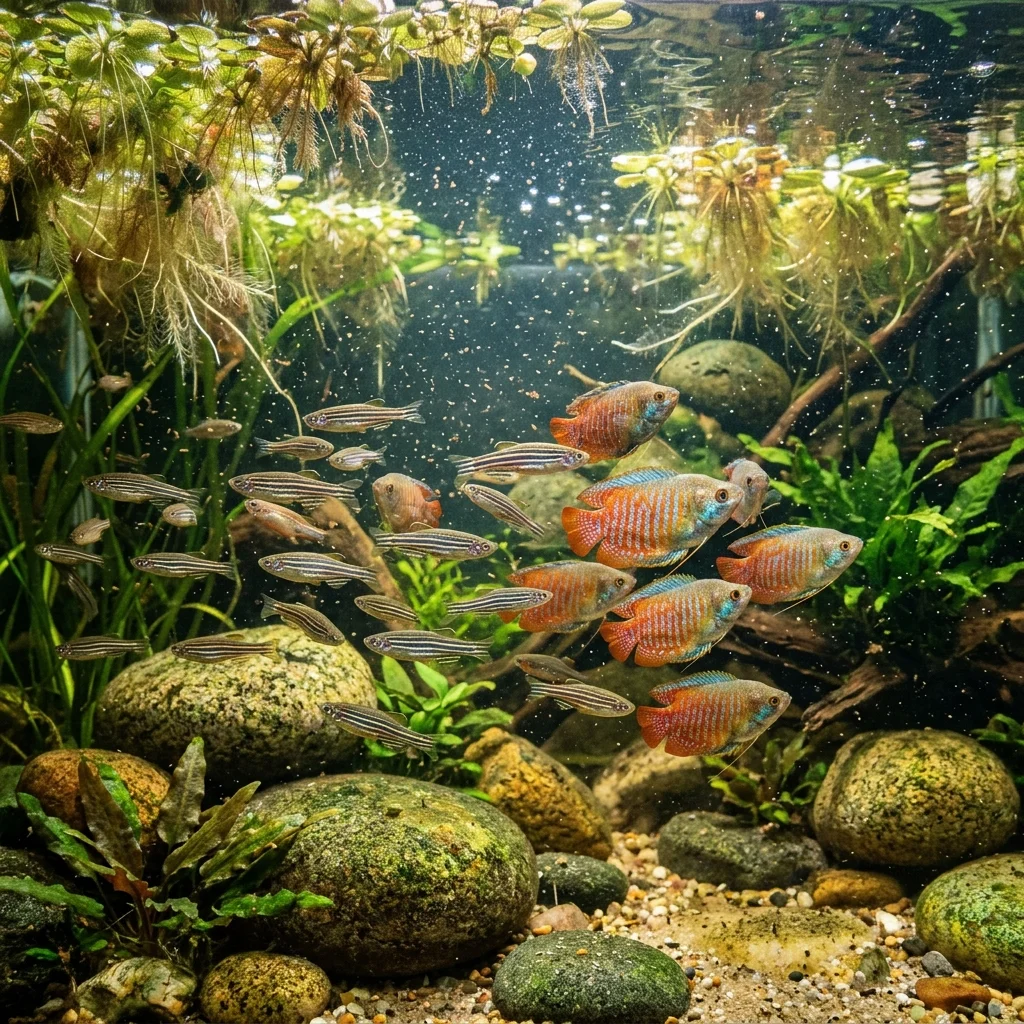
India is home to over 374 native freshwater ornamental fish species, yet many hobbyists remain unaware of the stunning aquatic jewels swimming in our own rivers. From the crystal‑clear Highfin Glassy Perchlet to the intricately patterned Dwarf Fire Rasbora, these native species are not only beautiful but also better adapted to local water conditions. Breeding them also supports biodiversity conservation.
1. Highfin Glassy Perchlet (Pseudambassis lala)
Local names: Chanari, Tanbijla
Distribution: Gomti, Brahmaputra, Godavari, Narmada, Tapi, and Gandak rivers
Size: 2‑3.5 cm
Water: 6.5‑7.5 pH, 22‑26°C
Unique features: Semi‑transparent body that glows like crystal, orange‑red second dorsal fin edged in black. This Near Threatened species can be a sustainable source of income if reared properly.
A small, rounded body and upward‑turned mouth make it a graceful addition to planted community tanks. It co‑exists well with vegetation like Hydrilla and Vallisneria.
2. Dwarf Fire Rasbora (Horadandia atukorali)
Local name: Dandai
Distribution: Western Ghats (Kerala), Karnataka, Tamil Nadu
Size: 2.5‑3 cm
Water: 6.0‑7.0 pH, 22‑26°C
Unique features: Bright orange‑red body, perfect for nano planted tanks. Closely related to fire rasboras, this miniature fish is extremely active and peaceful.
3. Black‑line Rasbora (Rasbora daniconius)
Distribution: Pakistan, India, Bangladesh, Myanmar, Thailand
Size: Up to 10 cm
Water: 6.5‑7.5 pH, 22‑26°C
Unique features: Elegant slender body with a distinct black lateral stripe. Popular worldwide due to its graceful and majestic movements. One of the hardiest native rasboras, ideal for beginners.
4. Zebra Danio (Danio rerio) – India’s Gift to the World
Native to: Eastern India (West Bengal, Assam, Odisha)
Size: 4‑5 cm
Water: 6.5‑7.5 pH, 18‑24°C
Unique features: Horizontal blue and yellow stripes, extremely active, tolerates a wide range of water conditions. Originating from India, these fish are easily recognized by their distinctive stripes.
5. Tiger Dwarf Goby (Mugilogobius tigrinus)
Type: Brackishwater ornamental species
Size: 5‑8 cm
Water: Euryhaline (adapts to freshwater, brackish, and marine)
Unique features: Striking tiger‑like bands, excellent for planted, community, and nano aquariums. ICAR‑CIBA has standardised captive breeding of this species – the first such report worldwide.
6. Chiseltooth Goby (Mangarinus waterousi)
Type: Brackishwater ornamental
Size: 5‑7 cm
Water: Euryhaline (adaptable)
Unique features: Highly prized for its vibrant coloration and intricate patterns. Prices in India range from ₹150‑200 per fish.
7. Ornate Goby (Istiogobius ornatus)
Distribution: Exported chiefly from Sri Lanka to the US and other developed countries.
Size: 5‑8 cm
Unique features: Popular and high‑value marine ornamental fish prized for vibrant coloration and intricate patterns. Marketable‑sized fish costs ₹200‑250 in India, $15‑30 internationally. ICAR‑CMFRI standardised captive breeding for the first time in India.
8. Azure Damsel (Chrysiptera hemicyanea)
Distribution: Indo‑West Pacific, Eastern Indian Ocean, Indonesia
Status: Vulnerable (IUCN Red List) – over‑exploited from natural habitat
Unique features: Brilliant blue body with yellow underside. Market price in India ₹250‑350, internationally $15‑25.
9. Bengal Loach / Gangetic Scissortail Rasbora
Distribution: Northern and Eastern India rivers
Size: 8‑12 cm
Water: 6.5‑7.5 pH, 22‑26°C
Unique features: Silvery body with deeply forked tail, excellent jumper. Prefers sandy streams and rivers.
10. Orange‑Finned Rasbora (Rasbora cf. dandia)
Distribution: Krishna River basin, Western Ghats
Size: Up to 7 cm
Water: 6.5‑7.5 pH, 22‑26°C
Unique features: Orange fins, peaceful, ideal for community aquaria with other non‑aggressive fish.
Why Choose Native Species?
Native fish are adapted to Indian tap water (moderate hardness, slightly alkaline). They require less equipment – in many cases, no heater – and are more resilient to seasonal temperature fluctuations. By choosing native species from sustainable captive breeding sources, you support the reduction of wild collection pressure and help conserve India’s freshwater biodiversity.