Overview
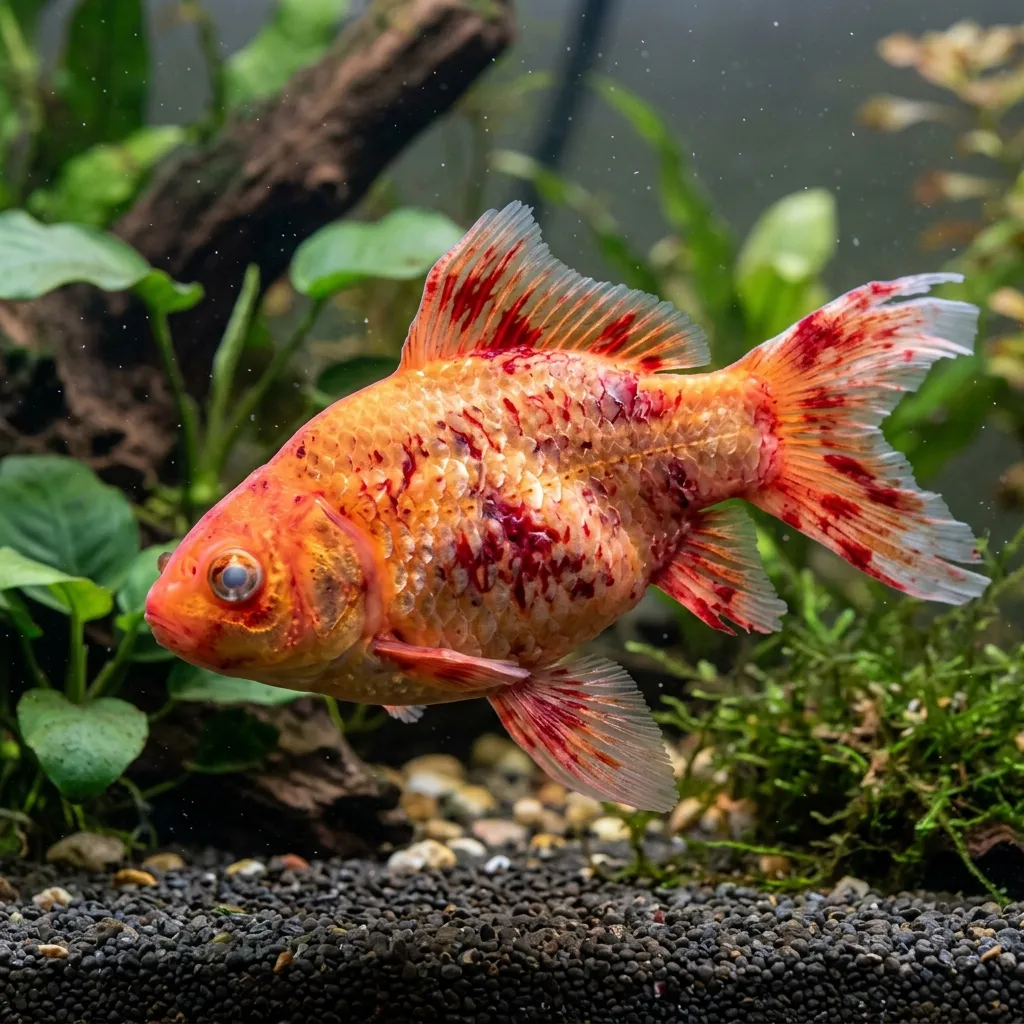
You glance at your goldfish tank and notice one fish hovering near the surface, its fins traced with thin red lines like cracked glass. Within hours pale pink patches bloom across its flanks. Hemorrhagic septicemia is a systemic bacterial infection caused by Aeromonas hydrophila, Pseudomonas fluorescens, or related gram-negative bacteria that breach the gut lining or enter through wounds and multiply in the bloodstream, rupturing capillaries and causing visible hemorrhaging. Unlike localized fin rot that stays at the fin margins, septicemia spreads through the entire circulatory system and damages the liver, kidneys, and gills simultaneously. The same stressors that trigger Columnaris outbreaks—ammonia spikes, temperature shock, overcrowding—also suppress immunity and allow these ubiquitous bacteria to invade. In my practice, I see hemorrhagic septicemia most often in goldfish kept in unfiltered bowls and in community tanks after a heater failure causes a temperature crash. The disease progresses fast: a fish with faint red streaks in the morning can be dead by evening if the bacterial load is high enough.
Identification
Hemorrhagic septicemia is a systemic bacterial disease characterized by red streaking along fin rays, bloody patches or petechiae on the body, and bulging eyes caused by bacterial toxins damaging blood vessels and organs. The earliest signs are subtle: a fish that isolates itself, clamps fins, or breathes faster than tank mates. As bacteria multiply in the bloodstream, capillaries rupture and produce the characteristic red lines that follow the fin vasculature. The skin develops irregular red or purple patches that do not fade when the fish moves. In advanced cases the abdomen swells with fluid, the anus protrudes, and the fish loses equilibrium and spirals. Do not confuse septicemia with ammonia burns, which cause uniform red gills and improve rapidly after a water change. Fin rot caused by Aeromonas stays localized to the fin edges without body hemorrhaging. Columnaris produces flat grey-white lesions, not red streaks.
Life Cycle
Hemorrhagic septicemia is not a contagious disease with a defined life cycle but rather a terminal clinical manifestation of bacterial septicemia that progresses through exponential bacterial replication in the bloodstream over 24–72 hours. Aeromonas and Pseudomonas are present in virtually all freshwater systems at low levels, remaining harmless in healthy fish. When stress hormones from poor water quality, temperature shock, or handling suppress white blood cell function, these bacteria breach the intestinal mucosa or skin barriers and enter the blood. Once in circulation they release endotoxins that damage capillary walls, causing the visible hemorrhaging. The bacteria also colonize the liver and kidneys, producing organ failure within 2–4 days of symptom onset. Chronic low-level ammonia exposure can weaken immune defenses for weeks before the bacterial population blooms and triggers acute septicemia.
Treatment
Hemorrhagic septicemia is a critical-condition bacterial infection requiring immediate gram-negative antibiotic therapy because the pathogen is protected by an outer membrane and releases endotoxins that damage organs faster than most single-drug protocols can stop. The most effective treatment I use is Kanaplex (kanamycin) dosed at 1 level measure per 5 gallons every 48 hours for three total doses, because it targets the gram-negative bacteria responsible for bloodstream infections. I pair this with pristine water conditions: ammonia and nitrite at 0 ppm, nitrates below 10 ppm, and temperature stabilized at 24–26°C/75–79°F. Maracyn Two (minocycline) at one packet per 10 gallons every 24 hours for 7 days is an alternative for fish that do not tolerate kanamycin, though it acts more slowly. Aquarium salt at 1–3 ppt reduces osmotic stress and supports gill function during recovery. Remove activated carbon and turn off UV sterilizers during antibiotic treatment or the medication is degraded before reaching therapeutic levels. Perform a 25% water change before each new antibiotic dose to control waste buildup. This is the step most beginners skip, and it is why treatment fails: they add medicine to dirty water and the bacteria face sub-lethal antibiotic concentrations that promote resistance. Treatment duration runs 7–10 days, with visible red streak recession beginning around day 3 if the protocol is correct. Fish that have stopped eating or show bloating need the full 10 days; stopping early because the red streaks faded is a common relapse trigger.
Calculate Treatment Dose
Once you have identified the medication and confirmed its label dosage, use the Medication Dosage Calculator to calculate the amount required for your aquarium volume.
Prevention
Always isolate new or sick fish; see our guide on Quarantine Tanks: Essential Disease Prevention.
Preventing hemorrhagic septicemia means eliminating the chronic stressors that allow opportunistic bacteria to breach the bloodstream. Maintain ammonia at 0 ppm, nitrite at 0 ppm, and nitrates below 20 ppm through regular water changes and adequate filtration. Avoid overcrowding, which elevates waste production and suppresses immune function through chronic stress. Quarantine new fish for 14 days at 24–26°C/75–79°F, inspecting daily for fin redness or lethargy before introducing them to community tanks. Temperature stability is critical: sudden drops below 20°C/68°F or spikes above 30°C/86°F suppress immune function and trigger bacterial blooms. In my experience, septicemia is almost always preceded by weeks of poor water quality or a recent stress event that the owner dismissed as minor. Test water parameters weekly, not monthly, and act on the first sign of fin redness or isolation behavior before it progresses to full septicemia.