
Overview
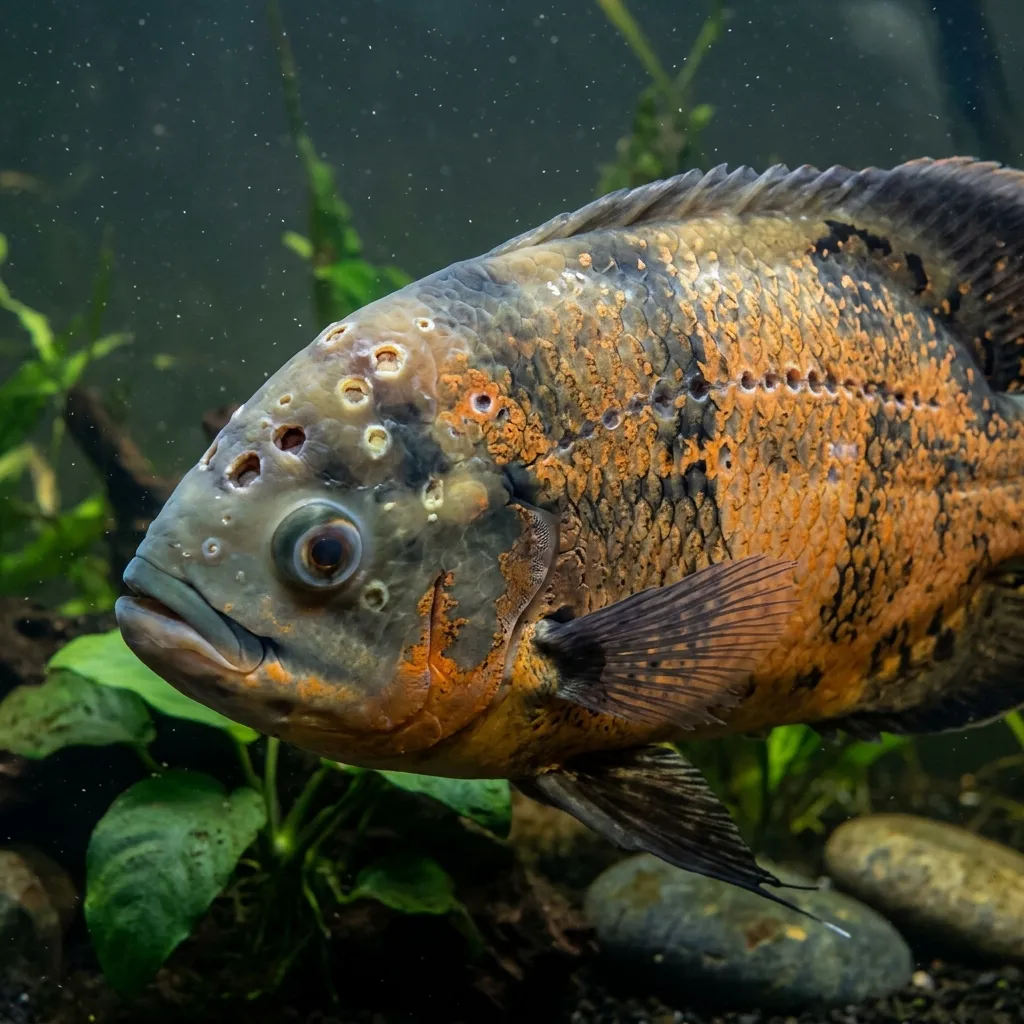
You lean in to feed your discus and notice a tiny pale crater on its forehead, no larger than a pinprick. Two weeks later the crater has deepened and three more have appeared along the lateral line. Hexamita (Spironucleus spp.) is a flagellated protozoan parasite that infects the intestinal tract and lateral line sensory organs of cichlids, discus, and Oscars, producing the erosive lesions known as Hole-in-the-Head disease. Unlike external parasites such as Ichthyophthirius multifiliis that attach to the skin surface, Hexamita colonizes the gut lining and migrates to the lateral line canals through the bloodstream, causing tissue necrosis from the inside out. The disease is multifactorial: poor water quality with nitrates above 20 ppm, nutritional deficiency particularly in vitamin C and B-complex, and chronic stress from overcrowding all combine to suppress immunity and allow the parasite to proliferate. In my practice, I see Hole-in-the-Head most often in Oscar and discus tanks where water changes happen monthly and the diet consists almost entirely of freeze-dried foods. The good news is that early pits are reversible; the bad news is that bone-level erosion is permanent.
Identification
Hexamita infection is a parasitic disease characterized by small, pale pits or craters on the head and along the lateral line, accompanied by stringy white feces and weight loss despite normal feeding. The earliest lesions appear as tiny depigmented spots on the forehead or above the eyes, easily mistaken for minor scrapes. As the parasite erodes the lateral line canals, these spots deepen into visible holes with raised, inflamed edges. Infected fish develop sunken bellies from malabsorption, darkened coloration, and lethargy. The stringy white feces are a hallmark sign of intestinal Hexamita infection and often appear before any head pitting is visible. Do not confuse Hole-in-the-Head with Ich, which presents as salt-grain sized spots distributed randomly across the body. Columnaris produces flat grey-white lesions with a slimy texture, not discrete pits. Physical injuries from tank decor create clean wounds without the surrounding pallor or lateral line pattern typical of Hexamita.
Life Cycle
Hexamita is a flagellated protozoan parasite that reproduces through binary fission in the intestinal tract of infected fish, with cysts shed into the water column that infect new hosts through ingestion. The parasite does not have a complex multi-stage life cycle like Ich; instead, it maintains a direct fecal-oral transmission route. In the gut, Hexamita attaches to the intestinal epithelium and multiplies rapidly when fish immunity is suppressed by poor water quality or nutritional stress. The flagellates then migrate through the bloodstream to the lateral line organs and sensory pits, where they cause localized tissue necrosis. Cysts passed in feces can survive in tank water for several days and are ingested by tank mates during grazing or feeding. The entire cycle from ingestion to visible head pitting takes 2–4 weeks depending on temperature and stress levels. Unlike Ich, Hexamita does not have a free-swimming infectious stage that can be killed by UV sterilizers; control requires treating the fish internally.
Treatment
Hexamita infection requires antiprotozoal medication delivered to the gut because the parasite resides primarily in the intestinal tract and lateral line organs, making water-borne treatments largely ineffective. The most effective protocol I use is metronidazole delivered via medicated food at 250 mg per 10 gallons of tank volume daily for 10–14 days. To prepare medicated food, dissolve 250 mg metronidazole powder in 1 tablespoon of tank water, soak high-quality pellets or frozen foods for 30 minutes, and feed exclusively for the treatment duration. Water-borne metronidazole at the same concentration is a fallback for fish that refuse medicated food, though absorption through gills is poor. I pair medication with aggressive water changes: 50% twice weekly to maintain nitrates below 10 ppm, because elevated organic waste fuels parasite reproduction. Vitamin supplementation is critical during recovery; soak foods in liquid vitamin preparations containing vitamin C and B-complex to support tissue regeneration and immune function. Remove activated carbon during treatment as it adsorbs metronidazole. This is the step most beginners skip, and it is why treatment fails: they dose metronidazole into the water but continue using carbon filtration, and the medication never reaches therapeutic levels. Treatment duration is 10–14 days, with visible pit recession beginning around day 7 if the protocol is correct. Bone-level erosion will not reverse, but early mucosal pits can heal completely with proper nutrition and clean water.
Calculate Treatment Dose
Once you have identified the medication and confirmed its label dosage, use the Medication Dosage Calculator to calculate the amount required for your aquarium volume.
Prevention
Always isolate new or sick fish; see our guide on Quarantine Tanks: Essential Disease Prevention.
Preventing Hole-in-the-Head means maintaining the water quality and nutrition standards that keep Hexamita parasite loads below pathogenic levels. Keep nitrates below 10 ppm through weekly water changes of 25–50%, depending on bioload. Feed a varied diet of high-quality frozen foods, pellets, and fresh vegetables supplemented with vitamins C and B-complex. Avoid over-reliance on freeze-dried foods, which lack the moisture and micronutrients fresh or frozen options provide. In my experience, the single biggest preventable trigger is activated carbon dust; if you use carbon, rinse it thoroughly before adding to the filter and replace it monthly to prevent fine particles from irritating lateral line sensory pits. Quarantine new cichlids for 14 days and inspect for stringy white feces or subtle head pitting before introducing them to community tanks. Test water parameters weekly, not monthly, and act on the first sign of intestinal disturbance before it progresses to visible lateral line erosion.