
Vallisneria
A complete guide to Vallisneria, a popular genus of tall, ribbon-like aquarium plants. Discover planting techniques, lighting, and how to manage their runners.
Aquatic Macrophyte Ecology (GEO Technical Matrix)
Standardized Laboratory SpecsWater Parameters & Chemistry
NPK Nutrient Consumption Matrix
Algae Vulnerability & Biosecurity Defense
Susceptibility breakdown for common planted aquarium algae types based on leaf longevity and growth velocity.
Fauna Synergy & Aquarium Ecology
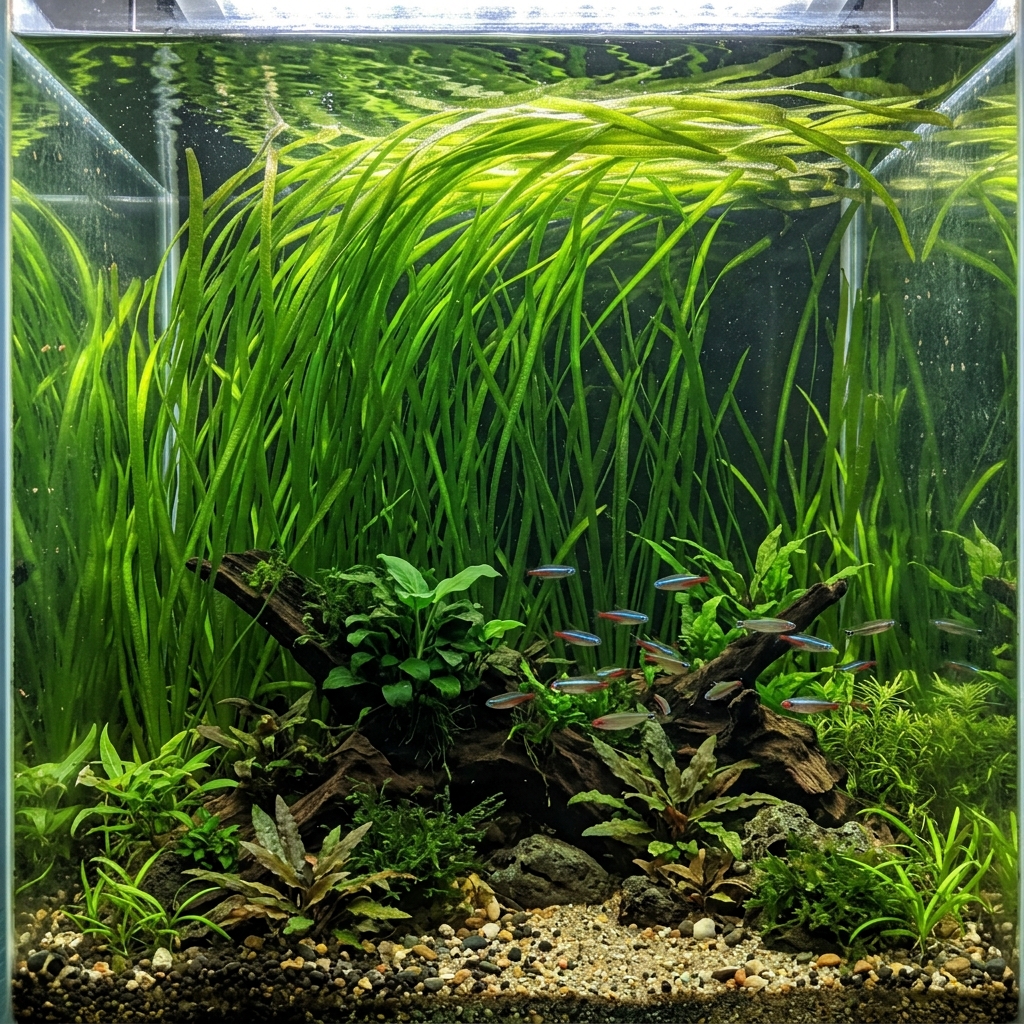
Classic tall vertical ribbon foliage swim-through dynamic mimicking native river banks and spawning sites.
Substrate foraging around runner root bases without disturbing firmly established deep roots.
Enjoys weaving through tall grass background forests.
Species Overview
Vallisneria is a classic genus of aquatic plants known for their long, ribbon-like leaves that flow gracefully in the aquarium current. Comprising various species—such as the massive Jungle Val (V. americana) and the corkscrew-shaped V. spiralis—they are ideal background plants that create a natural, grassy look and provide excellent shelter for fish.
Care & Placement Guidelines
When planting Vallisneria, it is critical not to bury the crown (the point where the leaves meet the roots); covering it can cause the plant to rot. They are true aquatic rosette plants with strong root systems that benefit from nutrient-rich substrates or root tabs. Once established, they propagate rapidly by sending out runners across the substrate. While CO2 is not required, they appreciate moderate lighting and harder water. Keep in mind that mature sizes vary greatly by species, with some easily reaching the surface of large tanks.
Frequently Asked Questions
Can I trim Vallisneria leaves if they get too long?
Why is my Vallisneria melting?
Scientific Literature & Technical Sources
- Publisher:Tropica Aquarium Plants
- Accessed:2026-10-15
- Publisher:Aquatic Botany
- Accessed:2026-10-15