
Water Wisteria
Learn how to grow Water Wisteria (Hygrophila difformis). This guide covers lighting, CO2 needs, planting techniques, and how to use it to control algae.
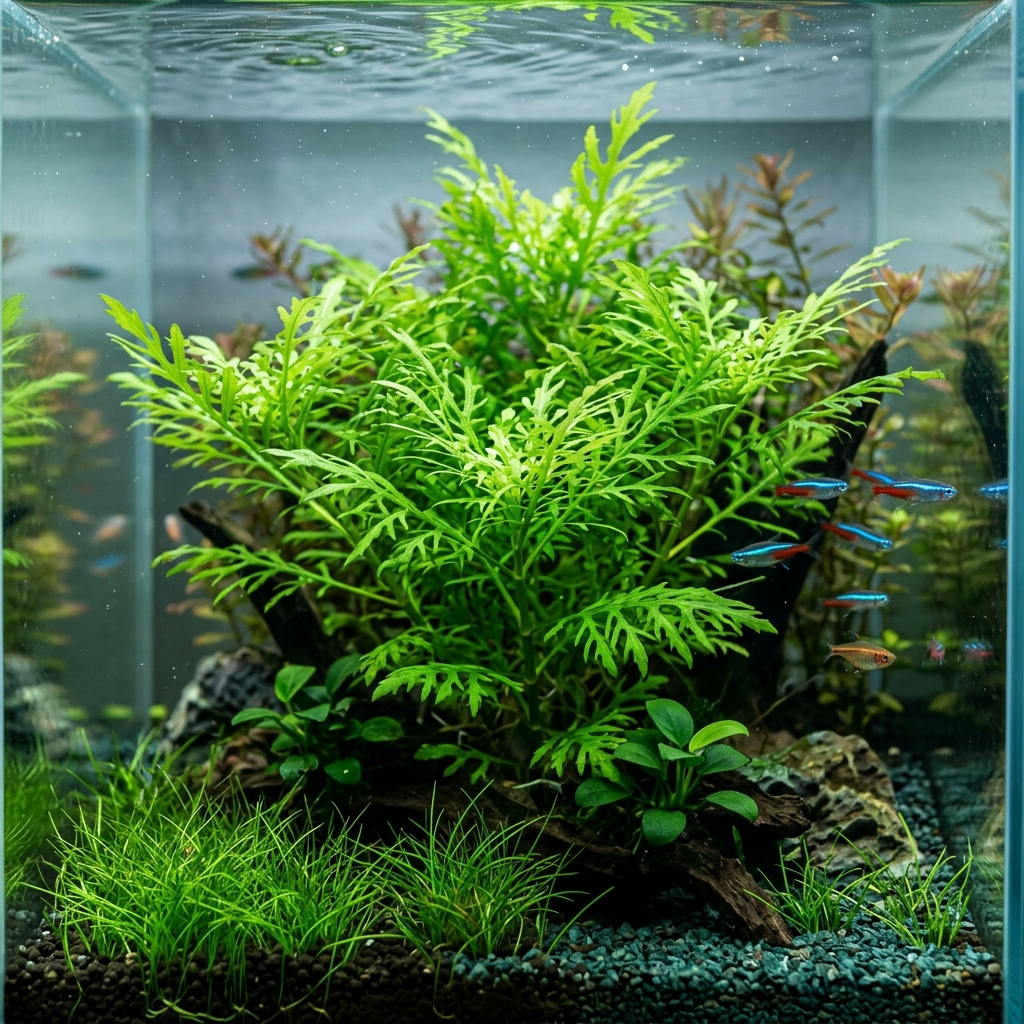
Aquatic Macrophyte Ecology (GEO Technical Matrix)
Standardized Laboratory SpecsFauna Synergy & Aquarium Ecology
Midwater navigation through dense pinnate leaf structures.
Sturdy, fast-growing foliage that easily withstands incidental benthic rasper contact.
Appreciates the dappled light and heavy nutrient consumption creating crystal clear water.
Species Overview
Species Overview
Water Wisteria (Hygrophila difformis) is one of the most popular and versatile aquarium plants available. Native to the marshy habitats of the Indian subcontinent (including India, Nepal, and Bangladesh), this fast-growing stem plant is famous for its bright green, deeply lobed, fern-like leaves. Its ability to absorb excess nutrients rapidly makes it an excellent choice for beginners looking to combat algae, while its intricate leaf structure appeals to advanced aquascapers.
Care & Placement Guidelines
Planting and Aquarium Setup
Planting and Placement
Due to its rapid growth and potential height (often reaching the surface of most standard tanks), Water Wisteria is best placed in the background or midground of the aquarium. It can be planted directly into the substrate by pushing the stems down a few inches. Alternatively, it can be left floating at the surface, where it will grow dense root systems that provide perfect cover for fry and surface-dwelling fish.
Lighting and Water Parameters
This plant is incredibly adaptable. While it survives in low light, moderate to high lighting is recommended to achieve the finely lobed, feathery leaf shape that makes it so sought after. In low light, the leaves tend to be broader and less divided. It tolerates a wide range of water parameters, doing well in temperatures from 72°F to 82°F (22°C to 28°C) and a pH between 6.5 and 7.5.
Nutrients and CO2
Water Wisteria is an aggressive nutrient consumer. While CO2 injection is not necessary, providing a nutrient-rich substrate or dosing a comprehensive liquid fertilizer will ensure lush, vibrant growth. If the plant's lower leaves begin to yellow or melt, it is typically a sign of a nutrient deficiency (often nitrogen or potassium) or insufficient light reaching the bottom of the stems.
Trimming & Maintenance
Trimming and Propagation
Because of its fast growth rate, regular maintenance is required to prevent Water Wisteria from shading out other plants. When it grows too tall, simply use aquascaping scissors to trim the top portion of the stem. The rooted bottom half will sprout new side shoots, creating a bushier appearance. The trimmed top cuttings can be immediately replanted into the substrate to propagate new plants, making it very easy to multiply your stock.
Frequently Asked Questions
Can Water Wisteria grow floating?
Yes, Water Wisteria can be grown floating. When left to float at the surface, it will grow rapidly, develop long roots dangling into the water column, and provide excellent shade and hiding spots for fry and labyrinth fish like Bettas.
Why are the leaves on my Water Wisteria changing shape?
Water Wisteria is highly heterophyllous, meaning its leaf shape changes drastically depending on the environment. Under high light, the leaves become deeply lobed and fern-like (pinnatifid). Under low light, or when grown emerged (above water), the leaves become solid, broad, and oval-shaped with serrated edges.
Does Water Wisteria need CO2 injection?
No, CO2 injection is not required. Water Wisteria is a very hardy plant that will grow well in low-tech setups. However, adding CO2 and high lighting will significantly accelerate its already fast growth rate and encourage more finely lobed leaf structures.
How do you propagate Water Wisteria?
Propagation is incredibly easy. Simply take a cutting from the top of the stem (leaving a few inches on the bottom portion to regrow) and plant the cutting directly into the substrate. It will quickly develop roots and grow into a new plant.
Scientific Literature & Technical Sources
- Publisher:Tropica Aquarium Plants
- Accessed:2026-10-15
- Publisher:Aquarium Plants Manual
- Accessed:2026-10-15