
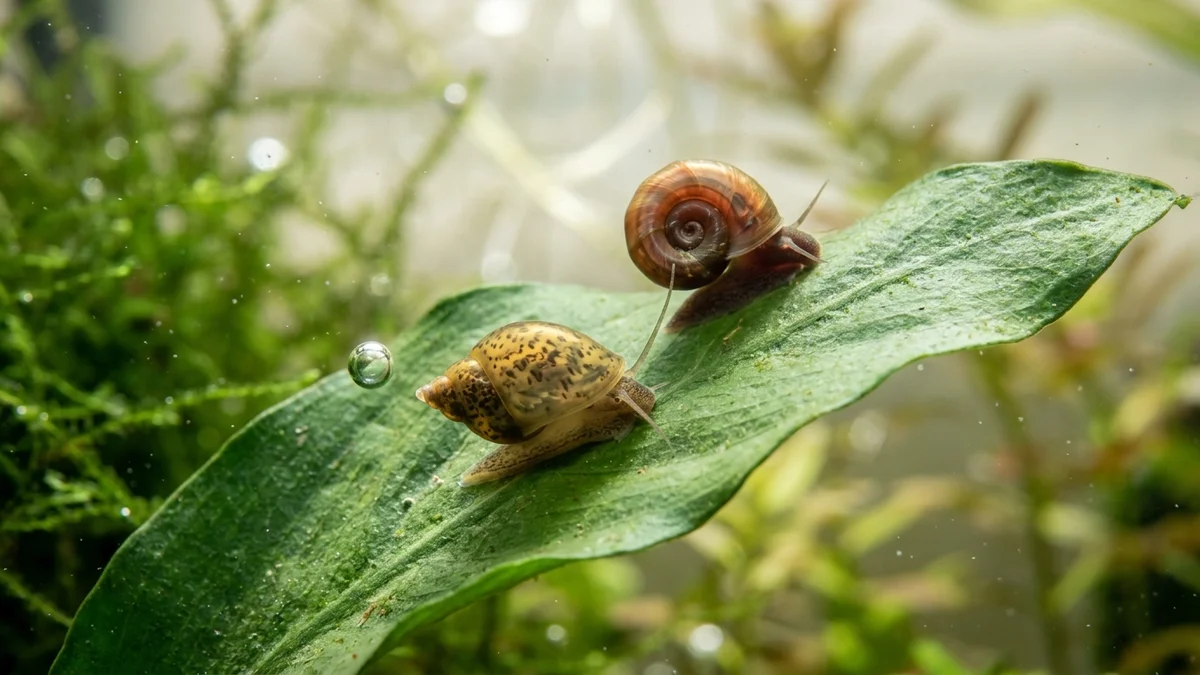
Pest Snails vs. Beneficial Snails
Pond, bladder, Malaysian trumpet and ramshorn snails are often harmless in small numbers. They can consume leftover food, decaying plant matter and other organic debris. A large population, however, can indicate excess food or accumulated waste and may become unsightly. For small-tank snail and shrimp setups see the 5 Gallon Fish Tank Stocking Guide.
Why Pest Snail Populations Explode
Many common aquarium snails reproduce readily, and some species can reproduce without a mate. Their small eggs or egg clutches may be difficult to notice on plants, décor and other surfaces. Snails often enter aquariums as hitchhikers on new plants. Excess food and decaying organic matter provide additional resources, so reducing overfeeding and cleaning the tank are sensible first steps. Use the Stocking Calculator to help assess aquarium stocking and potential waste load.
Safe Removal Methods
Manual Removal and Vegetable Traps
Start by reviewing feeding amounts, removing uneaten food and pruning decaying leaves. Remove visible snails by hand during routine maintenance. You can also try placing a small piece of lettuce in the aquarium overnight and removing it in the morning if snails have gathered on it. Repeat as needed. Trapping and manual removal work best alongside better control of excess food and organic waste.
Biological Control with Assassin Snails
Assassin snails prey on other snails and may help reduce some pest populations. They generally reproduce more slowly than many common hitchhiker snails, but they are not a risk-free solution: they may also prey on snails you want to keep, including some ornamental species. Remove or protect valued snails before introducing them. Check compatibility with the aquarium's existing fish and invertebrates, and research the care requirements of assassin snails before adding them.
Some fish are described as snail predators, but choosing a fish solely to control snails is not recommended. Predatory species can have specialised space, diet, social and water requirements. Do not add a fish unless the aquarium is suitable for its long-term care.
Preventing Snails on New Plants
Inspect new plants carefully for visible snails, eggs and gelatinous egg clutches. Rinse plants and consider quarantining new additions separately before placing them in an established aquarium. A short quarantine may not reveal every egg or hatchling, so inspection should be repeated. Tissue-culture plants are produced under controlled, sterile conditions and can reduce the risk of introducing hitchhikers, although they may cost more and require careful acclimation.
Some hobbyists use chemical or bleach treatments on plants, but these methods can damage plants and may leave residues if performed incorrectly. Do not use a bleach dip or chemical snail treatment without a validated protocol for the specific plant and product, including concentration, exposure time, rinsing and appropriate neutralisation. Never mix cleaning chemicals. Keep treatments away from aquarium animals and established aquarium water.