Fish care calculator

Aquarium Stocking & Bioload Calculator | FishZone

Estimate realistic fish stocking capacity using adult size, bioload, filtration, swimming space, tank maturity, plants, and maintenance habits. Suitable for community tanks, cichlids, predators, and planted aquariums.


  • Scientific Formula
  • Reviewed by Experts
  • Updated May 2026
  • Instant Results

Type

Risk Assessment

Inputs

6

Difficulty

Beginner

Calculation Time

Instant

Quick Answer

Use this calculator before buying fish to avoid overcrowding. Safe stocking depends on adult body size and shape, waste output, oxygen demand, filtration turnover, tank maturity, territorial needs, and how often you perform water changes. The inch-per-gallon shortcut ignores these factors and fails badly for high-bioload fish like goldfish, plecos, oscars, and many cichlids. Always plan for the fish’s adult size, not the juvenile size you see in the store.

1
2
3
4

Enter your details

Enter the labeled values below. Results appear without leaving this page.

How to Use This Calculator (Worked Example)

This tool requires 6 key inputs:

  1. Volume: Enter your specific value (e.g., from your tank's test kit or dimensions).
  2. Search Species Database: Enter your specific value (e.g., from your tank's test kit or dimensions).
  3. Quantity to Add: Enter your specific value (e.g., from your tank's test kit or dimensions).
  4. Unit: Enter your specific value (e.g., from your tank's test kit or dimensions).
  5. Filtration Type: Enter your specific value (e.g., from your tank's test kit or dimensions).
  6. Tank Maturity: Enter your specific value (e.g., from your tank's test kit or dimensions).

Example: If you input average baseline values, the calculator will immediately process the formula and return the recommended output and safety warnings above.

Method

This tool uses the visible inputs on the page and returns practical aquatics guidance for maintaining your tank.

Knowledge Journey

Explore other helpful tools for your aquarium.

The Problem

Fishkeepers need a practical way to decide whether a tank can handle a planned fish list without relying on misleading inch-per-gallon rules, and to diagnose and correct overstocking before it harms the fish.

When to Use This Tool

Use before buying fish, adding schools, upgrading tanks, troubleshooting nitrate, planning filtration, or deciding whether a species will fit long term. Also useful after a fish loss or disease outbreak to reassess stocking balance.

Who is this for?

  • Beginner aquarium keepers planning a first community tank and wanting a safe, clear stocking guide
  • Intermediate aquarists adjusting filtration, water change schedules, or evaluating a new species addition
  • Advanced keepers setting up cichlid, predator, grow-out, planted, or high-bioload systems
  • Aquarium store staff helping customers avoid overstocking and returns
  • Aquarium club educators and content creators looking for a practical demonstration tool

This aquarium stocking calculator helps you estimate how many fish your tank can support without relying on the outdated one-inch-per-gallon rule. It weighs bioload, filtration capacity, tank maturity, adult fish size, swimming room, aggression, and your maintenance rhythm. Use it to build a sensible stocking plan before you buy fish, not after the tank is crowded.

Who Should Use This Calculator?

Beginners can use it when planning their first community tank to avoid classic overstocking mistakes. Intermediate keepers can compare filter output and water change schedules to fine-tune their setup. Advanced aquarists can sanity-check predator tanks, cichlid systems, grow-out plans, planted aquariums, and high-bioload setups where oxygen and territorial space become limiting.

Why This Calculator Is Useful

The one-inch-per-gallon rule treats all fish as equal, but a ten-inch oscar produces far more waste than ten one-inch tetras, and a discus needs entirely different water quality. This tool helps you avoid the most common pitfalls: stunted growth, constant algae, nitrate spikes, aggression, and fish loss. It turns a wish list into a safe, maintainable stocking plan.

When to Use This Calculator

  • Before purchasing any fish for a new or existing tank
  • When adding a new school or a larger centerpiece fish
  • When upgrading filtration or changing water change habits
  • If you notice nitrate rising too fast, aggression, or cloudy water
  • When planning a species-only tank (cichlids, goldfish, discus, shrimp)
  • Before moving fish from a grow-out tank to a permanent display

Common Problems This Calculator Solves

Overstocking often shows up as ammonia and nitrite spikes, nitrate that climbs above 40 ppm in a few days, fish gasping at the surface, constant disease outbreaks, fin nipping, stunted growth, and substrate that fouls quickly. Using a bioload-based estimate helps you set a safe starting point and then adjust based on actual water test results.

How the Calculator Works

Instead of measuring fish inches, the tool estimates the waste load each species produces based on adult body mass, feeding habits, and activity level. It compares that load against your filter’s biological capacity, the tank’s surface area for oxygen exchange, and your typical water change volume and frequency. It also considers swimming space – a tall, narrow tank may have less usable horizontal room than a long, shallow one. The result is a percentage of the tank’s practical capacity, not a magic number of fish.

Use Adult Size, Not Store Size

Many fish are sold as juveniles. A tiny common pleco, oscar, goldfish, bala shark, or angelfish may outgrow a beginner aquarium in months. Always calculate for maximum adult size and long-term behaviour, then add fish slowly so the biological filter can catch up. A fish’s territorial needs and swimming style are just as important as its bioload.

Real-World Scenarios

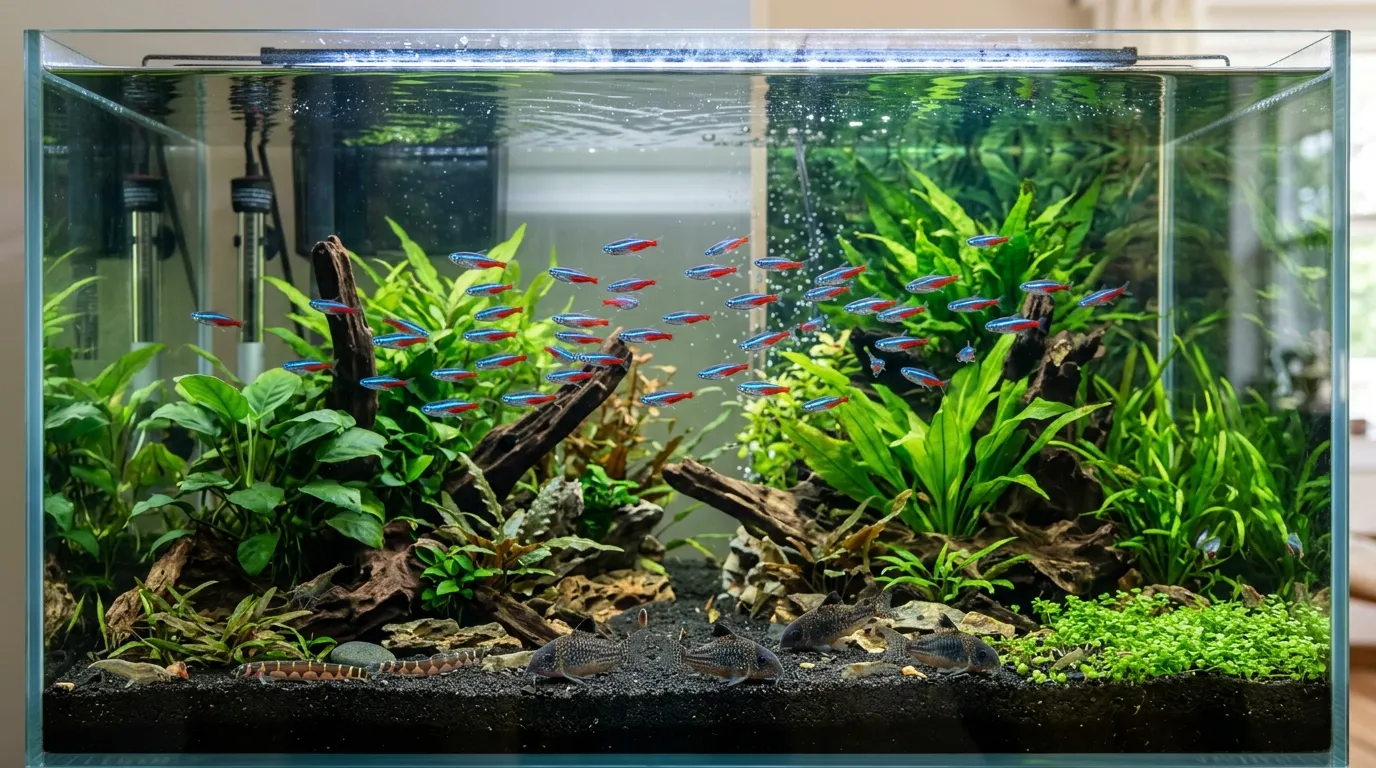
  • Community 20-gallon tank: One honey gourami, 8–10 small tetras, and 5 pygmy corydoras may fit comfortably if filtration is adequate and water changes are weekly.
  • Mbuna cichlid 55-gallon tank: Overstocking is actually used to spread aggression, but this demands massive filtration, frequent large water changes, and very stable pH.
  • Planted high-tech 40-gallon: Fast-growing stems can absorb a lot of nitrate, but at night plants consume oxygen, so surface agitation and stocking restraint still matter.
  • Goldfish tank: Fancy goldfish need at least 20 gallons for the first fish and 10 gallons for each additional one, with powerful filtration. They produce extreme bioload and need spacious swimming room.

Safety Warnings & Limitations

A calculator gives an estimate, not a guarantee. Biological filtration must be fully cycled before the calculated load is added. Always test ammonia, nitrite, and nitrate after introducing new fish. If nitrate climbs too fast, or fish show stress, reduce the load immediately. Never add a full calculated stocking list at once – the bacteria need time to multiply. Aggression, temperature incompatibility, and special dietary needs are not captured in a simple bioload model, so always research each species individually.

Beginner vs Advanced Usage

Beginners can treat the calculator as a “red light / green light” check before buying. Advanced keepers can use it to model the effect of a sump upgrade, doubling water change volume, or switching from a hang-on-back to a canister filter. It’s also a great teaching tool for fish clubs, store staff, and anyone trying to move beyond outdated rules.

Reference Table

Static Aquarium Fish Stocking Calculator Reference

These baseline ratios and decision rules are included directly in the page so visitors can review core guidance before using the interactive calculator.

Scenario Baseline Rule Safety Note
Inputs used by this tool Volume, Search Species Database, Quantity to Add, Unit The interactive calculator refines the result from these inputs.
Outputs generated Search results, Stocking list container, Unique count badge, Total bioload val The static table gives baseline logic; final value depends on entered values.
Fish Profile (Examples)Typical Adult SizeBioload ContributionMinimum Recommended Tank Size
Neon Tetra (Schooling Fish)1.5 inchesVery Low10 Gallons (for a small school)
Corydoras Catfish2 - 3 inchesLow20 Gallons (for a small group)
Fancy Goldfish6 - 8 inchesVery High30 Gallons (for the first fish)
Oscar (Large Cichlid)10 - 14 inchesHigh to Very High75+ Gallons
Common Plecostomus15 - 24 inchesExtreme100+ Gallons
Troubleshooting Guide
1 Ammonia or nitrite present after adding new fish

Possible cause: Added too many fish too quickly; bacteria colony couldn’t keep up.

Perform a 25–50% water change, add a bacterial starter, reduce feeding, and test daily until levels zero out. Next time, add fish more gradually.

2 Nitrate shoots up within 2–3 days of a water change

Possible cause: Bioload too high for current filtration/water change routine, or overfeeding.

Increase water change frequency/volume, clean filter media lightly, reduce feeding amount, and reconsider stocking level using the calculator.

3 Fish gasping at surface despite good filtration

Possible cause: Low dissolved oxygen, often at night in heavily planted or overstocked tanks with poor surface movement.

Add an air stone, increase surface agitation, reduce stocking, or add a powerhead. Check temperature (cooler water holds more O2).

Glossary of Terms
Bioload
The total amount of biological waste produced by the inhabitants of an aquarium, which must be processed by the filtration system.
Nitrogen Cycle
The biological process where beneficial bacteria convert toxic ammonia (fish waste) into nitrite, and then into less toxic nitrate.
Inch-Per-Gallon Rule
An outdated and often dangerously inaccurate guideline suggesting you can safely keep one inch of adult fish per gallon of water, completely ignoring fish girth, bioload, and oxygen requirements.
Beneficial Bacteria
Microorganisms that live in the filter media, substrate, and on tank surfaces, responsible for breaking down toxic fish waste.
Sump
An external reservoir, usually housed below the main aquarium, used for additional water volume, hiding equipment, and expanding filtration and biological capacity.
Scientific References
  1. Ecology of the Planted Aquarium: A Practical Manual and Scientific Treatise
  2. The Nitrogen Cycle and Biological Filtration

Frequently Asked Questions

What exactly does an aquarium stocking calculator do?
It takes your tank’s size, filter type, and your planned fish list and estimates whether the total bioload (waste production) can be managed safely. It looks at adult fish size, body shape, oxygen needs, territorial behaviour, and your maintenance schedule – not just inches of fish.
Why is the one-inch-per-gallon rule so unreliable?
Because a slim one-inch neon tetra and a bulky one-inch goldfish fry produce very different amounts of waste and have different oxygen demands. The rule ignores filtration, water changes, swimming space, and adult growth. It’s a rough beginner shortcut that often leads to overstocked tanks.
When should I use a stocking calculator?
Ideally before you buy any fish. Also use it when you want to add new fish to an existing community, upgrade your filter, change your water change routine, or when you suspect your tank is already overloaded because nitrate is high or fish are stressed.
How many fish can I really keep in a 20-gallon tank?
There is no single number. A 20-gallon long could hold a small school of 8–12 tetras, a centerpiece fish, and a few bottom dwellers if filtration is strong and you change water weekly. But it cannot safely house a common pleco, a group of goldfish, or large cichlids. Always check adult sizes and temperament.
Does a bigger filter allow me to keep more fish?
A larger filter processes ammonia and nitrite faster, which helps with bioload, but it does not create more physical space or reduce aggression. You can push the stocking limit slightly with oversize filtration, but you must still respect swimming room and territorial boundaries.
How does tank maturity affect stocking?
A new tank’s beneficial bacteria colony is small and delicate. You must add fish gradually over weeks while testing water. A mature tank (6+ months) with a thick biofilm and stable parameters can handle new additions more smoothly, but it can still crash if you add too many fish at once.
What nitrate level signals that my tank is overstocked?
If nitrate consistently rises above 40 ppm within a few days despite regular water changes, your bioload is likely too high, or you’re feeding too much, or the filter maintenance is insufficient. Many community tanks aim to keep nitrate below 20–30 ppm before a water change.
Can a heavily planted tank support more fish?
Yes, fast-growing plants absorb ammonia, nitrite, and nitrate, which improves water quality and can slightly increase stocking capacity. However, plants also consume oxygen at night, and they don’t eliminate the need for horizontal swimming space or species-appropriate territory sizes.
How many fish should I add at one time?
Add a small number – a single shoal or one larger fish – and then wait at least 10–14 days while testing for ammonia and nitrite. The bacterial population needs time to grow in response to the new waste. Never add your entire stocking list in one weekend.
Do shrimp and snails count toward the stocking total?
They do, but their bioload is usually much lower than fish. In nano tanks, a large mystery snail or a heavily fed shrimp colony can produce noticeable waste, so include them in your estimate. A few cherry shrimp and a nerite snail add negligible load in larger tanks.
What are the clearest signs that my aquarium is overstocked?
Ammonia or nitrite readings above zero, nitrate climbing very fast, cloudy water, fish gasping near the surface, clamped fins, frequent disease, fin nipping, stunted growth, and filters clogging within days. Any of these should make you reconsider your stocking level.
What’s the biggest stocking mistake beginners make?
Buying fish based on the size they are in the store, not their adult size. A tiny common pleco, iridescent shark, or goldfish quickly becomes a giant waste producer and outgrows the tank. Also, impulse buying without a researched stocking plan leads to aggression and compatibility disasters.
How does water change frequency change stocking capacity?
If you can commit to large, frequent water changes (e.g., 50% twice a week), you can manage a heavier bioload because you’re exporting more waste. The calculator factors this in: a maintenance-heavy keeper can push closer to the filter’s limit than someone who only changes water every two weeks.
Is there a safe range or ideal stocking percentage?
Aim for a stocking level that keeps your pre-water-change nitrate under 30–40 ppm without heroic effort. Many keepers target around 70–85% of the calculated capacity to leave a safety margin for missed water changes, power outages, or a fish growing larger than expected.
Can I use this calculator for a cichlid overstocking strategy?
Yes. Some African cichlid keepers intentionally overstock to reduce individual aggression, but this requires massive filtration, frequent large water changes, and careful monitoring. The calculator helps you assess whether your equipment can handle the extreme bioload, but it doesn’t model social dynamics.
What if my tank has a sump? Does that change the calculation?
A sump adds water volume, which dilutes waste and increases total oxygen exchange surface. You should include the sump’s water volume when entering tank size, and consider its additional filter media capacity. The calculator can then account for the increased biological stability.
How do temperature and oxygen affect stocking limits?
Warmer water holds less oxygen, and many tropical fish have high metabolic rates. A tank stocked near capacity in summer may suffer oxygen crashes at night if surface agitation is weak. Always consider aeration and temperature stability, especially in tanks without a sump or wet/dry trickle filter.