
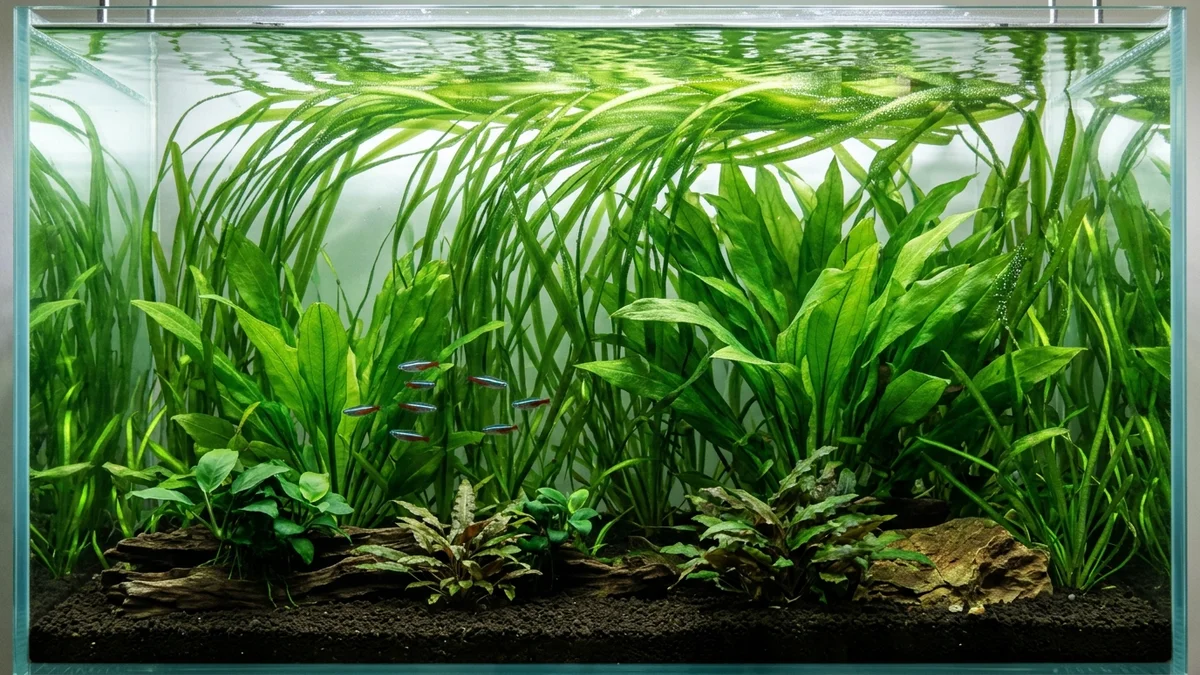
Which plants suit the back of an aquarium? For tall aquascapes, Aquarium Co-Op lists Vallisneria, Pogostemon 'Octopus', Brazilian pennywort, water sprite, Amazon sword, Bacopa caroliniana, pearl weed, scarlet temple, tiger lotus and Crinum calamistratum as beginner-friendly background plants around 30 cm or more. Group them by growth type: trim and replant stems, leave bulbs partly exposed, and expect farm-grown leaves to melt and regrow within about two to four weeks. Individual heights and light needs are not all stated and need verification.
Creating Depth and Hiding Equipment
Tall plants at the back frame a layout and keep shorter plants visible in front. Aquarium Co-Op's list covers beginner-friendly plants around 30 cm or more, which is why this guide leans toward tall aquascapes.
Dense planting can screen filter intakes, heaters and pipes, but the sources reviewed give no specific guidance on this. As general practice, which is inference and not a sourced instruction, keep equipment reachable for cleaning rather than packing plants tightly against it.
Contrasting leaf shapes and heights add depth. Co-Op describes Vallisneria as tall and grass-like and Amazon sword as a large plant that can form giant bushes, so the two look different side by side. Keep the front low; see foreground aquarium plants for that layer.
Choosing Background Plants for Tank Size and Layout
Check each plant's final size and light needs before buying. For easier, lower-demand options, see low-light aquarium plants.
Plants for Tall Aquariums
Pogostemon 'Octopus' can reach the surface, and Co-Op says to cut the top half and replant it deeply. Most plants on the list are described as around 30 cm or more. Exact heights for each plant were not retained in this draft and need verification against the source.
Plants for Narrow and Small Aquariums
No source reviewed says which of these plants suit narrow or small tanks. Amazon sword can form giant bushes, so allow space for it. Co-Op says pearl weed can work as a foreground, midground or background plant depending on trimming, which makes it more adaptable. Verify final sizes before buying.
Creating a Dense Green Background
Co-Op's documented way to keep stems full is to cut and replant: top half of Pogostemon replanted deeply, Bacopa pruned to height with trimmings replanted, long ends of pearl weed snipped and replanted, and tangled sections of Brazilian pennywort trimmed for a bushier plant.
Combining Background, Midground and Foreground Plants
Put taller plants at the back and keep their spread from covering lower plants. Beyond Co-Op's note that pearl weed can fill any of the three layers, the sources reviewed give no layering rules.
Best Background Aquarium Plants
Details below come from Aquarium Co-Op's background plant list unless noted. Where little was retained, the entry says so.
Vallisneria
Tall and grass-like, low to medium light, spreads by runners. Mature height is not retained here and needs verification.
Pogostemon 'Octopus'
A stem plant that can reach the surface. At the surface, cut the top half and replant it deeply. Light is not stated.
Brazilian Pennywort
Medium to high light. Trim tangled sections to make it bushier.
Water Sprite
Listed by Co-Op as a beginner-friendly tall plant. No size, light or trimming detail was retained; verify before relying on it.
Amazon Sword
A large plant that can form giant bushes. Co-Op says to feed its roots with fertilizer tabs and that side shoots can be separated; see the aquarium root tabs dosing guide. Light is not stated.
Bacopa Caroliniana
Prune to the height you want and replant the trimmings. Light is not stated.
Pearl Weed
Medium to high light. Snip long ends and replant them. It can serve as a foreground, midground or background plant depending on trimming.
Scarlet Temple
Listed by Co-Op as a beginner-friendly tall plant. No further detail was retained; verify before relying on it.
Tiger Lotus
Plant the bulb on or only partly in the substrate; fully burying it can kill it. Light is not stated.
Crinum Calamistratum
Very slow growing, medium to high light. Avoid disturbing the substrate around it.
Understanding Different Background Plant Growth Types
Growth type tells you how to plant and trim. Behaviour stated by a source is noted; other classifications need verification.
Stem Plants
Pogostemon, Bacopa and pearl weed are handled in the sources by cutting and replanting stems, and pennywort by trimming tangled sections. Water sprite and scarlet temple are not classified in the notes retained.
Runner-Forming Plants
Co-Op says Vallisneria spreads by runners.
Rosette Plants
Co-Op's plant melt guide says rosette crowns should sit above the substrate. The background list does not label rosette plants, so whether Amazon sword is classed this way here needs verification.
Bulb Plants
Tiger lotus is planted with its bulb partly exposed, and Co-Op's melt guide says bulbs should be partly exposed. Whether Crinum is treated as a bulb plant is not stated in the notes retained.
How to Plant and Arrange Background Aquarium Plants
The sources reviewed give no specific grouping, spacing or shading rules. The points below are practical inference to verify:
- Groups: replant cut stem tops together so they fill out.
- Spacing and depth: taller plants behind, lower plants in front.
- Shading: dense growth at the surface may shade plants beneath it.
- Access: leave room to reach plants and equipment.
Trimming and Maintaining Background Aquarium Plants
Co-Op says many store plants melt their farm-grown leaves after planting and regrow underwater leaves within roughly two to four weeks; see how to prevent aquarium plant melt.
How to Trim and Replant Stem Plants
Cut the stem, keep the healthy top and replant it, as in the plant entries above.
Managing Vallisneria Runners
Co-Op notes that it spreads by runners. The sources reviewed give no advice on controlling them, so none is given here.
Maintaining Amazon Swords
Feed the roots with tabs and separate side shoots if you want more plants.
Maintaining Tiger Lotus and Crinum
Keep the lotus bulb partly exposed and avoid disturbing the substrate around Crinum, which grows very slowly.
Common Background Planting Mistakes
- Ignoring mature size: check final size first; heights here need verification.
- Overcrowding the rear: inference; it makes access and trimming harder.
- Shading the foreground: inference; keep tall growth from covering low plants.
- Using stem trimming on rosettes: cut-and-replant is described for stems; rosette crowns should stay above the substrate.
- Disturbing roots or bulbs: fully burying a tiger lotus bulb can kill it, and Crinum should not have its substrate disturbed.