How do you use root tabs for aquarium plants? Root tabs are slow-release fertilizer pushed into the substrate for root feeders such as crypts, sword plants, bulb plants and carpeting plants. Aquarium Co-Op advises pushing each tab deep near the roots, roughly every 12-15 cm in a grid, replacing them about monthly, and not using houseplant or vegetable fertilizer as DIY tabs. Plants like Anubias and Java fern rely on them much less.
Which Aquarium Plants Need Root Feeders?
Aquarium Co-Op says root feeders such as crypts, sword plants, bulb plants, carpeting plants and runner-producing plants draw most of their nutrients from the substrate and benefit most. Stem plants such as Bacopa and moneywort can use tabs but prefer nutrients from the water, and mosses, floating plants, Anubias and Java fern rely on them much less. Epiphytes can take nutrients from the water, so see their plant profiles for feeding advice, for example Anubias Nana.
How to Place Root Tabs Correctly
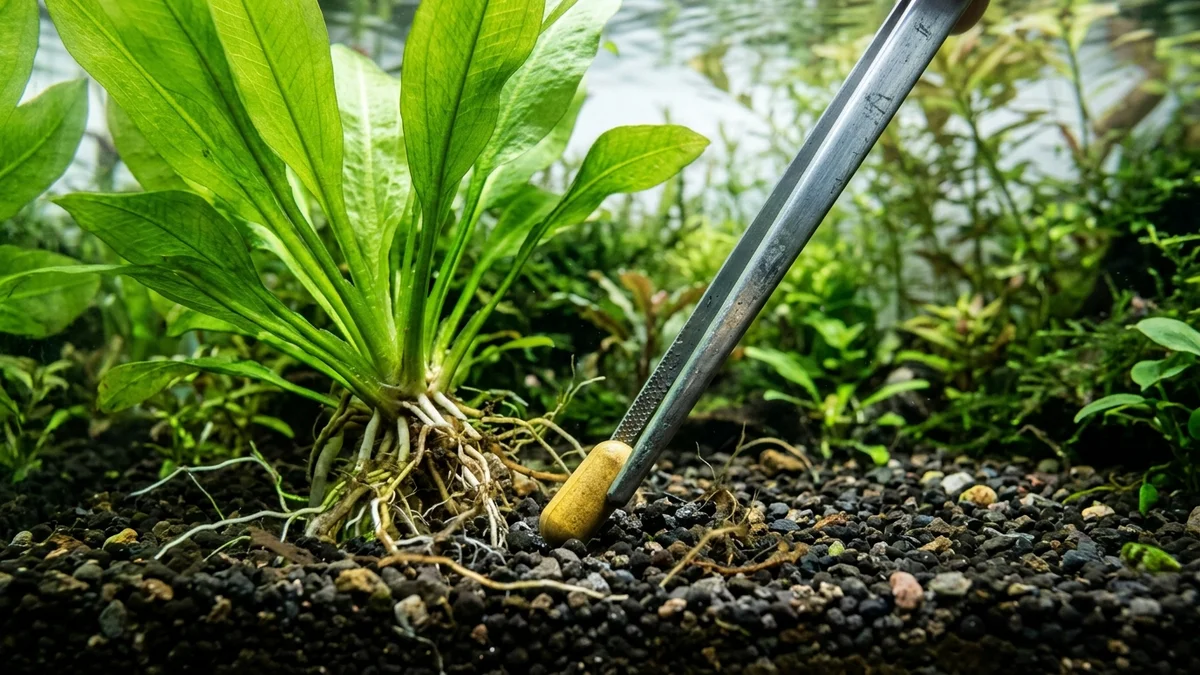
Push each tab as far into the substrate as you can, ideally beneath or beside the roots, using tweezers or fingers. A tab that pops out or is dug up by fish is reported not to harm water quality in that guide, though it is a seller's claim for its own product.
Spacing and Replacement
The same guide suggests one tab about every 12-15 cm (5-6 inches) in a grid, closer in dense plantings and several tabs around the base of a large sword plant, replacing them roughly monthly. Needs rise as plants grow. Signs that tabs are depleted include stunted growth, yellowing or browning, or melting leaves on a plant that previously grew well, although those signs can have other causes.
Commercial Tabs vs. DIY Tabs
Aquarium Co-Op advises against using houseplant or vegetable fertilizers as DIY tabs because they can cause dangerous ammonia spikes that may harm fish and invertebrates. I found no reliable aquarium-safety source for any specific DIY product, including garden controlled-release fertilizer, so this guide does not recommend one.
Substrate Choices
Inert substrates such as gravel or sand rely more on tabs, according to the same guide. Soil-based systems are covered in Walstad Method vs Active Soil, and substrate quantities can be planned with the Substrate Weight Calculator.