
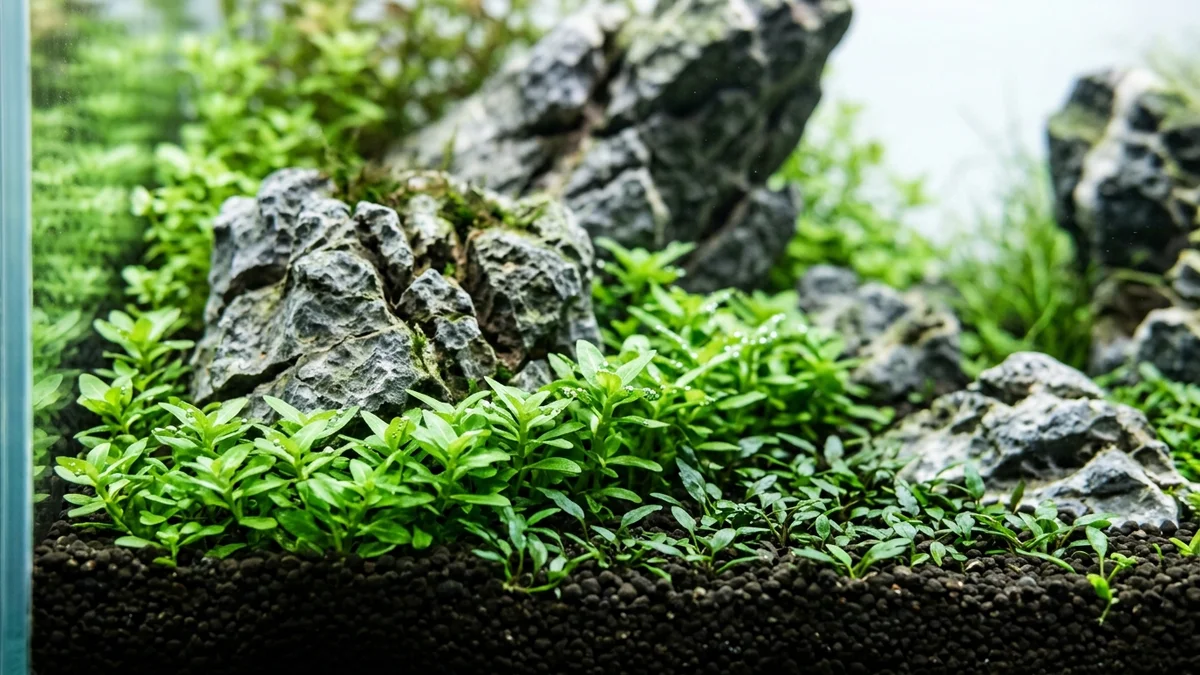
Which plants work well in an aquarium foreground? Foreground plants stay low at the front of the tank. Practical Fishkeeping suggests Marsilea hirsuta, Helanthium tenellum 'Green' and dwarf hairgrass as easier options in a non-CO2 tank, and notes Cryptocoryne parva is slow. Too much light encourages algae and too little can kill plants. Check each species' light and CO2 needs and start with in-vitro plants where possible.
Designing the Front of Your Aquascape
The foreground frames the layout, so choose low plants and leave open space for focal points. Taller plants belong behind; see Background Aquarium Plants. For full lawns, see the Carpet Plants Guide.
Top Foreground Species Profiles
Easier Options Named by Sources
Practical Fishkeeping author George Farmer suggests, for a non-CO2 tank, Marsilea hirsuta (described as the easiest), Helanthium tenellum 'Green' (moderate growth) and dwarf hairgrass, Eleocharis parvula (moderate to fast), with Cryptocoryne parva tolerant of low light but slow. Lilaeopsis brasiliensis and Eleocharis may work but need more light. Modern Aquarium also lists dwarf Sagittaria as easy and suited to low light, and Marsilea, Glossostigma and dwarf hairgrass among its carpeting options.
Plants With Little Verified Detail
Staurogyne repens is a commonly used foreground plant, and "Micro Tenellus" is the trade name for Helanthium tenellum. This draft makes no specific care claims for Staurogyne because none were verified. Sources also use different Latin names for dwarf hairgrass (Eleocharis parvula and Eleocharis acicularis), so check the name you are buying.
Substrate and Lighting Needs for Foreground Plants
Practical Fishkeeping warns that too much light encourages algae and too little can kill plants, and suggests root tabs or nutrition capsules for the roots plus regular liquid fertiliser. Modern Aquarium says carpet plants can grow without CO2 but more slowly and less densely, and that strong light is crucial for spread. Plan substrate with the Substrate Calculator and set light with the Light Duration Calculator.