Overview
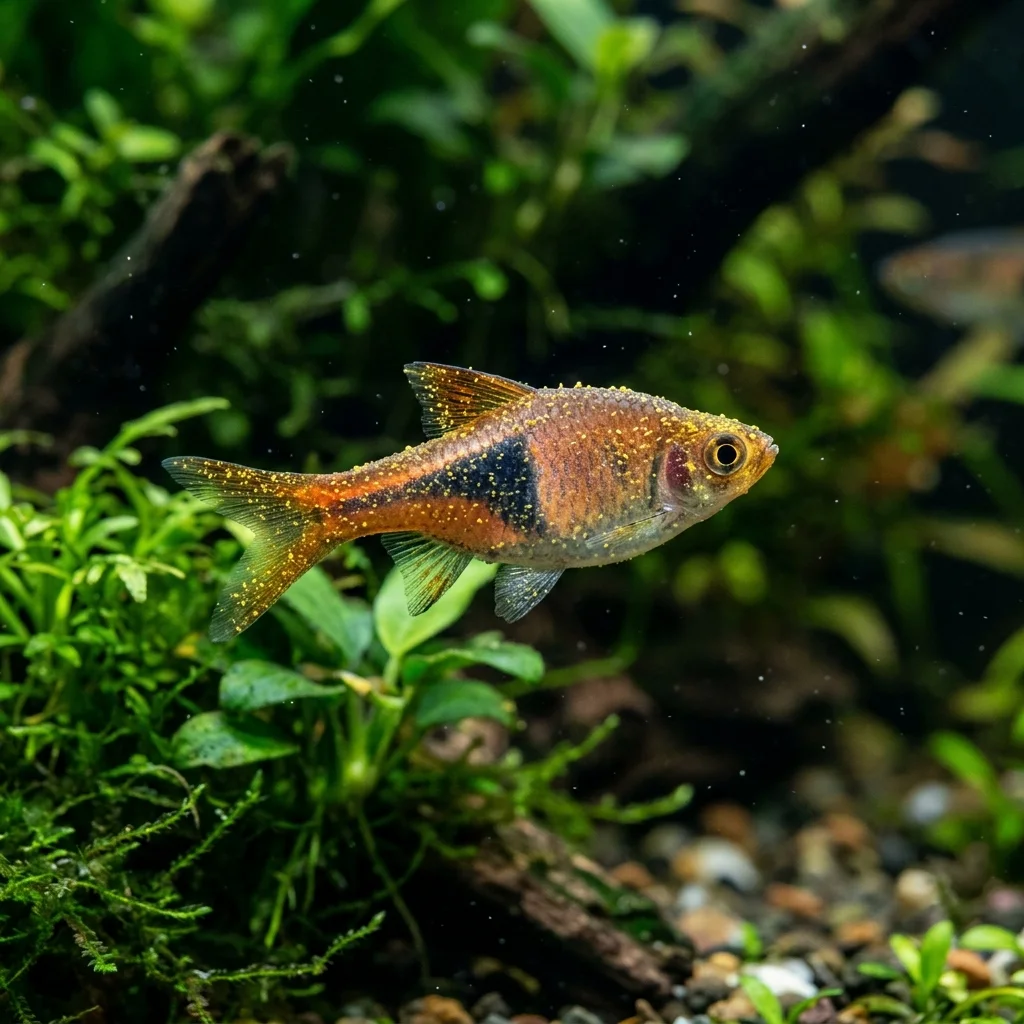
Velvet disease is a contagious parasitic infection affecting aquarium fish. It is commonly associated with Oodinium or Piscinoodinium organisms and may produce a characteristic fine gold, yellow, rust-colored, or dusty appearance on the fish's body and fins. Early recognition is important because severe infections can affect the gills and cause significant respiratory distress. Prompt identification, stable water conditions, and an appropriate treatment approach can improve the chances of managing an outbreak.
What Is Velvet Disease?
Velvet disease is caused by microscopic dinoflagellate parasites that can attach to a fish's skin and gills. Infection can irritate and damage affected tissues and may interfere with normal respiration when the gills are involved. The exact organism and terminology can vary between freshwater and marine aquarium contexts, so the name Velvet disease is best treated as a common aquarium-hobby description rather than a precise diagnosis by appearance alone.
Some organisms associated with Velvet have photosynthetic structures. This characteristic is one reason reduced lighting is sometimes discussed as part of Velvet management, but reducing light should not be treated as a replacement for an appropriate antiparasitic treatment.
Velvet Disease vs. Oodinium / Gold Dust Disease
In aquarium keeping, the terms Velvet disease, Oodinium, and Gold Dust disease are often used when describing a similar fine, dust-like parasitic appearance. Oodinium and Piscinoodinium are scientific names associated with organisms that have been linked to Velvet-like infections, while Gold Dust and Velvet are common hobby names based on the appearance of affected fish.
Because terminology can vary between freshwater and marine contexts, identifying the likely parasite and considering the affected fish species is important before selecting treatment. The terms should not be treated as proof that every case has the same organism or requires exactly the same medication.
Symptoms of Velvet Disease
The most recognizable sign of Velvet disease can be a very fine gold, yellow, rust-colored, or dust-like appearance on the fish's skin or fins. The coating may be difficult to see under normal aquarium lighting and can sometimes become more noticeable when the fish is viewed with a flashlight in a darkened room. However, a visible coating is not always present, particularly during early infection.
Other possible signs include:
- Flashing: Fish may rub or scrape themselves against substrate, rocks, decorations, or other surfaces.
- Respiratory distress: Rapid breathing, gasping, or remaining near areas of strong water movement can occur when the gills are affected.
- Behavioral changes: Fish may become lethargic, hide more than usual, or show reduced interest in food.
- Physical changes: Clamped fins, increased mucus production, dull coloration, or an otherwise abnormal appearance may occur.
These signs are not specific to Velvet disease. Similar symptoms can occur with other parasites, infections, or poor water quality. Respiratory distress should therefore be treated as an important warning sign regardless of the eventual diagnosis.
How Velvet Disease Spreads
Velvet-like parasitic infections can spread between susceptible fish through stages of the parasite's life cycle that occur in the aquarium environment. In practical aquarium situations, an infection can be introduced with infected fish, contaminated water, or wet equipment transferred between systems.
The parasite's life cycle includes stages associated with the host and environmental stages involved in reproduction and transmission. Because the timing and characteristics of these stages vary with the organism and environmental conditions, treatment should be continued according to the instructions for the selected medication rather than based on a generic timetable.
How to Diagnose Velvet Disease
A fine gold or dusty appearance combined with flashing and respiratory distress can suggest Velvet disease, but visual symptoms alone do not provide a definitive diagnosis. Other parasites and water-quality problems can produce similar signs.
Microscopic examination by an experienced aquarist, aquatic veterinarian, or other qualified professional can provide greater diagnostic confidence when available. Checking the aquarium's water parameters is also important because elevated ammonia, nitrite, unsuitable temperature, or other water-quality problems can cause stress and make an existing disease more difficult for fish to tolerate.
When fish show unexplained illness, check ammonia, nitrite, nitrate, pH, temperature, and other parameters appropriate for the aquarium before assuming that a parasite is the only problem.
Velvet Disease Treatment
Treatment should be selected according to the suspected parasite, fish species, aquarium environment, and compatibility of the medication with other livestock and equipment. There is no single treatment protocol that is appropriate for every aquarium.
Commonly discussed treatment options for Velvet-like infections include copper-based medications and other antiparasitic products containing active ingredients such as malachite green or formalin. Their suitability varies by species, parasite, and aquarium setup.
- Copper-based medications: Copper is commonly used against certain parasitic fish diseases, but it must be used according to the specific product instructions and monitored as directed. Copper can be harmful to many invertebrates and may be unsuitable for some fish or aquarium environments.
- Malachite green or formalin-containing treatments: These ingredients are used in some parasite treatments, but their safety and suitability depend on the product, fish species, dosage instructions, and aquarium setup.
Always follow the medication manufacturer's label exactly. Do not combine medications unless the manufacturer or another qualified source specifically indicates that the combination is appropriate. Never assume that a medication is safe for every fish, plant, invertebrate, filter, or aquarium material.
Once you have confirmed the appropriate medication and your tank’s net water volume, use the Aquarium Medication Dosage Calculator to calculate the correct dose based on actual water volume rather than the advertised tank size.
Reducing Aquarium Lighting During Treatment
Reduced lighting or a temporary blackout is sometimes recommended as part of Velvet management because some organisms associated with the disease have photosynthetic capabilities. However, lighting reduction should be considered supportive management rather than a standalone cure.
If a medication is being used, follow the manufacturer's instructions about lighting and treatment conditions. Do not extend a blackout or otherwise alter the treatment environment in a way that conflicts with the medication's instructions or the needs of the fish and plants.
Treatment Considerations and Precautions
A separate hospital or treatment aquarium can be useful when the medication is incompatible with the display aquarium's plants, invertebrates, substrate, rocks, or other livestock. It can also make medication management easier in some situations. However, moving severely stressed fish can create additional stress, so the decision should consider the condition of the fish and the requirements of the treatment.
Supportive aquarium management during treatment can include:
- Maintain stable water parameters and a temperature appropriate for the affected species.
- Provide adequate oxygenation and surface agitation, particularly when fish are showing respiratory distress.
- Avoid excessive feeding and remove significant uneaten food.
- Monitor ammonia and nitrite because illness, treatment, reduced biological filtration, or changes in maintenance can affect water quality.
- Perform water changes when appropriate and follow the medication manufacturer's instructions regarding water changes and redosing.
- Keep treatment conditions as stable as practical and avoid unnecessary handling of affected fish.
If fish are experiencing severe respiratory distress or rapidly worsening symptoms, seek advice from an aquatic veterinarian or other qualified professional where available.
Preventing Velvet Disease
Preventing introduction is an important part of managing contagious aquarium diseases. Good quarantine and equipment-hygiene practices can reduce the chance of introducing parasites into an established aquarium.
- Avoid introducing visibly sick fish into an established display aquarium.
- Quarantine new fish when practical and observe them before adding them to the main aquarium.
- Avoid transferring untreated aquarium water between systems.
- Do not share wet nets, siphons, algae scrapers, or other equipment between aquariums without appropriate cleaning and disinfection.
- Maintain stable water quality and appropriate environmental conditions to reduce unnecessary stress on fish.
Good aquarium husbandry cannot guarantee that Velvet disease will never occur, but it can reduce opportunities for introduction and help fish tolerate environmental stress more effectively.
Quarantine and New Fish
Quarantining new fish is one of the most useful ways to reduce the risk of introducing Velvet disease into a new aquarium setup or established display. A dedicated quarantine aquarium allows new arrivals to be observed separately from established livestock.
If signs of Velvet or another disease appear during quarantine, treatment can be evaluated without immediately exposing the main display to the suspected infection or to medications that may be unsuitable for the display aquarium.
No quarantine period can guarantee that every disease will be detected, so continued observation and appropriate husbandry remain important when fish are eventually introduced to the display aquarium.
When to Test Water Parameters
Any time fish show unexplained illness, including flashing, clamped fins, reduced appetite, lethargy, or respiratory distress, test the aquarium water. Check ammonia, nitrite, nitrate, pH, temperature, and other parameters appropriate for the species being kept.
Poor water chemistry can cause or worsen stress and may make sick fish less able to tolerate infection. Correcting a water-quality problem does not replace disease treatment when a parasitic infection is present, but maintaining appropriate water conditions is an important part of supportive care.
Frequently Asked Questions
What does Velvet disease look like?
Velvet disease can appear as a very fine gold, yellow, rust-colored, or dust-like coating on the fish's skin or fins. The appearance may be difficult to see under normal lighting and is sometimes easier to notice with a flashlight in a darkened room. Not every infected fish will show an obvious coating.
Can Velvet disease be treated?
Velvet disease can be treated, but successful management depends on the organism involved, fish species, severity of infection, aquarium conditions, and suitability of the selected treatment. Follow the medication manufacturer's instructions carefully and monitor water quality throughout treatment.
Is Velvet disease contagious?
Velvet-like parasitic infections can spread between susceptible fish and can be introduced through infected livestock, contaminated water, or wet aquarium equipment. Because transmission involves environmental stages of the parasite's life cycle, isolating affected fish and using appropriate quarantine and equipment-hygiene practices can help reduce spread.
Why do some aquarists turn off the lights for Velvet disease?
Some organisms associated with Velvet have photosynthetic capabilities, which is why reduced lighting or blackout periods are sometimes included in treatment discussions. Reduced lighting should be considered supportive management and should not replace an appropriate antiparasitic treatment. Always follow the selected medication's instructions.
Does a UV sterilizer prevent Velvet disease?
A properly installed and maintained UV sterilizer may reduce some free-swimming organisms that pass through the unit, but its effectiveness depends on factors such as UV dose, flow rate, equipment condition, and the organism's life-cycle stage. A UV sterilizer should not be considered a standalone cure for Velvet or assumed to eliminate an established infection.
Should Velvet disease be treated in a hospital tank?
A hospital or treatment tank can be useful when medication may harm plants, invertebrates, substrate, rocks, or other display-tank components. However, moving severely stressed fish can add stress, so the decision should depend on the fish's condition, the medication being used, and the requirements of the aquarium.
Can poor water quality look like Velvet disease?
Yes. Poor water quality can cause flashing, rapid breathing, lethargy, clamped fins, and other signs that overlap with disease symptoms. Test ammonia, nitrite, nitrate, pH, and temperature when fish become ill so environmental problems can be identified and addressed alongside any suspected infection.
How can I prevent Velvet disease in a new aquarium?
Use quarantine when practical, observe new fish before adding them to the display, avoid sharing untreated aquarium water or wet equipment between systems, and maintain stable environmental conditions. These practices reduce the risk of introducing contagious parasites but cannot guarantee that an aquarium will remain disease-free.