
Quick Answer
Quarantine is the practice of isolating all new fish, plants, and invertebrates in a separate tank for 2 to 4 weeks before introducing them to your main aquarium. This isolation period allows you to observe for illnesses like Ich or parasites and treat them safely without risking the lives of your established fish or crashing your main biological filter.
What is Quarantine in Aquatics?
Quarantine involves keeping new aquatic life in a separate, dedicated observation tank for a specific duration—typically 2 to 4 weeks. It is used for all incoming livestock (fish, shrimp, snails, and even live plants) to ensure they are healthy and eating well before they join your established display aquarium.
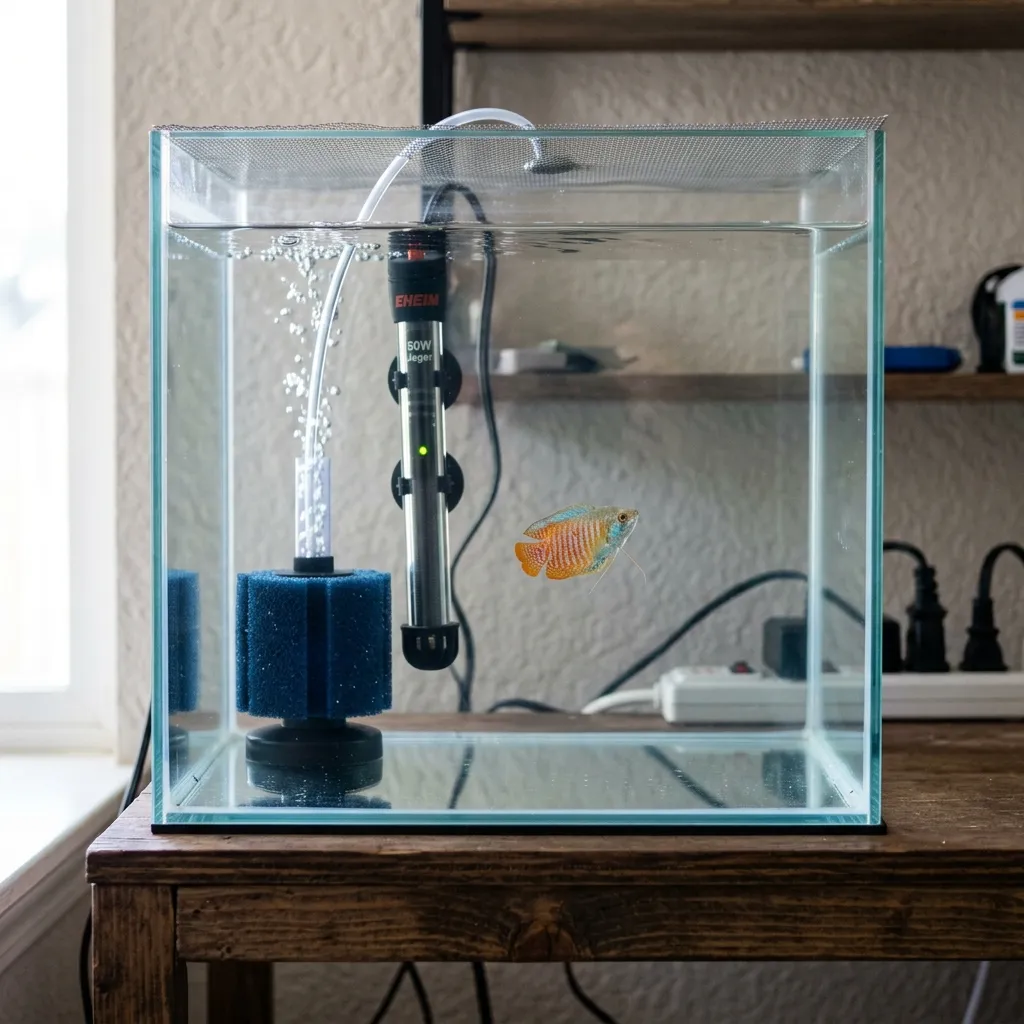
A quarantine tank (sometimes called a hospital tank when used for sick fish) is deliberately simple. It is not designed to be beautiful; it is designed to be sterile, easily monitored, and easy to medicate.
Why Quarantine Matters
Isolating new arrivals is the single most effective form of disease prevention in the aquarium hobby.
Fish travel a brutal path from breeder or wild river to your home. They endure multiple netting sessions, bagging, temperature fluctuations, and crowded holding tanks. This extreme stress suppresses their immune systems. A fish that looks perfectly healthy in a store may be carrying dormant parasites or bacterial infections that will explode into a full-blown illness three days after you bring it home.
If you drop a sick fish directly into your main tank, the pathogen can spread rapidly to your existing livestock. Furthermore, treating a display tank is a nightmare. Many effective medications will permanently stain silicone, kill live plants, annihilate invertebrates (like snails and shrimp), and destroy the beneficial bacteria in your biological filter.
Treating a fish in a bare, isolated 10-gallon tank is infinitely cheaper, safer, and more effective.
Setting Up the Quarantine Tank
Do not set up the quarantine tank exactly like a display tank. It needs specific modifications for medical use.
### The Setup Checklist * **The Tank:** A 10-gallon or 20-gallon long glass aquarium is ideal for most freshwater fish. It is small enough to make medication dosing economical, but large enough to provide a stable water volume. * **Filtration:** Use an air-driven sponge filter. Do not use chemical filtration (like activated carbon) in a quarantine tank, as it will instantly absorb any medications you add to the water. * **Heating:** A standard, reliable heater to maintain tropical temperatures (or slightly higher, as temperatures around 82°F–86°F can speed up the lifecycle of parasites like Ich during treatment). * **Substrate:** None. Leave the tank bare-bottom. Gravel absorbs medications and hides detritus. * **Decor:** Use sections of PVC pipe or plastic plants to provide hiding spots. Scared fish need a place to hide to keep their stress levels down, which aids immune recovery.
### Cycling the Quarantine Tank Because a quarantine tank is often set up on short notice, you don't have 4 weeks to cycle it from scratch. The easiest method is to permanently run a small sponge filter in the corner or sump of your main display tank. When you bring new fish home, fill the quarantine tank with fresh, dechlorinated water, move the seeded sponge filter over, and the tank is instantly cycled.
The Quarantine Workflow
There are two main schools of thought regarding the quarantine process: **Observation** and **Prophylactic Treatment**.
### Method 1: The Observation Protocol This method relies on patience and a keen eye. It is best for sensitive fish (like scaleless fish or wild-caught species) that may not tolerate harsh medications. 1. Acclimate the fish and place them in the quarantine tank. 2. Observe them daily for 2 to 4 weeks. 3. Look for symptoms: white spots (Ich), clamped fins, lethargy, stringy white feces (internal parasites), or rapid breathing. 4. If a symptom appears, diagnose it and administer the specific medication required. 5. If 4 weeks pass with zero symptoms, move the fish to the display tank.
### Method 2: The Prophylactic Protocol This method assumes all new fish carry *something* and treats them preemptively. This is highly recommended for fish sourced from big-box pet stores with shared water systems. 1. Acclimate the fish. 2. Wait 48 hours to let the fish rest and begin eating. 3. Dose a broad-spectrum anti-parasitic (like Praziquantel). 4. Dose a broad-spectrum antibiotic (like Erythromycin) if bacterial issues are common in that species. 5. Observe for a minimum of 2 weeks after the final medication dose before moving to the display.
Breaking Quarantine
Once the quarantine period is over, use a net to move the fish to the main tank. **Do not pour the quarantine water into the display tank.**
After moving the fish, drain the quarantine tank, bleach the PVC pipes and tank walls, throw away the sponge filter media, and let the tank dry completely. It must be sterilized before the next batch of fish arrives.