
Species Overview
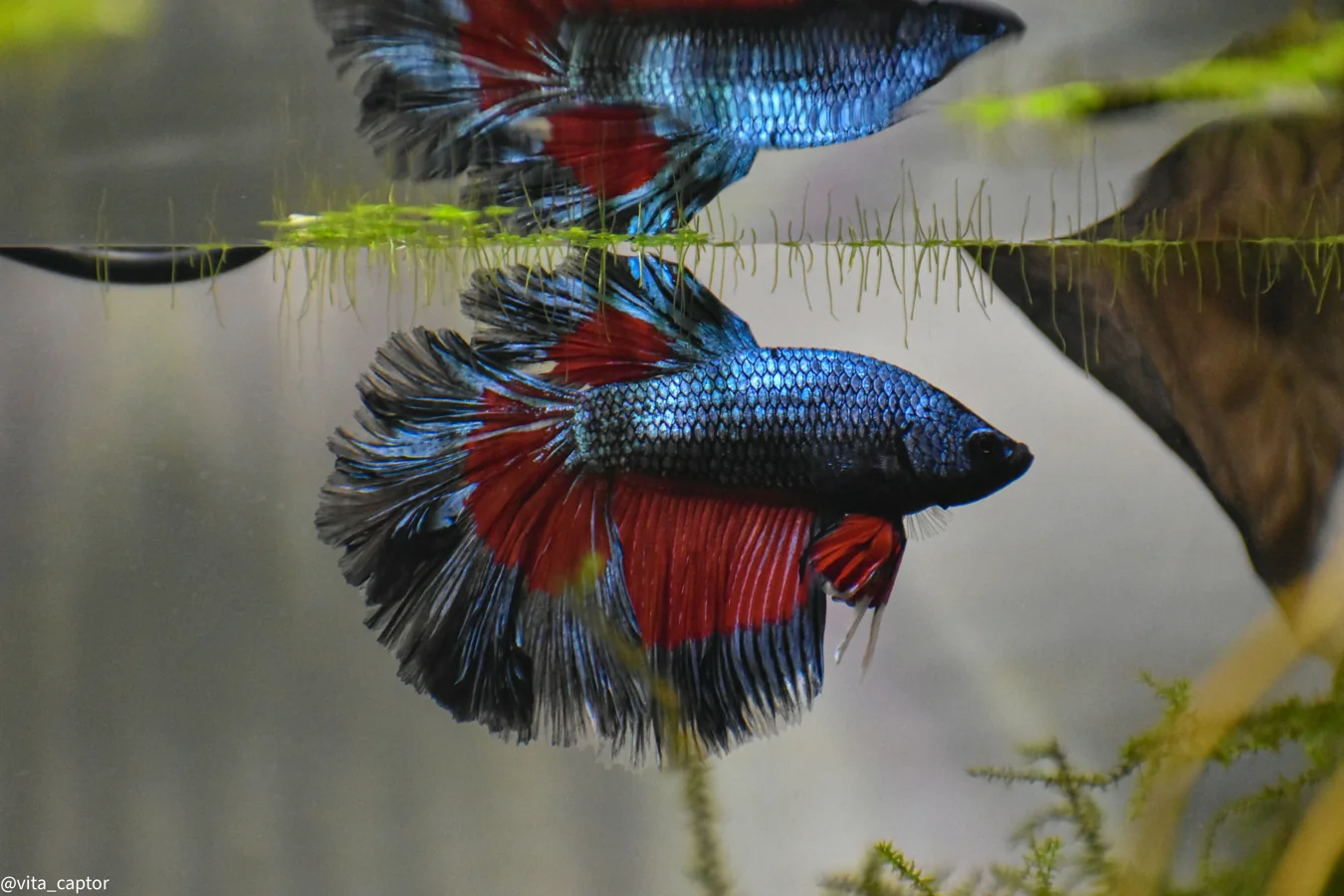
The Betta Fish (Betta splendens), also called the Siamese fighting fish, is a small freshwater labyrinth fish native to Southeast Asia. Centuries of selective breeding for ornamental color and finnage have produced varieties such as Veiltail, Halfmoon, Plakat, Crowntail, and others that can look very different from shorter-finned wild forms.
Aquarium Care & Tank Requirements
Setting up a proper environment is important for Betta health and longevity. Bettas benefit from stable water conditions, gentle filtration, appropriate temperature control, hiding places, and enough swimming space.
Tank Size Guidelines
A larger aquarium generally provides more stable water conditions and more usable swimming space than a very small container. RSPCA Australia lists 10 litres as an absolute minimum and 20 litres or more as ideal for a Siamese fighting fish. Rounded up, 3 US gallons (11.4 litres) is used here as the minimum reference; around 5 US gallons (19 litres) is a more practical home target for a single betta, and 10 gallons provides still more space and stability. Larger tanks can be even easier to maintain when appropriately filtered and decorated.
Heater Requirements
Bettas are tropical fish and benefit from stable warm water. A commonly recommended aquarium temperature range is about 76°F-81°F (24.4°C-27.2°C). A properly sized, thermostatically controlled heater is often needed to maintain that range when the room or seasonal temperature is too cool or fluctuates substantially. Use a thermometer to monitor the actual water temperature rather than relying only on the heater setting.
Filtration and Flow
Gentle filtration is preferred because strong currents can make swimming difficult, particularly for long-finned bettas. Sponge filters, air-driven filters, or appropriately adjusted low-flow filters are common options. Provide plants, hides, or other safe cover while avoiding sharp or rough decorations that could damage fins.
Diet & Feeding Protocol
Bettas are carnivorous, with wild diets consisting largely of insects, insect larvae, and other small aquatic invertebrates. In captivity, a high-quality betta-specific pellet or other appropriately formulated carnivorous fish food can form the staple diet, supplemented with occasional frozen or live foods such as bloodworms or brine shrimp. Because bettas are relatively small fish, feed modest portions once or twice daily according to the food and fish, and remove uneaten food to help maintain water quality. Overfeeding can contribute to obesity, digestive problems, and poor water quality.
Behavior & Social Dynamics
Bettas are territorial, and males in particular are well known for aggression toward other male bettas and toward some fish with bright colors or flowing fins that may trigger territorial responses. Female bettas are often less aggressive than males, but individual temperament varies and keeping females together still carries a risk of conflict. As labyrinth fish, bettas have a specialized labyrinth organ that allows them to breathe atmospheric air at the surface. This adaptation can help them use oxygen-poor water more effectively than many fish, but it does not make poor water quality, inadequate filtration, or accumulated waste safe. Stable, clean water and appropriate filtration remain important for long-term health.
Tank Mate Compatibility
Tank mate selection requires care. Male bettas should not be housed with other male bettas. Some individual bettas can live with carefully selected peaceful, non-nippy tank mates when the aquarium provides adequate space, cover, stable water quality, and appropriate conditions for every species, but compatibility is never guaranteed. Avoid species likely to nip fins or provoke persistent territorial behavior. Female bettas can sometimes be maintained together under specialized conditions, but aggression can still occur and requires close monitoring. Solo housing is often the simplest option for a betta with a strongly territorial temperament.
Health & Disease Prevention
Bettas can be affected by common aquarium diseases and husbandry-related problems. Many apparent disease symptoms can have multiple possible causes, so water quality, temperature, nutrition, physical injury, and recent changes in the aquarium should be considered before choosing treatment.
Breeding & Spawning
Bettas are bubble-nest builders: the male constructs a nest of mucus-coated bubbles at the water's surface, and after spawning he collects the eggs and tends the nest, generally driving the female away afterward. Successful home breeding requires a dedicated breeding setup, careful conditioning of both fish, close monitoring during spawning, and separation of the female after spawning. The male may also need to be removed later to prevent predation on free-swimming fry.
Expert Tips & Common Mistakes
Common mistakes include keeping bettas in very small or unstable containers, allowing water temperature to fluctuate substantially, assuming the labyrinth organ makes poor water quality safe, keeping incompatible tank mates, and overfeeding. A properly cycled and filtered aquarium with stable temperature, appropriate cover, and sensible feeding provides a much more reliable environment than an unfiltered bowl.