
Water Change
Technical Specifications & Benchmark Matrix
- Water Conditioning Protocol
- Treat replacement tap water with a dechlorinator or chloramine-neutralizing conditioner per label
Overview
A water change is the deliberate partial removal and replacement of aquarium water to dilute accumulated waste products, replenish depleted minerals, and reset the chemical balance of a closed system. A hobbyist who tests their 55-gallon community tank after six weeks of neglect will see nitrates at 80 ppm, a pH that has drifted from 7.2 to 6.4 from organic acid accumulation, and fish flashing against décor from elevated nitrite. The water looks clear. That is the trap. Clear water is not clean water. A bacterial bloom turns water milky white and self-corrects in days. Filter bypass leaves haze and debris despite the motor running. Old tank syndrome from skipped water changes is invisible until the pH crashes or fish die. The water change is the single most effective intervention in aquarium keeping, and it is the one most hobbyists perform incorrectly.
Why Water Changes Are Essential
A water change is a preventive maintenance protocol that reduces dissolved nitrogenous waste, dilutes suppressive hormones, and reintroduces essential ions that biological filtration and plant growth deplete over time. No piece of equipment replicates it.
### Nitrate Dilution
Nitrate dilution is the primary mechanical function of a partial water change, lowering the concentration of the terminal nitrogen compound that no standard filter media can remove. Even in heavily planted tanks, nitrogen fixation eventually outpaces plant uptake, pushing nitrates above 20 ppm. Above 40 ppm, fish suffer immune suppression and stunted growth. Above 80 ppm, chronic toxicity damages kidneys and liver. No filter removes nitrate. Only water changes, denitrifying anaerobic zones, or heavy plant mass extract it. For most hobbyists, the water change is the only practical nitrate control.
### Hormone and Toxin Removal
Hormone and toxin removal is the chemical benefit of water replacement, diluting somatostatin and cortisol excreted by fish that suppress immune function and growth in closed systems. In a 20-gallon tank with twelve tetras, these compounds concentrate within three weeks. Activated carbon adsorbs some organics, but not all. A 30 percent water change dilutes these hormones faster than any chemical filtration.
### Mineral Replenishment
Mineral replenishment is the restoration of calcium, magnesium, and carbonate ions through the addition of fresh water, preventing the softening and pH instability that occurs when these ions are consumed by plants and bacteria. Softened water or reverse osmosis water stripped of minerals must be remineralized with products like Seachem Equilibrium or GLA GH Booster before adding to the tank. Adding RO water without remineralization drops general hardness (GH) and carbonate hardness (KH), causing pH swings and osmotic stress.
How to Perform a Water Change (Step-by-Step)
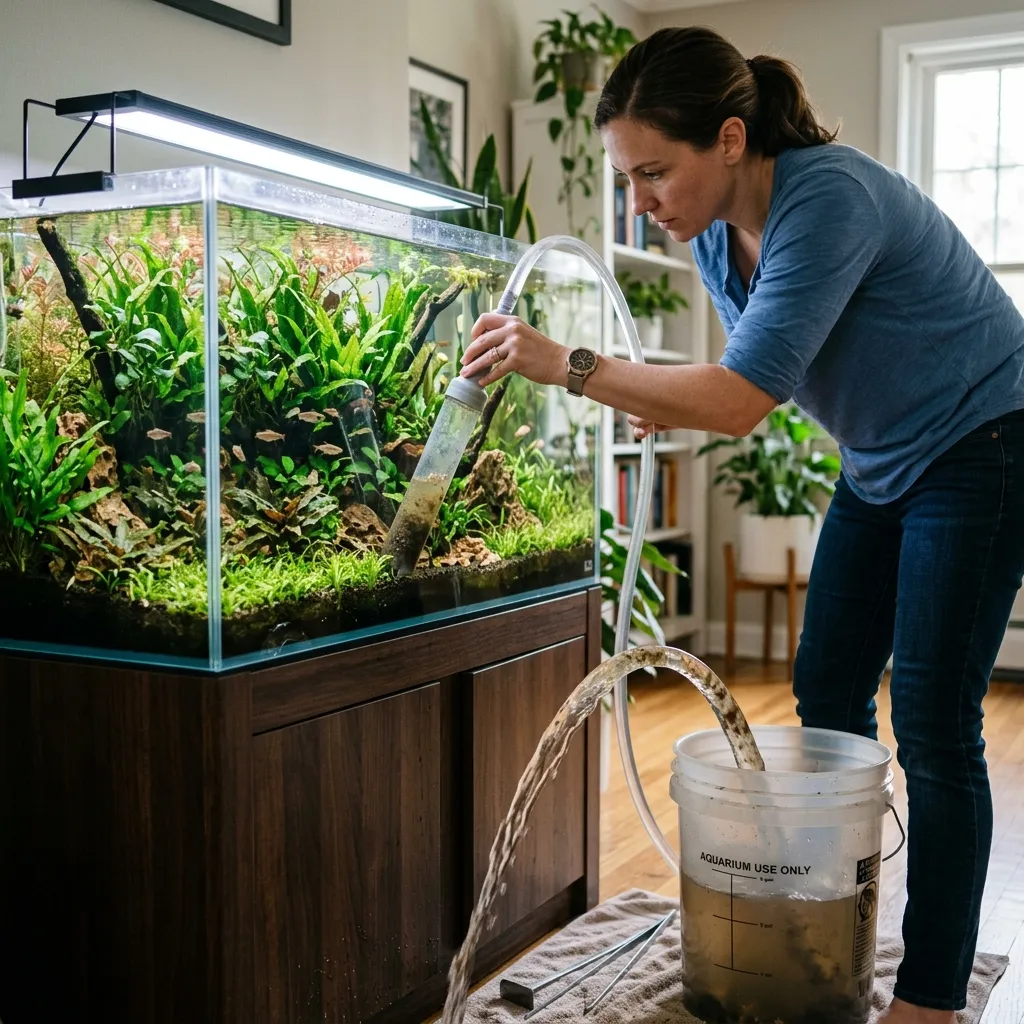
A water change is a physical procedure executed with a siphon or hose system, dechlorinator, and temperature-matched replacement water to safely remove waste without stressing fish or disrupting the biological filter. Follow these exact steps for a safe, effective water change:
### Step 1: Prepare Your Equipment
Gather your water siphon (like a Python No-Spill system or a standard gravel vacuum), a clean 5-gallon bucket (if not using a hose system), liquid dechlorinator (e.g., Seachem Prime), and a thermometer. Unplug your heater and filter to prevent running them dry, which can permanently damage the equipment.
### Step 2: Siphon and Vacuum the Substrate
Start the siphon and direct the flow into your bucket or sink. Use the wide end of the vacuum to extract trapped organic debris from the substrate. Push the vac into the gravel until the flow turns cloudy, then withdraw as the debris clears. In planted tanks, vacuum only exposed areas; never jam the tube into dense root mats. In sand substrates, hover the tube just above the surface to avoid sucking up sand while removing mulm.
### Step 3: Remove the Correct Volume
Volume is calculated based on bioload, plant density, and measured nitrate levels rather than an arbitrary calendar schedule. For a typical tank, aim to remove 25 to 50 percent of the water. The golden rule is: change enough water to keep nitrates consistently below 20 ppm. Never perform a 100% water change on an established tank unless it's a severe chemical emergency.
### Step 4: Prepare the Replacement Water
Fill your bucket with fresh tap water (or prepare your hose system). Before adding it to the tank, you must do two critical things: First, treat the water with a liquid dechlorinator to neutralize lethal chlorine and chloramine. Second, use your thermometer to match the replacement water temperature to the tank temperature within 1-2°F. Temperature shock is a primary cause of fish death after maintenance.
### Step 5: Refill and Restart Equipment
Gently pour or pump the conditioned, temperature-matched water back into the aquarium. Pouring over your hand, a small dish, or a piece of hardscape helps prevent disturbing the substrate and uprooting plants. Once the tank is full, plug your heater and filter back in, ensuring the filter resumes full flow.
Common Mistakes
A water change mistake is any deviation from temperature matching, chemical conditioning, or volume limits that converts a beneficial maintenance act into a stressor or toxin event.
### Full Water Changes
A full water change is the removal of 100 percent of tank water, a practice that strips beneficial bacteria, shocks fish with osmotic and parameter shifts, and should be reserved for chemical emergencies only. Never remove more than 50 percent in a single session unless you are treating a medication overdose or an ammonia emergency. Even then, split it into two 50 percent changes 24 hours apart.
### Untreated Tap Water
Untreated tap water is municipal water containing chlorine or chloramine disinfectants that kill nitrifying bacteria and damage fish gill tissue upon contact. Chloramine, used by most municipal systems, is more stable than chlorine and will not gas off during sitting. Prime or an equivalent must be dosed to the new water before it hits the tank, or at minimum to the tank volume before refilling.
### Temperature Shock
Temperature shock is the physiological stress caused by introducing replacement water that differs by more than 2°F from the tank temperature, collapsing immune function and triggering secondary infections. Fish are poikilotherms; their metabolism depends on stable temperature. Use a thermometer. Match temperatures exactly. This is the fix everyone skips, and it is why fish die after a water change that the hobbyist swore was routine.
Distinguishing Water Change Needs From Other Problems
Water change needs must be distinguished from bacterial bloom, filter bypass, and old tank syndrome because each presents similar cloudiness or poor water clarity but requires entirely different interventions. Bacterial bloom produces milky white water that clears spontaneously in 3 to 5 days; it does not respond to water changes and often worsens them by removing established bacteria. Filter bypass leaves persistent haze and debris despite clear water changes because water is channeling around clogged media. Anaerobic pockets release hydrogen sulfide—rotten egg smell—when disturbed by gravel vacuuming, requiring substrate depth reduction rather than more water changes. If nitrates remain elevated after a 50 percent change, test the source water; some well water contains nitrates above 20 ppm, making the water change itself part of the problem.
Run Precision Calculations For Your Setup
Check species compatibility, volumetric displacement, and filtration turnover benchmarks for your specific aquarium parameters.
🐟 Associated Species Profiles & Susceptibility
Browse All Fish Profiles →
Associated species profile & care guidelines
Associated species profile & care guidelines
Associated species profile & care guidelines
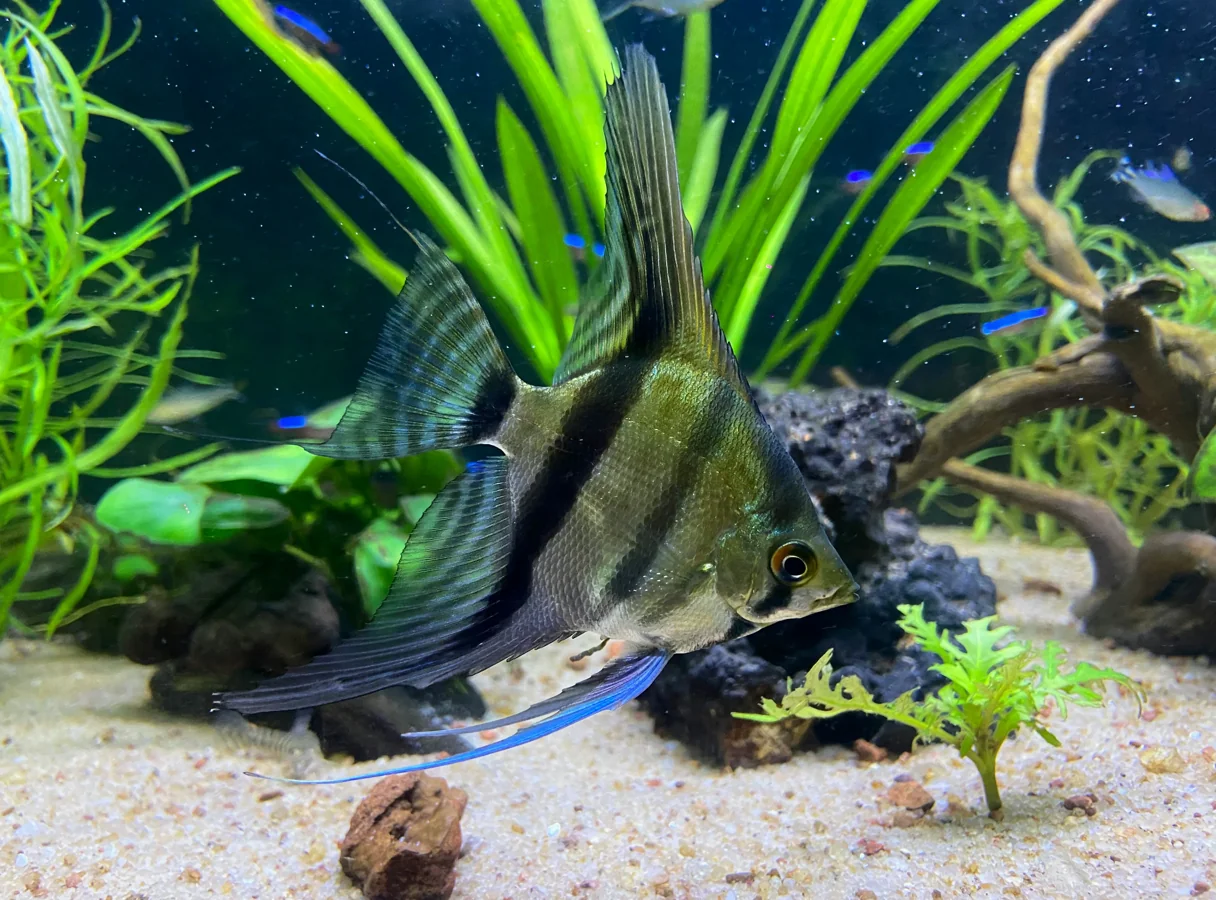
Associated species profile & care guidelines
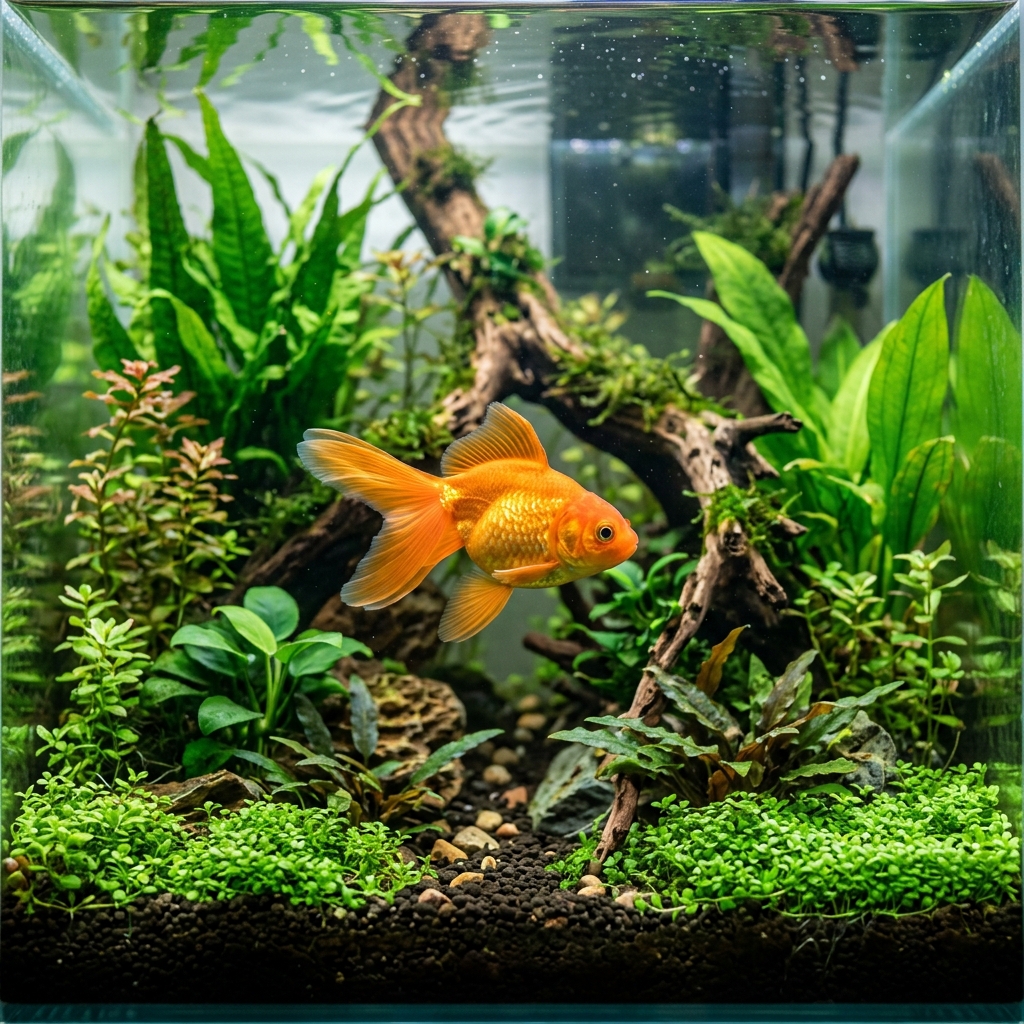
Associated species profile & care guidelines
⚙ Diagnostic & Sizing Calculators
Estimate a single water-change percentage and volume to dilute measured nitrate toward a selected target.
Estimate gross aquarium volume in gallons and liters from rectangular or cylindrical dimensions, plus rough water-and-glass weight.
Estimate the net usable water volume in your aquarium.
Water Change Methods Compared
| Method | Best For | Volume Precision | Time Required | Key Risk |
|---|---|---|---|---|
| Python No-Spill Changer | Medium to large tanks (20+ gal) | Excellent (faucet-regulated) | 15–30 min | Temperature mismatch if not monitored |
| Gravel Siphon + Bucket | All tank sizes, no nearby sink | Good (mark bucket) | 30–45 min | Back strain; spillage; inconsistent parameters between buckets |
| Auto Drip System | High-tech planted or marine | Excellent (timer-controlled) | 0 min (passive) | Slow leaks; unmonitored source water chemistry shifts |
| Cup/Dip Method | Nano tanks under 5 gal | Poor (inconsistent) | 10–15 min | Disturbs aquascape; inadequate detritus removal |
| Full Drain and Refill | Emergency only (medication spill) | Total | 60+ min | Complete biological crash; osmotic shock; temperature trauma |
Frequently Asked Questions
How often should I change my aquarium water?
How much water should I change at once?
Can I do a 100% water change?
Do I need to use a dechlorinator?
Why is my water still cloudy after a water change?
Should I remove my fish during a water change?
Why do my fish gasp after a water change?
Can water changes lower nitrates too fast?
Is it okay to skip water changes if I have live plants?
Can I use hot tap water to match temperature?
Sources & References
- Publisher:Wiley-Interscience
- Accessed:2026-10-14
- The Manual of Fish Health
- Source:Interpet Publishing
- Standard Methods for the Examination of Water and Wastewater
- Source:APHA/AWWA/WEF
- Aquaculture Engineering: Water Quality Management
- Source:Wiley-Blackwell Aquaculture Series
- The Ecology of the Planted Aquarium
- Source:Echinodorus Publishing