
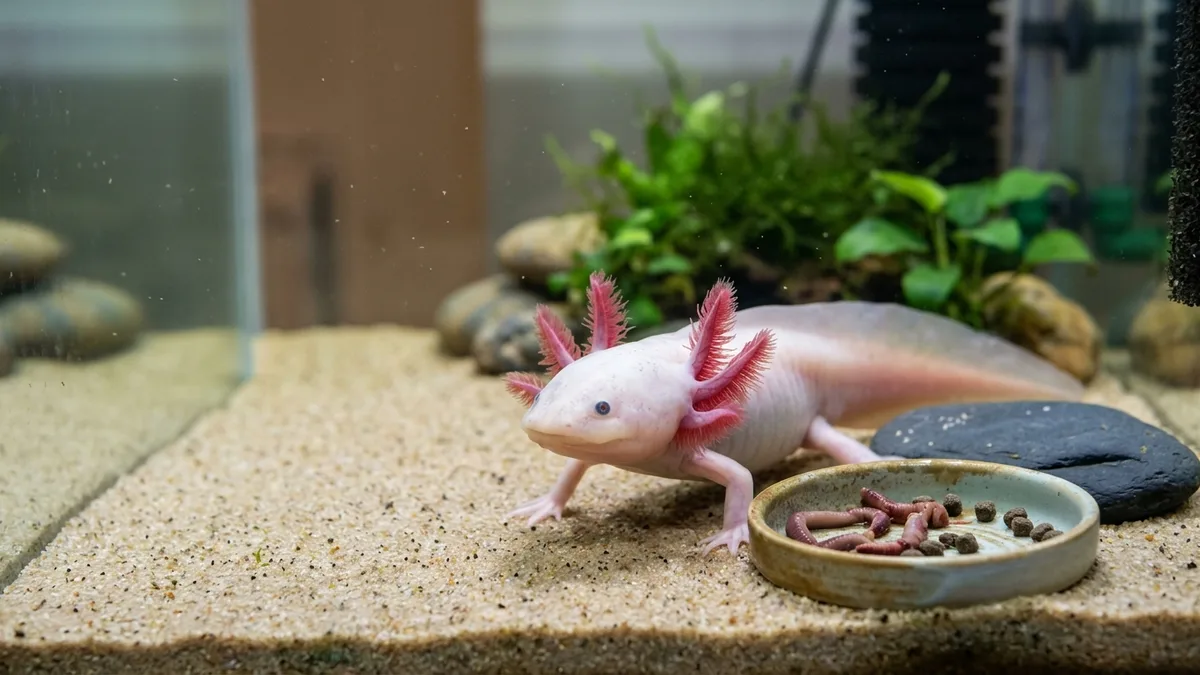
Safety warning: Never feed axolotls terrestrial insects or earthworms collected from soil exposed to pesticides, fertilizers, heavy metals, or chemical treatments. Always source food from reliable aquaculture suppliers or clean, uncontaminated captive cultures.
When planning an axolotl enclosure, understanding ongoing operational expenses is just as crucial as initial tank setup costs. Feeding requirements shift dynamically from high-frequency juvenile growth phases to stable adult maintenance schedules.
This guide explores nutritional requirements across life stages, evaluates staple diet options, outlines food safety and storage protocols, and provides a practical mathematical methodology for calculating monthly feeding expenses.
Direct Answer: How Much Does It Cost to Feed an Axolotl?
Axolotl feeding costs vary depending on animal count, life stage, food type, and supplier pricing. While monthly consumable expenses are typically modest, tracking exact quantities and distinguishing between consumption cost and actual purchasing expenditure ensures accurate budgeting.

Axolotl Feeding Cost Calculator
Interactive ToolEstimate monthly food consumption, consumption value, and whole-package checkout budgets.
Visualizes portion breakdown across whole purchased packages. Unused food remains usable depending on shelf-life, storage conditions, and culture viability.
One axolotl consumes approximately 26 worms per month. At the selected package price, this represents about $3.12 in consumption value. 1 package (50 worms) would cost $6.00 at checkout, with free shipping / local pickup (no delivery fee).
Life-Stage Nutrition & Metabolism
Metabolic demands and feeding behavior change significantly as an axolotl develops from a larval juvenile into a mature adult:
- Juvenile Phase: Rapidly growing juveniles have high metabolic demands relative to their body mass and generally require more frequent feedings to support growth and development.
- Adult Phase: Mature adults experience slower metabolic rates and require less frequent feeding. Excessive feeding can contribute to weight gain, and uneaten food can increase aquarium waste and strain filtration systems.
- Environmental Modifiers: Water temperature, individual health, activity levels, and digestive efficiency directly influence an animal's appetite and food processing speed.
Staple Diets & Nutritional Evaluation
Selecting appropriate staple and supplementary foods is critical for long-term health and water quality (refer to our comprehensive axolotl feeding guide for life-stage diets and feeding schedules):
- Earthworms (Nightcrawlers & Red Wigglers): Earthworms are widely used as a suitable staple food for captive axolotls when obtained from clean, uncontaminated sources. Suitability depends on species and source. European and Canadian nightcrawlers are commonly accepted by many axolotls, though individual acceptance varies. Red wigglers (Eisenia fetida) may be rejected by some individual axolotls; animals should never be forced to eat rejected food.
- Commercial Sinking Pellets: Formulated sinking carnivorous or axolotl-specific pellets offer a shelf-stable alternative. Keepers must evaluate ingredient lists, protein sources, and manufacturer guidelines. Uneaten pellets must be removed promptly before decomposition degrades water quality.
- Frozen Bloodworms: Frozen bloodworms may be offered as supplementary food, but should not be relied upon as the sole diet.
Cost Calculation Methodology & Worked Example
When calculating monthly feeding expenses, keepers must separate estimated consumption costs from actual purchasing expenditure:
Actual purchasing cost also depends on package size, delivery fees, unused food, and spoilage.
For packaged foods (such as pellets), calculations can be performed using either daily or weekly consumption formulas:
- Cost per gram: Total package price ÷ Total package weight in grams.
- Daily method: Daily pellet consumption in grams × 30.4 × cost per gram.
- Weekly method: Weekly pellet consumption in grams × 4.33 × cost per gram.
For live earthworms, calculate:
- Cost per worm: Total tub price ÷ Number of worms in the tub.
- Monthly worm consumption cost: Total monthly worms consumed × Cost per worm.
Hypothetical Worked Example (For Illustrative Purposes Only)
| Parameter | Hypothetical Value |
|---|---|
| Number of Axolotls | 1 Adult Animal |
| Staple Food Type | European Nightcrawlers (Bulk Tub) |
| Consumption Rate | Portions and frequency vary by individual animal size, appetite, and body condition |
| Feeding Frequency (Hypothetical) | 3 times per week (~13 feedings/month = 26 worms consumed) |
| Supplier Package Size | Tub of 50 Nightcrawlers |
| Package Checkout Cost | $6.00 total tub price |
| Cost per Worm | $6.00 ÷ 50 worms = $0.12 per worm |
| Estimated Consumption Value | 26 worms consumed × $0.12 = $3.12 (estimated value of worms consumed, assuming remaining 24 are usable later and delivery is free) |
| Actual Monthly Expenditure Factors | Depends on replacement purchases, package sizing, delivery fees, and spoilage of unused worms. |
Note: Actual expenses vary by region, supplier, seasonal availability, package sizing, and delivery fees.
Food Safety & Storage Guidelines
Proper handling prevents contamination, spoilage, and digestive illness:
- Sourcing: Obtain live earthworms from trusted bait farms, aquaculture suppliers, or dedicated captive worm cultures to avoid environmental toxins.
- Live Food Storage: Keep live worms under the specific storage and bedding conditions recommended for that species and supplier.
- Dry Foods: Store commercial sinking pellets in cool, dry, sealed containers to prevent moisture absorption, mold growth, and vitamin degradation.
- Frozen Foods: Thaw frozen bloodworms separately in a clean container according to the supplier's instructions, offer an appropriate amount, and promptly remove leftovers.
- Waste Removal: Always remove uneaten food pieces promptly from the aquarium floor to prevent spikes in ammonia and bacterial proliferation.
Monitoring Body Condition & Growth
Monitor body condition through regular observation and, where practical, consistent weight measurements. Consider appetite, growth, activity, and fecal output together rather than relying on a single body-shape measurement. Persistent appetite changes, unexplained weight loss, abdominal swelling, or lethargy warrant assessment by an aquatic or exotic-animal veterinarian.
Related Resources & Calculators
- Axolotl Feeding Guide — Comprehensive guide to staple diets, portion frequencies, and target feeding techniques.
- Annual Aquarium Cost Calculator — Project recurring food, electrical, and equipment expenses across the entire year.
- Axolotl Care Guide — Explore complete husbandry, housing, and maintenance baselines.
- Axolotl Water Parameters Guide — Maintain ideal water chemistry for biological stability.
- Water Change Calculator — Calculate dilution schedules to manage organic waste from feeding.
- Axolotl Tank Setup Guide — Review filtration and feeding dish placement.
Final Thoughts: Balancing Nutrition and Budget
Providing a suitable staple diet is essential for long-term axolotl health. By understanding individual life-stage metabolic demands, maintaining strict food safety protocols, and applying structured budgeting formulas, keepers can ensure optimal animal welfare.