How to Identify a German Blue Ram
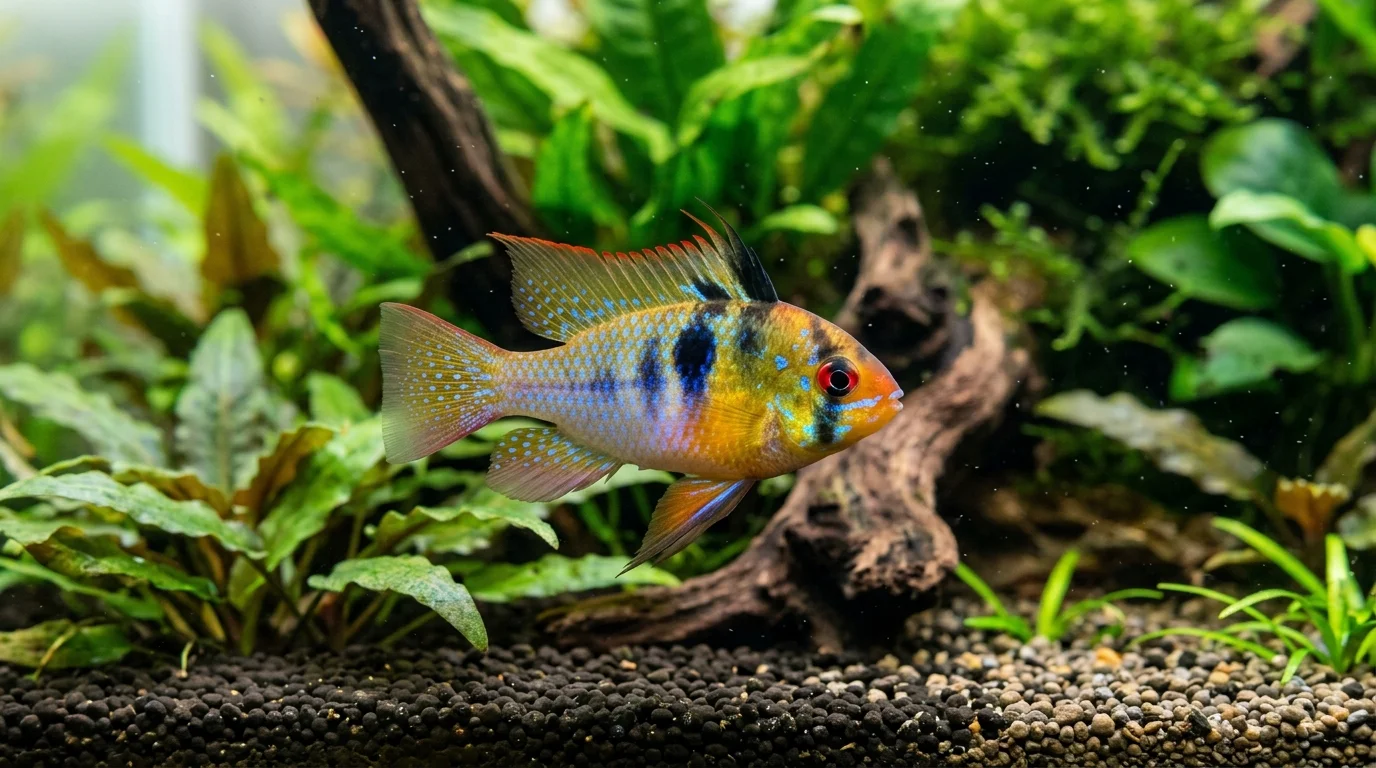
The German Blue Ram (Mikrogeophagus ramirezi) is a small South American dwarf cichlid known for iridescent blue markings, yellow and orange coloration, a dark vertical stripe through the eye, and a dark spot on the side of the body. Regular German Blue Rams generally reach about 2–2.5 inches (5–6 cm). The name describes a selectively bred aquarium form of the ram cichlid rather than a species that originated in Germany.
German Blue Ram Tank Setup
Tank Size
A 20-gallon aquarium is a commonly recommended community setup for a pair of German Blue Rams. A larger aquarium is preferable when adding multiple territorial fish, additional pairs, or a substantial community because extra volume and territory can reduce conflict. A smaller dedicated breeding aquarium may be used for a pair when no other fish are present, but that setup is different from a community aquarium.
Temperature
German Blue Rams are unusually warm-water fish. Many experienced keepers target approximately 84–86°F (29–30°C), while exact preferences can vary with strain, acclimation, and husbandry. The important practical point is that their high temperature requirement significantly limits compatible tank mates and should be considered before stocking the aquarium.
Water Chemistry
They generally do well in soft, low-GH water and can tolerate a range of pH values when conditions are stable. Rather than chasing a precise pH number, prioritize stable chemistry, low dissolved waste, and appropriately soft water. Avoid sudden changes caused by aggressive attempts to force the aquarium toward a target pH.
Filtration and Water Quality
Use mature biological filtration with enough capacity for the aquarium's actual bioload. Gentle to moderate circulation is generally appropriate, while excessive flow can make a small territorial fish less comfortable. Ammonia and nitrite should remain undetectable in a properly cycled aquarium, and regular partial water changes help maintain stable conditions.
Substrate and Decor
Fine sand or another smooth substrate is a useful choice because German Blue Rams naturally investigate and sift through the bottom of the aquarium. Provide driftwood, plants, flat stones, caves, or other structures that create cover and break up lines of sight. Plants that tolerate warm water are particularly useful because the recommended temperatures are higher than those preferred by many common aquarium plants.
Feeding German Blue Rams
German Blue Rams are omnivorous and usually accept a variety of aquarium foods. A quality sinking pellet or suitably sized prepared food can form the staple diet, supplemented with frozen or live foods such as brine shrimp, bloodworms, cyclops, or daphnia. Offer appropriately sized portions rather than relying on a fixed amount for every aquarium, and remove uneaten food when necessary to protect water quality.
Behavior and Temperament
German Blue Rams are generally peaceful for a cichlid, but they can become territorial when spawning or when defending a preferred area. They spend much of their time around the lower and middle portions of the aquarium and often investigate the substrate while feeding. Pairs may establish and defend a small territory, so visual barriers, suitable spawning sites, and adequate space can help reduce conflict.
Tank Mates and Compatibility
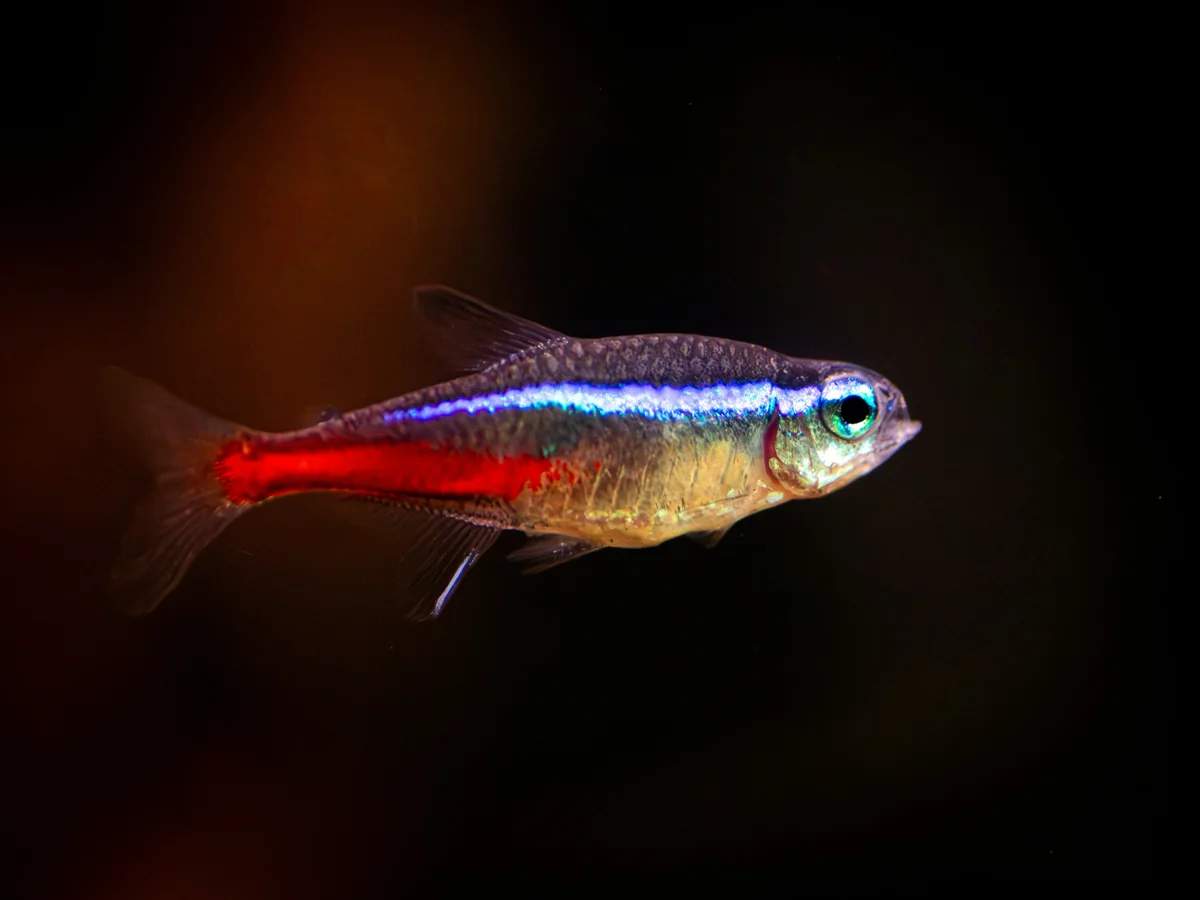
German Blue Rams can work in community aquariums when their tank mates tolerate the same unusually warm water and are not aggressive or excessively competitive at feeding time. Potential companions include appropriately sized peaceful fish such as cardinal tetras and Sterbai Corydoras. Compatibility depends on the actual aquarium, fish temperament, swimming space, and temperature requirements, so a species being listed as a possible tank mate does not guarantee that every combination will work.
Use extra caution with other territorial bottom-dwelling fish and other dwarf cichlids. During spawning, a normally peaceful pair may defend its territory more actively.
German Blue Ram Health
German Blue Rams have a reputation for being less forgiving of poor husbandry than many hardier community fish. Stable temperature, mature biological filtration, low waste accumulation, and consistent maintenance are important parts of keeping them healthy. Poor water quality should be treated as a husbandry problem first rather than assuming that a particular symptom identifies a single disease.
Breeding German Blue Rams
German Blue Rams can form pairs and spawn on flat surfaces such as stones or other suitable spawning sites. A pair may become more territorial while guarding eggs and fry. If breeding is the goal, provide clean, stable water, appropriate temperature, sheltered areas, and a gentle filtration setup that will not create excessive current for eggs or fry.
Community breeding can be unpredictable because eggs or fry may be eaten by tank mates. A dedicated breeding setup gives the parents and offspring greater separation from other fish.
Common German Blue Ram Care Mistakes
- Keeping them too cool: Their unusually warm temperature requirement is easy to overlook when choosing community fish.
- Adding unsuitable tank mates: Many popular tropical community species are not appropriate companions because they prefer cooler water or may outcompete or harass the rams.
- Ignoring water quality: German Blue Rams are not a good choice for an immature or poorly maintained aquarium.
- Overcrowding the bottom: Multiple territorial bottom-dwelling fish can create persistent conflict.
- Chasing exact pH numbers: Stability and appropriate hardness are generally more useful than repeatedly making large adjustments to hit a particular pH.
- Overfeeding: Excess food can rapidly contribute to deteriorating water quality.