Aquarium Lighting
Technical Specifications & Benchmark Matrix
- Photoperiod Standard
- 6 to 8 hours continuous, or split photoperiod with a midday break
Overview
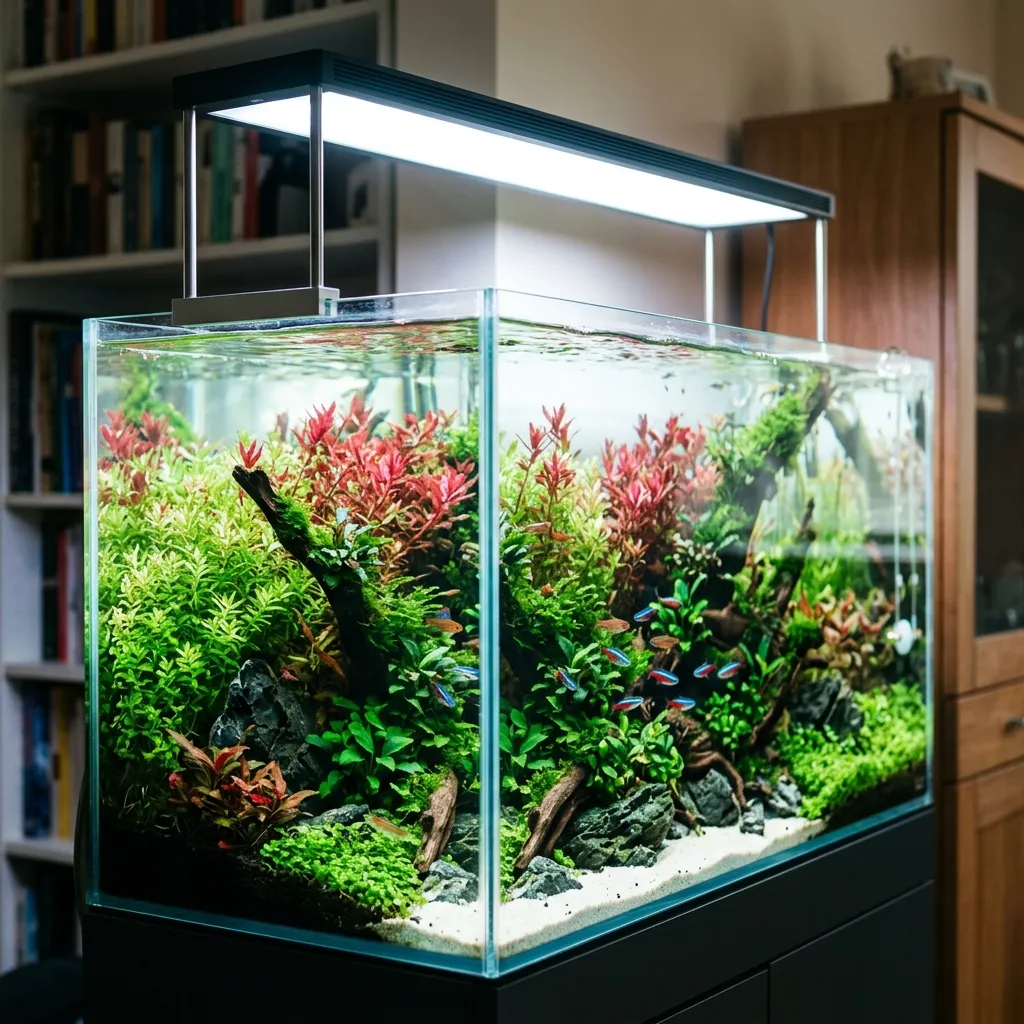
You stand in front of the lighting aisle, or scroll through a dozen LED listings online, and every product claims to be the best option for your tank. Aquarium lighting is the light source and daily schedule that determines how well fish colors show, how effectively plants photosynthesize, and how much algae growth your tank sustains. It's one of the most misunderstood pieces of equipment in the hobby, mostly because the wrong intuition — brighter and longer must be better — is exactly backwards for algae control. A fish-only tank has simple needs: enough light to see your fish and a stable day-night rhythm. A planted tank is a different equation entirely, where light intensity has to be matched against CO2 availability and fertilizer dosing, or you end up feeding algae instead of plants. Getting this balance right is often the difference between a tank that thrives and one that fights a constant algae battle.
Light Types and Spectrum
Aquarium lighting today is overwhelmingly LED-based, having largely replaced older fluorescent tube systems for most setups. Full-spectrum LED fixtures use 30-50 percent less electricity than fluorescent tubes, run cooler, and last 30,000-50,000 hours compared to 6,000-10,000 hours for fluorescent bulbs that lose output well before they actually fail. Spectrum matters as much as intensity: a light skewed heavily toward blue or green wavelengths, common in cheap budget fixtures, will leave fish colors looking washed out and dull even at high brightness. Look for a Color Rendering Index (CRI) above 90 if vibrant fish coloration matters to you, and confirm the fixture includes red and orange wavelengths, not just blue, since red spectrum intensifies coloration in species like discus, bettas, and many tetras.
PAR and Matching Light to Plant Demand
PAR, or Photosynthetically Active Radiation, is the correct metric for aquarium lighting, not watts or lumens, because it measures the actual usable light intensity reaching plant leaves. Low-light plants like Anubias, Java fern, and Cryptocoryne need only 20-30 PAR near the substrate to thrive, while demanding carpeting plants like Monte Carlo or Glossostigma require 50-100+ PAR to grow low and dense rather than tall and leggy. This is where I see the most expensive mistakes: hobbyists buy a high-PAR fixture rated for advanced planted tanks, run it on a low-tech setup with no CO2 injection, and end up with algae outcompeting plants for the excess light within a week or two. Match your fixture's PAR output to the specific plants you're keeping, not to the most powerful option available.
Photoperiod and Scheduling
Photoperiod, the number of hours lighting runs each day, is a bigger lever on algae control than most hobbyists realize. Most freshwater tanks do well with 6-8 hours of light daily on a consistent timer, and running lights longer than 8-10 hours provides no meaningful benefit to fish or plants while significantly raising algae risk. Consistency matters as much as duration — an irregular schedule, lights on some days for 4 hours and other days for 12, is itself a trigger for algae blooms that a stable 7-hour schedule wouldn't cause. Programmable LED fixtures that ramp brightness gradually at dawn and dusk also reduce fish stress compared to lights switching instantly from darkness to full brightness.
Common Lighting Mistakes and Fixes
The single most common lighting mistake is increasing intensity or duration expecting better plant growth, only to get worse algae instead. Plant growth follows Liebig's Law of the Minimum: growth is capped by whichever resource, light, CO2, or nutrients, is scarcest, so adding more light without matching CO2 injection and fertilizer dosing just hands the advantage to algae, which needs far less coordination to exploit excess light. If algae appeared shortly after a new light or longer photoperiod, that's rarely a coincidence. Reduce photoperiod to 6 hours and, if your fixture is dimmable, lower intensity for one to two weeks while monitoring algae response before making further changes. For fish-only tanks, resist the urge to buy plant-rated high-PAR lighting entirely — it adds cost and algae risk with zero benefit if there's no plant mass to use the extra output.
Run Precision Calculations For Your Setup
Check species compatibility, volumetric displacement, and filtration turnover benchmarks for your specific aquarium parameters.
🐟 Associated Species Profiles & Susceptibility
Browse All Fish Profiles →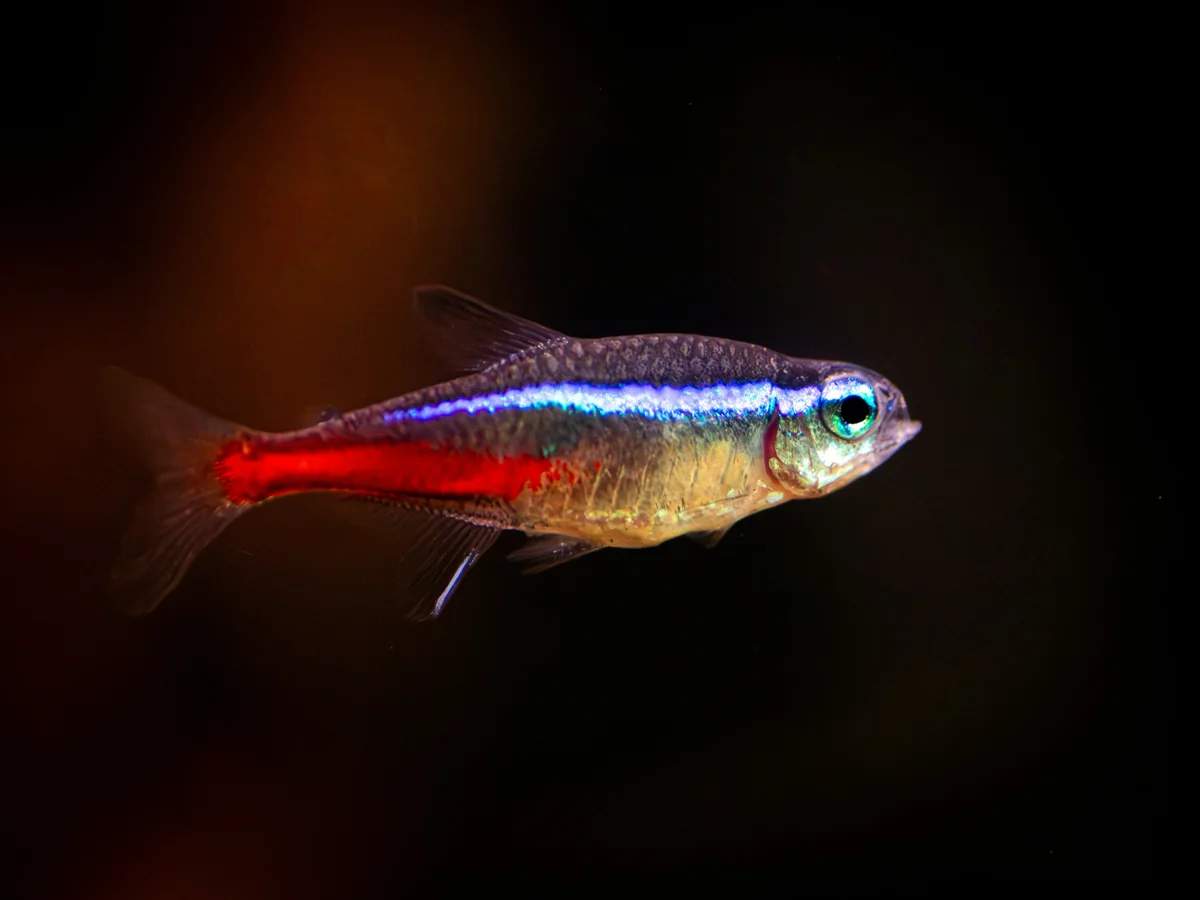
⚙ Diagnostic & Sizing Calculators
Dial in the perfect photoperiod for your aquarium. Enter your tank type, plant density, and viewing schedule to calculate the optimal daily light duration that fuels plant growth, suppresses nuisance algae, and gives your fish a healthy day/night cycle — without guesswork.
Estimate the net usable water volume in your aquarium.
Aquarium Light Types Compared
| Type | Effectiveness for Plants | Cost | Lifespan | Energy Use |
|---|---|---|---|---|
| Full-spectrum LED | High – programmable intensity/spectrum, suitable for low to high-light plants | Moderate-High ($50–300+ depending on size/features) | 30,000–50,000 hours | Low – 30-50% less than fluorescent for equivalent output |
| T5/T8 Fluorescent | Moderate-High – reliable output but fixed spectrum | Low upfront ($20–60), higher long-term (bulb replacement) | 6,000–10,000 hours before replacement needed | Moderate – runs hotter, less efficient than LED |
| Basic LED strip (non-programmable, low PAR) | Low-Moderate – adequate for fish-only or low-light plants only | Low ($15–40) | 20,000–30,000 hours | Low |
| Metal halide | High – very high PAR output, suited to demanding high-light plants | High ($150–400+), plus bulb replacement cost | 10,000–20,000 hours | High – significant heat output, may require cooling fans |
Frequently Asked Questions
How many hours a day should aquarium lights be on?
What is PAR and why does it matter for aquarium lighting?
Do I need special lighting for a fish-only tank with no plants?
Is LED or fluorescent lighting better for aquariums?
What PAR level do low-light plants need versus high-light plants?
Can too much aquarium light hurt fish?
Does more aquarium light always mean more plant growth?
How do I know if my aquarium light is causing algae?
Sources & References
- Publisher:Echinodorus Publishing
- Accessed:2026-10-14
- Photosynthetically Active Radiation Requirements Across Aquatic Plant Species
- Source:Journal of Aquatic Plant Management
- LED Spectrum Effects on Ornamental Fish Coloration
- Source:American Association of Fish Veterinarians
- Photoperiod Length and Algal Growth Rates in Closed Aquatic Systems
- Source:Aquacultural Engineering Society