
Discus (Symphysodon spp.)
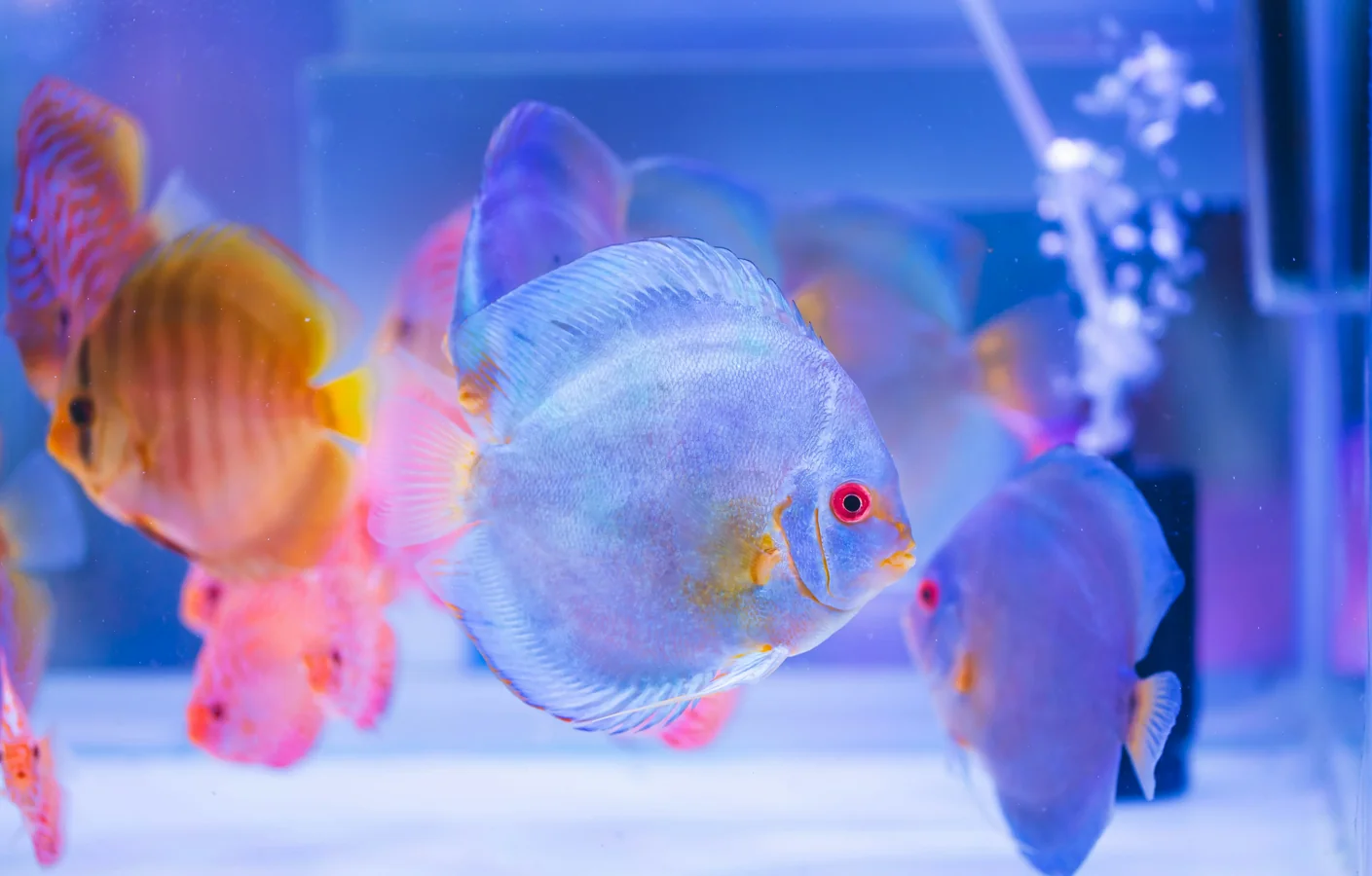
Quick Answer
Discus (Symphysodon spp.) is a large, laterally compressed cichlid native to the Amazon River basin. It requires a minimum 55-gallon (208 L) aquarium for juveniles, 75+ gallons (284+ L) for adults, with water temperature 82-86 degrees Fahrenheit (28-30 degrees Celsius), pH 6.0-7.5, and very soft water (GH 1-4 dGH). This peaceful, social cichlid must be kept in groups of 5+ and requires pristine water quality with frequent water changes. Known as the King of the Aquarium for its stunning coloration and demanding care requirements.
Quick Facts
| Scientific Name | Symphysodon spp. |
|---|---|
| Common Names | Discus |
| Family | Cichlidae |
| Genus | Symphysodon |
| Type | Freshwater |
| Temperament | peaceful |
| Care Difficulty | advanced |
| Lifespan | 10 years |
| Maximum Size | Up to 8 in (20 cm) |
| Diet | Carnivore / Omnivore |
| Temperature | 82–90°F (28–32°C) |
| pH | 6–7.5 |
| Hardness | 1–10 dGH |
| Minimum Size | 55 gallons |
Key Takeaways
- Adults reach 6-8 inches (15-20 cm) with a strongly compressed disc-shaped body.
- Requires pristine warm water at 85-86 degrees Fahrenheit (29.5-30 degrees Celsius) for optimal immune function.
- Must be kept in social groups of 5-6 minimum; solitary keeping causes lethal stress.
- Daily 30-50% water changes standard for juveniles; 25-50% 2-3x weekly for adults.
- Hole-in-the-Head disease is multifactorial — remove activated carbon, treat Hexamita with metronidazole, improve nutrition and water quality simultaneously.
- Fry feed on parental mucus for 3-4 weeks — a unique parental care strategy with immunoglobulin transfer analogous to mammalian colostrum.
- Captive-bred strains tolerate pH 7.0-7.5; wild Heckels require pH 5.5-6.5.
- Lifespan 8-15 years in optimal conditions with documented cases exceeding 15 years.
Overview
Species Overview
The Discus (Symphysodon spp.), universally crowned the King of the Aquarium, is a large, laterally compressed cichlid endemic to the floodplain lakes and flooded forests of the Amazon River basin in South America. Three primary species are recognized in the aquarium trade: Symphysodon aequifasciatus (Green Discus, including all captive-bred color varieties), Symphysodon discus (Heckel Discus, the most demanding wild form), and Symphysodon tarzoo (Brown Discus). Through decades of intensive selective breeding, dozens of color morphs exist including pigeon blood, turquoise, snakeskin, red melon, cobalt blue, and leopard — each representing generations of line-breeding for pigment intensity and pattern.
Natural History and Conservation
Wild discus inhabit quiet, blackwater floodplain lakes (igarapes) and submerged forest areas (igapo) along the Amazon and Rio Negro systems. These environments experience extreme seasonal water level fluctuations, with fish migrating into flooded forests during the wet season and concentrating in deep pools during the dry season. Water is typically warm (82-90 degrees Fahrenheit / 28-32 degrees Celsius), extremely soft (GH 0-3 dGH), acidic (pH 4.5-6.5), and tannin-stained from decomposing leaf litter. Wild populations are currently listed as Least Concern by the IUCN due to their wide distribution, though localized collection pressure exists. The aquarium trade is now dominated by captive-bred specimens from Southeast Asia, Germany, and North America.
Why This Species Demands Advanced Care
Discus are not difficult because they are fragile — they are difficult because they are unforgiving. Their high metabolic rate at tropical temperatures, large body mass relative to gill surface area, and evolution in nutrient-poor blackwater create a physiological profile that punishes lapses in water quality, nutrition, and temperature stability. A single missed water change in a heavily stocked discus tank can trigger a cascade of stress, parasite activation, and bacterial infection. You must approach discus keeping as a discipline, not a hobby.
Key Identification Features
- Maximum total length: 6-8 inches (15-20 cm); body is strongly laterally compressed into a disc shape
- Distinctive round, flat body profile with dorsal and anal fins extending the full body length
- Small mouth positioned terminally (at the tip of the snout)
- Coloration varies enormously by strain: pigeon blood (orange-red with black peppering), turquoise (blue-green with red striations), snakeskin (intricate worm-like pattern), red melon (solid red-orange), cobalt (deep blue)
- Wild Heckel discus: prominent dark vertical bar through the eye (the Heckel bar), brown to green base coloration
- Captive-bred strains often show enhanced coloration but may have weaker immune systems than wild fish
- Eyes should be proportionate to body size; disproportionately large eyes indicate stunting or malnutrition
Diet
Dietary Requirements and Feeding Protocol
Feeding Biology
Discus are high-metabolism carnivores with small stomachs and rapid digestive transit. In nature, they consume insect larvae, small crustaceans, worms, and zooplankton from the water column and substrate. Their small terminal mouth limits bite size, but they are enthusiastic feeders that quickly learn to recognize their keeper. At 85 degrees Fahrenheit (29.5 degrees Celsius), their digestive system operates at maximum efficiency; food is processed and waste eliminated within 4-6 hours. This rapid throughput necessitates multiple small feedings daily rather than one or two large meals.
Nutritional Targets
- Protein: 45-55% (essential for growth, immune function, and color pigment synthesis)
- Fat: 10-15% (energy reserve; excess fat causes hepatic lipidosis and obesity)
- Fiber: Low to moderate; discus are carnivores with limited cellulose digestion
- Vitamins: Vitamin C (ascorbic acid) is critical for immune function and wound healing; vitamin E for reproductive health
- Minerals: Calcium and phosphorus for bone development; trace elements from varied diet
Recommended Foods
Rotate between these options daily to ensure nutritional completeness:
- Homemade beefheart mix: Fresh beefheart trimmed of ALL fat and connective tissue, blended with spirulina powder, multivitamins, garlic extract, and calcium carbonate. Freeze in small portions.
- Frozen bloodworms: High-protein treat; thaw before feeding to prevent digestive shock
- Frozen blackworms: Excellent conditioning food with high protein and natural enzymes
- Frozen mysis shrimp: Superior to brine shrimp; contains astaxanthin for color enhancement
- High-protein granules: New Life Spectrum Discus Formula, Hikari Discus Bio-Gold, or Sera Discus Granules
- Live foods: White worms, grindal worms, and occasional blackworms for conditioning breeders
Feeding Schedule
Juveniles (under 4 inches / 10 cm): Feed 4-5 times daily in small quantities consumed within 3-5 minutes. Growth is maximized with frequent feeding and daily water changes. Adults: Feed 2-3 times daily. Remove uneaten food immediately after each feeding to prevent ammonia spikes. Fast the tank one day per week to clear digestive tracts and prevent constipation. Target-feed shy or subordinate individuals to ensure all fish receive adequate nutrition — subordinate discus in a hierarchy often hide and starve.
Critical Dietary Warnings
- Never feed tubifex worms — high parasite loads and poor nutritional value; linked to internal parasite outbreaks
- Do not rely on brine shrimp as a staple — extremely low nutritional value unless gut-loaded or enriched with Selcon
- Beefheart must be trimmed of ALL fat and supplemented with vitamins; pure beefheart causes fatty liver disease
- Avoid old or refrozen foods — vitamin degradation and bacterial contamination are common
- Do not overfeed — obesity in discus causes swim bladder disorders, heart failure, and shortened lifespan
Health
Health Management and Disease Protocols
Immunological Profile
Discus possess robust but temperature-dependent immune systems. At their optimal temperature of 85-86 degrees Fahrenheit (29.5-30 degrees Celsius), their immune response is highly active. However, temperatures below 80 degrees Fahrenheit (27 degrees Celsius) suppress immune function dramatically, making them susceptible to opportunistic infections that would not affect hardier species. Their thick mucus coat provides a primary barrier against pathogens, but this same mucus layer is targeted by the internal flagellate parasites that cause hole-in-the-head disease.
Medication Sensitivity and Protocol
This species tolerates most freshwater medications but has specific sensitivities and requirements:
- Copper: Use at half-dose maximum (0.05-0.1 mg/L). Discus are sensitive to copper accumulation in soft water.
- Formalin: Use at half-dose only; full-strength formalin causes gill irritation and osmotic stress.
- Metronidazole: The primary treatment for Hexamita and hole-in-the-head disease. Safe at standard doses. Dose at 250 mg per 10 gallons (38 liters) every other day for 3 treatments, or 100 mg per 10 gallons for 5 consecutive days.
- Praziquantel: Safe for tapeworm and fluke treatment at standard doses.
- Levamisole: Safe for nematode treatment at standard doses.
- Activated Carbon: Remove immediately. Strongly correlated with hole-in-the-head disease in cichlids. Do not use carbon in discus tanks.
- Salt (NaCl): Tolerates up to 1-2 ppt for short-term stress reduction but is not a primary treatment.
Quarantine Protocol
Quarantine all new discus for 4-6 weeks minimum in a bare-bottom hospital tank at 86 degrees Fahrenheit (30 degrees Celsius). Treat prophylactically with metronidazole in food (100 mg per tablespoon of food for 7 days) to eliminate subclinical Hexamita. Observe for feeding response, feces quality, and signs of ich or velvet. Do not introduce to the display tank until fish are eating aggressively, displaying full color, and producing dark, firm feces for 14 consecutive days.
Hole-in-the-Head (HITH) / Head and Lateral Line Erosion (HLLE)
A chronic, multifactorial condition causing pitting and erosion of the head and lateral line. The leading cause of disfigurement and death in discus. Caused by the interaction of internal flagellate parasites (Hexamita/Spironucleus), activated carbon filtration, nutritional deficiency, and poor water quality.
- Early: Small white-filled pores on the head, slightly more prominent than surrounding skin. Progressive: Pores become irregular with raised edges and white or mucous-filled centers. Advanced: Deep craters and tissue erosion across the head and flanks; weight loss; reduced activity; secondary bacterial infection of open wounds.
Internal flagellate parasites (Hexamita and Spironucleus) create the initial vulnerability. Activated carbon in filtration releases chemical compounds that damage the lateral line system. Nutritional deficiency, particularly lack of vitamin C and varied fresh/frozen foods. Water quality failure with nitrate accumulation above 10 ppm and pH instability.
Remove ALL activated carbon from the filtration system immediately and permanently. Perform daily 50% water changes for 7 days to reduce nitrates and chemical stressors. Switch to high-quality frozen foods with vitamin C supplementation. Treat with metronidazole at 250 mg per 10 gallons (38 liters) every other day for 3 treatments, or 100 mg per 10 gallons for 5 consecutive days. Feed medicated food (100 mg metronidazole per tablespoon of food) for 7 days. Healing takes 4-8 weeks; maintain all corrective factors throughout recovery.
Ich (White Spot Disease)
Caused by the ciliated protozoan Ichthyophthirius multifiliis. Highly contagious in warm discus tanks and can kill an entire group within days if untreated. More dangerous in discus than in temperate fish due to their sensitivity to temperature fluctuations.
- White salt-grain spots on body and fins; flashing against decor and substrate; rapid gill movement; clamped fins; lethargy; loss of appetite; rubbing against tank surfaces.
Introduction via new livestock without quarantine; temperature drops below 80 degrees Fahrenheit (27 degrees Celsius) weakening immune response; stress from poor water quality or aggressive tank mates; cross-contamination via nets, siphons, or shared equipment.
Mandatory 4-6 week quarantine for all new fish. Treat with gradual temperature elevation to 88-90 degrees Fahrenheit (31-32 degrees Celsius) combined with half-dose malachite green or formalin. Maintain elevated temperature for 10-14 days after the last visible spot disappears. In planted tanks, use heat-only treatment (90 degrees Fahrenheit for 14 days) to avoid plant damage. Never use full-dose copper in soft water.
Internal Parasites (Hexamita and Spironucleus)
Extremely common in discus, particularly wild-caught specimens and fish from poor water conditions. These flagellate protozoans inhabit the intestinal tract, causing malabsorption, weight loss, and creating the vulnerability for hole-in-the-head disease.
- Weight loss despite normal or increased appetite; stringy white or clear feces; lethargy and hiding; faded coloration; sunken belly; head-standing or bottom-sitting behavior; loss of appetite in advanced cases.
Wild capture and importation; introduction via contaminated live foods (tubifex worms are a major vector); stress from suboptimal water conditions; transmission through shared feeding surfaces and equipment.
Mandatory quarantine with prophylactic metronidazole treatment in food (100 mg per tablespoon for 7 days). Avoid tubifex worms entirely — they are the primary vector for Hexamita in the aquarium trade. Maintain pristine water quality and stable temperature above 82 degrees Fahrenheit (28 degrees Celsius). Do not introduce wild-caught discus to display tanks without full quarantine and treatment.
Gill Flukes (Dactylogyrus)
Monogenean trematode parasites that attach to gill filaments, causing respiratory distress, tissue damage, and secondary bacterial infection. Common in newly imported discus and fish kept in suboptimal water conditions.
- Rapid breathing and gill flaring; rubbing gills against decor and substrate; gasping at the surface; pale or swollen gills visible when fish is viewed from below; lethargy; loss of appetite; increased mucus production.
Introduction via new livestock; poor water quality with low dissolved oxygen; overcrowding; stress from temperature fluctuations; transmission through shared water sources at suppliers.
Quarantine all new fish for 4-6 weeks. Treat prophylactically with praziquantel (2.5 mg/L for 3-5 days, repeat in 2 weeks) to eliminate flukes before introduction. Maintain high water quality with adequate surface agitation and oxygenation. Increase water changes during treatment. Formalin baths at half-dose (25 mg/L for 30-60 minutes) are effective for visible infestations but must be monitored closely.
Bacterial Septicemia and Fin Rot
Systemic bacterial infection caused by Aeromonas, Pseudomonas, or Vibrio species. Usually secondary to parasitic infestation, physical injury, or severe water quality failure. Can progress rapidly in warm discus tanks.
- Red streaks in fins and tail (septicemia); ragged, fraying fin edges with white or red margins; receding fin tissue; inflammation and redness at the fin base; ulcers on the body; lethargy; loss of appetite; abnormal swimming or listing to one side.
Fix water quality immediately — test ammonia, nitrite, and nitrate. Perform daily 50% water changes for 5-7 days. Treat with Kanamycin (Kanaplex) at standard doses or a broad-spectrum antibiotic combination (Kanaplex + Furan-2) if infection is systemic. Remove sharp decor and aggressive tank mates. Ensure fish receive vitamin-rich foods to support tissue regeneration and immune response.
Breeding
Breeding and Reproduction
Reproductive Biology
Discus are biparental substrate spawners with one of the most extraordinary parental care strategies documented in fish. After a bonded pair forms (typically at 12-18 months of age), they select a vertical spawning surface — traditionally a cone-shaped ceramic or plastic breeder, though flat tiles and aquarium glass are also used. The female deposits 100-400 adhesive eggs in neat rows; the male follows, fertilizing each row. Both parents then guard the eggs, fanning them with pectoral fins to prevent fungal growth and ensure oxygenation.
Conditioning and Pair Formation
Discus pair formation is not guaranteed in groups. The most reliable method is to raise 6-10 juveniles together and allow natural pair bonds to form. Established pairs can be identified by synchronized swimming, shared territory defense, and cleaning of potential spawning sites. To condition a pair for spawning, feed high-protein foods (beefheart mix, blackworms, bloodworms) 4-5 times daily and perform daily 50% water changes for 2-3 weeks. Raise temperature gradually to 86-88 degrees Fahrenheit (30-31 degrees Celsius) to simulate the warmest period of the Amazon dry season.
Spawning Triggers
Simulate the Amazon dry season environmental cues:
- Gradually raise temperature to 86-88 degrees Fahrenheit (30-31 degrees Celsius) over 5-7 days
- Perform daily 50% water changes with soft (1-2 dGH), warm (86 degrees Fahrenheit / 30 degrees Celsius) water to simulate rainfall and water renewal
- Increase photoperiod to 12-14 hours with bright lighting
- Provide a dedicated spawning cone or vertical tile in the pair's established territory
- Remove all other discus from the breeding tank to prevent territorial aggression and egg predation
Egg and Fry Development
Eggs hatch in 48-60 hours at 84-86 degrees Fahrenheit (29-30 degrees Celsius). For the first 3 days, fry remain attached to the spawning site absorbing their yolk sac. Once free-swimming at day 4, the fry begin feeding on parental mucus — a behavior unique among aquarium fish. Research published in the Journal of Experimental Biology (Buckley et al., 2010) demonstrated that parental mucus contains elevated immunoglobulins peaking at free-swimming stage, functionally analogous to mammalian colostrum. Both parents actively 'flick' the shoal of fry between each other to share feeding duties and prevent epidermal damage.
By week 3-4, parents begin weaning behavior, swimming away from fry who must transition to independent feeding. At this stage, begin offering baby brine shrimp (Artemia nauplii) and micro-pellets. Expect 50-80% survival to juvenile stage under optimal conditions.
Common Breeding Failures
- Inexperienced pairs eating their first 2-3 clutches — this is normal; allow them to practice
- Fungal infection of eggs due to poor water flow over the spawning site or bacterial contamination
- Parents abandoning eggs due to stress from bright light, disturbance, or aggressive tank mates
- Fry starvation after weaning — have baby brine shrimp cultures established and active before spawning
- Water quality collapse in breeding tanks due to infrequent changes and heavy feeding
- Inbreeding depression in heavily line-bred color strains — use outcrossed pairs when possible
Compatible Tank Mates






Species Comparison
| Feature | Discus | Angelfish | Severum | Uaru |
|---|---|---|---|---|
| Scientific Name | Symphysodon spp. | Pterophyllum scalare | Heros severus | Uaru amphiacanthoides |
| Adult Size | 6.0 - 8.0 in (15 - 20 cm) | 6.0 - 8.0 in (15 - 20 cm) | 8.0 - 10.0 in (20 - 25 cm) | 8.0 - 10.0 in (20 - 25 cm) |
| Temperament | Peaceful; social hierarchy | Semi-aggressive; territorial | Semi-aggressive | Peaceful |
| Minimum Tank Size | 55 gal (208 L) juvenile; 75+ gal (284+ L) adult | 30 gal (114 L); 55 gal (208 L) adult | 55 gal (208 L); 75+ gal (284+ L) adult | 55 gal (208 L); 75+ gal (284+ L) adult |
| Optimal Temperature | 82 - 86 degrees F (28 - 30 degrees C) | 78 - 84 degrees F (25.5 - 29 degrees C) | 75 - 82 degrees F (24 - 28 degrees C) | 82 - 86 degrees F (28 - 30 degrees C) |
| Optimal pH Range | 6.0 - 7.5 (captive-bred) | 6.5 - 7.5 | 6.0 - 7.0 | 5.5 - 7.0 |
| General Hardness (GH) | 1 - 4 dGH (breeding); 3 - 10 dGH (display) | 3 - 8 dGH | 3 - 10 dGH | 1 - 5 dGH |
| Diet Type | Carnivore / Omnivore | Omnivore | Omnivore | Omnivore |
| Water Change Frequency | 25-50% 2-3x weekly (daily for juveniles) | 25% weekly | 25% weekly | 25-50% weekly |
| Difficulty Level | Advanced | Intermediate | Intermediate | Advanced |