Ich (White Spot)
Technical Specifications & Benchmark Matrix
- Thermal Arrest
- High temperature (around 86°F / 30°C) speeds the life cycle and shortens the treatment period
Overview
You notice a scattering of tiny white dots across your fish's body, almost like someone sprinkled salt or sugar on it, and by the next day there are more. Ich, formally Ichthyophthirius multifiliis, is a protozoan parasite that embeds beneath fish skin and gills, producing the characteristic white spots that give the disease its common name, white spot disease. It's arguably the most common disease call I get, and also one of the most frequently mistreated, because the visible spot you're looking at is only the feeding stage — the parasite's most vulnerable, treatable stage happens invisibly in the water column, which is exactly why partial or short treatment courses fail so often. Ich spreads through shared water almost instantly once mature, making tank-wide treatment the standard approach rather than isolating only visibly affected fish.
Identification
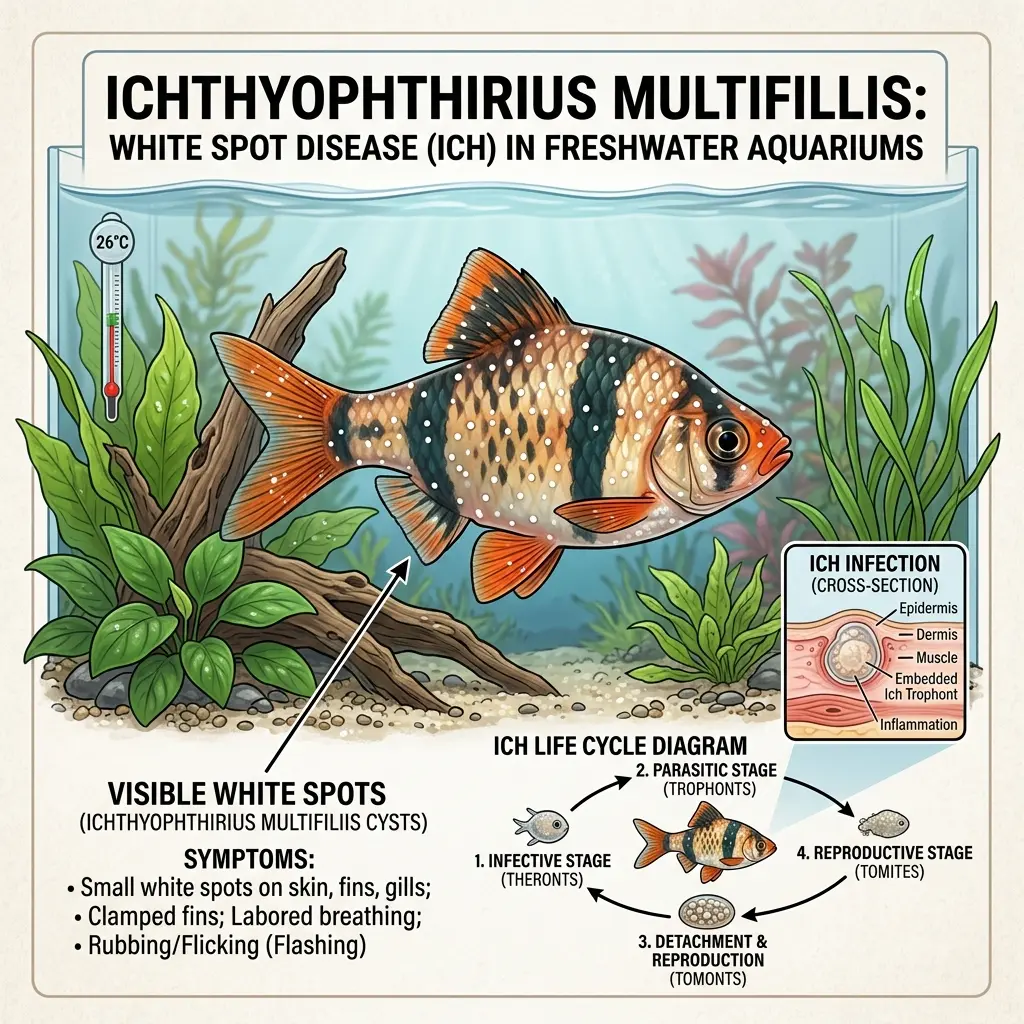
Ich is identified by small, distinct white spots roughly the size of salt or sugar grains scattered across the body, fins, and gills, each spot representing a single embedded parasite. Infected fish often flash against rocks or substrate before spots become visible, since the parasite irritates skin during its early feeding stage. As the infection progresses, fish may clamp their fins, become lethargic, and in advanced cases show labored or rapid gill movement if gills are heavily affected. Don't confuse Ich with Velvet disease, which produces a fine, dust-like golden or rust-colored coating rather than distinct individual spots and often requires a flashlight held at an angle to see clearly — Velvet also progresses faster and needs a different medication approach centered on copper rather than heat.
Life Cycle
Understanding the Ich life cycle explains why treatment timing matters so much. The visible white spot is the trophont, the feeding stage embedded beneath the skin, completely protected from medication and heat during this phase. After several days feeding on the host, the trophont drops off, forms a cyst, and divides into hundreds of theronts, the free-swimming infectious stage that must find a new fish host within 24-48 hours or die. This theront stage is the only point in the entire life cycle vulnerable to medication, heat, and salt treatment. At cooler temperatures around 21°C/70°F, this full cycle can take 4-6 weeks, while raising temperature to 28-30°C/82-86°F compresses it to a matter of days, which is precisely why heat is such a central part of effective Ich treatment — it forces the parasite through its vulnerable stage faster.
Treatment
Effective Ich treatment combines raising tank temperature to 28-30°C/82-86°F with a copper-based or malachite green/formalin medication dosed for the full labeled course, typically 10-14 days. Raise temperature gradually, about 1°C/2°F per hour, and add an air stone immediately, since warmer water holds less oxygen and stressed, infected fish need every advantage available. Aquarium salt at 1-3 grams per liter provides moderate additional theront-stage killing power when combined with heat, though it's unsafe for scaleless fish like loaches and most live plants, so check species compatibility before adding it to the protocol. This is the mistake I see constantly: fish owners see spots disappear after 3-4 days and stop treatment immediately, not realizing those visible spots were simply completing their feeding stage and dropping off on schedule, while newly released theronts and still-embedded parasites remain in the tank ready to reinfect. Complete the full course every time, regardless of how quickly visible symptoms clear.
Prevention
Quarantine every new fish for 14-21 days before adding them to an established tank, since Ich frequently arrives with new stock that appears healthy at purchase but develops visible symptoms once stressed by transport and a new environment. Maintaining stable water quality and temperature reduces the immune suppression that makes fish susceptible to a mild, otherwise manageable Ich exposure turning into a full outbreak. If a tank needs to be cleared of Ich entirely between fish, a fishless period of at least 2-4 weeks at raised temperature around 28-30°C/82-86°F ensures every life cycle stage completes and dies off without a host, since the free-swimming theront stage survives only 24-72 hours without finding a fish.
Run Precision Calculations For Your Setup
Check species compatibility, volumetric displacement, and filtration turnover benchmarks for your specific aquarium parameters.
🐟 Associated Species Profiles & Susceptibility
Browse All Fish Profiles →
Associated species profile & care guidelines
Associated species profile & care guidelines
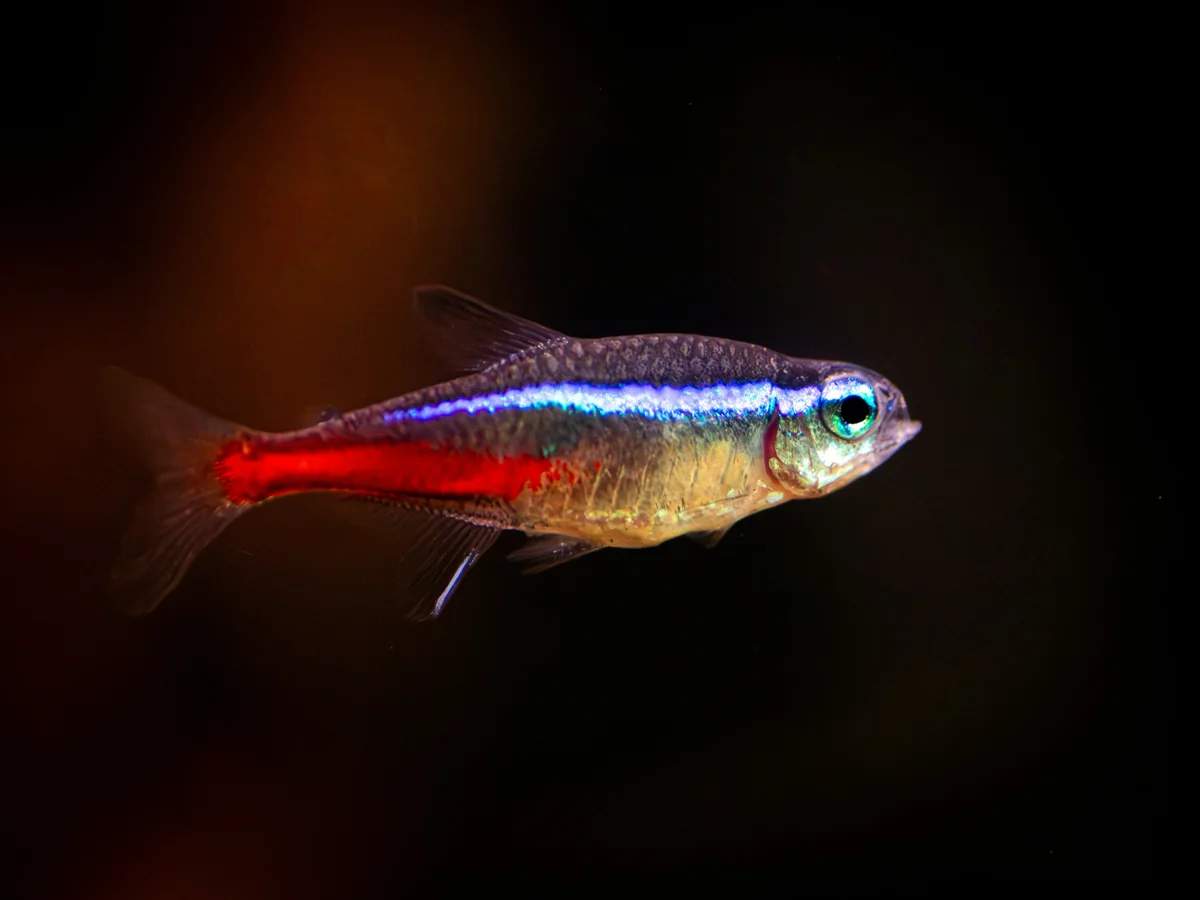
Associated species profile & care guidelines
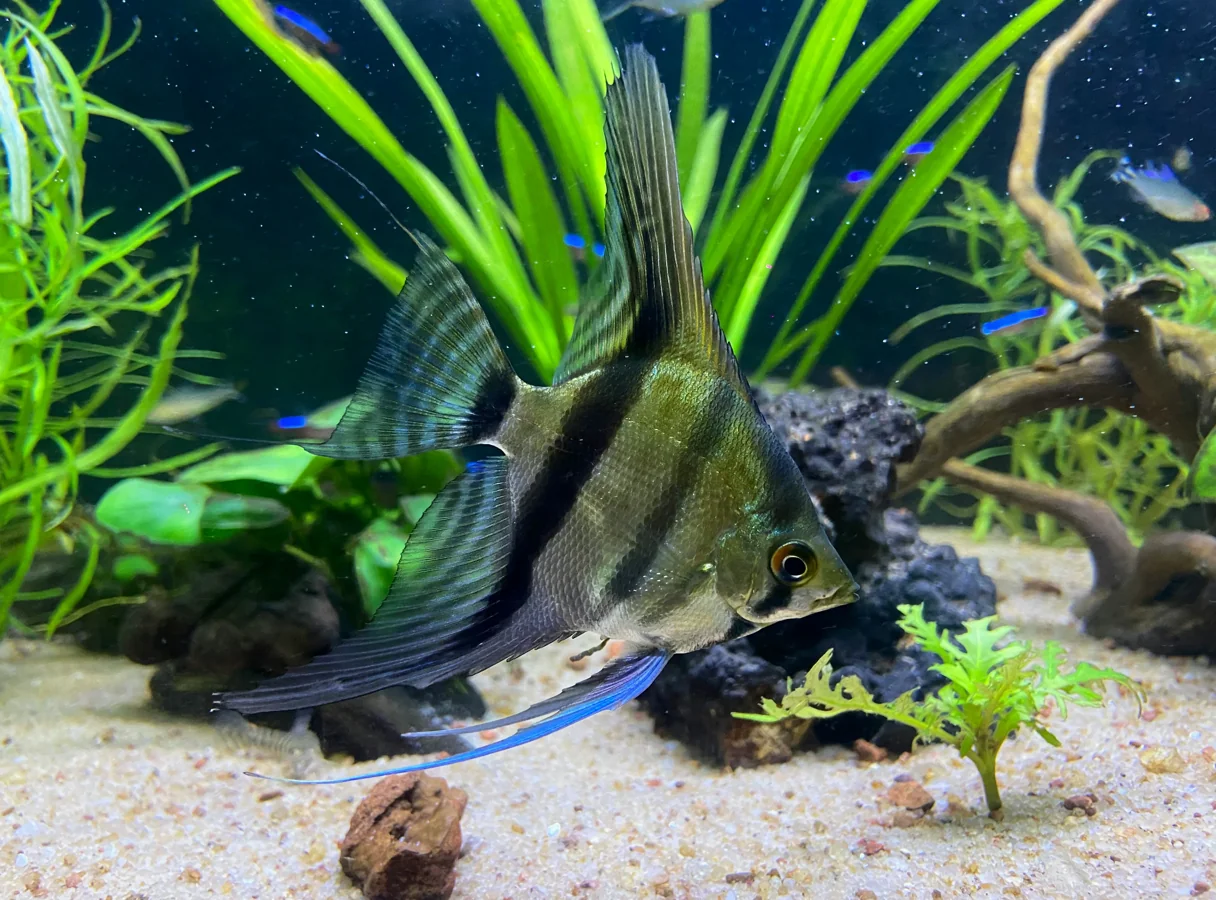
Associated species profile & care guidelines
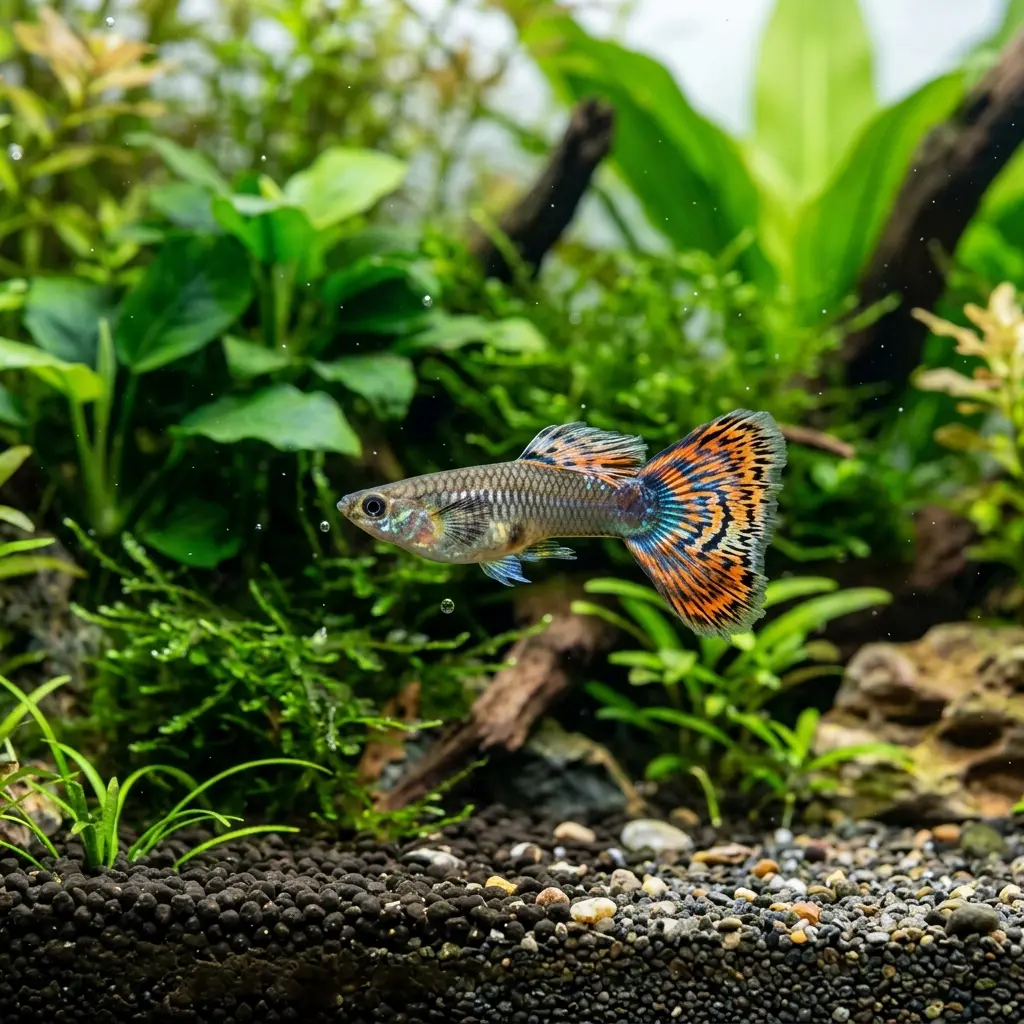
Associated species profile & care guidelines
⚙ Diagnostic & Sizing Calculators
Enter your tank size, substrate displacement, and medication type — get an exact safe dose based on true net water volume. Includes scaleless fish half-dose warnings for copper, formalin, and malachite green treatments.
Estimate the net usable water volume in your aquarium.
Estimate a single water-change percentage and volume to dilute measured nitrate toward a selected target.
Ich Treatment Methods Compared
| Method | Effectiveness | Cost | Time to Clear | Fish/Plant Safety |
|---|---|---|---|---|
| Heat raise (28-30°C/82-86°F) | High – accelerates life cycle, works with other methods | Free (uses existing heater) | 10-14 days combined with medication | Safe for most fish; monitor oxygen levels closely |
| Copper-based medication | High – reliably kills free-swimming theront stage | Moderate ($15–25) | 10-14 day full course | Toxic to invertebrates and some scaleless fish; not plant safe with some formulas |
| Malachite green/formalin | High – effective against theronts, widely used standard | Moderate ($10–20) | 10-14 day full course | Not safe for scaleless fish at full dose; use with caution in planted tanks |
| Aquarium salt (1-3 g/L) | Moderate – works on theronts only, not embedded spots | Very Low ($3–5) | Best combined with heat, 10-14 days | Unsafe for scaleless fish and most live plants |
Frequently Asked Questions
How contagious is Ich to other fish in the tank?
How long does it take to cure Ich?
Does raising the temperature actually help cure Ich?
Is salt effective against Ich in freshwater tanks?
What's the difference between Ich and Velvet disease?
Can Ich survive in a tank with no fish?
Why do the white spots on my fish keep coming back after treatment?
Are some fish species more susceptible to Ich than others?
Sources & References
- Publisher:Wiley-Blackwell
- Accessed:2026-10-14
- Life Cycle and Thermal Dependence of Ichthyophthirius multifiliis
- Source:Journal of Fish Diseases
- Comparative Efficacy of Heat, Salt, and Chemical Treatments Against Ich
- Source:American Association of Fish Veterinarians
- Host-Parasite Dynamics in Protozoan Outbreaks in Closed Aquatic Systems
- Source:Journal of Aquatic Animal Health