
Fancy Goldfish (Carassius auratus)
Quick Answer
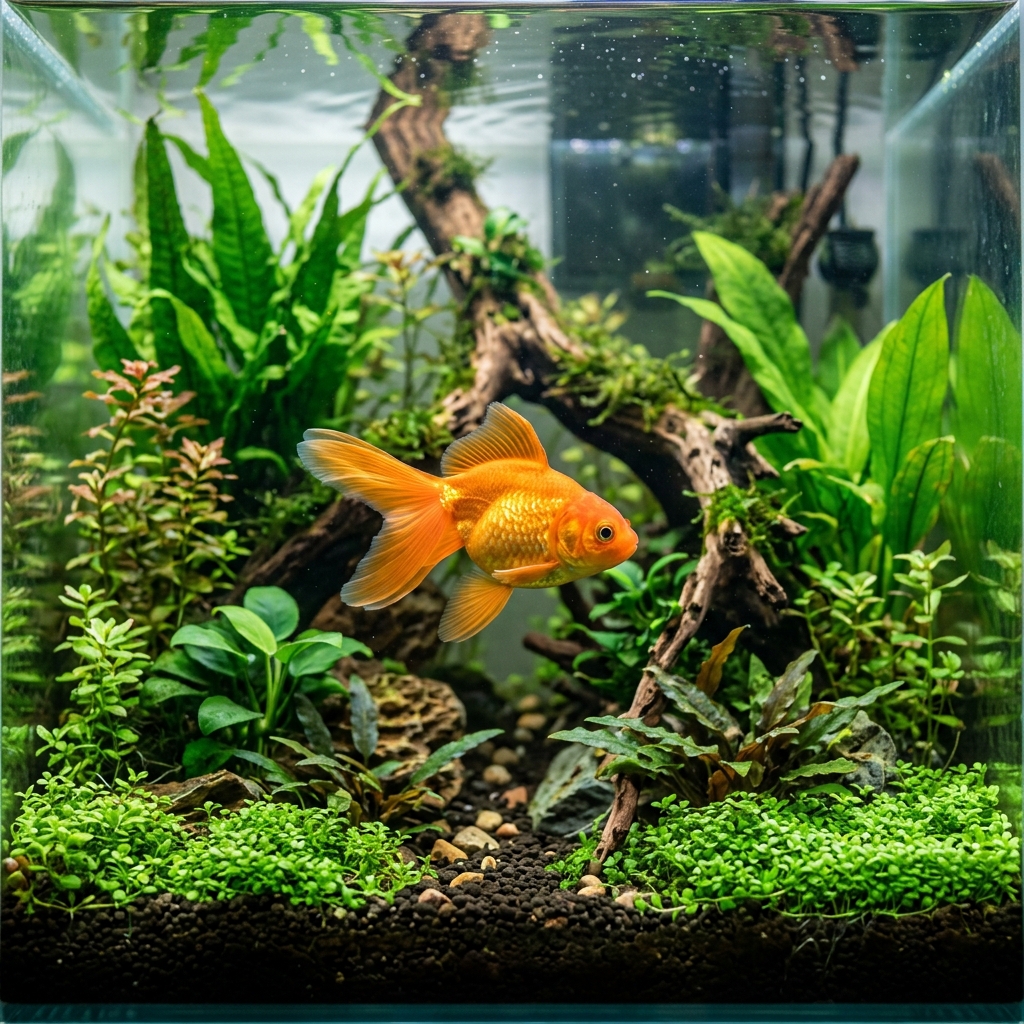
Fancy Goldfish (Carassius auratus) are iconic cold-water fish that can live 10-15 years and reach 6-8 inches (15-20 cm). They require a minimum 30-gallon (113 L) tank for one adult, with 10-15 gallons added per additional fish. Water temperature must be kept at 65F-74F (18C-23C) with heavy-duty filtration (10x turnover per hour). Their diet must consist of sinking pellets, vegetables (especially deshelled peas), and occasional protein treats. They cannot be kept with tropical fish or single-tailed goldfish.
Quick Facts
| Scientific Name | Carassius auratus |
|---|---|
| Common Names | Fancy Goldfish |
| Family | Cyprinidae |
| Genus | Carassius |
| Type | Freshwater |
| Temperament | peaceful |
| Care Difficulty | beginner |
| Lifespan | 15 years |
| Maximum Size | Up to 8 in (20 cm) |
| Diet | Omnivore |
| Temperature | 65–74°F (18–23°C) |
| pH | 7.2–8.4 |
| Minimum Size | 20 gallons |
Key Takeaways
- Requires a minimum 30-gallon tank for one adult; add 10-15 gallons per additional fish.
- Cold-water species: 65F-74F (18C-23C). Never keep with tropical fish.
- Heavy waste producers requiring 10x turnover filtration and weekly 40-50% water changes.
- Feed sinking pellets and deshelled peas; avoid floating flakes to prevent swim bladder disorder.
- Can live 10-15 years and reach 6-8 inches (15-20 cm) with proper care.
- Quarantine all new fish for 4 weeks with prophylactic Praziquantel treatment.
- Social and gregarious; keep in groups of 2+ but only with other fancy varieties.
- Fast one day per week to prevent digestive blockages and maintain water quality.
Overview
The Fancy Goldfish (Carassius auratus) is one of the most iconic and widely recognized aquarium fish in the world. Domesticated for over 1,000 years in China and later Japan, the goldfish is the longest-domesticated fish species on Earth. What began as a humble silver Prussian carp has been transformed through centuries of selective breeding into dozens of distinct varieties, each with unique body shapes, fin configurations, and color patterns.
Fancy Goldfish encompass the double-tailed varieties including Orandas, Ranchus, Ryukins, Fantails, Black Moors, Pearlscales, Bubble Eyes, and Celestials. These varieties share a compressed, deep-bodied shape, paired caudal fins, and often elaborate ornamental features such as head growths (wen), telescope eyes, or fluid-filled sacs beneath the eyes. Their striking appearance and engaging personalities have made them perennial favorites among aquarists of all experience levels.
Despite their reputation as beginner fish, Fancy Goldfish demand significantly more care than most people realize. They require large tanks, heavy-duty filtration, cool water temperatures, and meticulous attention to diet. The myth that goldfish can thrive in bowls is responsible for more fish deaths than any other misconception in the hobby. A properly cared-for Fancy Goldfish can live 10-15 years and reach 6-8 inches (15-20 cm) in body length, with some individuals exceeding 20 years in optimal conditions.
Fancy Goldfish are strictly cold-water fish. They cannot be kept with tropical species and will suffer in heated tanks. Their massive waste output, continuous grazing behavior, and susceptibility to swim bladder disorders make them a species that rewards informed, dedicated keepers and punishes neglect.
Care
Water Parameters
Water Parameters
Fancy Goldfish are cold-water specialists originating from temperate climates. Their parameter requirements reflect this evolutionary history:
- Temperature: 65F - 74F (18C - 23C), optimal 68F - 72F (20C - 22C). Temperatures above 75F (24C) cause oxygen depletion, metabolic stress, and shortened lifespans. Avoid heaters unless room temperature drops below 60F (15.5C).
- pH: 7.2 - 8.4, optimal 7.4 - 8.0. Goldfish prefer alkaline water. Their protective slime coat deteriorates in soft, acidic conditions.
- General Hardness (GH): 8 - 20 dGH (optimal 10 - 15 dGH). Hard water supports their slime coat and osmoregulation.
- Carbonate Hardness (KH): 6 - 12 dKH (optimal 8 - 10 dKH). Essential for pH stability.
- Total Dissolved Solids (TDS): 200 - 400 ppm.
- Ammonia: 0 ppm at all times.
- Nitrite: 0 ppm at all times.
- Nitrates: Below 20 ppm optimal; never exceed 40 ppm.
Water changes: Perform weekly 40-50% water changes without exception. Goldfish waste accumulates rapidly, and dilution is the only effective management strategy. Use a gravel vacuum to remove debris from the substrate during each change.
Diet
Fancy Goldfish are omnivorous grazers with a unique digestive system: they lack a true stomach and process food continuously. This means they produce waste constantly and require frequent, small meals rather than large, infrequent ones. Their diet must be carefully formulated to prevent the three most common health issues: swim bladder disorder, obesity, and fatty liver disease.
Health
Fancy Goldfish are generally hardy when kept in appropriate conditions, but their compressed body shapes, delicate ornamental features, and massive waste production make them susceptible to several specific diseases. The vast majority of goldfish health issues are preventable through proper water quality management, quarantine protocols, and informed diet choices.
Swim Bladder Disorder
A buoyancy syndrome, not a true disease, caused by compressed internal organs, constipation, air ingestion, poor water quality, or bacterial infection. Fancy goldfish are highly susceptible due to their rounded body shapes.
- Floating upside-down, sinking to the bottom, swimming sideways, inability to maintain equilibrium, listing to one side.
Overfeeding/constipation, air ingestion from floating foods, poor water quality (ammonia/nitrite), bacterial infection, physical injury, genetic defects in short-body varieties.
Feed sinking pellets exclusively. Feed deshelled peas weekly. Fast one day per week. Maintain pristine water quality. Avoid sudden temperature fluctuations. Select fish with strong, proportional body shapes.
Ich (White Spot Disease)
Parasitic infection caused by Ichthyophthirius multifiliis. Appears as tiny white salt-like grains on body and fins. Highly contagious and potentially fatal if untreated.
- White salt-like spots on body, fins, and gills; flashing (rubbing against objects); rapid breathing; clamped fins; lethargy.
Introduction via new fish or plants; triggered by temperature fluctuations or stress that compromise immune function.
Quarantine all new fish for 4 weeks. Avoid temperature swings. Maintain stable water parameters. Do not add untreated plants from outdoor sources.
Fin Rot
Bacterial infection (Aeromonas, Pseudomonas, Flexibacter) causing progressive destruction of fin tissue. Always secondary to poor water quality.
- Frayed, ragged, or receding fin edges; discoloration (white, red, or black edges); inflamed fin base; in advanced cases, erosion of the fin rays.
Poor water quality with elevated ammonia, nitrite, or nitrate; physical injury from sharp decorations or fin-nipping; stress from overcrowding or improper temperature.
Maintain pristine water with weekly 40-50% water changes. Use smooth decorations only. Avoid overcrowding. Test water parameters weekly.
Dropsy (Edema)
Not a disease but a symptom of severe organ failure (kidneys, liver). Characterized by fluid accumulation in body tissues. Often fatal once scales begin to raise.
- Pinecone-like scales (raised scales giving a spiky appearance), severely bloated abdomen, protruding eyes (in some cases), lethargy, loss of appetite, isolation from tank mates.
Chronic poor water quality, bacterial infection (Aeromonas, Pseudomonas), internal parasites, genetic predisposition, long-term overfeeding causing organ damage.
Maintain pristine water quality always. Avoid overfeeding. Quarantine new arrivals. Treat water quality issues immediately. Select fish from healthy, well-maintained stock.
Gill and Skin Flukes
Microscopic parasitic flatworms (Dactylogyrus, Gyrodactylus) that attach to gills and skin. One of the most common undiagnosed parasites in goldfish.
- Flashing and rubbing against objects, rapid breathing or gasping at the surface, clamped fins, excessive mucus production, lethargy, faded coloration.
Introduction via new fish, plants, or live foods. Stress from poor water quality or temperature swings allows parasites to proliferate.
Quarantine and prophylactically treat all new fish with Praziquantel. Avoid live foods from unreliable sources. Maintain stable, clean water conditions.
Wen Rot (Orandas and Lionheads)
Bacterial infection of the fleshy head growth (wen) characteristic of Oranda, Lionhead, and Ranchu varieties. Caused by poor water quality or physical trauma to the delicate wen tissue.
- Red, ulcerated, or open patches on the wen; white fuzzy growth on head; swelling or discoloration of the head growth; lethargy and reduced appetite.
Poor water quality with elevated nitrates or ammonia; physical injury from sharp decorations or aggressive handling; secondary bacterial infection (Aeromonas, Pseudomonas) entering damaged tissue.
Maintain nitrates below 20 ppm with weekly water changes. Use only smooth, rounded decorations. Handle fish with extreme care. Monitor wen growth regularly for early signs of infection.
Anchor Worms and Fish Lice
Macroscopic external parasites visible to the naked eye. Anchor worms (Lernaea) are thread-like crustaceans that burrow into the skin. Fish lice (Argulus) are disc-shaped crustaceans that attach to the body.
- Visible white or greenish threads protruding from skin (anchor worms); visible greenish, flat, oval parasites moving on the body (fish lice); red, inflamed patches at attachment sites; flashing and rubbing; lethargy.
Introduction via new fish, plants, or live foods from outdoor sources. More common in pond fish but can occur in aquariums.
Quarantine all new fish for 4 weeks. Inspect fish carefully before purchase. Avoid adding plants or decorations from outdoor ponds. Treat live foods before feeding.
Cloudy Eye
Condition where one or both eyes become opaque, white, or cloudy. Can be caused by poor water quality, physical injury, bacterial infection, or nutritional deficiency.
- One or both eyes appear white, cloudy, or opaque; may progress to bulging eyes if infection spreads; reduced vision causing difficulty locating food.
Poor water quality (especially high ammonia or nitrite); physical injury to the eye from sharp decorations or aggression; bacterial infection (Pseudomonas, Aeromonas); vitamin A deficiency.
Maintain pristine water quality. Use smooth decorations only. Feed a varied diet including vitamin-rich foods. Avoid rough handling during tank maintenance.
Breeding
Breeding Fancy Goldfish is a rewarding but challenging endeavor that requires patience, space, and attention to detail. Unlike many tropical fish, goldfish do not breed continuously. They require specific environmental triggers that simulate spring conditions to initiate spawning behavior.
Tips
Common Mistakes
Expert Tips
Compatible Tank Mates






Species Comparison
| Feature | Fancy Goldfish | Common Goldfish (Comet) | Koi Carp | Betta Fish |
|---|---|---|---|---|
| Maximum Size | 6-8 inches (15-20 cm) | 12-14 inches (30-36 cm) | 24-36 inches (60-90 cm) | 2.5-3 inches (6-7.5 cm) |
| Temperament | Peaceful / Social | Peaceful / Active | Peaceful / Gregarious | Aggressive / Territorial |
| Minimum Tank Size | 30 gallons (113 L) for 1 adult; +10-15 gal per additional | 40 gallons (151 L) for 1; +20 gal per additional | 1000+ gallons (3785 L) pond | 5 gallons (19 L) |
| Temperature Range | 65F - 74F (18C - 23C) | 65F - 72F (18C - 22C) | 59F - 77F (15C - 25C) | 76F - 82F (24C - 28C) |
| Diet | Omnivore: sinking pellets, vegetables, occasional protein | Omnivore: similar but higher vegetable content | Omnivore: pellets, vegetables, insects | Carnivore: pellets, bloodworms, brine shrimp |
| Lifespan | 10-15 years (up to 20 with optimal care) | 10-20 years (up to 30 in ponds) | 25-35 years (up to 50+ recorded) | 2-4 years |
| Filtration Needs | Extremely high; 10x turnover per hour | Extremely high; 10x turnover per hour | Very high; pond filtration system required | Low; gentle sponge filter sufficient |
| Community Suitability | Species-only or with other fancies only | Species-only; outcompetes fancies for food | Pond only; too large for aquariums | Limited; specific tank mates only |