
Aquarium to Paludarium: How to Convert a Tank
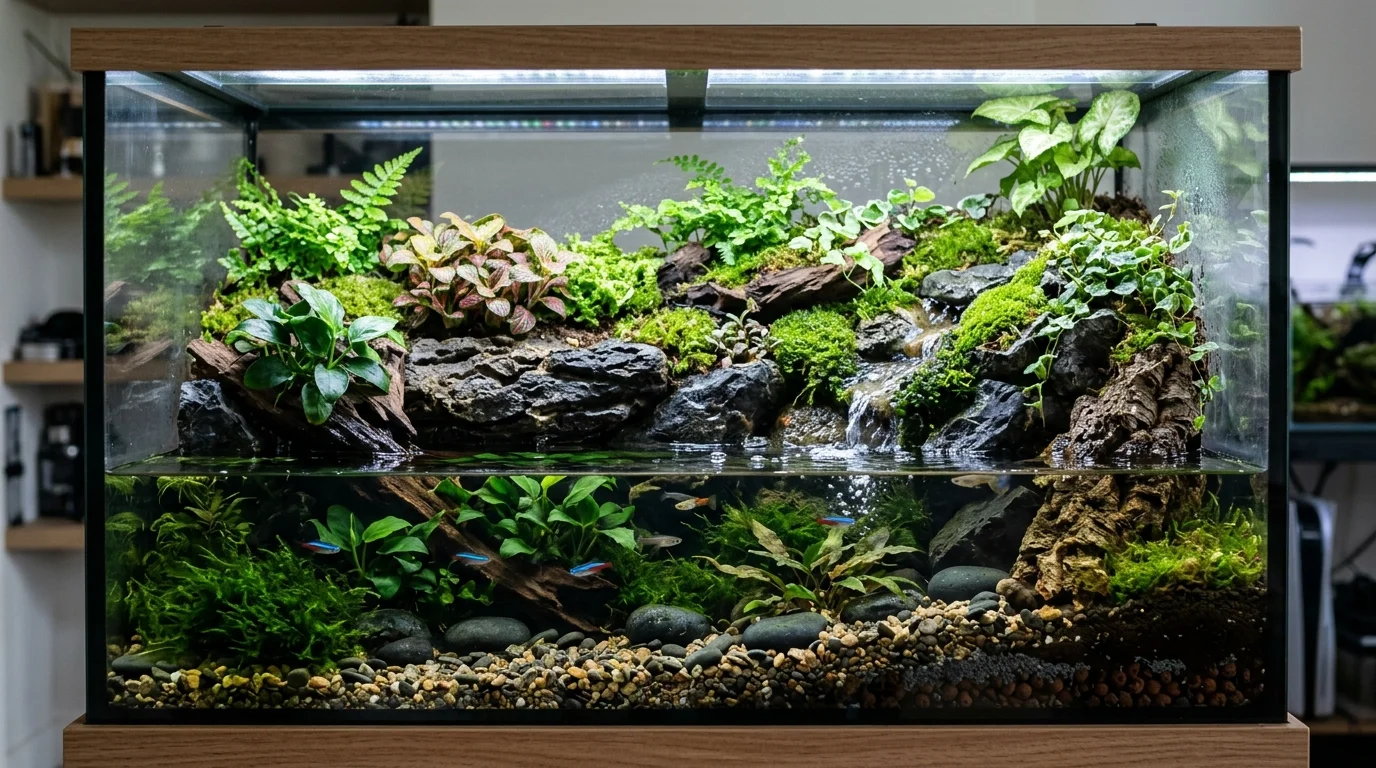
Technical Specifications & Benchmark Matrix
- Conversion Concept
- Convert part of the existing aquarium footprint into terrestrial habitat while retaining a functional aquatic zone.
- Primary Zones
- Aquatic, terrestrial, and transition zones
- Water Volume
- Final usable water volume decreases when land structures and hardscape displace water
- Planning Priority
- Establish the land-water boundary and structural support before adding substrate and plants
- Submerged Volume Displacement
- Significant reduction from nominal tank capacity; measure actual water volume
Converting an aquarium into a paludarium means changing a predominantly aquatic enclosure into a system with distinct aquatic and terrestrial zones. The existing tank can provide a useful glass enclosure, but the conversion requires more planning than simply lowering the water level and adding soil. Land structures, drainage, substrate, plants, hardscape, water movement, lighting, and access all need to work together.
Start With the Land-Water Boundary
The most important planning decision is where the aquatic zone ends and the terrestrial zone begins. Sketch the intended aquatic, terrestrial, and transition areas before adding any permanent structure.
The aquatic zone retains water. The terrestrial zone provides elevated growing space. The transition zone connects them and may contain rock, wood, roots, gravel, or plants adapted to conditions around the waterline.
Planning these zones first prevents the land structure from accidentally consuming most of the usable aquatic area. If aquatic volume or swimming space is important to the finished design, reserve that space before constructing the land mass.
Measure the Remaining Aquatic Space
Once the approximate aquatic footprint and water height are known, geometric water volume can be calculated from internal length × internal width × water height. The result can then be converted to US gallons or liters.
Converted aquariums require an additional consideration: land structures and hardscape occupy space that would otherwise contain water. The final usable volume can therefore be lower than the geometric volume of the empty rectangular water space.
Use the Paludarium Water Volume Calculator when you have the internal aquatic dimensions and an estimate of displacement. Treat a displacement-based result as an estimate rather than an exact measurement.
Build a Stable Terrestrial Structure
The terrestrial portion needs physical support. Loose substrate alone is generally not a suitable way to create a tall or steep land bank. The underlying structure should remain stable when exposed to wet substrate, plant roots, routine maintenance, and water movement.
Keep the construction compatible with the aquarium's available access and the intended drainage path. A visually impressive land structure is not useful if it blocks maintenance access, interferes with equipment, or allows substrate to collapse into the aquatic zone.
Plan Drainage Before Adding Substrate
The terrestrial section can remain humid or moist without every part of its substrate being permanently saturated. Drainage provides a route for excess water to leave the growing medium.
In bioactive builds, drainage may sit beneath the terrestrial substrate with a separation method that helps keep the growing medium from occupying the drainage space. There is no single universal layer design for every paludarium; the enclosure, plants, substrate, and water-management approach determine the appropriate construction.
For the biological function of terrestrial substrate, see Bioactive Substrate.
Protect the Transition Zone
The shoreline is a critical structural boundary. Water can wick into adjacent materials, splash during maintenance, and move through porous hardscape. Design the transition so that terrestrial substrate remains supported instead of continually washing into the aquatic zone.
A stable transition can also create an intermediate planting area. Emergent plants may occupy conditions close to the waterline while terrestrial plants can use better-drained substrate above it.
Choose Plants for Their Actual Zone
Plant selection should follow the conditions available in each part of the enclosure. Consider light, moisture, temperature, growth habit, root space, and whether the plant will be submerged, emergent, or entirely terrestrial.
A plant that performs well in a conventional pot is not automatically suited to a permanently wet shoreline. Likewise, an aquatic plant is not necessarily appropriate for an exposed terrestrial root zone.
For foundational enclosure and hardware planning, see Aquarium Setup.
Manage Water Movement
The aquatic and terrestrial zones influence one another through evaporation, humidity, moisture movement, and water circulation. Equipment serving the aquatic section should be positioned so that its output does not erode the land-water boundary or continuously saturate the terrestrial substrate.
If a pump or filter is used, test the flow before the enclosure is densely planted. This makes it easier to identify areas where water is moving too aggressively or failing to circulate effectively.
Lighting and Access Still Matter
An aquarium's existing light may not provide appropriate coverage after elevated land structures and plants are introduced. Tall hardscape can create new shadows, while terrestrial plants may have different lighting requirements from aquatic plants.
Also preserve access to the aquatic zone, substrate surface, equipment, and areas where debris accumulates. A dense paludarium can become difficult to maintain when routine access is sacrificed for appearance.
A Practical Conversion Sequence
- 1Measure the aquarium's internal dimensions.
- 2Decide the approximate aquatic, terrestrial, and transition zones.
- 3Reserve the intended aquatic space and target water height.
- 4Build and secure the terrestrial structure.
- 5Establish the drainage architecture and terrestrial substrate.
- 6Check the land-water boundary for stability and erosion.
- 7Install hardscape and verify water circulation.
- 8Add plants according to their intended environmental zone.
- 9Fill the aquatic section gradually and observe water movement, displacement, and saturation.
- 10Monitor the completed enclosure before considering the system established.
Common Conversion Mistakes
- Building the land first: Constructing a large terrestrial mass before reserving adequate aquatic space can leave less usable water than intended.
- Ignoring drainage: A constantly saturated terrestrial substrate can result when excess water has no planned route away from the growing medium.
- Using the empty tank volume: The original aquarium capacity does not represent final usable water volume after land and hardscape are installed.
- Choosing plants by appearance: Plants need to match the actual light, moisture, temperature, and zone available to them.
- Blocking maintenance access: Hardscape and land structures should leave enough access for equipment and routine cleaning.
When an Aquarium Is a Good Starting Point
An existing aquarium can be a practical enclosure for a paludarium when its dimensions, access, construction, and intended internal structure fit the project. The advantage is a defined footprint and an existing waterproof enclosure.
The finished design should be based on the physical characteristics of the particular tank rather than forcing every aquarium into the same land-water arrangement.
Run Precision Calculations For Your Setup
Check species compatibility, volumetric displacement, and filtration turnover benchmarks for your specific aquarium parameters.
🐟 Associated Species Profiles & Susceptibility
Browse All Fish Profiles →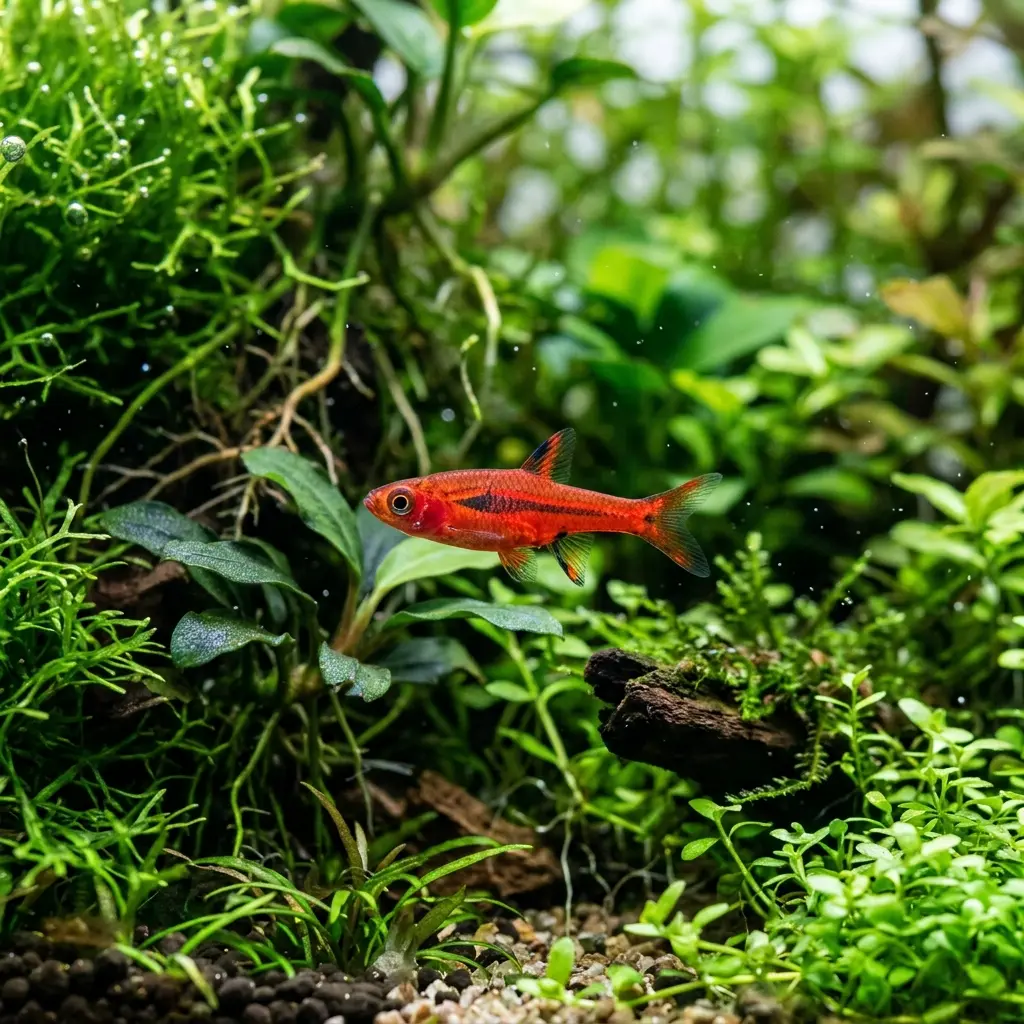
Associated species profile & care guidelines
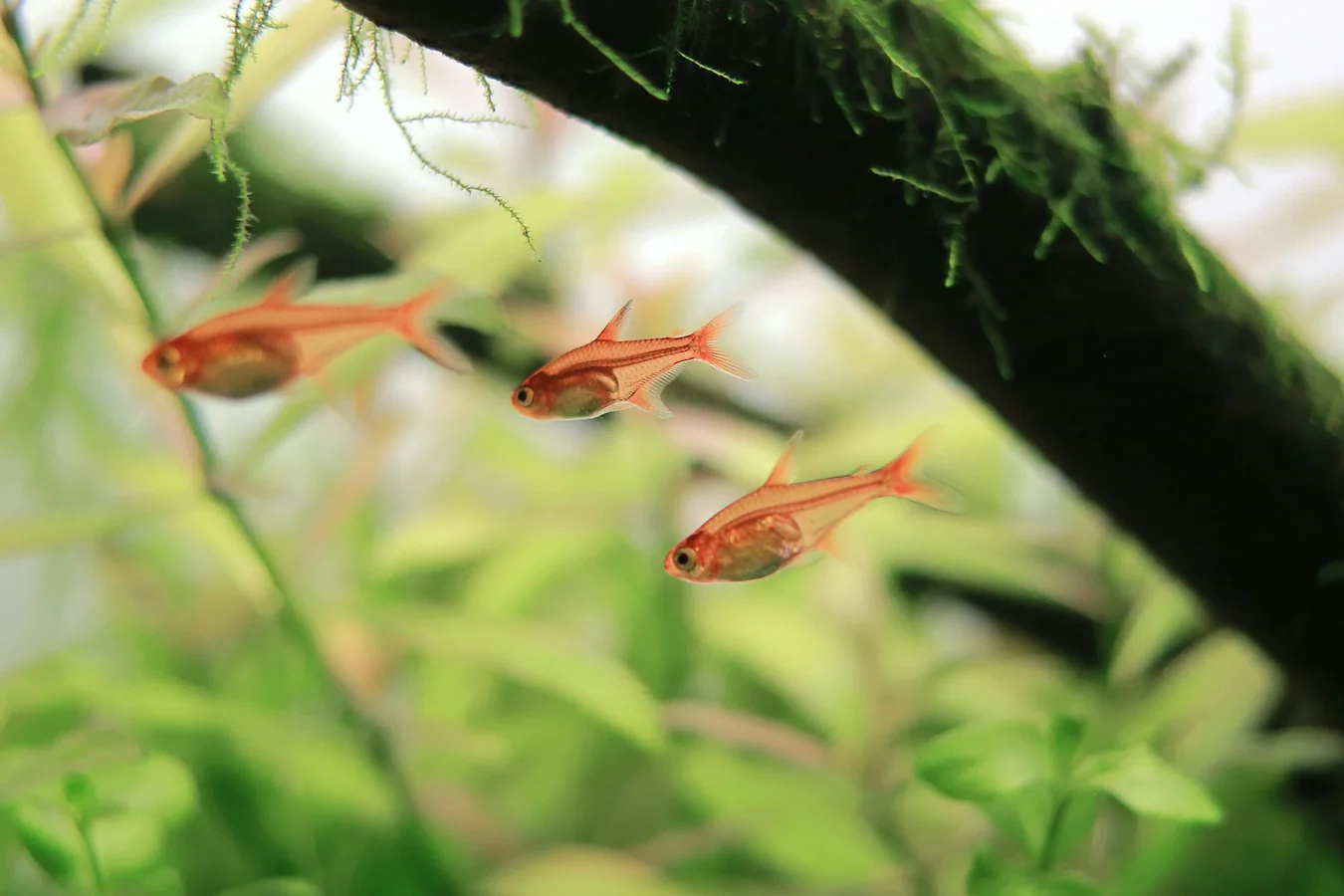
Associated species profile & care guidelines
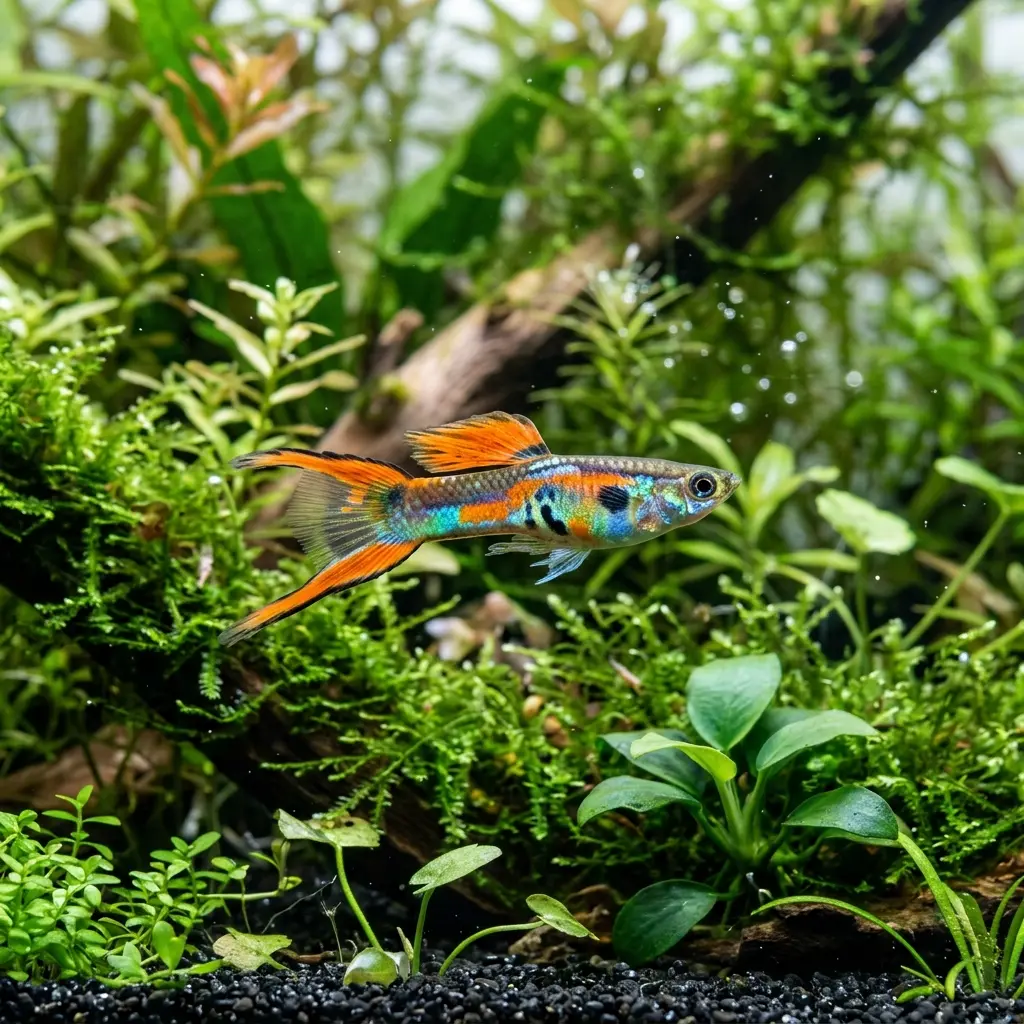
Associated species profile & care guidelines
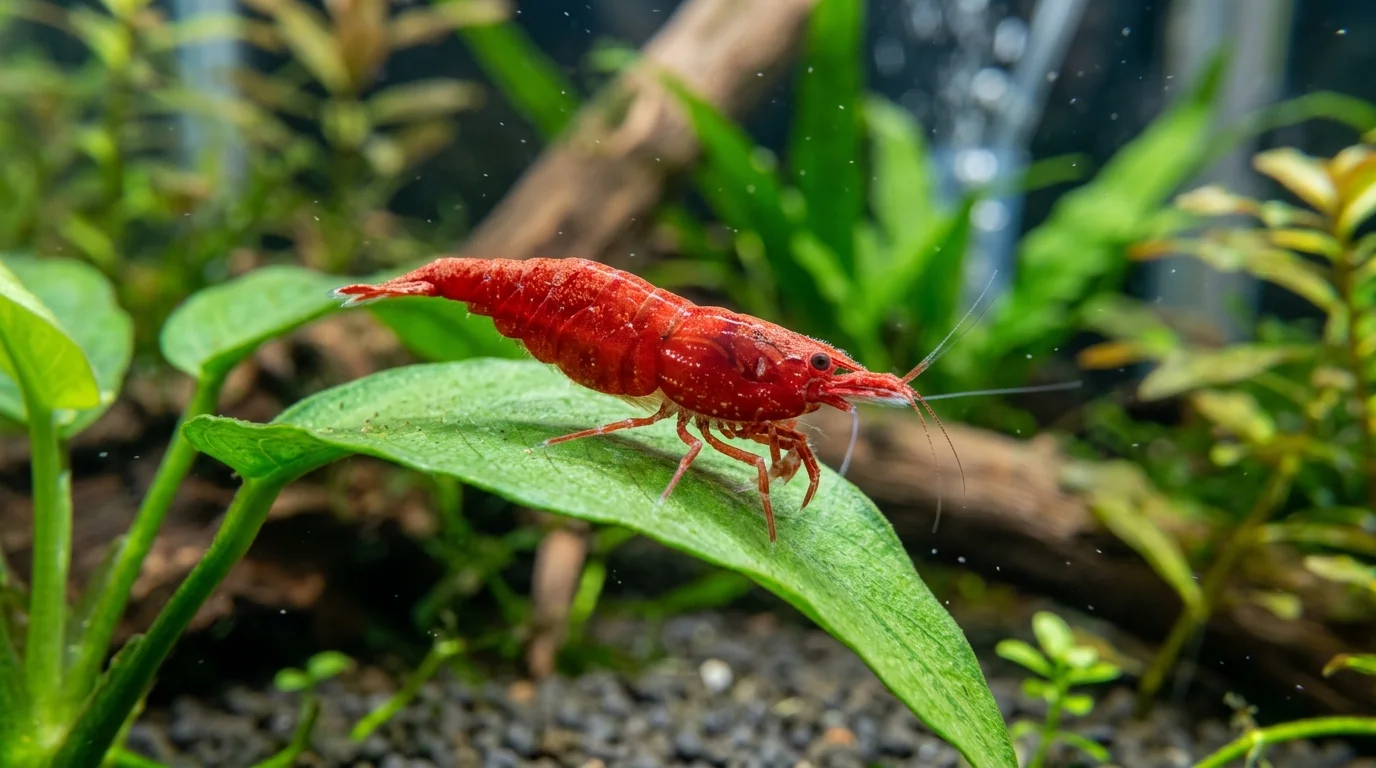
Associated species profile & care guidelines
⚙ Diagnostic & Sizing Calculators
Estimate the net usable water volume in your aquarium.
Calculate paludarium aquatic-zone water capacity in gallons and liters from internal dimensions, with optional hardscape and land displacement deduction.
Estimate realistic fish stocking capacity using adult size, bioload, filtration, swimming space, tank maturity, plants, and maintenance habits. Suitable for community tanks, cichlids, predators, and planted aquariums.
Aquarium-to-Paludarium Conversion Priorities
| Component | Primary question | Conversion priority | Main consideration |
|---|---|---|---|
| Aquatic zone | How much usable water space should remain? | Plan first | Water volume and aquatic access |
| Terrestrial zone | How will the land structure be supported? | Plan before substrate | Structural stability |
| Transition zone | How will land meet water? | Plan with structure | Erosion and substrate retention |
| Drainage | Where will excess terrestrial moisture go? | Plan before substrate | Avoid unintended saturation |
| Plants | Which plants fit each zone? | After environmental planning | Light and moisture compatibility |
Frequently Asked Questions
Can any aquarium be converted into a paludarium?
How much water should remain in an aquarium converted to a paludarium?
Does the land structure reduce water volume?
Do I need a drainage layer?
Can I use bioactive substrate?
Can aquarium filtration still be used?
Can I grow both aquatic and terrestrial plants?
Sources & References
- How to Set Up a Paludarium
- Source:Practical Fishkeeping — https://www.practicalfishkeeping.co.uk/features/how-to-set-up-a-paludarium/
- Paludarium
- Source:Wikipedia — https://en.wikipedia.org/wiki/Paludarium
- Vivarium Construction 101
- Source:NEHERP — https://www.neherpetoculture.com/vivariumconstruction101
- Bioactive Substrates
- Source:NEHERP — https://www.neherpetoculture.com/substratesvivariumsubstrates