
Ember Tetra (Hyphessobrycon amandae)
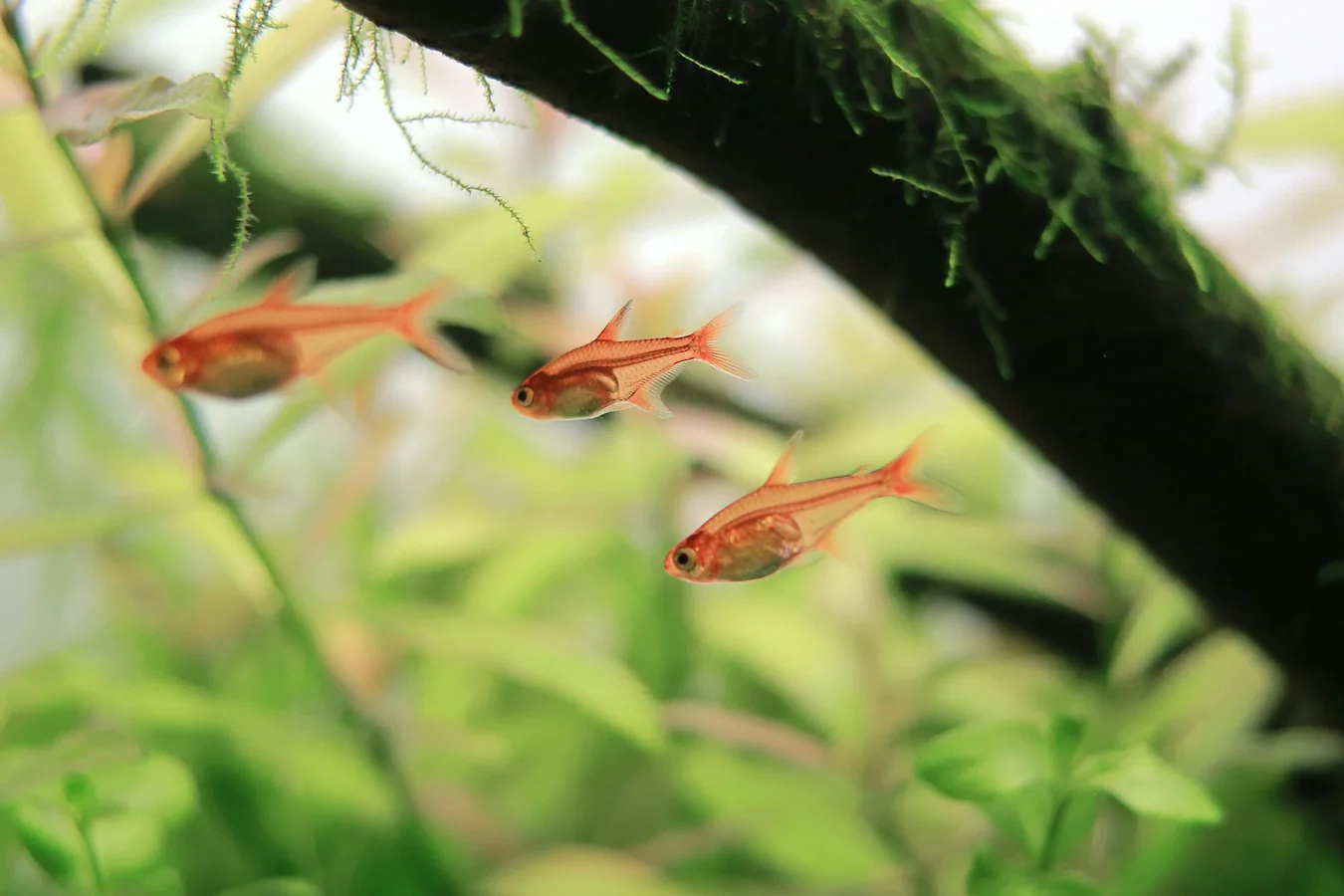
Quick Answer
Ember Tetra (Hyphessobrycon amandae) is a tiny, vibrant orange-red schooling fish from the Araguaia River basin in Brazil. It requires a minimum 10 gallon (38 liter) aquarium with a pH of 5.5 - 7.0 and temperature range of 72-82°F (22-28°C). This peaceful omnivore occupies the middle water column, must be kept in groups of 10 or more, and makes an excellent addition to carefully planned nano and community setups.
Quick Facts
| Scientific Name | Hyphessobrycon amandae |
|---|---|
| Common Names | Ember Tetra |
| Family | Characidae |
| Genus | Hyphessobrycon |
| Type | Freshwater |
| Temperament | peaceful |
| Care Difficulty | beginner |
| Lifespan | 3 years |
| Maximum Size | Up to 0.8 in (2 cm) |
| Diet | Omnivore |
| Temperature | 72–82°F (22–28°C) |
| pH | 5.5–7 |
| Hardness | 3–8 dGH |
| Minimum Size | 10 gallons |
Key Takeaways
- Known for its peaceful temperament and spectacular orange-red schooling displays in groups of 10 or more.
- Requires a minimum 10 gallon (38 liter) aquarium with a school of 10-15 individuals.
- Prefers soft, slightly acidic water (pH 5.5-7.0, GH 3-8 dGH) for optimal coloration and health.
- Mid-water feeder that prefers food as it sinks; not a surface feeder.
- Susceptible to neon tetra disease; remove dead fish immediately and quarantine new specimens.
- Can live 2-4 years with proper care; lifespan heavily influenced by water quality and group size.
- Breeding is moderate difficulty; fry require infusoria cultures for 10-14 days before accepting baby brine shrimp.
Overview
Species Overview
The Ember Tetra (Hyphessobrycon amandae) is one of the most captivating and popular nano aquarium fish in the hobby. Named for its striking deep orange-red coloration that resembles glowing embers, this tiny characin from Brazil has become a staple in planted tanks and biotope aquaria worldwide. Despite its diminutive size of barely 0.8 inches (2.0 cm), the ember tetra packs an extraordinary visual punch when kept in proper schools, creating a shimmering cloud of living fire in the middle water column.
Natural History
Native to the Araguaia River basin in central Brazil, specifically the Rio das Mortes and surrounding backwaters, ember tetras inhabit shallow, slow-moving tributaries, drainage ditches, and flooded areas. The Araguaia basin lies at the intersection of the Cerrado savanna and the Amazon forest, creating a region of extraordinary biodiversity. Their natural habitats are characterized by soft, acidic water, sand or sand-dirt mixed substrates, abundant fallen leaves and branches, and dense aquatic vegetation. They were first discovered in 1987 and named in honor of Amanda Bleher, mother of the famous fish explorer Heiko Bleher.
Physical Characteristics
Adults reach a maximum length of 0.8 inches (2.0 cm), making them one of the smallest tetras available in the aquarium trade. Males display more intense copper-red coloration, particularly during spawning, while females are slightly duller with rounder abdomens, especially when gravid. The body is a uniform, brilliant orange-red with a subtle sheen that catches light beautifully. A small dark spot is present near the base of the caudal fin. The fins are transparent or slightly tinted, enhancing their delicate appearance. Unlike neon tetras, ember tetras lack a reflective lateral stripe; their coloration is entirely body-based.
Key Identification Features
- Deep orange-red to copper body coloration (intense in males, slightly duller in females)
- Small dark spot at the base of the caudal fin
- Transparent or lightly tinted fins
- Maximum length of 0.8 inches (2.0 cm)
- No reflective lateral stripe (unlike neon or cardinal tetras)
- Females have larger swim bladders than males (a unique sexual dimorphism)
Important Taxonomic Note
Ember tetras are frequently confused with glowlight tetras (Hemigrammus erythrozonus). Glowlights have a silver body with a single copper-orange lateral stripe, while ember tetras are uniformly orange-red across the entire body. More importantly, they belong to completely different genera. Ember tetras are in the genus Hyphessobrycon, while glowlights are in Hemigrammus. This distinction matters for disease susceptibility, as both genera are vulnerable to neon tetra disease.
Diet
Dietary Requirements
Ember Tetras are omnivorous micro-predators with very small mouths. In the wild, they feed on small crustaceans, invertebrates, zooplankton, and microscopic algae. Their tiny mouths require appropriately sized food; they cannot consume standard-sized pellets or large flake pieces. They prefer to eat food as it begins to sink through the water column, making them mid-water feeders rather than surface or bottom feeders.
Recommended Foods
- High-quality crushed flakes or micro-flakes (staple diet)
- Micro-pellets (0.3 mm size or smaller)
- Frozen foods: daphnia, cyclops, baby brine shrimp, bloodworms (chopped to appropriate size)
- Live foods: baby brine shrimp, daphnia, grindal worms, microworms, vinegar eels
- Supplemental: spirulina powder, powdered fry food, and vegetable matter
Feeding Schedule
Feed small portions twice daily. Offer only what the fish can consume in 2-3 minutes. Because they are small, active fish with high metabolisms, frequent small feedings are superior to large, infrequent meals. Target feeding at the middle water column ensures they receive adequate nutrition before faster or larger tank mates consume the food. In community tanks, feed ember tetras first with slow-sinking foods, then add sinking foods for bottom-dwelling tank mates.
Foods to Avoid
- Large pellets or flakes that cannot fit in their tiny mouths
- Exclusively floating foods (they prefer sinking food)
- Beef heart or mammalian proteins (inappropriate for micro-predators)
- Overfeeding, which fouls water rapidly in nano tanks
Color-Enhancing Diet
To maximize their vibrant orange-red coloration, include foods rich in carotenoids and astaxanthin. High-quality color-enhancing flakes, spirulina, and foods containing krill or shrimp meal will intensify their natural pigmentation. A varied diet with regular live or frozen food supplementation produces significantly more colorful fish than dry foods alone.
Health
Health and Disease Management
Ember Tetras are generally hardy for their size but are vulnerable to diseases common in small, soft-water fish from blackwater habitats. Their primary weaknesses are susceptibility to neon tetra disease, sensitivity to poor water quality in nano tanks, and stress-related immune suppression. Preventive care through stable parameters, quarantine, and gentle handling is far more effective than reactive treatment.
Water Quality Sensitivity
These fish are notably sensitive to nitrate accumulation and pH swings. In small tanks, parameters can shift dangerously within hours. Nitrates above 20 ppm cause chronic stress and reduced immunity. Sudden pH drops greater than 0.2 units cause shock and can be fatal. Maintain weekly 20% water changes and test parameters regularly with a quality liquid test kit. Nano tanks require more vigilant maintenance than larger systems.
Small Fish Medication Protocol
Because of their small size and delicate structure, ember tetras require reduced-strength medications. Standard dosages designed for larger fish can be lethal. Always calculate medication doses based on the actual water volume. Copper is effective but must not exceed 0.15 mg/L. Formalin should be used at quarter-strength or avoided entirely. When in doubt, treat at half the recommended dose and extend the treatment duration.
Neon Tetra Disease (Pleistophora hyphessobryconis)
A microsporidian parasite that affects the entire tetra family, including ember tetras. It is highly communicable and fatal, with no effective medication. The parasite enters through the digestive tract when fish consume infected dead fish.
- Restlessness, particularly at night; loss of coloration with white areas expanding along the spine; S-curved spine as muscles waste; lumpy appearance from cysts; difficulty swimming with head down and twitching; tail takes a slight downward turn; fish no longer schools with others.
Ingestion of Pleistophora hyphessobryconis spores from eating infected dead fish. The parasite eats the fish from the inside out, starting with the digestive tract, then burrowing into skeletal muscles to produce cysts. Spreads through cannibalism, not water.
Remove and euthanize infected fish immediately. Remove all dead fish from the tank before other fish can consume them. Maintain crystal-clear, bacteria-free water with over-filtration and excellent aeration. Quarantine all new specimens for 4 weeks. There is no effective medication; prevention through immediate culling and water quality management is the only strategy.
Ich (Ichthyophthirius multifiliis)
A ciliated protozoan parasite causing white salt-like spots on the body and fins. Common during temperature fluctuations or stress in small fish.
- White cysts resembling salt grains on skin and fins, flashing against decor, rapid breathing, clamped fins, rubbing against substrate, loss of appetite.
Introduction via new fish, plants, or equipment. Triggered by temperature drops below 70°F (21°C) or stress weakening immune response. The parasite has a complex life cycle with free-swimming infectious stages.
Quarantine all new additions for 2-4 weeks. Maintain stable temperature at 74-78°F (23-26°C). If infected, raise temperature gradually to 82°F (28°C) and treat with half-dose malachite green (0.05 mg/L) or aquarium salt at 1 tablespoon per 5 gallons. For severe cases, use copper at 0.15 mg/L maximum in a hospital tank.
Bacterial Fin Rot (Aeromonas / Pseudomonas / Columnaris)
Bacterial infection causing frayed, discolored, or receding fins. Often secondary to neon tetra disease, poor water quality, or physical damage.
- Frayed or ragged fin edges, redness at fin base, fins appearing shorter than normal, possible white edge on fin margins, saddleback lesion (columnaris), lethargy, reduced schooling activity.
Maintain nitrates below 15 ppm through regular water changes. Treat with broad-spectrum antibiotics (e.g., kanamycin, nitrofurazone) at half-strength. For columnaris, treat all fish in the aquarium as it spreads rapidly. Medicated food is more effective than water-borne antibiotics for internal bacterial infections.
Color Loss and Stress Syndrome
Temporary or chronic loss of coloration due to environmental stress, not a pathogen. Can lead to immune suppression if prolonged and makes fish more susceptible to actual diseases.
- Pale or washed-out orange coloration, hiding behavior, reduced feeding, clamped fins, rapid breathing, refusal to school with the group.
Insufficient group size (under 8 individuals), bright unshaded lighting, strong water current, aggressive tank mates, hard water above 10 dGH, sudden parameter changes, inadequate plant cover, or recent shipment stress.
Maintain groups of 10+ with proper tank conditions. Provide dense plant cover and dim lighting. Maintain soft, acidic water (pH 5.5-7.0, GH 3-8). Acclimate new fish slowly over 1-2 hours using drip method. Color typically returns within 1-2 weeks in optimal conditions.
Internal Parasites (Nematodes / Cestodes)
Common in wild-caught or poorly conditioned specimens. Internal worms cause wasting, reduced immunity, and poor breeding condition.
- Weight loss despite normal appetite, white stringy feces, sunken belly, lethargy, faded coloration, reduced breeding activity, and failure to condition for spawning.
Introduction via wild-caught fish or contaminated live foods. More common in specimens from natural habitats than commercially bred or tank-raised fish.
Quarantine all new specimens for 2-4 weeks. Prophylactic treatment with praziquantel during quarantine is safe and effective. Purchase commercially bred or tank-raised specimens when possible. Culture your own live foods to avoid contamination.
Breeding
Breeding Ember Tetras
Ember tetra breeding is rated as moderate difficulty. While the fish spawn readily and frequently under proper conditions, raising the microscopic fry to juvenile stage requires significant preparation, particularly the establishment of micro-food cultures before spawning begins. Success rates improve dramatically with experience, but first attempts often result in high mortality due to inadequate food for the tiny fry.
Sexual Dimorphism
Males display more vivid copper-red coloration, especially during spawning periods. Females tend to have a lighter hue and appear slightly rounder, particularly when gravid with eggs. A unique dimorphism: females have larger swim bladders than males. Sexing is challenging outside of breeding condition and requires close observation of color intensity and body profile. Mature fish (9+ months) are required for reliable breeding.
Conditioning for Breeding
Condition a group of 12-15 adults (maintaining a 1 male:2-3 female ratio) with live foods for 2-3 weeks. Baby brine shrimp, grindal worms, daphnia, and bloodworms are ideal conditioning foods. Well-conditioned females will develop noticeably rounded abdomens and a dark gravid spot near the tail base 24-48 hours before spawning. Males will display their most intense coloration and actively chase females.
Spawning Setup and Trigger
Set up a dedicated 5-gallon (19 liter) breeding tank with 4 inches (10 cm) of water depth, pH 6.5, dGH 4, and temperature at 78-80°F (25.5-27°C). Use a sponge filter (the only acceptable filtration for fry tanks) and provide java moss or a spawning mop as egg deposition sites. The evening before spawning, perform a 50% water change with slightly cooler (2-3°F lower) water to simulate rainfall. Cover the tank completely with a dark towel for total blackout overnight. In the morning, remove the cover and expose to dim light or morning sun. This dawn simulation triggers spawning, which typically occurs within hours.
Egg and Fry Care
Critical: Remove ALL adults within 2-3 hours maximum of confirmed spawning. Ember tetras have zero parental instinct and will consume eggs and fry without hesitation. Eggs are small, transparent, and adhesive, sticking to plants and spawning mops. They hatch in 24-36 hours at 78-80°F. Newly hatched fry are microscopic, described as transparent eyelashes with eyeballs. They absorb their yolk sacs over days 2-4 and become free-swimming around day 5. The single most critical factor: Fry CANNOT eat baby brine shrimp, microworms, or commercial powdered food for the first 10-14 days. They REQUIRE infusoria (25-300 microns), vinegar eels (50-100 microns), or green water. Feed 40-50ml of infusoria culture to a 5-gallon fry tank 3-4 times daily. Around day 14, introduce baby brine shrimp, at which point growth accelerates dramatically. Daily 20-30% water changes are mandatory after week 1 to manage waste from heavy feeding. Growth is extraordinarily slow; fry reach only 1/4 inch (6 mm) at 4-6 weeks and sexual maturity at 4-6 months.
Realistic Expectations
First breeding attempts typically yield 15-25% fry survival. With experience and proper micro-food preparation, survival improves to 30-50%. The upper limit for experienced breeders is 60-70%. The total timeline from spawning to sellable juvenile is 8-12 weeks, requiring 30-60 minutes of daily care. This level of commitment surprises many beginners expecting rapid results. Successfully raising even 10-15 juveniles on the first attempt is a genuine achievement.
Compatible Tank Mates






Species Comparison
| Feature | Ember Tetra | Neon Tetra | Glowlight Tetra | Chili Rasbora |
|---|---|---|---|---|
| Maximum Size | 0.8 in (2.0 cm) | 1.5 in (3.8 cm) | 1.5 in (3.8 cm) | 0.8 in (2.0 cm) |
| Temperament | Peaceful, schooling, mid-water | Peaceful, schooling, mid-water | Peaceful, schooling, mid-water | Peaceful, shoaling, upper-water |
| Minimum Tank Size | 10 gal (38 L) for 10-15 | 10 gal (38 L) for 6-8 | 10 gal (38 L) for 6-8 | 10 gal (38 L) for 10-20 |
| Primary Diet | Omnivore: micro-pellets, flakes, small invertebrates | Omnivore: flakes, small pellets, brine shrimp | Omnivore: flakes, small pellets, daphnia | Omnivore: micro-crustaceans, zooplankton |
| pH Range | 5.5 - 7.0 | 5.0 - 7.5 | 6.0 - 7.5 | 4.0 - 7.0 |
| Unique Feature | Tiny size; intense orange-red; easy to breed | Iconic blue/red lateral stripe; sensitive to disease | Copper-orange lateral stripe; silver body | Deep scarlet red with black lateral stripe; surface feeder |