
Freshwater Invertebrates Care: beginnerpeacefulBottom Dweller

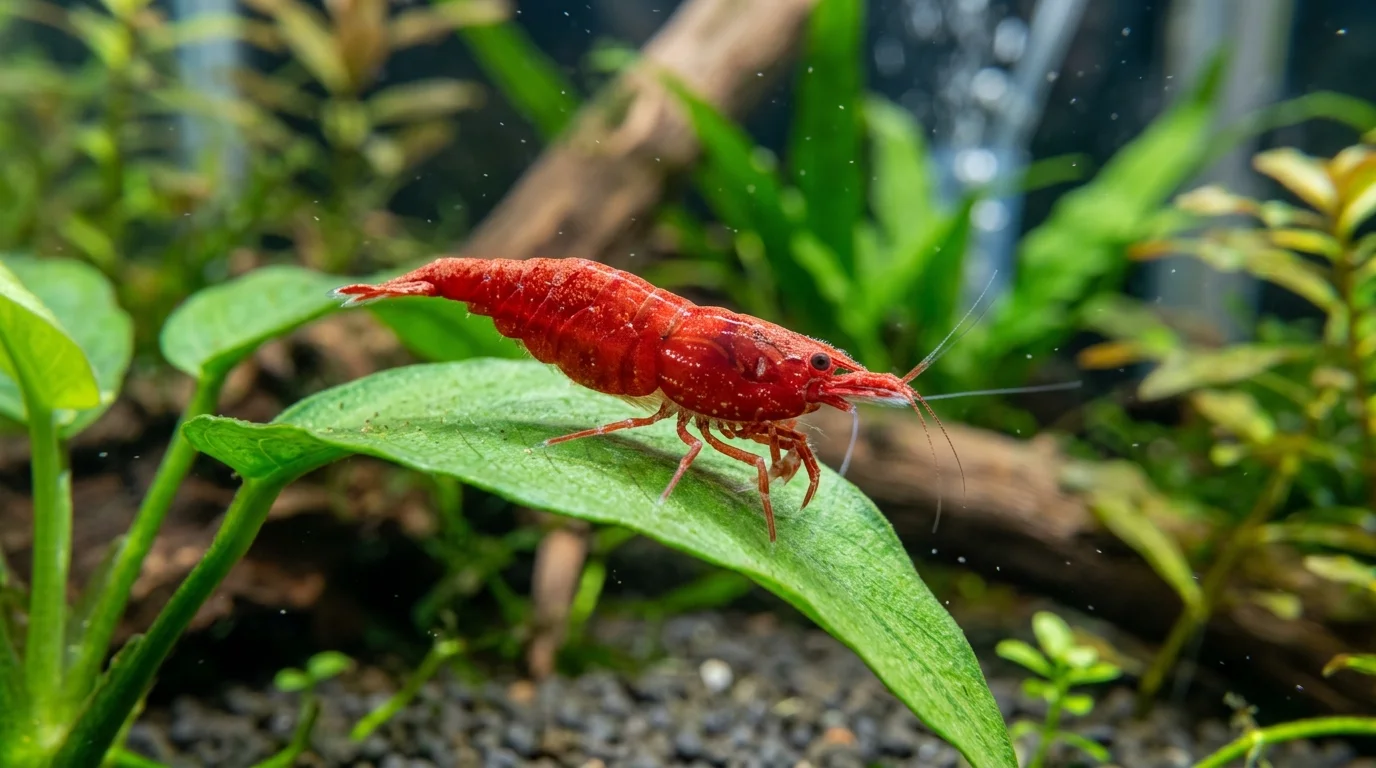
Neocaridina davidi (Cherry Shrimp)(Neocaridina davidi)

Origin: Freshwater river basins• Family: Atyidae

Verified Aquatic Care Protocol Water Parameters Cross-Checked
Neocaridina davidi (Cherry Shrimp) (Neocaridina davidi) — Aquarium Care & Species Profile

At a GlanceSpecs

Care Levelbeginner
Temperamentpeaceful
Adult Size1.5" (3.8 cm)
Min Tank Volume
Primary DietOmnivore
Water LayerBottom
Lifespan2 Years
pH Range6.8 – 7.8
Hardness6 – 8 dGH (<5 dKH)

Key Care Highlights

  • Requires a minimum aquarium capacity of 20 gallons.
  • Optimal water parameters: pH 6.8 – 7.8 at 70°F – 75°F (21°C – 24°C).
  • Thrives on high-quality omnivore diet formulated for bottom-dwellers.
  • Displays natural peaceful temperament in balanced systems.
  • Average captive life expectancy is 2 Years.
Verified Care Profile

Compatibility Snapshot

✓ Compatible Tankmates
Peaceful Community FishBottom DwellersDwarf Shrimp (with caution)
⚠ Avoid or Exercise Caution
Aggressive CichlidsFin NippersPredatory Species

*Always monitor fish individually during initial 48 hours in community tanks.

Overview & Taxonomy

Neocaridina davidi, commonly known as the Cherry Shrimp, is the quintessential dwarf freshwater invertebrate in modern aquascaping. Valued for its energetic grazing, minimal bioload impact, and prolific reproduction, this decapod crustacean plays a fundamental role in planted ecosystem maintenance.

Natural Habitat & Ecology

Indigenous to freshwater drainages across northern Taiwan and eastern China, Neocaridina davidi colonizes shallow streams, retention ponds, and flooded paddy basins. These wild habitats are characterized by slow-flowing currents, high dissolved oxygen, abundant submergent flora, and thick benthic leaf litter. This organic debris drives dense biofilms—a diverse micro-layer of autotrophic bacteria, diatoms, protozoa, and microscopic fungi that forms the foundational component of their nutrition.

Physiology, Exoskeleton, and Molting

Like all arthropods, Cherry Shrimp are bounded by an external chitinous cuticle reinforced with calcium carbonate and magnesium salts. Physical expansion requires periodically casting off this rigid barrier through ecdysis. Prior to shedding, the hypodermal layer synthesizes a pliable new shell beneath the old carapace while enzymatically reabsorbing mineral components. Proper mineralization via dissolved divalent cations in the water column (6–8 dGH) is critical; osmotic imbalances or improper calcium ratios lead to exuviation failure, trapping the specimen at the cervical seam.

Behavior and Tank Compatibility

Neocaridina are non-aggressive, social detritivores lacking morphological predatory adaptations. Their lifespan is dedicated to continuous surface grazing using specialized chelae equipped with microscopic setae. In community displays, their diminutive adult stature (1.0–1.5 inches) renders them vulnerable to opportunistic predation. Only the herbivorous Otocinclus catfish represents a completely benign tank mate across all developmental life stages. When keeping shrimp alongside peaceful nano fish like Boraras or micro-rasboras, dense vegetation (such as Christmas Moss, Fissidens, or Vallisneria) and botanical hides (cholla wood, catappa leaves) are vital to ensure shrimplet survival.

For operational guidance on tank setup, drip acclimation, and breeding management, review our dedicated Neocaridina Care & Breeding Guide.

Dietary Protocol & Husbandry Essentials

Biofilm Foraging vs. Supplementary Nutrition

Over 80% of a dwarf shrimp's daily intake is derived from continuous micro-grazing on natural surface matrices. Establishing a mature, seasoned aquarium environment (cycled for at least 4 to 6 weeks) before stocking is essential for colony survival. While supplemental feeds provide targeted chitin-building minerals and carotenoids for pigmentation, overfeeding introduces organic waste spikes that trigger lethal pathogenic bacterial blooms.

  • Primary Sustenance: Naturally occurring biofilm, epilithic algae, and microbial decomposing botanicals.
  • Targeted Supplementation: Insoluble sinking invertebrate pellets, pure spirulina, and blanched calcium-rich botanicals (spinach, kale, or zucchini) fed in micro-portions 2 to 3 times weekly.
  • Organic Waste Caution: Any manufactured food unconsumed within 2 hours must be siphoned out to preserve water chemistry and prevent blooms of parasitic Planaria or Hydra.

Sources & References

  • Effects of Water Hardness and Calcium Concentration on Neocaridina davidi Survival and Reproduction
    • Source:Aquaculture Research, DOI: 10.1111/are.13787
  • Freshwater Decapod Crustaceans: Physiology of Molting and Osmoregulation
    • Source:Journal of Crustacean Biology, DOI: 10.1163/1937240X-00002241
  • Ecdysteroid Titers and Exoskeletal Chitin Dynamics in Dwarf Freshwater Shrimp
    • Source:Comparative Biochemistry and Physiology Part A: Molecular & Integrative Physiology, DOI: 10.1016/j.cbpa.2014.07.012

🏞 Habitat & Tank Setup Specifications

Aquarium Dimensions & Surface

Recommended for systems 20+ gallons with ample swimming corridors.

Cover & Lid Requirements

Standard glass or mesh canopy to prevent moisture loss and leaping.

Lighting & Shading

Low to moderate lighting. Excessive light without plant cover can cause stress and encourage unwanted algae, though they will eat many types of soft green algae.

Water Flow & Currents

Gentle to moderate flow with biological sponge or canister turnover.

🍽 Dietary Protocol & Nutrition Schedule

Feed appropriate portions 1-2 times daily based on the species' natural feeding habits (omnivore, bottom column feeder). Fast one day per week to maintain digestive efficiency.

Staple Food

High-grade species-specific pellets or flakes matching bottom layer.

Live & Frozen Prey

Bloodworms, daphnia, brine shrimp, or surface insects 2-3x weekly.

Foods to Avoid

Mammalian fats, oversized pellets, or sinking foods if strictly surface-dwelling.

Neocaridina vs. Caridina Shrimp Husbandry

← Scroll horizontally to inspect full matrix →
FeatureNeocaridina (Cherry)Caridina (Crystal Red)
Scientific NameNeocaridina davidiCaridina cantonensis
DifficultyBeginnerIntermediate to Advanced
pH Preference6.8 – 7.8 (Neutral to Hard)5.5 – 6.5 (Acidic / Soft)
Substrate RequirementInert Sand or Fine GravelActive Buffering Aquasoil
General Hardness (GH)6 – 8 dGH (100–145 ppm)4 – 6 dGH (70–105 ppm)
Carbonate Hardness (KH)2 – 5 dKH (Buffers pH)0 – 1 dKH (Zero buffer required)
Water Stability NeedsAdaptable; requires stable parametersObligate specialist; highly sensitive to shifts

Frequently Asked Questions

What is the scientific classification of Cherry Shrimp?

Cherry Shrimp belong to the species Neocaridina davidi (formerly classified as Neocaridina heteropoda or Neocaridina denticulata sinensis). They are decapod freshwater shrimp of the family Atyidae native to eastern China and northern Taiwan. While selective breeding has established morphs like Red Cherry, Blue Dream, Yellow Golden Back, Orange Sunkist, and Green Jade, they represent the identical biological species and will crossbreed.

What are the exact water parameters for Neocaridina shrimp?

Target a pH of 6.8 to 7.8, General Hardness (GH) of 6 to 8 dGH (approx. 100–145 ppm), Carbonate Hardness (KH) of 2 to 5 dKH, Total Dissolved Solids (TDS) of 150 to 220 ppm, and water temperatures of 70 to 75°F (21 to 24°C). Parameter stability is far more critical than chasing exact figures; sudden osmotic shifts or GH depletion below 4 dGH interrupt ecdysis, causing fatal molting entrapment (the White Ring of Death).

What do Neocaridina shrimp eat?

They are continuous micro-grazers that feed primarily on naturally occurring biofilm, epiphytic microalgae, and decaying organic matter. In a mature aquarium, supplement 2 to 3 times weekly with high-calcium sinking shrimp pellets, spirulina wafers, or blanched vegetables (spinach, zucchini). Always remove uneaten food within 2 hours to prevent bacterial surges and lethal planaria infestations.

Are Neocaridina shrimp compatible with fish?

The only truly harmless fish companion is the herbivorous Otocinclus catfish. While adult shrimp can coexist with small, peaceful nano species (such as Chili Rasboras, Celestial Pearl Danios, and Ember Tetras), any fish with a mouth large enough to swallow a 2 mm shrimplet will opportunistically prey upon them. For maximum breeding yields, establish a dedicated species-only aquarium or provide extensive cover using dense Java moss and botanicals.

What causes the White Ring of Death in Cherry Shrimp?

The White Ring of Death is a fatal molting complication where the old chitinous exoskeleton fractures unevenly across the cervical groove, exposing a white or clear band of hypodermis. It is triggered by general mineral deficiencies (GH < 6 dGH), insufficient dietary calcium and protein, or osmotic shock caused by water changes greater than 10–15% at a time.

How do you distinguish male from female Neocaridina shrimp?

Females exhibit pronounced sexual dimorphism: they are larger (up to 1.5 inches), feature deeper, rounded abdominal pleura designed to carry eggs, and display a dorsal 'saddle' (developing ovaries) behind the cephalothorax. Males are smaller, more slender, less vibrantly pigmented, and exhibit a straight, streamlined abdomen lacking protective lateral plates.