
Quick Answer
Green Spot Algae (GSA) is a hard, calcified, dot-like algae that grows on glass, slow-growing leaves, and hardscape. Counterintuitively, it's usually caused by low phosphate combined with too much light, not excess nutrients -- raising phosphate to 2-5 ppm and using a razor scraper on glass are the two most effective fixes.
Key Takeaways
- GSA is a hard, calcified spot algae found on glass and slow-growing leaves like Anubias
- It's usually caused by low phosphate combined with strong light, not excess nutrients
- A razor blade scraper is the fastest way to clear it from glass
- Raising phosphate to 2-5 ppm addresses the actual root cause
- Nerite snails are the most effective biological control for hard algae like GSA
What Is Green Spot Algae?
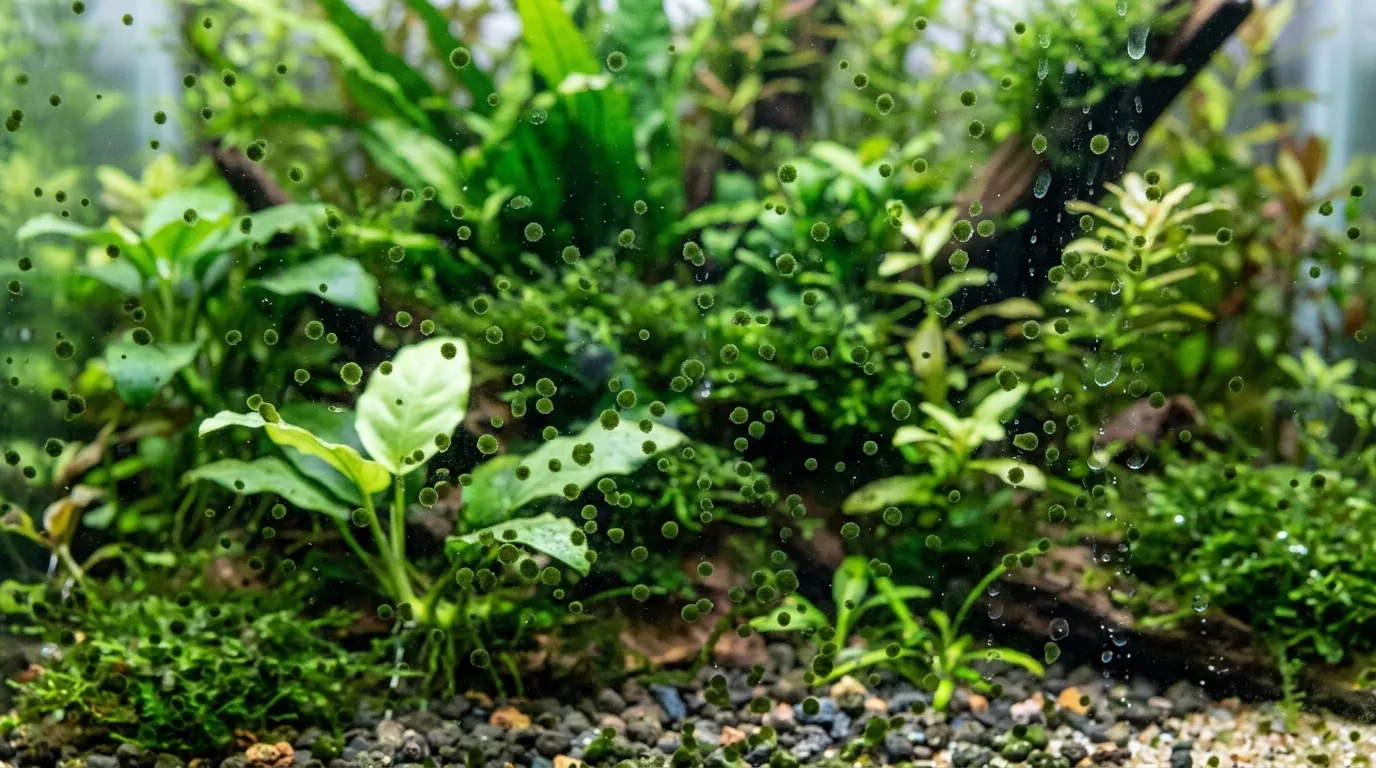
Green Spot Algae (GSA) appears as small, hard, dark-green circular spots stuck firmly to glass, slow-growing plant leaves (Anubias, Java Fern), and hardscape. Unlike most other algae types, it's calcified and genuinely difficult to remove by wiping -- you generally need a razor blade or scraper on glass, and on leaves it often won't come off at all without damaging the leaf.
Why It Grows
GSA is one of the few common algae types that's linked to a nutrient deficiency rather than excess -- specifically, low phosphate relative to the amount of light the tank is receiving. It's common after a light upgrade (switching to a stronger LED fixture) or in tanks running lean-dosing/low-tech setups where phosphate is kept intentionally minimal. Old bulbs suddenly being replaced with brighter, broader-spectrum ones is a classic trigger.
Step-by-Step Removal
- Scrape the glass with a razor blade scraper -- this is genuinely the fastest way to clear it from glass surfaces.
- Leave GSA on leaves alone if it's only lightly speckled; heavy removal attempts usually damage the leaf tissue. Trim badly affected leaves instead.
- Raise phosphate levels to roughly 2-5 ppm using a phosphate-containing fertilizer if you're currently dosing lean -- this is the actual root-cause fix, not just a cosmetic one.
- Reduce light intensity or duration slightly if raising phosphate isn't an option, to rebalance the light-to-nutrient ratio.
Prevention
Keep phosphate in the 2-5 ppm range consistently (a weekly all-in-one or EI-style fertilizer dosing routine handles this automatically) and avoid sudden jumps in light intensity without adjusting CO2 and nutrients to match.
Algae-Eaters That Help
Nerite snails are the best option for GSA specifically -- their radula is well-suited to scraping hard, calcified algae off glass and decor that most fish and shrimp can't touch.