
Quick Answer
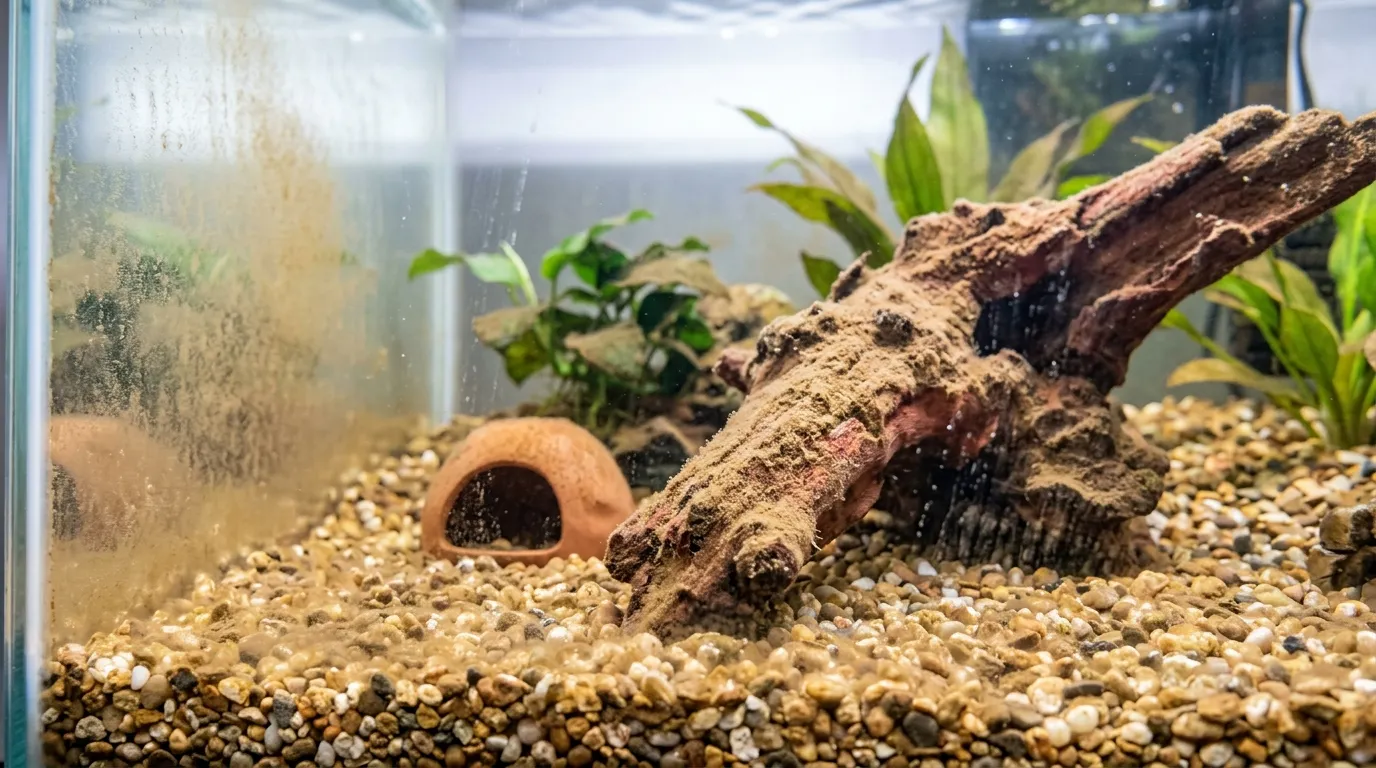
Diatom algae is a brown, dusty film that coats glass, decor, and plant leaves, almost always in tanks under 8 weeks old. It's fed by silicates from new substrate and tap water, and it typically clears on its own as the tank matures -- wiping and gravel vacuuming just help it along.
Key Takeaways
- Diatom (brown) algae is a normal new-tank-syndrome phase, not a sign of a problem
- It's fueled by silicates from new substrate, decor, and tap water
- Most blooms clear on their own within 6-8 weeks as the tank matures
- Wiping glass and gravel vacuuming speeds up the process but won't stop it outright
- Otocinclus catfish and nerite snails are the best biological cleanup crew for it
What Is Diatom Algae?
Diatom algae (often just called 'brown algae') shows up as a brownish, dusty or velvety coating on the glass, substrate, decor, and even plant leaves. It wipes off easily with a fingertip or algae pad, leaving a cloud of brown particles behind. It's one of the most common algae types new fishkeepers encounter, almost exclusively in tanks that have been running less than 6-8 weeks.
Why It Grows
Diatoms need silica to build their cell walls, and new tanks are loaded with it -- from fresh substrate, new decor, and often from tap water itself. Combined with the light already running in a newly set-up tank, conditions are ideal for a diatom bloom while the tank's biological filtration and competing plant growth are still establishing. This is why it's considered part of 'new tank syndrome' rather than a sign something is wrong.
Step-by-Step Removal
- Wipe glass with an algae pad or scraper during your regular maintenance.
- Gravel vacuum the substrate to remove settled diatoms along with debris during water changes.
- Rinse or replace filter media if diatoms have coated it heavily.
- Be patient -- in most tanks, diatoms peak around week 3-4 and clear up on their own by week 6-8 as silicates get consumed and biological processes stabilize.
Prevention
Using RO/DI water for water changes reduces the silicate load significantly if diatoms are a recurring problem in an established tank (which is less common but does happen with certain tap water sources). Otherwise, prevention mostly means accepting it as a normal new-tank phase rather than over-correcting with harsh cleaning or reduced lighting.
Algae-Eaters That Help
Otocinclus catfish are diatom specialists and will clear light films from glass and leaves quickly. Nerite snails are also effective, particularly on harder surfaces like glass and decor.