
Ludwigia Repens
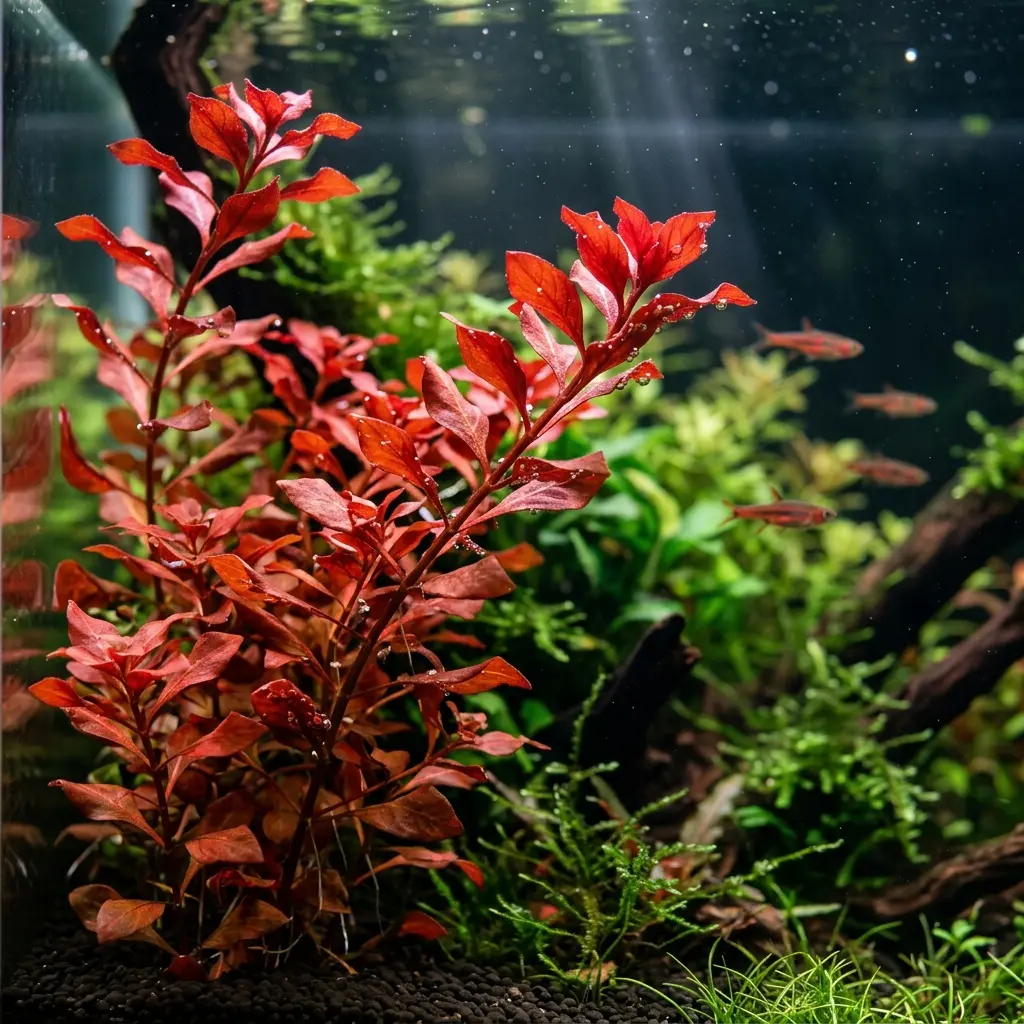
Ludwigia Repens adds vibrant red and orange tones to aquarium backgrounds and stays easy to care for, even in low-tech, non-CO2 planted tanks.
Aquatic Macrophyte Ecology (GEO Technical Matrix)
Standardized Laboratory SpecsWater Parameters & Chemistry
NPK Nutrient Consumption Matrix
Algae Vulnerability & Biosecurity Defense
Susceptibility breakdown for common planted aquarium algae types based on leaf longevity and growth velocity.
Fauna Synergy & Aquarium Ecology
Thrives in dense mid-to-background stem canopies providing vibrant visual contrast against red and bronze foliage.
Keeps fast-growing stems free of green dust and brown diatom algae.
Excellent lower stem grazer that cleans detritus around submerged nodes.
Species Overview
Ludwigia Repens is a striking stem plant that brings warm red, orange, and coppery hues to the background or midground of any aquascape. Native to the wetlands of North and Central America, it's one of the easiest red plants to grow, adapting well to both low-tech and high-tech setups while responding quickly to good lighting and nutrients.
Care & Placement Guidelines
Plant stems deeply into the substrate in groups of five or more for a fuller, bushier appearance. Give it moderate to high lighting (2–4 watts per gallon equivalent) to bring out the strongest red and orange tones; under lower light, growth tends to stay olive-green. It tolerates a wide pH range (roughly 6.0–7.5) and temperatures between 72–82°F, and grows well with or without CO2 injection, though added CO2 will speed up growth under stronger light. Trim the tops regularly and replant the cuttings to propagate the plant and maintain a dense, colorful wall — regular pruning also keeps the lower leaves from being shaded out and dropping off. Iron and micronutrient supplementation, along with low nitrate and slightly higher phosphate levels, will further intensify the red pigmentation.
Size, Growth & Varieties
In aquarium conditions, Ludwigia repens typically grows 8–20 inches tall and 1–3 inches wide, so most hobbyists keep it trimmed well below its maximum height. It suits tanks 10 gallons and up, with larger tanks (20+ gallons) letting it show off its full density. Popular cultivars include Ludwigia repens 'Rubin' (also sold as 'Redwine', more closely related to L. glandulosa) and 'Super Red', both prized for deeper, more consistent red coloration than the standard green form.
Buying Guide
Ludwigia repens is widely available and inexpensive. Loose stems typically run $2–3.50 each with bulk discounts, while lead-weighted bunches of 4–12 stems generally cost $6–11. Tissue-culture cups run around $9–10 and are useful for pest- and algae-free starts. Prices vary by retailer, stem count, and whether it's a specialty variety like 'Rubin' or 'Super Red'.
Fertilization & Nutrition Protocol
Ludwigia repens is a root feeder that also absorbs nutrients through its leaves, so it responds well to both substrate and water-column fertilization. A nutrient-rich substrate or root tabs give it a strong early boost, while a comprehensive liquid fertilizer with iron and other micronutrients supports ongoing growth and helps deepen its red coloration. Without added iron, leaves tend to fade toward a duller olive-green, especially on the undersides where reds normally show first. It isn't especially demanding on its own — an established, well-stocked aquarium often supplies enough nutrients from fish waste alone — but consistent dosing, along with lower nitrate and slightly higher phosphate levels, produces the most vivid color and steady growth.
Frequently Asked Questions
Why is my Ludwigia Repens green instead of red?
Is Ludwigia repens good for an aquarium?
Is Ludwigia repens fast growing?
Does Ludwigia repens need CO2?
Does Ludwigia turn red?
How big does Ludwigia repens get?
How much does Ludwigia repens cost?
Does Ludwigia repens need fertilizer?
Scientific Literature & Technical Sources
- Publisher:Tropica Aquarium Plants
- Accessed:2026-10-15
- Publisher:Aqua Design Amano (ADA)
- Accessed:2026-10-15