
Quick Answer
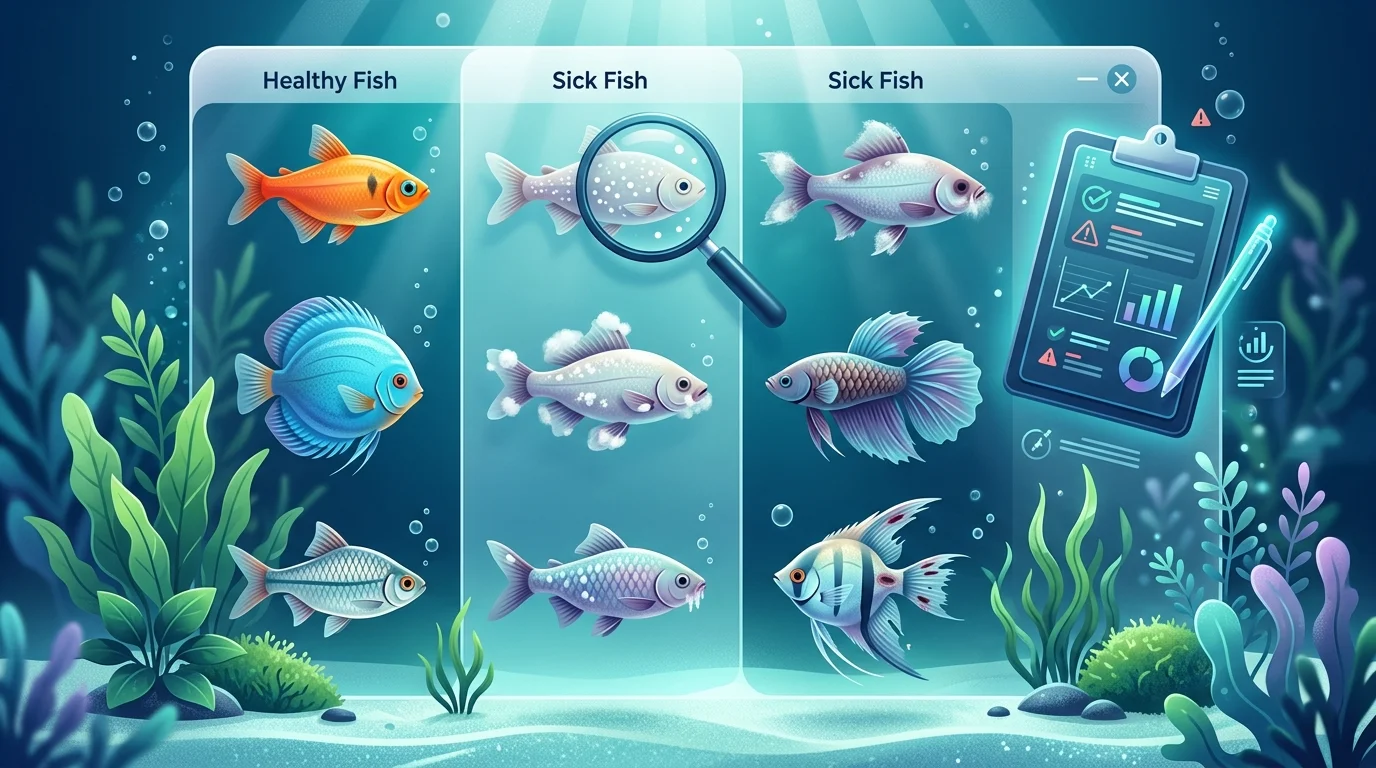
When a fish shows signs of illness, symptoms can overlap and visual appearance alone may not establish a definitive diagnosis. For example, Ich commonly appears as distinct white spots resembling grains of salt, Velvet commonly produces a fine gold or rust-colored dust-like appearance, and Columnaris is a bacterial disease that can produce pale or whitish lesions that may be confused with fungal growth. Similar-looking symptoms can have different causes. Water quality and fish species matter. Use this chart to compare multiple signs, narrow down possible causes, and decide which detailed disease guide to investigate next.
How to Use This Fish Disease Comparison Chart
This chart is a diagnostic reference designed to help you narrow down possible causes when your fish is unwell. It is important to note that symptoms can overlap significantly between different conditions. Visual appearance alone may not establish a definitive diagnosis. Furthermore, water quality and the specific fish species matter greatly when determining both the cause and the safest treatment plan. Rather than relying on a single symptom, use this guide to compare multiple signs. Once you have narrowed down the possibilities, refer to our individual disease guides for detailed treatment information.
Bloating, Buoyancy and Internal Symptoms
Internal issues can manifest as abnormal swimming or swelling. Remember that conditions like dropsy and swim bladder issues are often syndromes with multiple possible underlying causes, not necessarily a single infectious disease.
Swim Bladder Disease vs Dropsy vs Internal Parasites
| Condition / Syndrome | Key Visual Clue | Behavioral Sign | Possible Underlying Causes | Treatment Category |
|---|---|---|---|---|
| Swim Bladder Disease | No distinct external lesions; fish may appear physically normal or slightly bloated. | Abnormal buoyancy/swimming (floating upside down, sinking, or swimming sideways). | Constipation, overfeeding, bacterial/parasitic infection, or genetic deformity. | Depends on underlying cause (fasting/dietary adjustment or antibacterial). |
| Dropsy | Severe abdominal enlargement with raised/pineconing scales. | Lethargy, loss of appetite, hovering near the bottom or surface. | Symptom of organ failure, often driven by systemic bacterial infection or poor water quality. | Supportive care / water-quality correction; antibacterial treatment if bacterial. |
| Internal Parasites & Worms | Weight loss despite eating, sunken belly, or visible worms protruding from the vent. | Appetite changes, white/stringy feces. | Internal parasites (nematodes, tapeworms, etc.). | Antiparasitic treatment. |
Tissue Damage and Fungal-Looking Lesions
It is very common to mistake bacterial tissue decay for a fungal infection. Do not assume that every damaged or fuzzy lesion is fungal. Secondary infections can also complicate a visual diagnosis.
Fin Rot vs True Fungus vs Hemorrhagic Septicemia
| Disease | Key Visual Clue | Behavioral Sign | Primary Cause | Treatment Category |
|---|---|---|---|---|
| Fin Rot | Tissue/fin deterioration, frayed or ragged fin edges often with white or black margins. | Lethargy in severe cases. | Bacterial infection often associated with environmental factors (poor water quality). | Supportive care / water-quality correction; antibacterial treatment. |
| True Fungus | Distinctly fluffy, cotton-like white or gray tufts on the body or fins. | Usually appears on pre-existing wounds or dead tissue. | Fungal infection (often secondary). | Antifungal treatment. |
| Hemorrhagic Septicemia | Red streaks in the fins, blood spots (hemorrhages) under the scales or skin. | Lethargy, clamped fins, loss of appetite. | Systemic bacterial disease. | Antibacterial treatment. |
Other Common Conditions
The following conditions are also frequently encountered but present with their own distinct characteristics:
- Anchor Worm & Fish Lice: Visible external macro-parasites attached to the fish's skin or fins.
- Gill & Skin Flukes: Microscopic parasites causing heavy flashing, localized redness, and severe respiratory distress (gasping at the surface).
- Hexamita / Hole in the Head: Pitting or eroding lesions primarily around the head and lateral line, often accompanied by stringy white feces.
Why One Symptom Is Not Enough
Many diseases share common early warning signs, such as lethargy, clamped fins, or a loss of appetite. Because these signs are non-specific, relying on just one symptom can lead to the wrong treatment. Always look for a combination of primary (e.g., spots, lesions) and secondary (e.g., behavioral changes) signs.
When to Isolate Fish
If you suspect a contagious disease, moving the affected fish to a dedicated quarantine or hospital tank can prevent the spread of the pathogen to healthy tankmates. Isolation also allows you to administer treatments safely without harming sensitive invertebrates or plants in your main display aquarium.
Water Quality and Disease Diagnosis
Poor water quality is the most common underlying trigger for fish disease. Elevated ammonia, nitrite, or nitrate levels cause chronic stress, suppressing the fish's immune system and leaving them vulnerable to opportunistic bacteria and parasites. Always test your water parameters before starting any medication.
Key Takeaway
Use this comparison chart to narrow down the possibilities based on a combination of visual and behavioral clues. Once you have a strong suspicion, consult the specific disease guide for comprehensive, targeted treatment protocols rather than guessing with broad-spectrum medications.
White Spots and External Coatings: Ich vs Velvet vs Columnaris
| Disease | Key Visual Clue | Behavioral Sign | Primary Cause | Treatment Category |
|---|---|---|---|---|
| Ich / White Spot Disease | Distinct white spots resembling grains of salt | Flashing (scratching against objects), lethargy | Parasite (Ichthyophthirius multifiliis) | Antiparasitic treatment; temperature management may be appropriate in some setups |
| Velvet / Gold Dust Disease | Fine dust-like or gold/rust-colored coating, sometimes only visible under a flashlight | Flashing, clamped fins, respiratory distress | Parasite (Oodinium / Piscinoodinium) | Antiparasitic treatment (see disease guide) |
| Columnaris / Cotton Wool Disease | Pale, gray, or whitish fuzzy/stringy patches; saddle-like lesions on the back | Lethargy, rapid breathing if gills are affected | Bacterial (Flavobacterium columnare) | Antibacterial treatment |
Troubleshooting Guide
1 White spots but uncertain diagnosis
Check if the spots are distinct like salt grains (Ich) or a fine dust (Velvet). Look for behavioral signs like flashing. Consult the specific disease guides before choosing an antiparasitic treatment.
2 Fuzzy patch but uncertain whether bacterial or fungal
Columnaris (bacterial) often looks like white/gray fuzz or saddle-like lesions, while true fungus looks like fluffy cotton tufts on dead tissue. If uncertain, test water quality and refer to both disease guides.
3 Fish is bloated
Determine if the bloating is accompanied by pineconing scales (Dropsy) or abnormal swimming/buoyancy (Swim Bladder Disease). Fasting can help rule out simple constipation.
4 Fish is losing balance
Abnormal buoyancy or swimming sideways is a classic sign of swim bladder dysfunction. Fast the fish for 24-48 hours as a first step to see if the issue is related to overfeeding.
5 Multiple fish showing symptoms
When multiple fish are sick simultaneously, highly contagious pathogens (like Ich or Velvet) or severe environmental issues (like an ammonia spike) are the most likely culprits. Test water parameters immediately.
6 Symptoms persist after treatment
Ensure you have completed the full treatment course. If symptoms remain, re-evaluate your diagnosis using this comparison chart, check water parameters, and look for secondary infections.
7 Water parameters are abnormal
Perform a water change immediately to dilute toxins (ammonia/nitrite/high nitrate). Correcting water quality is often a necessary prerequisite for any medication to be effective.
Frequently Asked Questions
How can I compare common fish diseases?
How can I distinguish Ich from Velvet?
Can Columnaris look like fungus?
Can different fish diseases cause similar symptoms?
Is dropsy a specific disease?
Can swim-bladder problems have different causes?
Should I diagnose fish disease from appearance alone?
When should I isolate a sick fish?
Why should I check water quality when diagnosing disease?
Glossary of Terms
- Ich
- Ichthyophthirius multifiliis, a common ciliated protozoan parasite that causes white, salt-like spots on the fish's body and gills.
- Velvet
- A parasitic infection (Oodinium or Piscinoodinium) that produces a fine, gold or rust-colored, dust-like coating on the fish.
- Columnaris
- A bacterial infection (Flavobacterium columnare) that causes white, fuzzy, or stringy patches and saddle-like lesions, often mistaken for fungus.
- Fin Rot
- A symptom of bacterial infection where the tissue of the fins deteriorates and frays, often linked to poor water quality.
- True Fungus
- An infection that appears as fluffy, cotton-like tufts, typically colonizing pre-existing wounds or dead tissue.
- Dropsy
- A syndrome characterized by severe internal swelling and raised, pineconing scales, often indicating organ failure.
- Secondary Infection
- An infection that occurs during or after treatment for another infection, taking advantage of a weakened immune system or open wounds.
- Water Quality
- The physical and chemical characteristics of aquarium water, including ammonia, nitrite, nitrate, pH, and temperature, which dictate fish health.