
Quick Answer
Aquarium plants propagate through stem cuttings, runner division, rhizome splitting, or adventitious plantlet separation depending on species. Stem plants like Rotala and Ludwigia root within 7–14 days when cuttings of 4–6 inches are planted 2 inches into a nutrient-rich substrate. Rhizome plants like Anubias and Java fern should never be buried — attach them to hardscape instead.
Key Takeaways
- Propagate stem plants rapidly by cutting healthy stems just below a leaf node and planting them directly into the substrate to develop roots within a week.
- Divide rosette plants like Cryptocoryne by gently separating the mature root ball into smaller clumps, ensuring each new section retains at least three healthy leaves.
- Wait until new runner plantlets are at least one to two inches tall before severing the horizontal shoot connecting them to the mother plant.
- Multiply Java fern and Anubias by slicing the horizontal rhizome into sections, but never bury these pieces in substrate as they will quickly rot.
- Create a dedicated 10 to 20-gallon grow-out tank with moderate lighting running 10 to 12 hours daily to accelerate plant propagation without disturbing your main display.
One of the most satisfying skills in planted aquariums is propagation – creating new plants from existing ones. With a few basic techniques, a single plant can become dozens, filling your tank for free. This guide covers propagation methods for the most common aquarium plants.
Method 1: Stem Cuttings (Fastest Method)
Best for: Rotala, Hygrophila, Ludwigia, Bacopa, Limnophila, Hornwort.
How to do it: Use sharp scissors to cut a healthy stem just below a leaf node – the small bump where leaves emerge. Remove the lower 2‑3 leaves to expose the stem. Plant the cutting directly into the substrate, or let it float until roots appear. New roots will emerge from the nodes within 3‑7 days.
Pro tip: Make the cut at a 45‑degree angle – increases the surface area for root growth. For faster results, apply a few drops of liquid fertilizer to the water column after planting cuttings.
Method 2: Division
Best for: Cryptocoryne, Amazon swords, Vallisneria, Echinodorus, Aponogeton.
How to do it: Remove the mother plant from the tank. Gently separate the root ball into smaller clumps, each containing at least 3‑5 healthy leaves and a good portion of roots. Replant each clump. The original plant may be stressed for 1‑2 weeks – don’t be alarmed. New growth indicates successful division.
Pro tip: Perform division during a major water change – easier access and less mess.
Method 3: Runners (Offsets)
Best for: Vallisneria, Sagittaria, Dwarf sag, Cryptocoryne parva, and many carpeting plants (Monte Carlo, Dwarf baby tears).
How to do it: A runner is a horizontal shoot that grows away from the mother plant, producing small plantlets at nodes. Allow the runner to grow until the new plant has at least 4‑5 leaves and visible roots. Cut the runner between the mother and new plant, then gently remove the new plant.
Pro tip: Don’t cut runners too early – immature plantlets have low survival rates. Wait until the new plant is at least 1‑2 inches tall.
Method 4: Rhizome Division
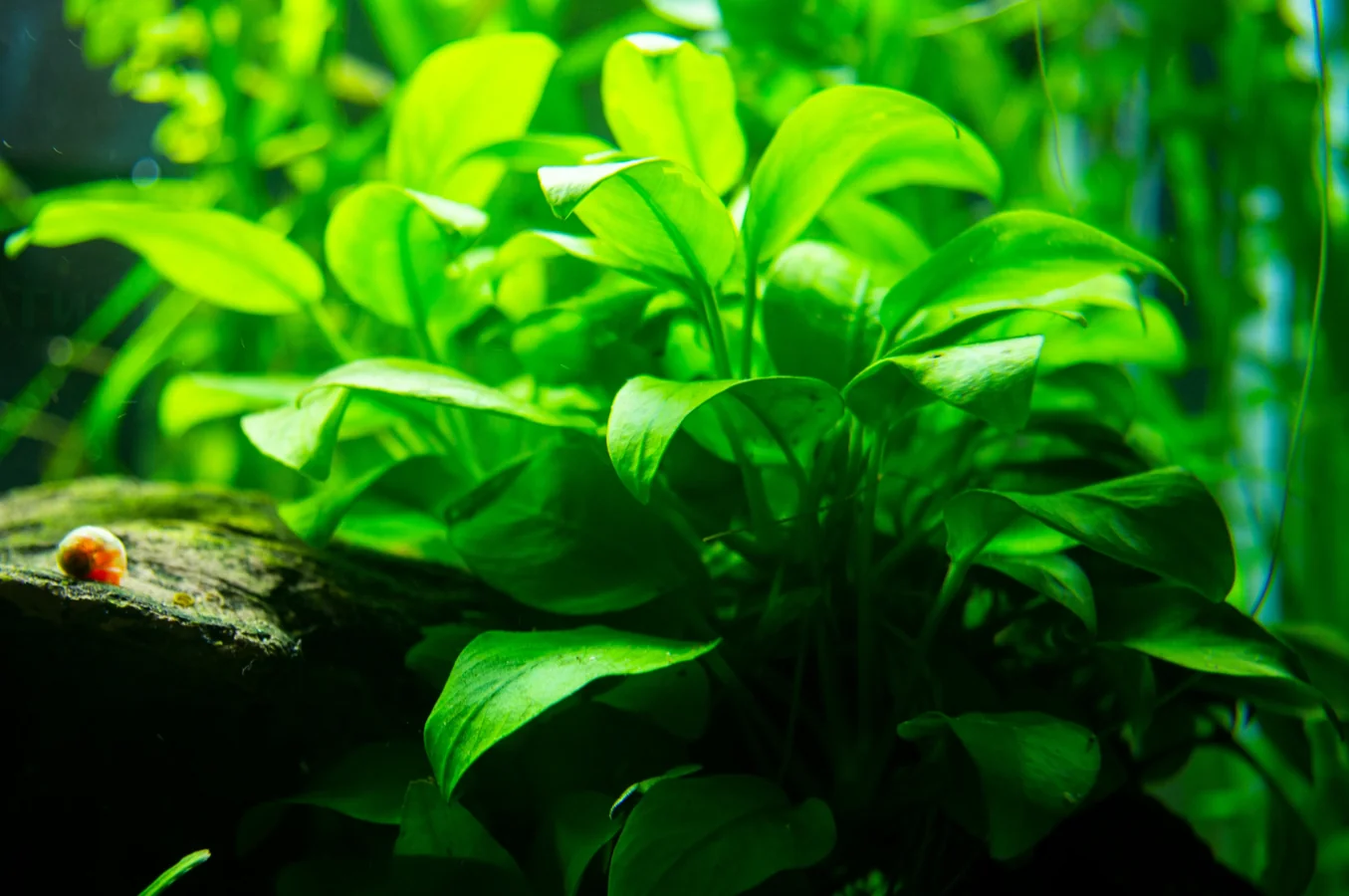
Best for: Java fern, Anubias, Bucephalandra, Bolbitis.
How to do it: These plants grow from a thick horizontal stem (rhizome). Remove the plant from the tank. Use sharp scissors or a knife to cut the rhizome into sections, each containing at least 2‑3 leaves and some roots. Tie or glue each section to a new piece of wood or rock – never bury the rhizome in substrate (it will rot).
Pro tip: Anubias grows extremely slowly. Be patient – it may take 3‑6 months for a single rhizome division to become a full plant.
Method 5: Adventitious Plantlets
Best for: Java fern (Microsorum pteropus), certain mosses.
How to do it: Java fern mother plants will grow small plantlets directly on mature leaves. When these plantlets have 3‑4 leaves and small roots, gently pluck them off and attach them to new wood or rock.
Pro tip: Leave the plantlet until it naturally begins to separate – forcing it too early reduces survival.
Fastest Propagators for Beginners
- Hornwort (Ceratophyllum demersum): Literally just cut a stem into 4‑6 inch segments. Each segment becomes a new plant.
- Water sprite (Ceratopteris thalictroides): Produces plantlets on leaf tips. A single plant can become 20 in 2 months.
- Pogostemon stellatus (Octopus plant): Stem cuttings root in 3‑5 days.
- Duckweed: Every frond is a new plant. Remove regularly unless you want to cover the entire surface.
Tools You’ll Need
- Fine‑tipped aquarium scissors (curved or straight)
- Long tweezers or forceps
- Small container for holding cuttings during the process
- Superglue gel (cyanoacrylate) for attaching epiphytes
- Fishing line or cotton thread (alternative to glue)
- Disposable gloves (optional – some plants can be irritating)
Propagation Setup – Grow‑out Tank
For serious propagation, set up a dedicated grow‑out tank:
- Shallow tank (10‑20 gallons) for easy access
- Substrate: aquasoil or sand with root tabs
- Lighting: moderate LED on 10‑12 hours (promotes faster growth)
- No fish – only snails or shrimp (cleaners)
- Liquid fertilizer: Dose weekly at recommended levels
Grow‑out tanks allow you to propagate without disturbing your main display. Once plants are established, you can sell or trade them.
Common Propagation Mistakes
- Cutting too short: Cuttings should be at least 4 inches – shorter plants struggle to establish.
- Burying the rhizome: Java fern and Anubias rot if buried – attach them instead.
- Poor water quality: Propagating plants need clean, nutrient‑rich water.
- Not trimming mother plants: Remove old, decaying leaves to direct energy to new growth.
Propagation is not just cost‑effective – it’s deeply satisfying. There’s something magical about watching a single cutting grow into a thriving plant that you can then divide again, expanding your underwater garden completely free.