Quick Answer
The correct acclimation method depends on the fish. Hardy fish from a local store usually do well with the floating cup method (gradually adding tank water over 45 minutes). Sensitive fish and shrimp should be drip acclimated over 1–2 hours to slowly equalize pH and hardness. Fish shipped overnight in sealed bags are safer with the plop-and-drop method to avoid ammonia toxicity—float for temperature, then net straight into the tank. Never pour transport water into your aquarium.
Key Takeaways
- Prevent fatal ammonia poisoning when receiving overnight shipped fish by utilizing the plop-and-drop method, transferring them immediately after a fifteen-minute temperature float.
- Protect sensitive shrimp, wild-caught species, and marine livestock from severe osmotic shock by slowly drip-acclimating them for one to two hours before introduction.
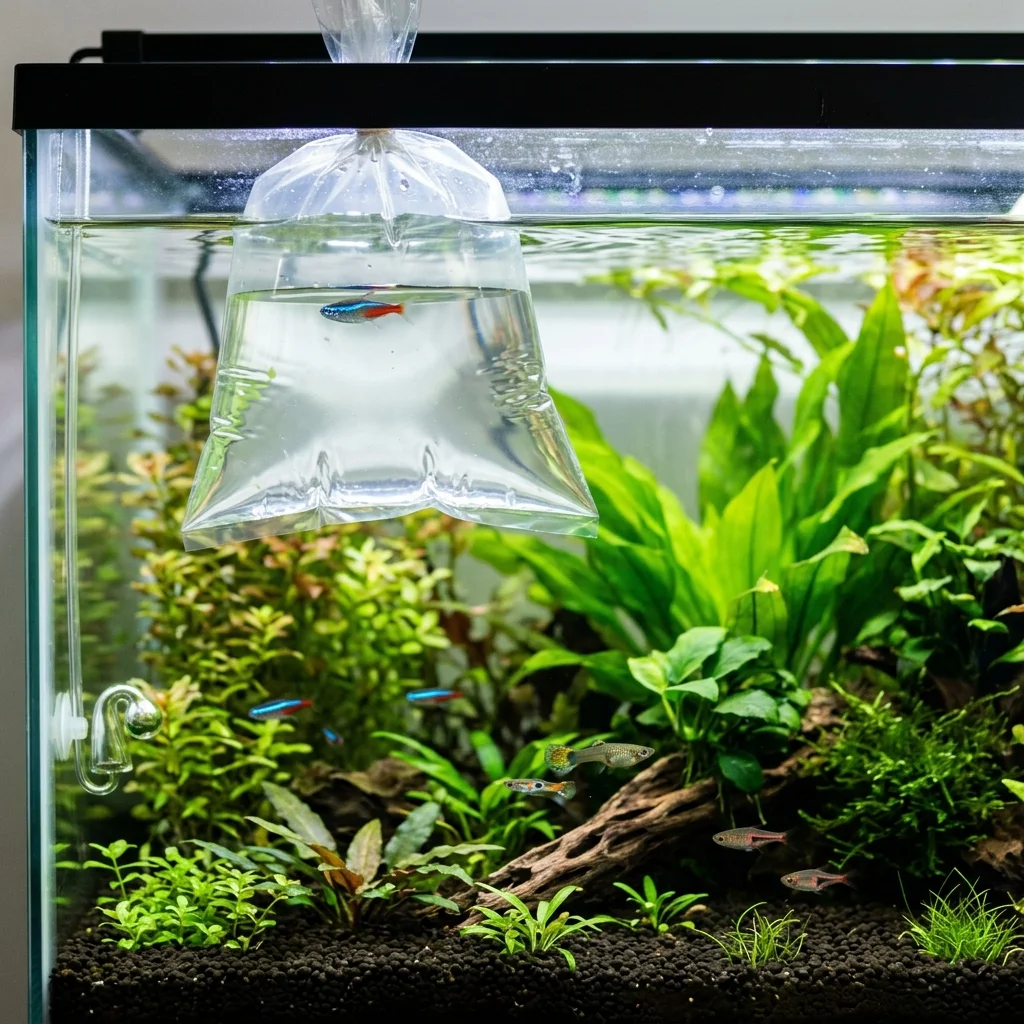
- Acclimate hardy freshwater fish from local stores safely by floating the sealed bag for temperature, then gradually adding half a cup of tank water every five minutes.
- Protect your established aquarium from dangerous pathogens, parasites, and copper medications by strictly netting new fish out and never pouring transport water into your tank.
- Reduce immediate post-acclimation stress and dangerous territorial aggression from existing tank mates by turning off all aquarium lights for the first full twenty-four hours.
There isn't one correct way to acclimate every fish. The safest method depends on whether your fish came from a local pet store, was shipped overnight, or is a sensitive species such as shrimp or wild-caught fish.
- Fish from a local pet store → Floating cup method
- Sensitive fish or shrimp → Drip acclimation
- Fish shipped overnight → Plop and drop
Choosing the wrong method can cause pH shock, osmotic stress, or ammonia poisoning—often killing the fish days later even if it looks fine at first. This guide explains exactly when to use each method.
How to Acclimate New Fish
Acclimation is the process of gradually matching the water in your transport container to the water in your aquarium. Because temperature, pH, hardness, and salinity all affect a fish’s gills and kidneys, skipping proper acclimation can lead to shock. The right method depends on where the fish came from and how long it has been in the bag. Use the quick decision guide below to pick the safest approach.
Quick Decision Guide
| Situation | Best method | Time | Difficulty |
|---|---|---|---|
| Local pet store, hardy fish | Floating cup | 45 min | Easy |
| Shrimp or sensitive fish | Drip | 1–2 hr | Medium |
| Marine fish & inverts | Drip | 1–2 hr | Medium |
| Overnight shipped fish | Plop & drop | 15 min | Easy |
Did your fish arrive by mail?
YES → Plop & Drop
NO
Is it shrimp or a sensitive species?
YES → Drip acclimation
NO (hardy freshwater fish) → Floating cup
Before You Start
- Wash your hands thoroughly to avoid introducing contaminants.
- Turn off aquarium lights to reduce stress.
- Gather a clean bucket, net, and (if needed) airline tubing.
- Check the tank temperature; it should already be stable.
- Do not feed fish for at least 24 hours after arrival.
Why Acclimation Matters
Fish regulate water and dissolved salts through their gills and kidneys. Sudden changes in temperature, pH, hardness, or salinity force their bodies to adjust too quickly, causing stress or even death.
Floating the bag only equalises temperature. Your tank water and the transport water can differ dramatically in pH, GH, and KH. When fish are moved directly from one chemistry to another, their gills and kidneys are forced to cope with rapid shifts in dissolved minerals and acidity. This causes osmotic stress: water moves too quickly into or out of their cells, damaging organs and suppressing the immune system. Even a healthy-looking fish can crash a week later from secondary infections like Ich.
Method 1: Plop & Drop (For Shipped Fish Only)
Why: During transit, fish produce ammonia and CO₂. The CO₂ lowers the bag water’s pH, keeping ammonia in its non-toxic ammonium form. When you open the bag, CO₂ escapes, the pH rises, and ammonium instantly converts to toxic ammonia. In this scenario, ammonia poisoning kills faster than pH shock.
How:
- Float the sealed bag in the tank for 15 minutes to match temperature.
- Open the bag, net the fish out immediately.
- Gently release the fish directly into the aquarium.
Never drip-acclimate fish that have been in a sealed bag for hours—you will only expose them to a lethal ammonia spike.
Method 2: Floating Cup (For Hardy, Locally Bought Fish)
Why: Hardy farm-raised fish like guppies, platies, and danios tolerate gradual water mixing well. This method slowly blends tank water into the bag, giving the fish’s kidneys time to adjust to changes in pH and hardness without special equipment.
How:
- Float the sealed bag for 15 minutes.
- Open the bag, roll down the edges to create a floating ring.
- Every 5 minutes, add ½ cup of your aquarium water into the bag.
- Repeat 4–5 times until the bag is mostly tank water.
- Net the fish into the tank. Discard the bag water—never pour it in.
Method 3: Drip Acclimation (The Gold Standard)
Why: Delicate species, wild-caught fish, and all invertebrates (shrimp, snails, corals) need extremely slow adjustment. Their cells are far more sensitive to osmotic shock. Drip acclimation changes water chemistry drop by drop, giving gills, kidneys, and cell membranes time to adapt without stress.
Step‑by‑Step Drip Acclimation
- Pour the fish and transport water into a clean bucket.
- Use airline tubing to start a siphon from the main tank. Tie a loose knot in the tube (or use a control valve) to reduce flow to 2–4 drops per second.
- Let the water drip into the bucket for 1–2 hours, discarding excess water every 15–20 minutes so the bucket doesn’t overflow.
- Once the water volume has tripled and parameters match, net the fish and transfer them to the tank.
This method is mandatory for marine setups—salinity differences of even 0.001 specific gravity can kill corals and shrimp within hours.
Do Betta Fish Need a Different Acclimation Method?
Betta fish should be acclimated using the same principles as other freshwater fish. A floating cup method is usually sufficient for healthy bettas purchased locally. However, wild-type bettas or fish shipped overnight should be acclimated according to the shipping method rather than the species itself. In all cases, bettas benefit from dimmed lights and plenty of cover after release.
How to Acclimate Fish to a New Tank
Moving fish between established aquariums follows the same principles as introducing newly purchased fish. If the two tanks have different temperatures, pH, hardness, or salinity, gradually mix water from the new aquarium into a bucket containing the fish over 30–60 minutes. Sensitive species and marine fish should be drip acclimated, while hardy freshwater fish can usually be acclimated using the floating cup method.
Common Acclimation Mistakes
- Floating the bag too long: Oxygen depletes and ammonia builds up after 30 minutes in a sealed bag.
- Adding bag water to the tank: Even “clean” store water can carry pathogens, copper, or ammonia.
- Feeding immediately: New fish need 24 hours to recover from transport stress; feeding too soon can foul the water and cause bloat.
- Bright lights: Always dim or turn off lights for the first day to reduce stress and aggression from tank mates.
- Skipping quarantine: Acclimation doesn’t guarantee disease-free fish—always observe in a separate quarantine tank for 4–6 weeks.
- Dripping shipped fish: This is the most dangerous mistake; use plop-and-drop for any fish that spent more than 4 hours in a sealed bag.
Quarantine and Post‑Acclimation Care
No matter which acclimation method you use, always introduce new arrivals into a dedicated quarantine tank first. A 4–6 week quarantine protects your main display from parasites, bacteria, and viral infections before the nitrogen cycle in the QT is stable.
After release, turn off the aquarium lights for the rest of the day. Darkness lowers cortisol levels, helping new fish find cover and avoid harassment. Do not feed for 24 hours, and ensure the tank has plenty of hiding spots. A stable water chemistry during this vulnerable window dramatically improves survival.
Final Checklist
- Determine which acclimation method matches your fish’s origin.
- Prepare a clean bucket, net, and (if needed) airline tubing.
- Float for temperature match (15 min).
- Perform the correct water‑mixing technique.
- Net fish into the tank—never pour transport water in.
- Turn off lights for 24 hours, skip feeding.
- Quarantine new fish whenever possible.
Conclusion
The best acclimation method depends on the fish—not on a single universal rule. Hardy local fish usually do well with the floating cup method, sensitive species require drip acclimation, and overnight-shipped fish are safest with plop-and-drop. Choosing the right approach reduces stress, prevents disease, and gives new fish the best chance of thriving in their new aquarium.
People Also Ask
- Can you acclimate fish too long?
- Yes. Keeping fish in a sealed bag longer than 30 minutes depletes oxygen and allows toxic ammonia to build up. Even in an open container, acclimation should not exceed 1–2 hours—after that, temperature and water quality may degrade, stressing the fish further.
- Should aquarium lights stay off after adding fish?
- Yes. Keep the lights off for the first 24 hours. Darkness reduces stress, discourages aggression from tank mates, and gives new fish time to find shelter and settle in.
- Can fish survive without acclimation?
- Some hardy species may survive, but skipping acclimation always causes unnecessary stress and increases the risk of disease or death. Proper acclimation is the single most effective way to protect a new fish’s health.
- How do you know acclimation worked?
- Successful acclimation looks quiet: the fish explores slowly, colours up within a few hours, and starts eating within 24–48 hours. Rapid breathing, clamped fins, or hiding without eating beyond three days suggests a problem.
- Can I use tap water during acclimation?
- Only if your aquarium water is dechlorinated tap water. Never use untreated tap water—chlorine and chloramines are lethal to fish and will destroy beneficial bacteria.