
Quick Answer
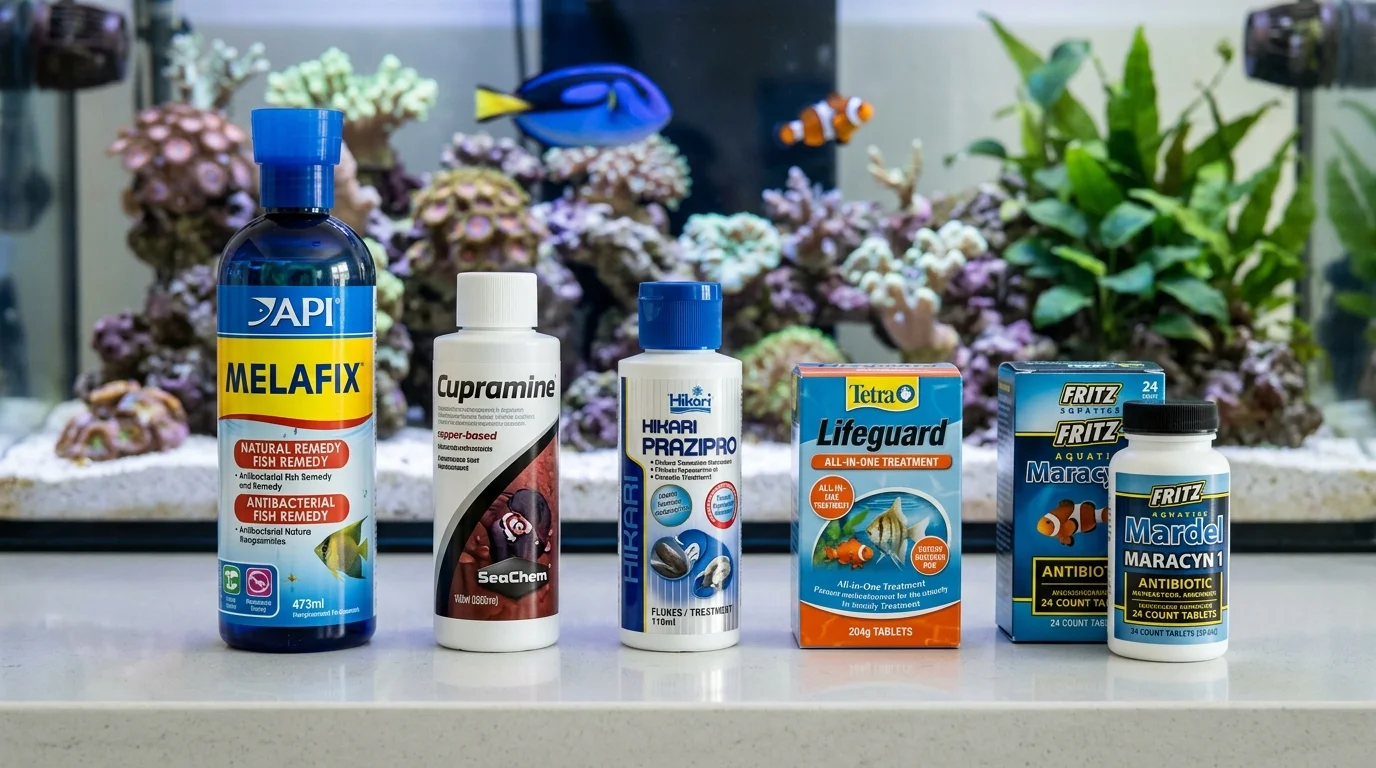
Aquarium brand loyalty is secondary to pharmacology: therapeutic success depends strictly on active ingredient chemistry, gram-stain sensitivity, and bioavailability. API and Fritz specialize primarily in unit-dose powder packets (such as General Cure and ParaCleanse, which share identical Metronidazole and Praziquantel formulations), whereas Seachem focuses on pure or concentrated compounds (such as MetroPlex and KanaPlex) optimized for either water column dispersion or binding into oral feed with lipids. When selecting treatments, differentiate Gram-negative from Gram-positive bacterial pathogens, remove chemical adsorbents (carbon/Purigen), and avoid empirical multi-drug tank dosing.
Key Takeaways
- API and Fritz specialize in unit-dose powder packets (General Cure/ParaCleanse), providing identical Metronidazole and Praziquantel formulations for protozoans and flukes.
- Over 85% of freshwater bacterial infections are Gram-negative; using a Gram-positive antibiotic like Erythromycin (API E.M. Erythromycin/Fritz Maracyn) for these is ineffective.
- Seachem KanaPlex (Kanamycin Sulfate) is a premier broad-spectrum Gram-negative antibiotic that is systemically absorbed and exerts minimal biological filter disruption.
- Metronidazole (Seachem MetroPlex) exhibits poor water-column absorption and must be bound to food using a lipid binder (Focus) to effectively treat internal intestinal flagellates.
- Always remove chemical filtration (activated carbon/Purigen) and turn off UV sterilizers before dosing, as they will deactivate pharmaceutical active ingredients.
Commercial fish therapeutics are often marketed under proprietary trade names that obscure their underlying pharmacological compounds. Choosing between API, Seachem, and Fritz Aquatics requires evaluating the active pharmaceutical ingredient (API), systemic absorption rates, impact on the biological nitrogen cycle, and route of administration.
Antibacterial Therapeutics: Gram-Negative vs. Gram-Positive Coverage
Over 85% of freshwater bacterial epizootics—including columnaris (Flavobacterium columnare), bacterial fin rot, and systemic septicemia (Aeromonas and Pseudomonas)—are caused by Gram-negative bacilli. Administering a Gram-positive antibiotic for an acute Gram-negative pathogen results in treatment failure and unnecessary chemical load.
Erythromycin: API E.M. Erythromycin vs. Fritz Maracyn
Both products utilize erythromycin base or phosphate, a macrolide antibiotic that inhibits bacterial protein synthesis by reversibly binding to the 50S ribosomal subunit. Erythromycin features a narrow antibacterial spectrum predominantly targeting Gram-positive bacteria, alongside minor effectiveness against select spirochetes. Its most legitimate freshwater application is treating mouth rot, true localized Gram-positive lesions, and stubborn Cyanobacteria (blue-green algae) outbreaks. It exhibits poor gastrointestinal absorption in freshwater teleosts and will rapidly deplete nitrifying autotrophic bacteria (Nitrosomonas and Nitrospira) if dosed directly into an unbuffered biological system.
Kanamycin & Minocycline: Seachem KanaPlex vs. Fritz Maracyn Two
True systemic and internal bacterial septicemias demand broad-spectrum Gram-negative antibiotics capable of systemic absorption:
- Seachem KanaPlex (Kanamycin Sulfate): An aminoglycoside antibiotic that binds the 30S ribosomal subunit. Kanamycin is highly water-soluble and can be absorbed across the gill lamellae in freshwater fish, making it the premier choice for internal dropsy, hemorrhagic septicemia, and systemic Columnaris. KanaPlex exerts minimal disruption on biological filter colonies when dosed according to label instructions.
- Fritz Maracyn Two (Minocycline HCl): A broad-spectrum tetracycline antibiotic. Minocycline is lipid-soluble and absorbed directly through dermal tissue. However, minocycline acts as a weak acid in solution, precipitating quickly in hard, alkaline water (GH > 12 dGH) and destabilizing low-KH water bodies.
Antiparasitic Compounds: Protozoans, Cestodes, and Trematodes
Parasitic infections in captive fish fall into two broad physiological groups: ectoparasitic/flagellated protozoa and macroparasitic platyhelminthes (flukes and tapeworms).
Metronidazole: API General Cure vs. Seachem MetroPlex vs. Fritz ParaCleanse
Metronidazole is a synthetic nitroimidazole with antiprotozoal and anaerobic antibacterial properties. It targets flagellates responsible for Hexamitiasis (Hole-in-the-Head disease) and internal intestinal bloating:
- Seachem MetroPlex: Contains 100% pure metronidazole powder. While water dosing is effective for surface micro-aerophilic protozoa, systemic intestinal flagellates respond poorly to immersion due to minimal gut absorption. Seachem designs MetroPlex to be bound to food matrices using a lipid-based binding agent (Seachem Focus) to deliver high serum concentrations directly to the digestive tract.
- API General Cure & Fritz ParaCleanse: Formulated as combination therapies containing 250 mg Metronidazole and 75 mg Praziquantel per single packet. This combination simultaneously addresses internal protozoans and monogenean trematodes.
Praziquantel: Trematodes and Cestodes
Praziquantel increases cell membrane permeability to calcium ions in platyhelminths, inducing rapid paralytic tetany and vacuolization of the parasite integument. It is the gold standard clinical treatment for gill and skin flukes (Dactylogyrus and Gyrodactylus) as well as tapeworms (Bothriocephalus). Praziquantel does not disrupt biological filtration and is tolerated well by invertebrates, scaleless catfish, and sensitive mormyrids.
Antifungal Agents: Chemical Actives vs. Botanical Extracts
True fungal diseases in freshwater teleosts (predominantly Saprolegnia and Achlya water molds, biologically classified as oomycetes) are secondary opportunists capitalizing on necrotic tissue from wounds or primary bacterial lesions.
- Botanical Extracts (API Melafix & API Pimafix): Derived from Melaleuca alternifolia (tea tree) and Pimenta racemosa (bay rum). These essential oil suspensions exert mild in-vitro antiseptic and surface-tension effects. They lack systemic antimicrobial potency and can foul labyrinth organ surfaces in anabantoids (Gouramis, Bettas) if dosed in low-dissolved-oxygen setups.
- Synthetic Chemotherapeutics (Seachem PolyGuard): Formulated with malachite green, sulfathiazole, quinacrine, and nitrofurazone. PolyGuard provides wide-spectrum efficacy against external ectoparasites, fungal mats, and surface-bound bacteria, but its components (particularly malachite green) are toxic to scaleless fish and bioaccumulative in invertebrate tissues.
Pharmacokinetics and Safe Dosing Protocols
- Cease Chemical Adsorption: Activated carbon, ion-exchange resins (Seachem Purigen), and copper-sequestering media must be removed from the filtration path prior to dosing; otherwise, therapeutic active ingredients are cleared from solution within hours.
- Deactivate Ultraviolet Sterilizers: UV-C sterilizers and ozone reactors cleave antibiotic chemical bonds, rendering compounds like metronidazole and kanamycin pharmacologically inert through photolytic degradation.
- Adjust Aeration Parameters: Dissolved oxygen saturation drops precipitously during chemical treatments due to chemical oxidation and gill lamellar inflammation. Install secondary aerators or venturi powerheads during treatment.
- Calculate Exact Net Volume: Never dose based on the gross external footprint. Subtract 10–15% for substrate and hardscape volume using our Tank Size Calculator to prevent toxic overdosing.
Aquarium Medication Active Ingredients
| Medication Brand | Active Ingredient | Primary Indication | Target Pathogens | Filter Safe? | Administration |
|---|---|---|---|---|---|
| API E.M. Erythromycin | Erythromycin Base (200 mg) | Gram-Positive Bacterial & Cyanobacteria | Streptococcus, Mouth Rot, Blue-Green Algae | High Risk | Water Column |
| Seachem KanaPlex | Kanamycin Sulfate (~32% active) | Gram-Negative Systemic Bacterial | Flavobacterium, Aeromonas, Dropsy, Septicemia | Low Risk | Food Matrix / Water Column |
| API General Cure / Fritz ParaCleanse | Metronidazole (250 mg) + Praziquantel (75 mg) | Internal Protozoans & Trematodes | Hexamita, Spironucleus, Gill & Body Flukes | Completely Safe | Water Column / Food Drip |
| Fritz Maracyn Two | Minocycline Hydrochloride | Gram-Negative Internal Bacterial | Internal Septicemia, Fin Rot, Pop-Eye | Low Risk | Water Column |
Troubleshooting Dosing Issues
Issue: Ammonia or nitrite spike detected within 48 hours of starting bacterial treatment. Solution: The antibiotic (typically erythromycin) has disrupted the autotrophic nitrifying biofilter. Administer an emergency dose of Seachem Prime or Fritz A.C.C.R. to bind toxic ammonia into a non-toxic ammonium complex, cease feeding, and establish temporary biological filtration using an auxiliary pre-cycled sponge filter.
Issue: Fish display rapid opercular respiration (gasping) and surface-piping after chemical administration. Solution: Dosed therapeutics have reduced dissolved oxygen saturation or triggered acute gill irritation. Immediately perform a 25% water change with temperature-matched dechlorinated water, install high-output air stones, and ensure water return outputs agitate the surface.
Issue: Internal parasite symptoms (white stringy feces, hollow belly) persist after water column dosing. Solution: Metronidazole and Praziquantel exhibit poor oral bio-absorption when dissolved in the ambient water column. Incorporate the medication into frozen or pellet food using a lipid binder (Seachem Focus) and feeding stimulants (garlic extract) to deliver the compound directly into the intestinal lumen.
Issue: Minocycline or Tetracycline clouding and discoloring water in a hard-water aquarium. Solution: Tetracycline-class antibiotics chelate with divalent calcium and magnesium ions in hard water (GH > 12 dGH), precipitating out of solution and forming yellow/brown colloidal suspensions that reduce drug bioavailability. Shift treatment to an isolated hospital tank with neutral water chemistry or substitute with Kanamycin.
Pharmacology Glossary
- Gram-Negative Bacteria: Bacteria possessing a thin peptidoglycan layer enveloped by an outer lipopolysaccharide membrane that resists many common antibiotics, constituting the majority of virulent freshwater fish pathogens.
- Ecdysis Inhibition: The disruption of chitin synthesis or shedding in non-target aquatic invertebrates, often triggered by systemic heavy metal or organophosphate exposure.
- Chelation: The chemical bonding of mineral ions (such as calcium and magnesium in hard water) to antibiotic molecules, neutralizing their therapeutic efficacy.
- Bioavailability: The proportion of an administered drug that successfully enters systemic circulation and reaches the intended physiological site of action in active form.
- Monogenean Trematodes: Parasitic flatworms (flukes) possessing a posterior attachment organ (haptor) that infect the dermal tissue and gills of teleosts, effectively treated with praziquantel.
References & Citations
- Pharmacokinetics and Tissue Distribution of Kanamycin and Metronidazole in Teleost Fish (Journal of Aquatic Animal Health, DOI: 10.1577/1548-8667(1998)010<0122:PATDOK>2.0.CO;2)
- Efficacy of Praziquantel and Nitroimidazole Formulations Against Monogenean and Diplomonad Parasites (Diseases of Aquatic Organisms, DOI: 10.3354/dao047055)
- Antibacterial Activity of Essential Oils Versus Synthetic Antibiotics Against Flavobacterium columnare and Aeromonas hydrophila (Aquaculture, DOI: 10.1016/j.aquaculture.2015.04.019)
Helpful Tool: Use our Medication Dosage Calculator for precise planning.
The Problem
Hobbyists frequently dose medications based on brand marketing or misdiagnose internal Gram-negative infections as external fungal issues, administering ineffective botanical remedies or disrupting biological nitrifying filters.
When to Use This Tool
Consult this comparative guide before purchasing or administering aquatic pharmaceuticals, when designing quarantine isolation protocols, or when confirming pathogen resistance profiles.
Who is this for?
- Aquarists, quarantine managers, and aquatic veterinary technicians seeking peer-reviewed pharmacological data and dosing safety profiles across major commercial brands.