
Mexican Dwarf Crayfish (Cambarellus patzcuarensis)
Quick Answer
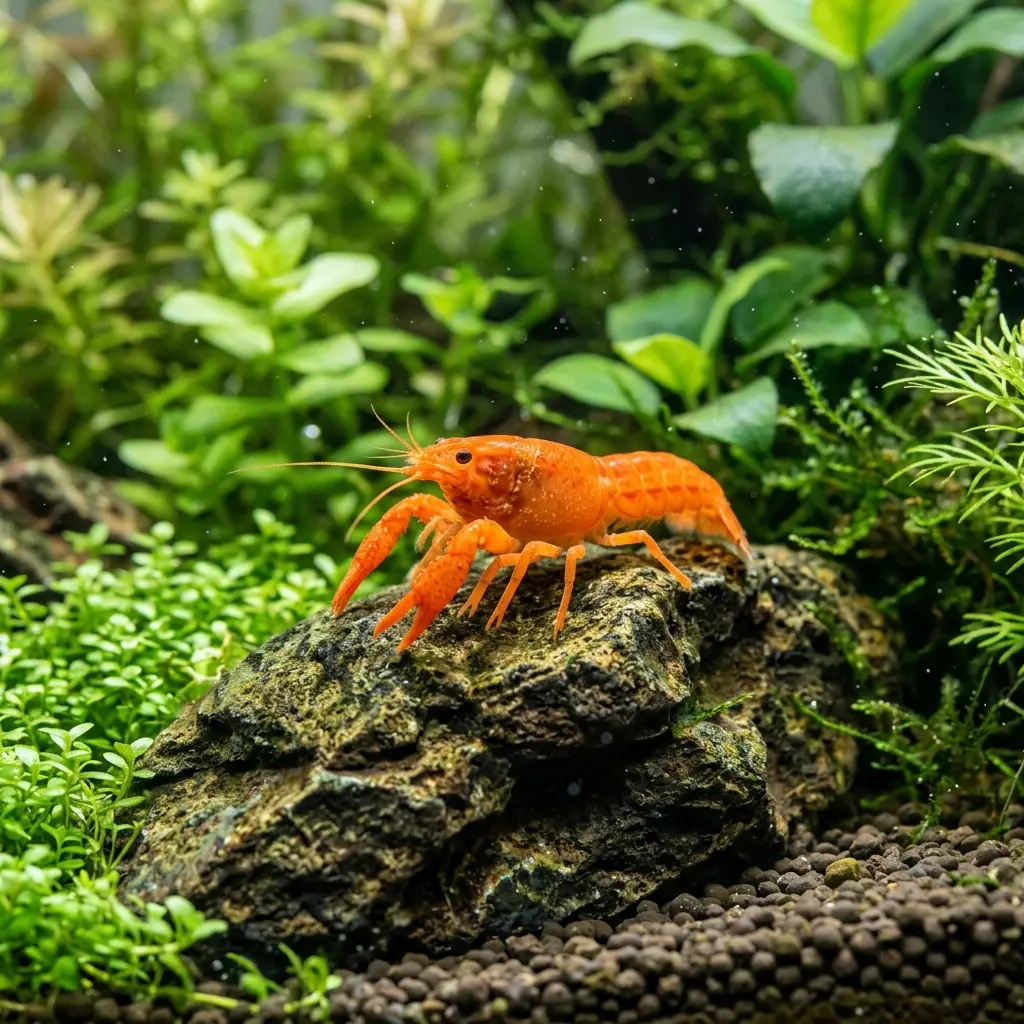
The Mexican Dwarf Crayfish (Cambarellus patzcuarensis), often sold as the orange "CPO," is a small, hardy, generally peaceful crayfish reaching about 1.5–2 inches (4–5 cm). It suits a 10-gallon-plus planted tank with pH 6.5–8.0 and cooler temperatures of 65–75°F (18–24°C). It's an easy omnivorous scavenger for beginners, though it may eat slow-moving dwarf shrimp or snails.
Quick Facts
| Scientific Name | Cambarellus patzcuarensis |
|---|---|
| Common Names | Mexican Dwarf Crayfish |
| Family | Cambaridae |
| Genus | Cambarellus |
| Type | Freshwater |
| Temperament | peaceful |
| Care Difficulty | beginner |
| Maximum Size | Up to 2 in (5 cm) |
| Diet | Omnivore |
| Temperature | 65–75°F (18–24°C) |
| pH | 6.5–8 |
| Hardness | 6–15 dGH |
| Minimum Size | 10 gallons |
Key Takeaways
- Generally peaceful, though territorial with its own kind and opportunistic with slow shrimp or snails.
- Reaches about 1.5–2 inches (4–5 cm) and needs at least a 10-gallon aquarium.
- Prefers cooler water (65–75°F / 18–24°C) than many tropical tankmates.
- The wild form is classified Endangered by the IUCN; the orange morph in the trade is captive-bred.
Diet
An opportunistic omnivorous scavenger that eats sinking pellets, algae wafers, blanched vegetables, occasional protein-rich frozen foods, and biofilm/detritus. Feed once or twice daily in amounts that are cleared within a few hours to avoid fouling water quality.
Breeding
Breeding is relatively easy with a healthy male-female pair, good nutrition, and stable water conditions. Sexual maturity is typically reached at a few months of age. After mating, the female carries eggs on her pleopods for several weeks until they hatch as fully formed miniature crayfish that require no special larval food, though ample hiding cover helps young survive early molts.
Compatible Tank Mates






Species Comparison
| Species | Adult Size | Temperament | Min. Tank Size | Difficulty |
|---|---|---|---|---|
| Mexican Dwarf Crayfish (Cambarellus patzcuarensis) | 1.5–2 in (4–5 cm) | Peaceful | 10 gal (38 L) | Beginner |
| Marbled Crayfish (Procambarus virginalis) | 4 in (10 cm) | Semi-aggressive | 20 gal (75 L) | Beginner |
| Electric Blue Crayfish (Procambarus alleni) | 5 in (13 cm) | Aggressive | 20 gal (75 L) | Beginner–Intermediate |
| Cherry Shrimp (Neocaridina davidi) | 1.5 in (4 cm) | Peaceful | 5 gal (19 L) | Beginner |