
African Red Eyed Tetra (Arnoldichthys spilopterus)

Quick Answer
African Red Eyed Tetra (Arnoldichthys spilopterus) is a robust, large-bodied characin endemic to the Niger and Ogun River systems of Nigeria. It requires a minimum 30-gallon (113 liter) aquarium with a pH of 6.5 to 7.5, temperature range of 72 to 79 degrees F (22 to 26 degrees C), and a school of at least 8 to 10 individuals. This active omnivore occupies the middle to upper water column and is classified as Endangered by the IUCN due to habitat degradation from oil production.
Quick Facts
| Scientific Name | Arnoldichthys spilopterus |
|---|---|
| Common Names | African Red Eyed Tetra |
| Family | Alestidae |
| Genus | Arnoldichthys |
| Type | Freshwater |
| Temperament | peaceful |
| Care Difficulty | beginner |
| Lifespan | 6 years |
| Maximum Size | Up to 3.8 in (10 cm) |
| Diet | Omnivore |
| Temperature | 72–79°F (22–26°C) |
| pH | 6.5–7.5 |
| Hardness | 5–15 dGH |
| Minimum Size | 30 gallons |
Key Takeaways
- Requires a minimum school of 8 to 10 individuals; smaller groups develop destructive fin-nipping behavior
- Needs a minimum 30-gallon (113 liter) aquarium with 36 inches (90 cm) of horizontal swimming space
- IUCN Endangered species endemic to Nigerian river systems; captive breeding supports conservation
- Exceptional jumper requiring a fully enclosed aquarium lid with no gaps
- Sensitive to organic pollution; nitrates must remain below 15 ppm through consistent water changes
- Females require live insect foods for egg development during breeding conditioning
Overview
Species Overview
The African Red Eyed Tetra, scientifically known as Arnoldichthys spilopterus, is one of the most visually striking and behaviorally captivating characins available to the aquarium hobby. Endemic to the Lower Niger, Ogun, and Otamiri River systems of Nigeria, this species represents a true West African biotope specimen that commands attention through its vivid red irises, large reflective scales, and relentless schooling activity.
Taxonomy & Naming
This species belongs to the family Alestidae, the African tetras or characins, within the order Characiformes. The genus name Arnoldichthys honors Johann Paul Arnold (1869 to 1952), the eminent German aquarist from Hamburg who sent specimens to George Boulenger for formal description in 1909. The specific epithet spilopterus derives from Greek, meaning spotted fin, referring to the diagnostic markings on the anal fin.
Conservation Status
It is imperative that every aquarist understand the conservation reality of this species. The IUCN Red List classifies Arnoldichthys spilopterus as Endangered (EN) as of the 2019 assessment. The primary threat is massive water pollution from oil production activities in the Niger Delta, combined with habitat degradation and restricted geographic range. The aquarium trade does not significantly impact wild populations, and captive breeding programs may become essential for genetic preservation. By maintaining healthy breeding colonies, dedicated hobbyists contribute directly to species conservation.
Physical Characteristics
Mature specimens reach a maximum standard length of 3.8 inches (9.6 cm), with females typically larger and more robust than males. The body is laterally compressed and fusiform, covered in unusually large, iridescent scales that reflect blue, green, and gold under proper lighting. The definitive feature is the brilliant red to orange coloration of the upper half of the eye, which contrasts sharply with the silvery-gold body. The dorsal fin carries contrasting black and yellow coloration, while the anal fin displays sexual dimorphism: males exhibit curved anal fins with yellow or orange stripes and dark banding, while females possess straight anal fins with a distinct black tip or separated spot pattern. Multiple geographic color variants exist, and you must never mix imports from different collection localities to avoid producing mongrel pet forms.
Care
Aquarium Care Requirements
Arnoldichthys spilopterus is forgiving of minor parameter deviations but absolutely intolerant of poor water quality and organic pollution. Success depends on providing adequate space, stable chemistry, and consistent maintenance discipline.
Minimum Tank Specifications
The absolute minimum tank volume is 30 gallons (113 liters) for a school of 8 individuals. However, 40 gallons (150 liters) or larger is strongly recommended to accommodate their active swimming behavior and reduce intraspecific aggression. The critical dimension is horizontal length: the tank must measure at least 36 inches (90 cm) from front to back. Taller, narrower tanks such as column designs are completely unsuitable and will cause chronic stress. A standard 40-gallon breeder (36 inches by 18 inches by 16 inches, or 90 cm by 45 cm by 40 cm) provides the ideal footprint.
Water Parameters
Maintain the following parameters with zero compromise on ammonia and nitrite levels, which must remain at 0 ppm at all times:
- Temperature: 72 degrees F to 79 degrees F (22 degrees C to 26 degrees C); optimal at 75 degrees F (24 degrees C)
- pH: 6.5 to 7.5 (tolerance range 6.0 to 8.0)
- General Hardness (GH): 5 to 15 dGH (tolerance range 5 to 20 dGH)
- Carbonate Hardness (KH): 4 to 10 dKH
- Total Dissolved Solids (TDS): 120 to 300 ppm
- Nitrates: Less than 15 ppm at all times
- Ammonia and Nitrite: 0 ppm
Note on water chemistry: This species naturally inhabits soft, slightly acidic to neutral waters stained with tannins from decaying leaf litter. While they adapt to standard tap water, they display superior coloration and immune function in conditions that replicate their blackwater origins. Use Indian Almond leaves, peat filtration, or driftwood to introduce beneficial tannins without drastic pH alteration.
Filtration and Flow
Provide filtration rated at 6 to 8 times the tank volume per hour. Canister filters or hang-on-back units with adjustable flow are ideal. Water movement should be moderate but not turbulent; these fish inhabit slow-moving riverine habitats and cannot tolerate high-velocity currents that force constant exertion. Position filter outflow to create gentle circulation across the tank length, not downward jets. Surface agitation is beneficial for oxygen exchange, as this species requires well-oxygenated water.
Aquascaping and Decor
Replicate a West African stream biotope. Use dark fine gravel or sand substrate to enhance scale iridescence through contrast. Install driftwood roots and smooth river stones to create broken sight lines and retreat zones. Plant density should be moderate to heavy along the sides and rear, with an open central swimming lane at least 12 inches (30 cm) wide. Floating plants such as Water Sprite, Amazon Frogbit, or Salvinia are mandatory to diffuse overhead lighting and provide security. A tight-fitting lid is non-negotiable, as this species is an exceptional jumper capable of clearing gaps of 1 inch (2.5 cm) or more.
Lighting Requirements
Moderate-intensity LED lighting on a 10 to 12 hour photoperiod. Direct, unshaded bright light causes stress and suppresses the red eye coloration. Use floating vegetation to create dappled light zones that mimic the canopy-filtered illumination of their native streams.
Diet
Diet and Nutrition
Arnoldichthys spilopterus is a versatile but discerning feeder whose dietary needs shift between maintenance and reproductive conditioning.
Natural Feeding Behavior
In their native Nigerian rivers, these fish are primarily insectivorous, with dietary analysis showing over 80 percent of gut contents consisting of terrestrial insects, aquatic insect larvae, worms, and small crustaceans. They are opportunistic surface and mid-water feeders, capturing prey during brief sallies from the school. Plant matter and detritus constitute the remaining dietary fraction.
Captive Diet Recommendations
For maintenance, provide a varied diet consisting of:
- High-quality tropical flakes or granules (Omega One, New Life Spectrum, or Sera) as the daily staple
- Frozen foods including daphnia, cyclops, Mysis shrimp, and bloodworms, offered 3 to 4 times weekly
- Live foods such as baby brine shrimp, blackworms, and fruit flies for conditioning and color enhancement
- Vegetable matter including spirulina flakes, blanched spinach, or cucumber slices twice weekly
For breeding conditioning, females require live approach foods such as small insects, blackworms, and fruit flies. Dry food alone is insufficient for egg development. Aquarium Glaser notes that without live insect prey, females will fail to develop viable egg masses regardless of apparent health.
Feeding Schedule
Feed adult fish twice daily, morning and evening. Each feeding should be consumed within 2 to 3 minutes. Offer the primary flake or pellet ration in the morning and a protein supplement in the evening. Fast the tank one day per week to clear digestive systems and reduce organic waste load. Juveniles under 6 months require three feedings daily to support their moderate growth rate.
Foods to Avoid
Never offer beef heart, pork, or other mammalian proteins. These proteins lack the correct amino acid profile for characins and cause fatty liver degeneration. Avoid oversized pellets that cannot be swallowed whole, as these fish have relatively small mouths despite their body size. Freeze-dried foods should be pre-soaked to prevent intestinal blockage from rapid expansion.
Breeding
Breeding Guide
Breeding Arnoldichthys spilopterus is moderately difficult and requires dedicated preparation. The species is an egg-scattering free spawner with no parental care, and adults are voracious egg predators.
Conditioning and Selection
Select 6 to 8 mature fish at least 12 months old, ensuring a balanced sex ratio of 2 males to 3 females. Condition the group in a separate 20-gallon (75 liter) tank for 10 to 14 days. The conditioning diet is critical: offer live blackworms, fruit flies, and baby brine shrimp twice daily. Females must receive live insect prey to develop eggs; dry foods alone are insufficient. Select the most vibrantly colored male with the most pronounced anal fin stripes and the roundest, most gravid female for the spawning attempt.
Spawning Setup
Prepare a dedicated 10-gallon (40 liter) breeding tank with the following specifications:
- Water: Reverse osmosis or deionized water adjusted to pH 6.0, 2 dGH, 4 dKH
- Temperature: 80 degrees F (27 degrees C), 2 to 3 degrees above maintenance temperature
- Depth: 4 to 6 inches (10 to 15 cm) of water to concentrate spawning activity
- Substrate: Bare bottom or covered with a plastic mesh with 0.125-inch (3 mm) openings to allow eggs to fall through
- Spawning medium: Java moss, Cambomba, or synthetic spawning mops anchored to the bottom
- Filtration: Gentle air-driven sponge filter only; no power filters
- Lighting: Dim, with a programmable light that gradually increases intensity over 30 minutes to simulate dawn
Transfer the conditioned pair or group to the breeding tank in the evening. Spawning occurs during the simulated dawn period, with males driving females in trembling, vibrating movements against the spawning medium. A healthy female releases 200 to 800 eggs per spawn, with some exceptional females producing up to 1,000 eggs.
Egg Management
Remove all adult fish within 4 hours of spawning completion. Adults will consume every egg if given the opportunity. Eggs are adhesive and semi-transparent, measuring approximately 1.2 mm in diameter. Fungus is the primary threat; maintain pristine water and consider a prophylactic methylene blue treatment at 3 drops per gallon to prevent fungal growth. Eggs hatch in 24 to 36 hours at 78 degrees F (25 degrees C).
Fry Rearing
Newly hatched fry measure 0.1 inch (2.5 mm) and remain attached to surfaces for 24 hours while absorbing the yolk sac. Once free-swimming, typically 3 to 4 days post-hatch, feed infusoria or commercial liquid fry food for the first 72 hours. Transition to microworms or vinegar eels on day 4, and introduce newly hatched brine shrimp nauplii from day 7. Perform daily 10 percent water changes with matched temperature and chemistry to maintain pristine conditions. Growth is moderate; fry reach 0.5 inch (1.3 cm) at 4 weeks and 1 inch (2.5 cm) at 8 weeks. Sexual dimorphism in anal fin coloration becomes visible at 3 to 4 months.
Tips
Expert Tips and Common Mistakes
After decades of combined experience with West African characins, the following insights will separate successful keepers from those who struggle with this species.
Pro Tips from Experienced Breeders
Tip 1: Geographic Integrity. Different collection localities produce distinct color variants, particularly in anal fin striping color (yellow versus red). Always breed fish from the same import batch to preserve natural color lines and avoid producing mongrel pet forms that lose the species' characteristic beauty.
Tip 2: Tannin Enrichment. Even in neutral pH tap water, add Indian Almond leaves or alder cones to introduce tannins. This does not acidify water significantly but provides antimicrobial properties and triggers natural color displays that plain water suppresses.
Tip 3: Surface Feeding Triggers. These fish are hardwired to respond to surface disturbances as insect fall signals. Gently tapping the glass surface before feeding conditions rapid surface aggregation, allowing you to verify all individuals are feeding normally, a critical early health indicator.
Tip 4: Breeding Density. In a 10-gallon spawn tank, use only one pair. Group spawning reduces fertilization rates because dominant males monopolize females while subordinate males disrupt the process without contributing milt.
Critical Mistakes to Avoid
Mistake 1: Inadequate School Size. Purchasing 3 to 4 individuals is the most common failure. This triggers chronic stress, immunosuppression, and fin-nipping. The minimum functional school is 8; the optimal school is 12 to 15.
Mistake 2: Open-Top Tanks. These fish are powerful jumpers that will clear standard aquarium hood gaps during startle responses or dawn spawning behavior. A fully enclosed lid is not optional.
Mistake 3: Neglecting Water Changes. Sensitivity to organic pollution means that skipping weekly water changes leads to rapid nitrate accumulation, which manifests first as faded eye color and progresses to Columnaris outbreaks. Consistency is more important than volume; a 20 percent change weekly is superior to a 50 percent change monthly.
Mistake 4: Overfeeding Dry Foods. Excessive flake food causes constipation and swim bladder disorder. Feed measured portions and incorporate vegetable matter to provide digestive fiber.
Mistake 5: Mixing with Long-Finned Fish. Despite their peaceful classification in proper schools, stressed or understocked groups will nip the fins of Betta splendens, Guppies, and Angelfish. Always verify tank mate fin length does not exceed what the tetra can fit in its mouth.
Conservation Awareness
As an IUCN Endangered species dependent on a restricted Nigerian range, every captive population matters. Document your breeding successes, share fry with other dedicated hobbyists, and support conservation organizations working to restore Niger Delta water quality. Your aquarium can serve as a genetic reservoir for a species whose wild future is uncertain.
Compatible Tank Mates





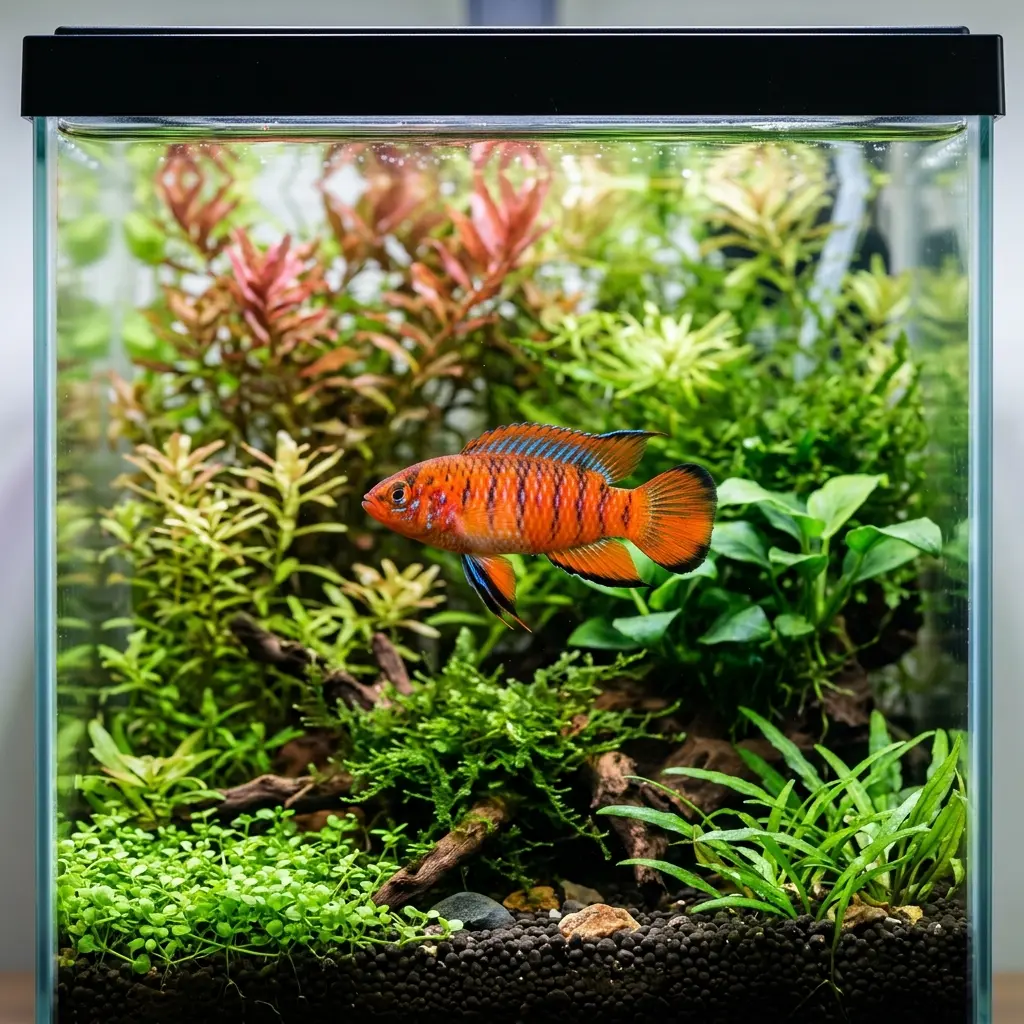
Species Comparison
| Feature | African Red Eyed Tetra | Congo Tetra | Red Eye Tetra | Lemon Tetra |
|---|---|---|---|---|
| Scientific Name | Arnoldichthys spilopterus | Phenacogrammus interruptus | Moenkhausia sanctaefilomenae | Hyphessobrycon pulchripinnis |
| Max Size | 3.8 inches (9.6 cm) | 3.5 inches (8.5 cm) | 2.75 inches (7 cm) | 1.8 inches (4.5 cm) |
| Temperament | Peaceful in proper schools; fin nippers if under-stocked | Very peaceful; shy without adequate cover | Peaceful; occasional fin nipping in small groups | Peaceful; excellent community fish |
| Minimum Tank Size | 30 gallons (113 L); 40 gal (150 L) recommended | 30 gallons (113 L) | 20 gallons (75 L) | 10 gallons (37 L) |
| Diet | Omnivore with strong insectivorous preference; requires live foods for breeding | Omnivore; accepts flakes, frozen, and live foods | Omnivore; highly adaptable feeder | Omnivore; accepts all standard aquarium foods |
| Optimal pH Range | 6.5 to 7.5 | 6.0 to 7.5 | 7.0 to 8.0 | 6.0 to 7.5 |
| Origin | Nigeria, West Africa | Congo Basin, Central Africa | South America (Paraguay, Argentina, Brazil) | South America (Amazon Basin) |
| Special Notes | IUCN Endangered; sensitive to organic pollution; excellent jumper | Males develop spectacular flowing fins; requires soft water for breeding | Commonly confused with African Red Eyed Tetra; much smaller and from different continent | Ideal beginner tetra; smaller and less demanding than African species |