Coral Beauty Angelfish (Centropyge bispinosa)
Quick Answer
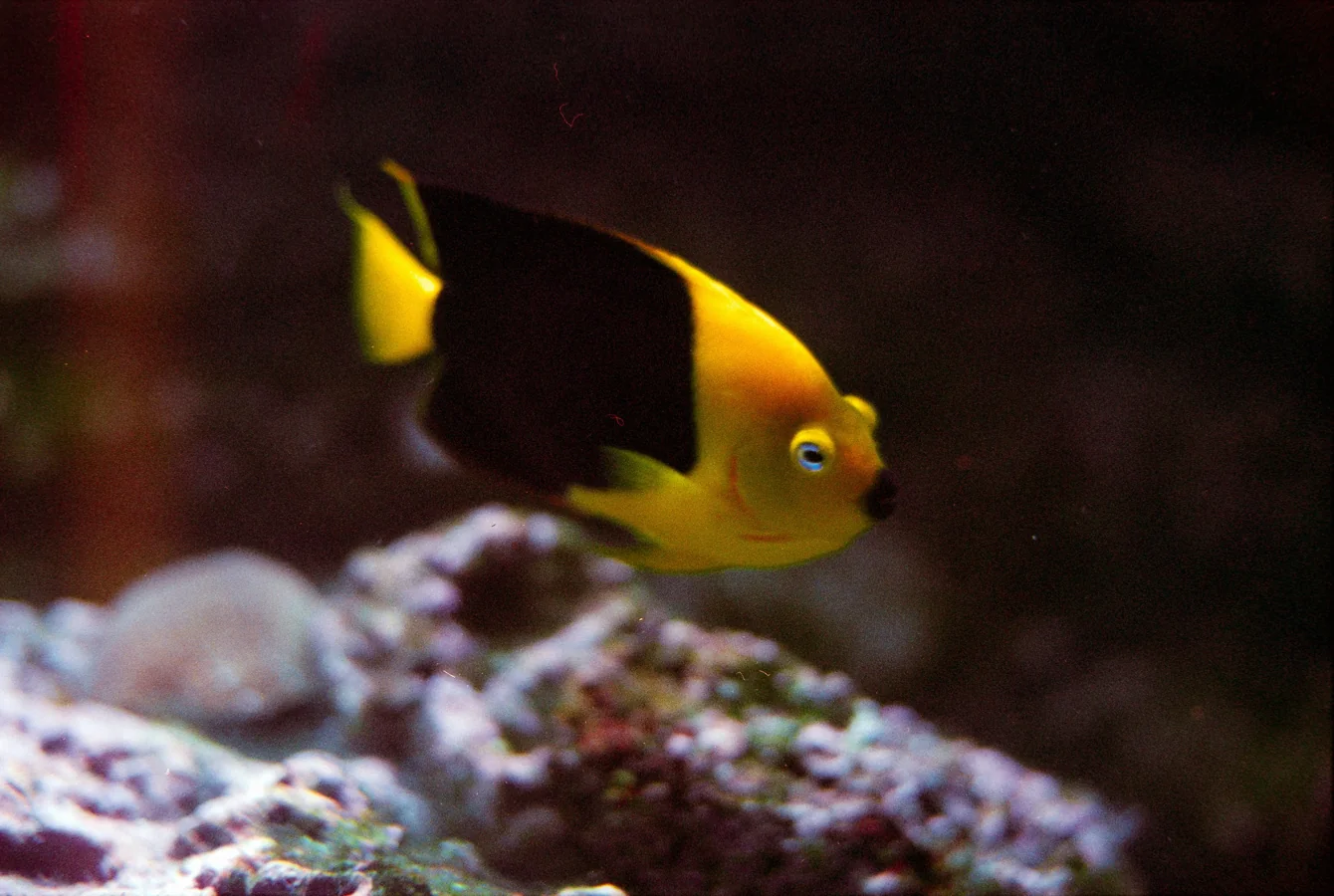
The Coral Beauty Angelfish (Centropyge bispinosa) is a hardy dwarf angelfish prized for its blue-and-orange coloration. It reaches about 4 inches (10 cm), does best in 55+ gallons with stable reef parameters (pH 8.1–8.4, 72–82°F), and is an omnivorous grazer. It is semi-aggressive and territorial toward other dwarf angelfish, so careful tank mate selection matters.
Quick Facts
| Scientific Name | Centropyge bispinosa |
|---|---|
| Common Names | Coral Beauty Angelfish |
| Type | Saltwater |
| Temperament | semi-aggressive |
| Care Difficulty | beginner-intermediate |
| Lifespan | 7-10 years |
| Maximum Size | Up to 4 in (10 cm) |
| Diet | Omnivore |
| Temperature | 72–82°F (22–28°C) |
| pH | 8.1–8.4 |
| Hardness | 8–12 dGH |
| Minimum Size | 55 gallons |
Key Takeaways
- Semi-aggressive and territorial, especially toward other dwarf angelfish.
- Reaches about 4 inches (10 cm) and needs at least a 55-gallon aquarium.
- Omnivorous grazer — feed a varied diet including algae and sponge-based foods.
- Reef safe with caution; may occasionally nip soft corals or clam mantles.
- Lives 7-10+ years with stable care; forms wild harems of one male and several females.
- Color pattern (blue/purple vs. orange balance) varies naturally by collection location.
Health
Marine Ich (Cryptocaryon irritans)
A common parasite affecting most marine aquarium fish, not specific to this species, often triggered by the stress of shipping or inadequate quarantine.
- White salt-like spots on the skin and fins, flashing/scratching against rock, labored breathing, reduced appetite.
Introduced via unquarantined fish, live rock, or water; stress and poor water quality increase susceptibility.
Quarantine all new arrivals before adding to a display tank; maintain stable water quality and minimize stress.
Marine Velvet (Amyloodinium ocellatum)
A fast-moving, potentially lethal parasite affecting most marine fish, not specific to this species.
- Fine gold or rust-colored dusting on the skin, rapid or labored breathing, clamped fins, rapid decline.
Introduced via unquarantined fish or contaminated equipment/water; spreads quickly in closed systems.
Strict quarantine of new stock; UV sterilization can help reduce free-swimming parasite load in established systems.
Head and Lateral Line Erosion (HLLE)
A chronic condition producing pitted erosion around the head and along the lateral line, disproportionately reported in tangs and angelfish, including Centropyge species, compared to many other marine fish families.
- Small pits or eroded patches of skin beginning around the eyes and head, sometimes progressing along the lateral line toward the tail; rarely fatal but can become disfiguring if unaddressed.
Not fully established scientifically; peer-reviewed studies have linked activated carbon filtration (particularly lower-quality or dusty carbon) to HLLE-type lesions in related marine fish, and dietary deficiencies (notably vitamin C and other micronutrients) plus general stress and poor water quality are widely suspected contributing factors.
Feed a varied, vitamin-rich diet (including algae/nori and vitamin-supplemented foods), maintain stable high water quality, and if using activated carbon, choose a reputable product, rinse it well before use, and avoid placing it in high-flow reactors that can grind it into fine irritating dust.
Breeding
Coral Beauty Angelfish are protogynous hermaphrodites that reproduce via harem spawning: a single dominant male mates with each female in his harem in turn, typically at dusk, releasing pelagic (free-floating) eggs and sperm into the water column rather than depositing eggs on a surface. Captive breeding has been achieved on a limited basis by specialized aquaculture facilities, but it remains very difficult for home aquarists because the larvae are extremely small and fragile, requiring specialized live planktonic foods (rotifers, phytoplankton) and precise water conditions. This is not a species home aquarists should expect to breed intentionally.
Compatible Tank Mates
Species Comparison
| Species | Adult Size | Temperament | Min. Tank Size | Difficulty |
|---|---|---|---|---|
| Coral Beauty Angelfish (Centropyge bispinosa) | 4 in (10 cm) | Semi-aggressive | 55 gal (208 L) | Beginner–Intermediate |
| Flame Angelfish (Centropyge loricula) | 4 in (10 cm) | Semi-aggressive | 70 gal (265 L) | Intermediate |
| Bicolor Angelfish (Centropyge bicolor) | 6 in (15 cm) | Semi-aggressive | 70 gal (265 L) | Intermediate–Advanced |
| Lemonpeel Angelfish (Centropyge flavissima) | 5 in (13 cm) | Semi-aggressive | 70 gal (265 L) | Intermediate |