
Scarlet Badis (Dario dario)
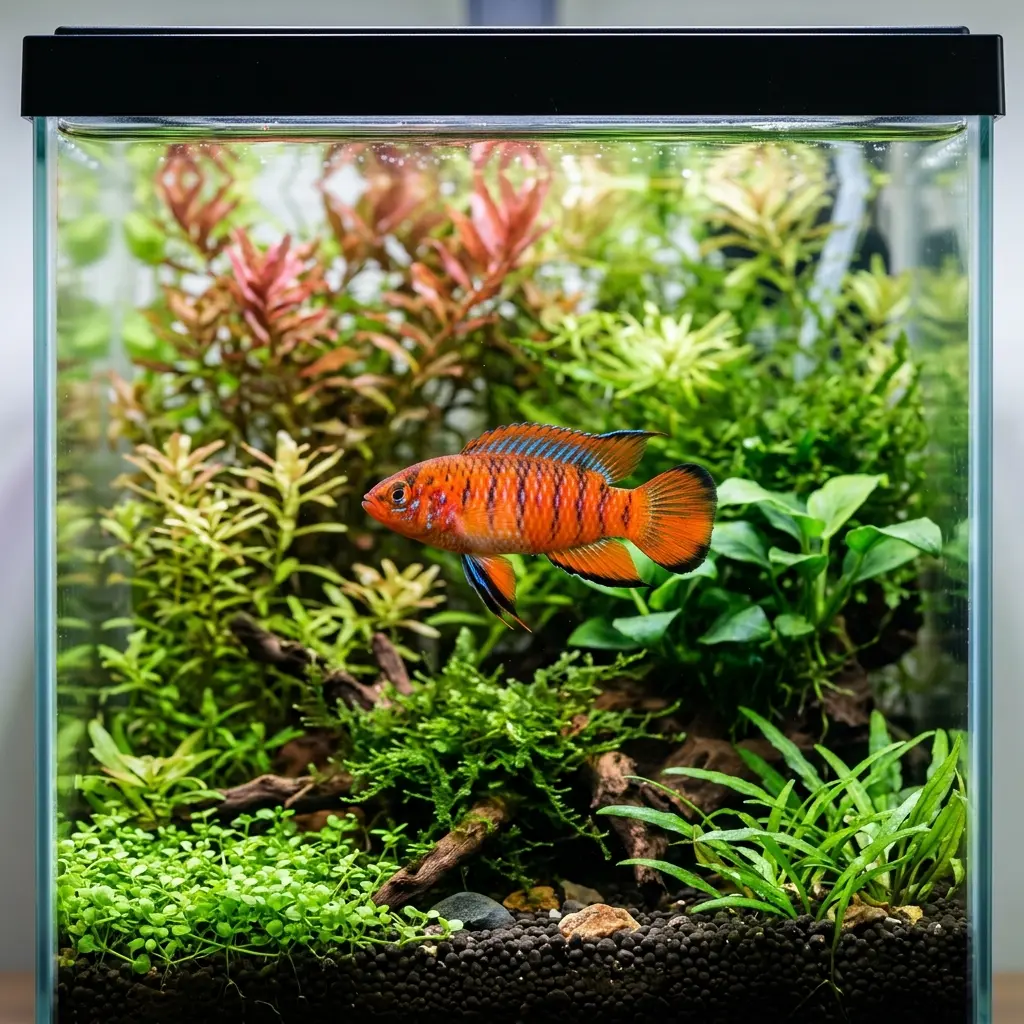
Quick Answer
The Scarlet Badis (Dario dario) is a jewel-like nano fish from northeastern India. It requires a mature, softly lit tank with stable water, a diet of live/frozen foods, and careful management of male aggression. A minimum 10-gallon aquarium with ample hiding places is recommended.
Quick Facts
| Scientific Name | Dario dario |
|---|---|
| Common Names | Scarlet Badis |
| Family | Badidae |
| Genus | Dario |
| Type | Freshwater |
| Temperament | semi-aggressive |
| Care Difficulty | intermediate |
| Lifespan | 5 years |
| Maximum Size | Up to 0.6 in (2 cm) |
| Diet | Carnivore |
| Temperature | 64–79°F (18–26°C) |
| pH | 6.5–7.5 |
| Hardness | 1–12 dGH |
| Minimum Size | 10 gallons |
Key Takeaways
- Keep only one male in tanks under 30 gallons.
- Live/frozen food is essential; dry foods are usually refused.
- Sensitive to copper, formalin, and salt—choose medications with care.
- Thrives in heavily planted, low‑light aquariums with leaf litter.
Overview
Species Overview
The Scarlet Badis (Dario dario) is one of the smallest percomorph fishes in the hobby, native to northeastern India, particularly populations associated with the Brahmaputra drainage. FishBase records the distribution as India. Its habitat consists of shallow, slow‑flowing or low‑current vegetated streams with sand and fine gravel substrate and abundant aquatic vegetation. Males display a spectacular pattern of scarlet vertical stripes alternating with iridescent blue, reaching a documented standard length of 0.6 inches (1.5 cm), with some aquarium‑bred individuals slightly larger. Females are smaller and drab. The species is a micro‑predator, feeding on insect larvae and tiny crustaceans. Its reclusive, territorial nature and demanding diet place it firmly in the intermediate keepers’ realm.
Taxonomy
- Kingdom: Animalia
- Phylum: Chordata
- Class: Actinopterygii
- Order: Anabantiformes
- Family: Badidae
- Genus: Dario
- Species: Dario dario
Diet
Feeding & Nutrition
As micro‑predators, Scarlet Badis rely on small live and frozen foods. Live baby brine shrimp, grindal worms, Daphnia, and chopped bloodworms (thawed and rinsed) form the core diet. Many specimens ignore dry commercial foods entirely; while some long‑term captives may eventually accept tiny pellets or granules, this should never be assumed. Offer food 2–3 times per day in very small amounts, as their stomachs are tiny. Enrichment of live foods with vitamin supplements is beneficial but not mandatory. Never feed large, hard‑shelled prey that could cause impaction, and avoid beef heart or other mammalian products.
Health
Health & Disease Management
Prevention through excellent water quality and a low‑stress environment is paramount. Scarlet Badis can be sensitive to poor water conditions and rapid parameter changes. Common ailments include ich (Ichthyophthirius multifiliis), velvet (Oodinium), and internal nematode infections. Because this species may react adversely to certain medications, always consult an aquatic veterinarian and follow product labels carefully. Treatments should be administered in a separate hospital tank whenever possible. Salt treatments require careful consideration of concentration, duration, and species tolerance; never apply automatically.
Ichthyophthirius multifiliis (Ich)
White spot disease caused by a protozoan parasite.
- Small white cysts on fins and body, flashing, rapid gill movement.
Introduction of infected fish or plants; temperature stress.
Quarantine new livestock; maintain stable temperature; use an ich medication appropriate for scaleless/sensitive fish following label directions.
Oodinium (Velvet Disease)
Parasitic dinoflagellate causing a gold‑dust sheen.
- Fine gold‑yellow coating, clamped fins, lethargy, loss of appetite.
Often associated with poor water quality, low pH, or introduction of infected live food.
Use a commercial velvet remedy; increasing aeration and darkening the tank may help reduce parasite load. Follow medication instructions precisely.
Internal Nematodes (Camallanus worms)
Thread‑like worms infecting the digestive tract.
- Red worms protruding from anus, wasting, bloated belly.
Ingestion of infected live food, especially wild‑harvested tubifex or copepods.
Use an appropriate dewormer under expert guidance; feed only clean cultured live foods.
Fin Rot / Columnaris
Bacterial infection causing fin erosion and skin lesions.
- Frayed fins, grey‑white patches, lethargy.
High organic load, injury, or stress.
Improve water quality; treat with an antibiotic in a hospital tank as directed by a veterinarian; avoid untested home remedies.
Breeding
Breeding Scarlet Badis
Captive breeding is achievable with dedication. The following protocol is based on aquarium husbandry reports, not peer‑reviewed studies. Prepare a separate 5–10 gallon (19–38 litre) spawning tank with soft, slightly acidic water (pH ~6.8, GH 4–8), a cave (half clay pot or coconut shell), and Java moss. Condition a male and female with live foods for at least two weeks. Raise the temperature to around 78–80°F (25–27°C). The male will intensify his colours and lead the female into the cave where she deposits eggs. Remove the female if aggression or egg predation occurs; the male guards the eggs and may be removed once fry are free‑swimming. Eggs typically hatch in about 3 days. Fry are extremely tiny and need infusoria for the first several days, graduating to microworms and freshly hatched brine shrimp. Perform small, daily water changes with aged, matching water. Growth is slow; patience is essential.
Compatible Tank Mates






Species Comparison
| Feature | Scarlet Badis (Dario dario) | Blue Badis (Badis badis) | Flame Badis (Dario hysginon) | Chameleon Fish (Badis blosyrus) |
|---|---|---|---|---|
| Max Size (standard length) | 0.6 in (1.5 cm) | 2.8 in (7 cm) | 0.9 in (2.3 cm) | 2.4 in (6 cm) |
| Temperament | Semi-aggressive; male territoriality prominent | Peaceful but may eat small tankmates | Similar male aggression pattern | Territorial, especially when breeding |
| Minimum Tank Size (practical) | 10 gal (38 L); 15+ gal recommended for groups | 20 gal (76 L) | 10 gal (38 L) | 20 gal (76 L) |
| Diet | Carnivore; live/frozen foods essential; dry foods rarely accepted | Carnivore; accepts frozen, sometimes prepared | Obligate micro-predator; live food crucial | Carnivore; prefers live invertebrates |
| pH Range (aquarium) | 6.5–7.5 | 6.0–7.5 | 6.5–7.5 | 6.8–7.8 |