Advanced

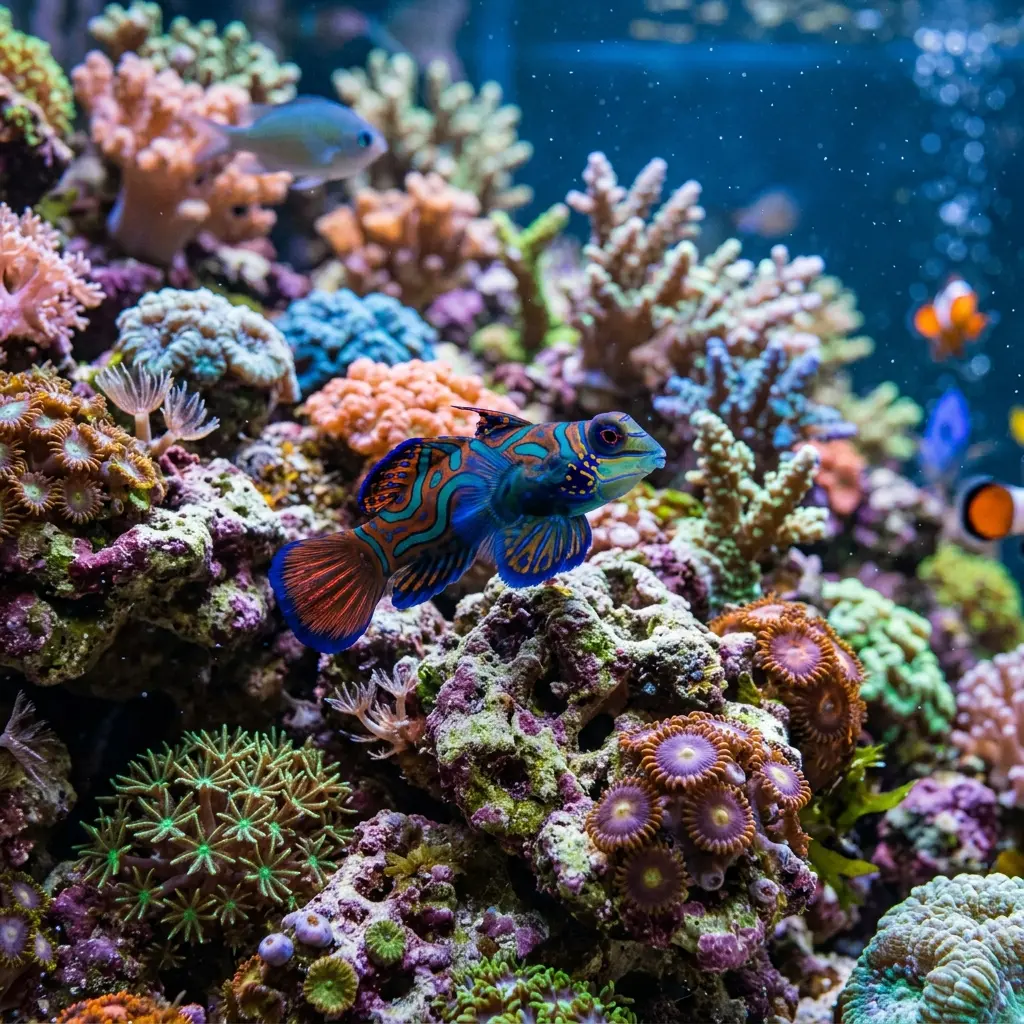
Mandarin Dragonet

By The Aquarium Calculators Editorial Team ·

Synchiropus splendidus

Complete Mandarin Dragonet care guide covering carnivore diet requirements, peaceful temperament, minimum 40 Gallons tank setup, and compatible saltwater tankmates. Difficulty: Advanced.

Mandarin Dragonet

Quick Answer

Mandarin Dragonet (Synchiropus splendidus) is one of the most beautiful marine fish, with swirling patterns of blue, orange, and green. It requires a minimum 40 Gallons aquarium with a pH of 8.1 - 8.4 and temperature range of 24-26°C. This carnivore occupies the bottom zone and makes an excellent addition to community setups.

Intro

Mandarin Dragonet (Synchiropus splendidus) is one of the most beautiful marine fish, with swirling patterns of blue, orange, and green. It is a specialized micropredator.

Setup

A 40-gallon or larger established reef tank (6+ months) with abundant live rock and a thriving copepod population. Refugium is highly recommended.

Feeding

Carnivorous; feeds exclusively on live copepods and other small crustaceans. Must have a mature refugium to supply continuous live food. Can be trained to eat frozen foods with patience.

Compatibility

Peaceful. Keep singly or as a mated pair. Good with other peaceful fish. Avoid aggressive tankmates that compete for food.

Aquarium Tank Volume Calculator

Enter your details below for an instant recommendation.

Recommended Output

Gallons

--

Liters

--

Empty weight

--

Filled weight

--

Tank Position
Bottom
Water Temp
24-26°C
Adult Size
See profile
Water pH
8.1 - 8.4

Species Characteristics

Adult Size
Lifespan
Growth Rate
moderate
Tank Compatibility
Community compatible
Indoor Aquarium
Yes

Water Parameters

Water Temperature
Humidity
Water pH

Tank Lighting

Tank Lighting
Standard lighting
Light Hours
N/A
Intensity
moderate

Feeding & Diet

Diet Type
Diet: Carnivore
Feeding Schedule
N/A
Live Food Options
N/A

Frequently Asked Questions

How many Mandarin Dragonets should be kept together?
Keep a single specimen, or a confirmed male-female pair in a tank of at least 55 gallons (208 liters) with a footprint of 36x18 inches (90x45 cm). Mandarin dragonets (Synchiropus splendidus) are specialized feeders; two males will fight over foraging grounds in standard reef systems. A bonded pair requires abundant live rock (2 lbs/gallon) and copepod population. For a single fish, 40 gallons minimum. Provide at least 50 lbs of mature live rock. Avoid with competitive feeders (wrasses, dottybacks) that consume copepods.
What are the exact marine water parameters for Mandarin Dragonets?
Target pH 8.1 - 8.4, specific gravity 1.023 - 1.025 (35-35.5 ppt), General Hardness 7 - 12 dGH, Carbonate Hardness 8 - 12 dKH, Total Dissolved Solids 32,000 - 35,000 ppm, and temperature 72°F - 78°F (22°C - 26°C). They require an established reef tank (minimum 6 months old) with a large population of copepods (Tigriopus, Tisbe). Maintain nitrates below 10 ppm with weekly 15% water changes. Use a refugium to breed copepods. Stable parameters are critical; they are sensitive to fluctuations. Avoid copper entirely.
What is the dietary and medication protocol for Mandarin Dragonets?
They feed almost exclusively on live copepods and amphipods, requiring 90% live prey, 10% supplemented foods. They often refuse commercial dry foods or frozen mysis unless carefully trained. To train, use a feeding station and live baby brine shrimp, then transition to frozen cyclops and oyster eggs. A mature reef tank can sustain one dragonet per 40 gallons with 1-2 lbs live rock per gallon. Medication alert: Extremely sensitive to copper (0.05 mg/L lethal) and formalin. Never use copper in tanks with mandarins. Praziquantel is safe but stressful.
How to breed Mandarin Dragonets in captivity?
Condition a bonded pair with enriched live brine shrimp and copepods for 4 weeks. Maintain temperature at 78°F (25.5°C) and photoperiod 12 hours. Spawning occurs at dusk; the pair rises in the water column and releases eggs. Female lays 50-200 eggs nightly for several days. Eggs hatch in 18-24 hours; larvae are 1.5 mm and require copepod nauplii (Parvocalanus, Acartia) for the first 14 days. Metamorphosis occurs at day 30-40. Larval rearing is extremely challenging; requires continuous live copepod cultures. Only for advanced breeders.