
Electric Blue Ram (Mikrogeophagus ramirezi)
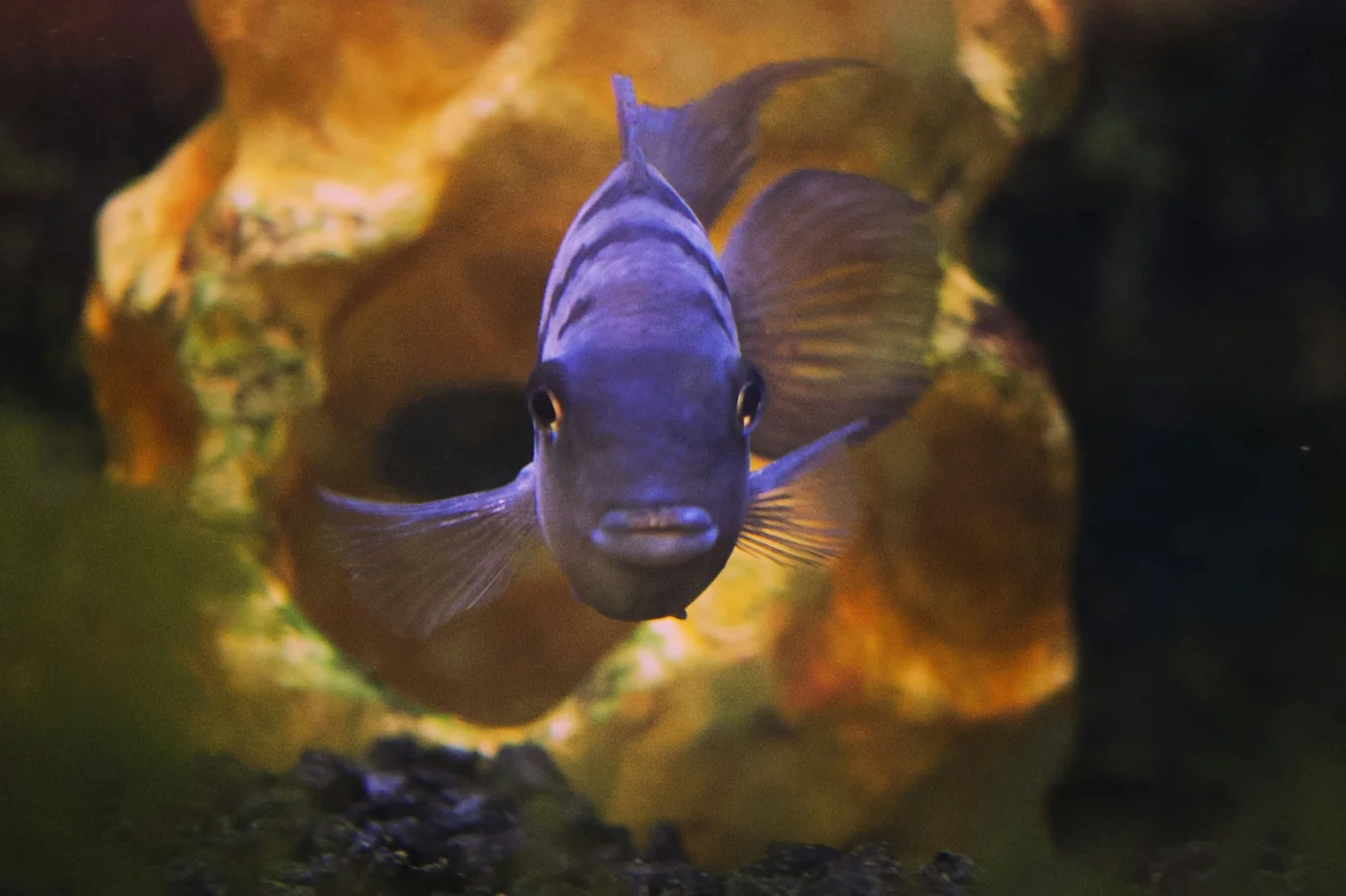
Quick Answer
The Electric Blue Ram is a selectively bred, neon-blue color strain of the South American dwarf cichlid Mikrogeophagus ramirezi. It's peaceful toward other fish but sensitive to water quality, needing a mature, warm (78-86°F/26-30°C), soft, stable tank of at least 20 gallons.
Quick Facts
| Scientific Name | Mikrogeophagus ramirezi |
|---|---|
| Common Names | Electric Blue Ram |
| Type | Freshwater |
| Temperament | peaceful |
| Care Difficulty | intermediate |
| Lifespan | 2-4 years |
| Maximum Size | Up to 2.75 in (7 cm) |
| Diet | Omnivore |
| Temperature | 78–86°F (26–30°C) |
| pH | 5.5–7 |
| Hardness | 2–8 dGH |
| Minimum Size | 20 gallons |
Key Takeaways
- Peaceful toward other fish; territorial mainly when spawning.
- Needs consistently warm water (78-86°F/26-30°C).
- Sensitive to poor water quality; best added to a mature, cycled tank.
- Grows to about 2.5-2.75 in (6-7 cm).
Health
Hexamita / Hole-in-the-Head Syndrome
A protozoan-associated condition frequently reported in dwarf cichlids, including rams, often linked to stress, poor water quality, and nutritional deficiency rather than being unique to this species.
- Small pits or lesions around the head and lateral line, loss of appetite, weight loss, and stringy white feces.
Chronic stress, poor water quality, and/or nutritional deficiency are commonly cited contributing factors, alongside the underlying protozoan.
Maintain pristine, stable water quality with frequent small water changes and a varied, high-quality diet.
Ich and General Stress-Related Disease
Not unique to this species, but this fish’s sensitivity to water conditions makes stress-driven disease outbreaks a particular concern.
- White cyst-like spots, clamped fins, lethargy, loss of appetite.
Introduction of an infected fish or contaminated water/equipment without quarantine; temperature or water-quality instability.
Quarantine new arrivals, introduce only to a mature, well-cycled tank, and keep parameters stable.
Breeding
Electric Blue Rams are substrate/cave spawners: a bonded pair selects and cleans a flat surface or shallow depression, and the female lays eggs which both parents typically guard and fan. Reported clutch sizes vary widely across sources, commonly cited in the range of roughly 100-400 eggs depending on the individual pair and conditions, with eggs generally reported to hatch within a few days. Breeding success in this selectively bred color strain is reported to be lower and less consistent than in wild-type German Blue Rams. Soft, warm, very clean water is widely reported to improve spawning success and fry survival.
Compatible Tank Mates






Species Comparison
| Species | Adult Size | Temperament | Min. Tank Size | Diet | Social Behavior | |
|---|---|---|---|---|---|---|
| Electric Blue Ram (Mikrogeophagus ramirezi "Electric Blue") | 2.5-2.75 in (6-7 cm) | Peaceful (territorial when spawning) | 20 gal (75.7 L) | Omnivore | Pair-forming | |
| German Blue Ram (Mikrogeophagus ramirezi, wild-type) | 2.5-2.75 in (6-7 cm) | Peaceful (territorial when spawning) | 20 gal (75.7 L) | Omnivore | Pair-forming | Same species, wild-type coloration; parent strain of the profiled color variant, not a distinct species. |
| Bolivian Ram (Mikrogeophagus altispinosus) | Up to 3.5 in (8.9 cm) | Peaceful | 20-30 gal (75.7-113.6 L) | Omnivore | Pair-forming | Closely related, commonly considered alternative dwarf cichlid that tolerates a wider water-parameter range; not the profiled species. |