Six Line Wrasse (Pseudocheilinus hexataenia)
Quick Answer
Six Line Wrasse (Pseudocheilinus hexataenia) is a small, vibrantly colored carnivorous wrasse renowned for natural pest control in reef aquariums. It requires a minimum 30 gallon (113 liter) aquarium with stable marine water parameters (pH 8.1-8.4, temperature 75-79 degrees Fahrenheit). As a highly territorial and aggressive species, only one should be kept per tank, and tank mate selection must exclude other wrasses and small passive fish.
Quick Facts
| Scientific Name | Pseudocheilinus hexataenia |
|---|---|
| Common Names | Six Line Wrasse |
| Family | Labridae |
| Genus | Pseudocheilinus |
| Type | Saltwater |
| Temperament | aggressive |
| Care Difficulty | beginner |
| Lifespan | 10 years |
| Maximum Size | Up to 3 in (8 cm) |
| Diet | Carnivore |
| Temperature | 75–79°F (24–26°C) |
| pH | 8.1–8.4 |
| Hardness | 7–12 dGH |
| Minimum Size | 30 gallons |
Key Takeaways
- Keep only one per aquarium; conspecifics will fight to death regardless of tank size.
- Requires minimum 30 gallons (113 liters) with at least 1.5 pounds of live rock per gallon.
- Exceptional biological pest control: eats flatworms, pyramidellid snails, and bristle worms.
- Obligate carnivore requiring 60-70% protein, 15-20% fat, and vitamin supplementation.
- Quarantine for 4-6 weeks; wild-caught specimens frequently carry Cryptocaryon and velvet.
- Does not bury in sand; sleeps in rock crevices within a protective mucus cocoon.
- Incompatible with all other wrasses, especially fairy, flasher, and leopard wrasses.
- First commercial captive breeding achieved in 2025 by Rising Tide Conservation.
Overview
The Six Line Wrasse (Pseudocheilinus hexataenia) is one of the most popular and visually striking members of the Labridae family in the marine aquarium trade. Native to the Indo-Pacific region from the Red Sea to the Tuamotu Islands, this small but formidable predator has earned its place in reef aquariums worldwide through a combination of breathtaking coloration and exceptional utility as a biological pest control agent.
Appearance and Identification
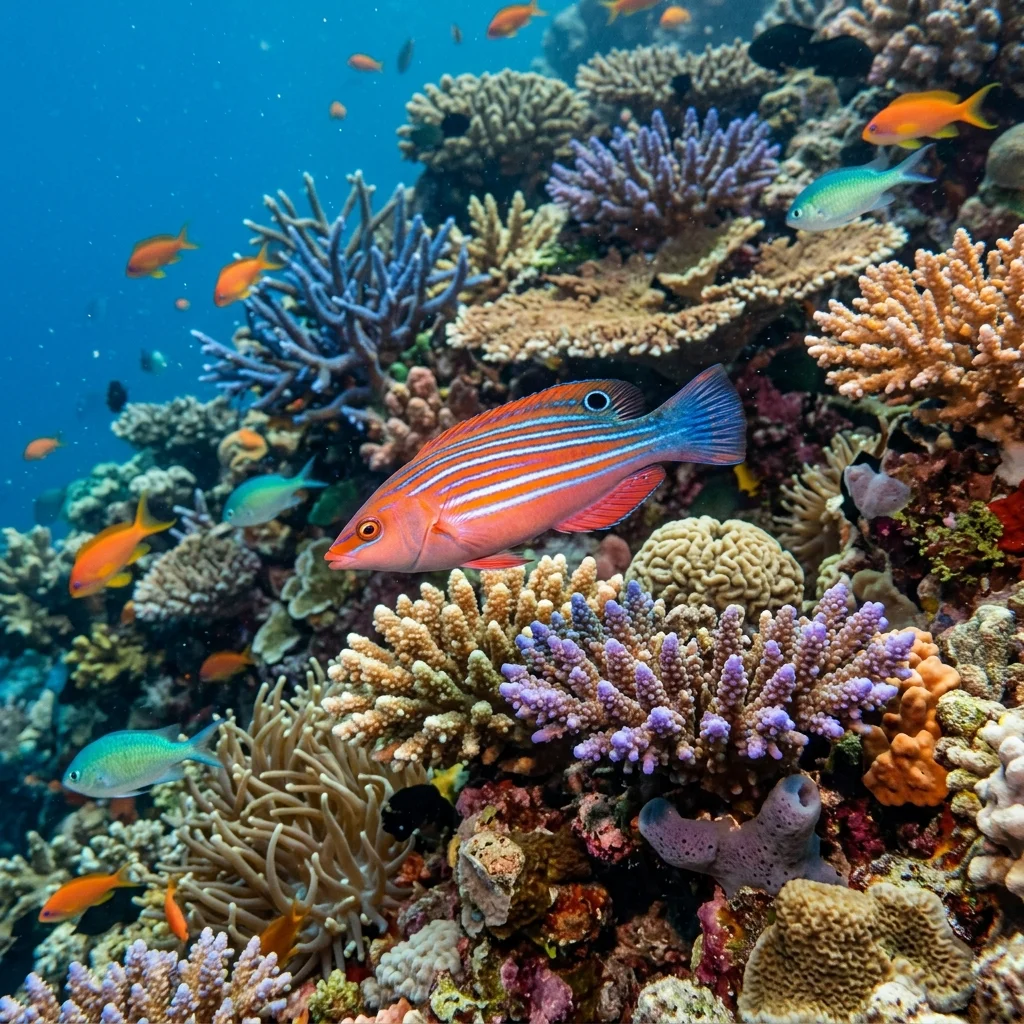
Six Line Wrasses display six vivid orange horizontal stripes alternating with deep purple-blue bands across the upper two-thirds of their elongated body. The lower body transitions to a rich purple-orange hue, while the head features fine yellow dots on the lower jaw. The caudal fin is distinctly green with a small blue-edged black spot at the upper base. Their eyes are a striking red with two white horizontal stripes, giving them an alert and intelligent expression.
Maximum length reaches 3 inches (7.6 cm), though most aquarium specimens remain closer to 2.5 inches (6.3 cm). Sexual dimorphism is subtle; terminal phase males may develop slightly more intense coloration and marginally longer fins, but visual sexing in aquarium conditions is unreliable.
Natural Habitat
In the wild, Six Line Wrasses inhabit seaward reefs among dense coral branches, particularly Pocillopora coral formations, at depths of 6-115 feet (2-35 meters). They are diurnal, highly active foragers that swim amongst coral branches for protection while hunting small crustaceans, copepods, and planktonic organisms. They occur in small, loose social groups in nature but establish strict dominance hierarchies within these groups.
Conservation Status
The IUCN lists Pseudocheilinus hexataenia as Least Concern due to its wide distribution and large population. However, rising demand in the aquarium trade has prompted conservation efforts. In 2025, Rising Tide Conservation achieved the first successful commercial captive breeding breakthrough, reducing pressure on wild populations.
Care
Housing & Pond Requirements
Tank Size and Dimensions
The absolute minimum tank size for a single Six Line Wrasse is 30 gallons (113 liters) with a footprint of at least 30x12 inches (75x30 cm). However, for long-term health and reduced territorial aggression, a 55 gallon (208 liter) or larger aquarium is strongly recommended. Tanks under 30 gallons amplify aggression and stress, leading to disease and shortened lifespans.
Rockwork and Aquascape
Provide a minimum of 1.5 pounds of live rock per gallon (0.18 kg per liter). The rockwork must include at least five discrete caves or crevices where the wrasse can establish sleeping sites. Six Line Wrasses do not bury in sand at night; instead, they retreat into rock crevices and secrete a protective mucus cocoon around their body. Without adequate hiding spots, they become chronically stressed and susceptible to disease.
Substrate
A sand bed of 2-3 inches (5-7.6 cm) is recommended for biological filtration and aesthetic purposes, though not strictly required for the fish itself. Avoid crushed coral with sharp edges, which can abrade their delicate ventral surface during foraging.
Filtration and Water Flow
Use a protein skimmer rated for at least 1.5x the system volume. Moderate to high water flow mimics their natural reef habitat and encourages active swimming. Ensure flow is not so intense that the fish cannot rest or feed comfortably.
Lighting Requirements
Standard reef lighting is sufficient. Six Line Wrasses are diurnal and most active during daylight hours. Maintain a photoperiod of 10-12 hours using LED or T5 lighting that supports coral photosynthesis. They do not require specialized lighting beyond standard reef illumination.
Water Parameters
Critical Water Parameters
Six Line Wrasses require stable marine water parameters. Fluctuations exceeding the tolerances listed below cause osmotic stress, immune suppression, and disease susceptibility.
- Temperature: 75-79 degrees Fahrenheit (23.9-26.1 degrees Celsius). Stability within 1 degree Fahrenheit (0.5 degrees Celsius) daily is more important than the exact value.
- pH: 8.1-8.4. Prolonged exposure below 8.0 causes chronic stress and lateral line erosion.
- Specific Gravity: 1.023-1.025 (35-35.5 ppt). Never use hyposalinity treatment below 1.018; this species is highly sensitive to low salinity.
- Carbonate Hardness (dKH): 8-12 dKH. Essential for pH buffering in reef systems.
- General Hardness (dGH): 7-12 dGH.
- Ammonia: 0 ppm. Any detectable ammonia is lethal.
- Nitrite: 0 ppm.
- Nitrate: Below 10 ppm. Ideal is below 5 ppm for optimal coloration.
- Phosphate: Below 0.05 ppm.
- Total Dissolved Solids: 32,000-35,000 ppm.
Why These Parameters Matter
Six Line Wrasses are active, high-metabolism fish that require well-oxygenated, clean water. Elevated nitrates and phosphates not only dull their vibrant coloration but also suppress immune function, making them susceptible to Cryptocaryon and bacterial infections. Stable salinity is absolutely critical; this species lacks the osmoregulatory flexibility of some hardier marine fish.
Diet
Six Line Wrasses are obligate carnivores with a high metabolism requiring frequent, varied feedings. In the wild, they forage continuously on small crustaceans, copepods, amphipods, and planktonic organisms. In captivity, their diet must replicate this nutritional profile to maintain health, coloration, and immune function.
Health
Six Line Wrasses are generally hardy and disease-resistant when provided with stable water parameters, a varied diet, and proper quarantine. However, they are susceptible to several common marine fish diseases, particularly when stressed by poor water quality, inadequate nutrition, or aggressive tank mates.
Marine Ich (Cryptocaryon irritans)
The most common parasitic infection in Six Line Wrasses, caused by the ciliated protozoan Cryptocaryon irritans.
- White salt-like spots on body and fins, rapid breathing, flashing against rocks and substrate, clamped fins, loss of appetite, and lethargy.
Introduction via infected fish, invertebrates, or contaminated water. Stress from poor water quality, temperature fluctuations, or aggressive tank mates triggers outbreaks in carriers.
Quarantine all new fish for 4-6 weeks. Do not use reef-safe ich medications in the display tank; they are ineffective. Treat in a hospital tank with Cupramine copper at 0.15 mg/L or chloroquine phosphate at 15 mg/L for 14-21 days. Maintain stable water parameters and reduce stress.
Marine Velvet (Amyloodinium ocellatum)
A highly lethal dinoflagellate parasite that is frequently misdiagnosed as marine ich. Velvet progresses much faster and is more deadly than ich.
- Fine yellow-gold dust coating the body (like powdered sugar), rapid breathing, lethargy, clamped fins, loss of appetite, and death within 48-72 hours if untreated.
Introduction via infected fish or live foods. The parasite attaches to gills first, causing respiratory distress before visible body symptoms appear.
Quarantine all new fish with chloroquine phosphate at 15 mg/L for 14 days as a prophylactic. Velvet is often present without symptoms in carriers. Do not use copper alone; velvet requires higher treatment concentrations or chloroquine. Increase aeration during treatment as infected fish suffer from oxygen deprivation.
Head and Lateral Line Erosion (HLLE)
A chronic condition characterized by pits and erosion along the lateral line and head. In Six Line Wrasses, HLLE is primarily nutritional and environmental rather than parasitic.
- Small pits developing along the lateral line, around the eyes, and on the head. In advanced cases, deep craters form exposing underlying tissue. Fish may appear lethargic and lose coloration.
Deficiency in vitamins A, D3, and E. Activated carbon dust in the water column is a known trigger. Poor water quality with elevated nitrates and phosphates exacerbates the condition. Some evidence suggests stray voltage or electromagnetic fields may contribute.
Feed vitamin-enriched foods soaked in Selcon or Vita-Chem. Use high-quality activated carbon in a media bag, not loose granules that produce dust. Maintain nitrates below 5 ppm. Remove carbon dust with fine filter floss. Supplement with foods rich in carotenoids and marine lipids.
Bacterial Fin Rot and Septicemia
Secondary bacterial infections that typically follow physical damage from aggressive tank mates or parasite infestation.
- Frayed or disintegrating fin edges, red streaks along the body or fins, cloudy eyes, skin ulcers, and bloating.
Aeromonas, Pseudomonas, or Vibrio bacteria entering through wounds or gill damage. Stress from poor water quality, overcrowding, or bullying weakens immune defenses.
Maintain pristine water conditions with zero ammonia and nitrite. Remove aggressive tank mates causing physical damage. Treat with broad-spectrum antibiotics such as kanamycin or nitrofurazone in a hospital tank. Improve nutrition with vitamin supplementation to boost immune response.
Brooklynella hostilis (Anemonefish Disease)
A ciliated protozoan that primarily affects clownfish but can infect Six Line Wrasses, especially when kept with clownfish or in shared quarantine systems.
- Excessive mucus production giving a cloudy or slimy appearance, rapid breathing, lethargy, and loss of appetite. Skin may appear cloudy or opaque.
Direct contact with infected fish or contaminated water. Brooklynella spreads rapidly in quarantine tanks with poor water quality.
Quarantine all fish separately from clownfish. Treat with formalin baths at 25 mg/L for 30-45 minutes daily for 3-5 days, or use chloroquine phosphate at 15 mg/L in a hospital tank. Formalin is effective but stressful; monitor fish closely during treatment.
Breeding
Captive breeding of Six Line Wrasses was long considered impossible for home aquarists due to the microscopic size of larvae and their highly specific dietary requirements. However, recent breakthroughs have changed the landscape of commercial aquaculture for this species.
Tips
Common Mistakes to Avoid
- Adding Two Six Line Wrasses: This is the most common fatal mistake. Two individuals will fight to the death, regardless of tank size. Only one per aquarium.
- Mixing with Other Wrasses: Fairy wrasses, flasher wrasses, leopard wrasses, and other lined wrasses are incompatible. The Six Line Wrasse will harass them relentlessly.
- Insufficient Rockwork: Tanks with minimal rockwork cause chronic stress. Without adequate hiding spots, the fish becomes susceptible to disease and may jump from the tank.
- Skipping Quarantine: Introducing a wild-caught fish directly to the display tank risks infecting the entire system with Cryptocaryon or velvet.
- Using Reef-Safe Ich Medications: These products do not work. They delay proper treatment and result in fish death. Use proven copper or chloroquine treatments in a hospital tank.
- Feeding Terrestrial Meats: Beef heart, chicken, and other mammal meats cause fatty liver disease and should never be fed to marine fish.
- Ignoring Aggression Signs: If your Six Line Wrasse is chasing other fish to the point of hiding, action is required immediately. Remove either the wrasse or the victim before starvation or death occurs.
Expert Tips for Success
- Introduce Last: Always add the Six Line Wrasse as the final fish to your aquarium. Established territories reduce the likelihood of the wrasse dominating the entire tank.
- Live Rock is Non-Negotiable: Provide at least 1.5 pounds of live rock per gallon. The rockwork is their hunting ground, sleeping quarters, and stress refuge.
- Vitamin Soak Everything: Soak all frozen foods in Selcon or Vita-Chem for 5 minutes before feeding. This single practice prevents HLLE and maintains vibrant coloration.
- Quarantine is Mandatory: Never skip quarantine. Six Line Wrasses are wild-caught and frequently carry Cryptocaryon. A 4-6 week quarantine with chloroquine phosphate prophylaxis is the standard of care.
- Target Feed if Necessary: Use a turkey baster or pipette to deliver food directly to shy specimens near their hiding spot during the first week.
- Maintain Copepod Populations: A refugium or dedicated copepod culture ensures a constant supply of live food, which stimulates natural hunting behavior and reduces aggression toward tank mates.
- Secure the Lid: Six Line Wrasses are known jumpers. A tight-fitting lid or mesh screen is essential to prevent carpet surfing.
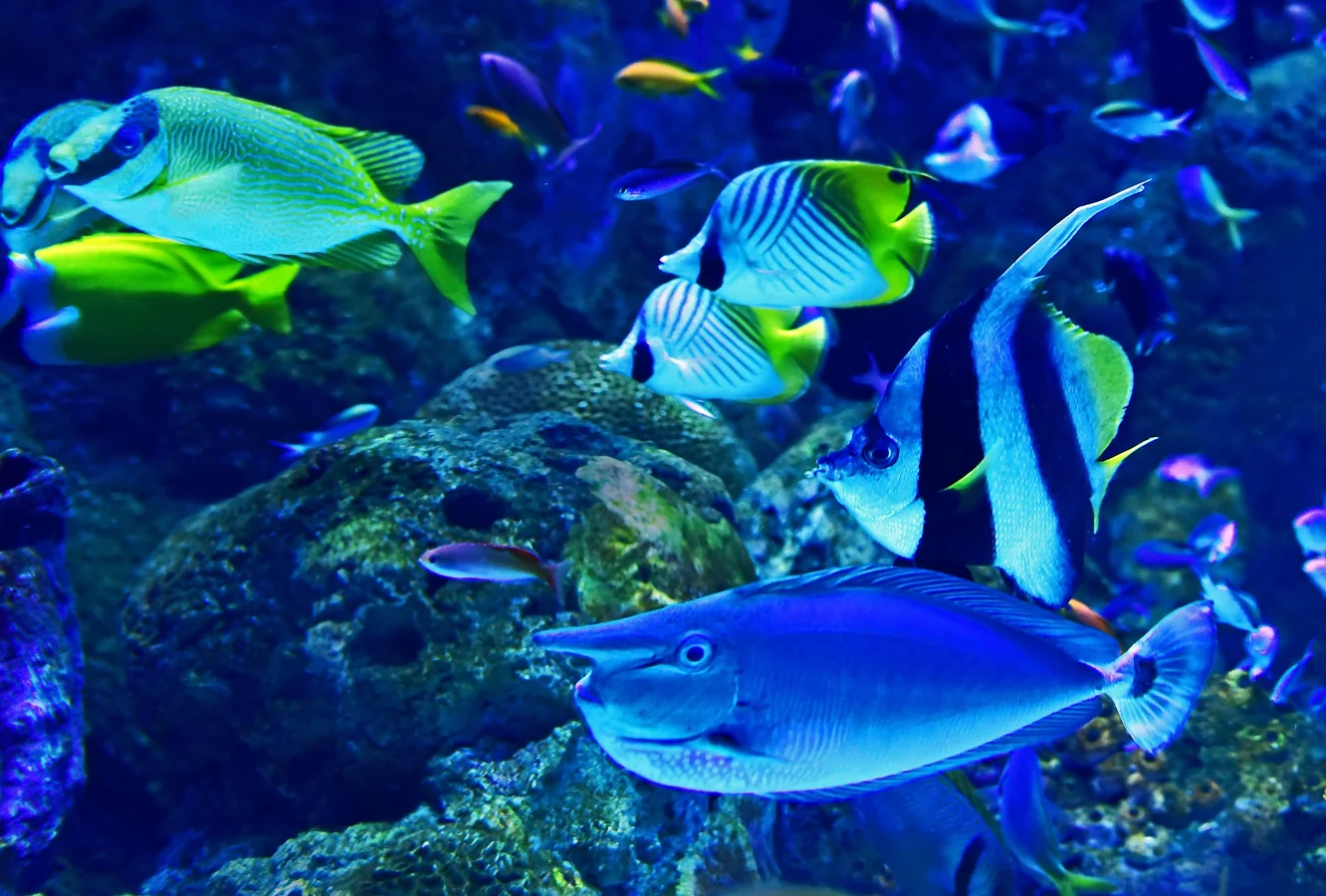
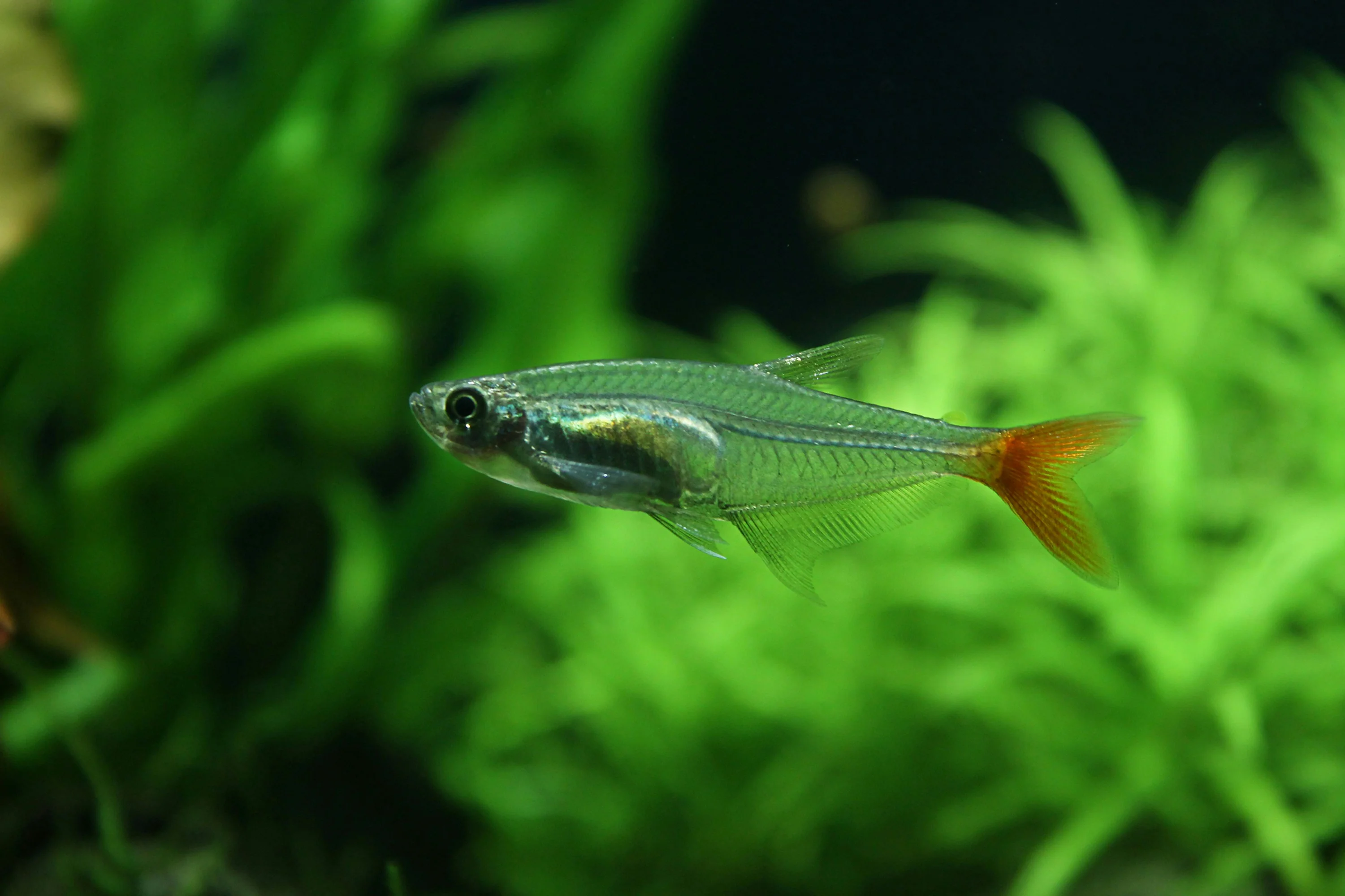
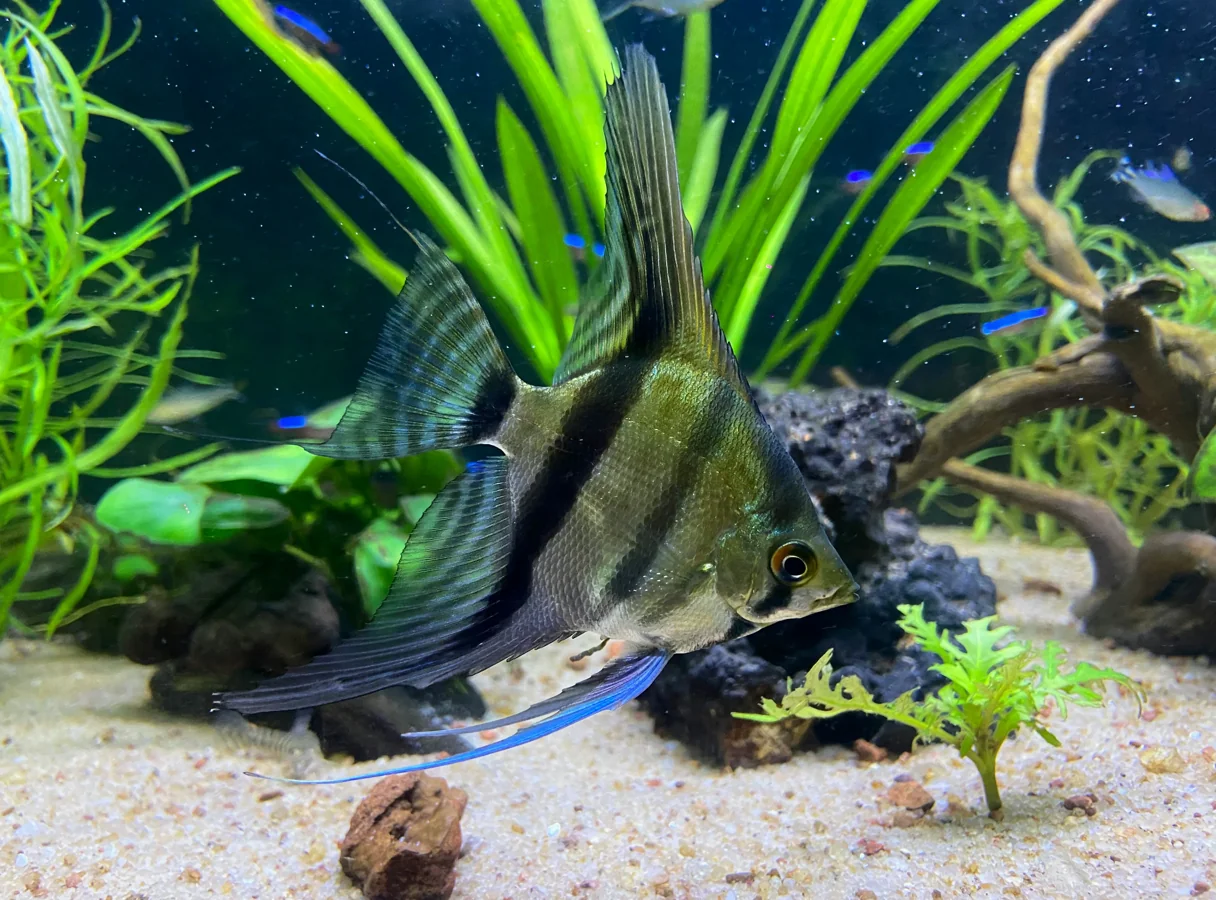
Compatible Tank Mates
Species Comparison
| Feature | Six Line Wrasse | Cleaner Wrasse | Fairy Wrasse | Leopard Wrasse |
|---|---|---|---|---|
| Scientific Name | Pseudocheilinus hexataenia | Labroides dimidiatus | Cirrhilabrus spp. | Macropharyngodon spp. |
| Maximum Size | 3 inches (7.6 cm) | 4 inches (10 cm) | 3-6 inches (7.6-15 cm) | 4-6 inches (10-15 cm) |
| Temperament | Aggressive / Territorial | Peaceful / Social | Peaceful / Mild | Peaceful / Shy |
| Minimum Tank Size | 30 gallons (113 L) | 55 gallons (208 L) | 40 gallons (151 L) | 75 gallons (283 L) |
| Diet | Carnivore (Pest Hunter) | Carnivore (Parasite Cleaner) | Carnivore (Zooplankton) | Carnivore (Invertebrates) |
| pH Range | 8.1 - 8.4 | 8.1 - 8.4 | 8.1 - 8.4 | 8.1 - 8.4 |
| Reef Safety | Reef Safe (Eats Pests) | Reef Safe | Reef Safe | Reef Safe with Caution |
| Wrasse Compatibility | Incompatible with all wrasses | Compatible with most wrasses | Compatible with own genus | Compatible with peaceful wrasses |