
Vampire Shrimp (Atya gabonensis)
Quick Answer
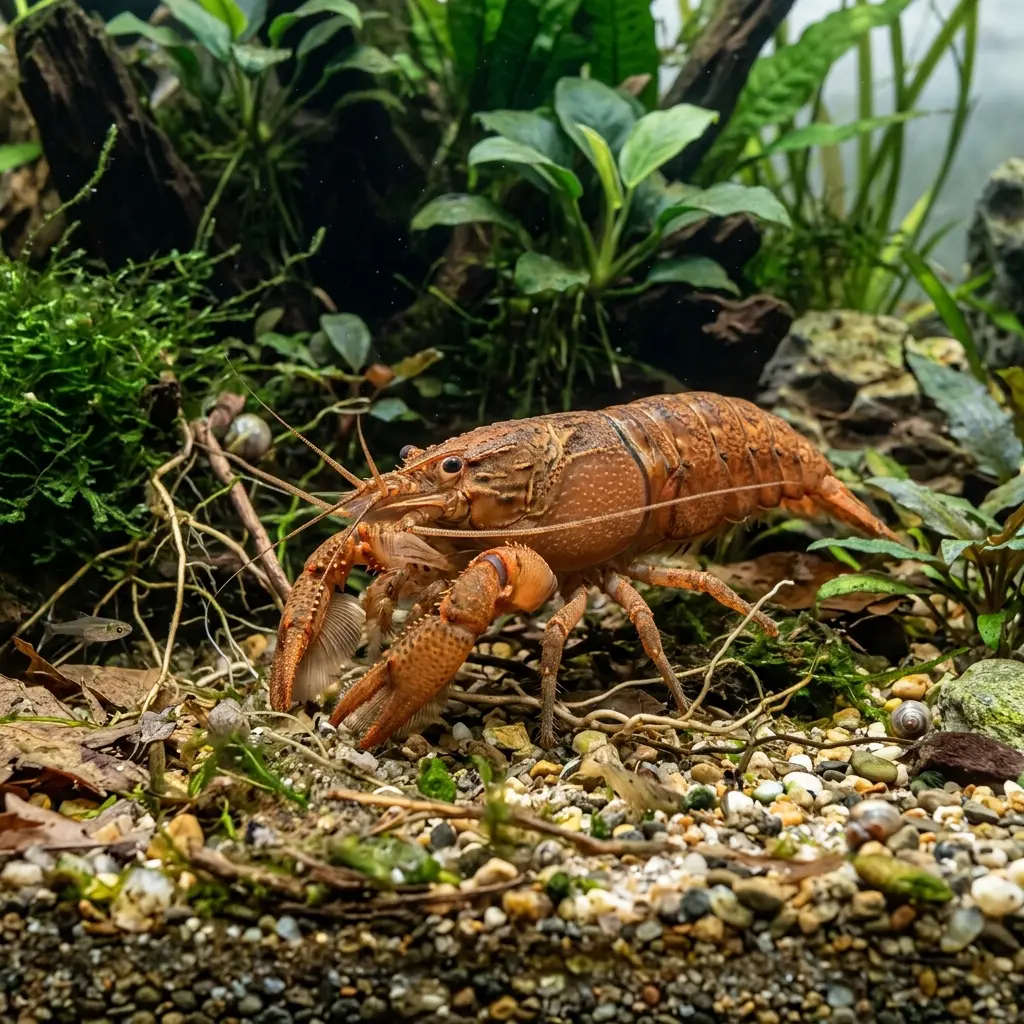
Vampire Shrimp (Atya gabonensis) is a large, peaceful, nocturnal filter-feeding shrimp native to West Africa. Adults reach 6 inches (15 cm) and live up to 10 years. They require a minimum 20-gallon (76-liter) aquarium with strong water flow, sand substrate, multiple caves, and specialized powdered or suspended foods. Extremely sensitive to copper and heavy metals. Not suitable for beginner aquarists due to wild-caught origin and specific feeding requirements.
Quick Facts
| Scientific Name | Atya gabonensis |
|---|---|
| Common Names | Vampire Shrimp |
| Family | Atyidae |
| Genus | Atya |
| Type | Freshwater |
| Temperament | peaceful |
| Care Difficulty | intermediate |
| Lifespan | 10 years |
| Maximum Size | Up to 6 in (15 cm) |
| Diet | Omnivore (Filter Feeder) |
| Temperature | 72–82°F (22–28°C) |
| pH | 6.5–7.8 |
| Hardness | 6–20 dGH |
| Minimum Size | 20 gallons |
Key Takeaways
- Peaceful, nocturnal giant shrimp reaching 6 inches (15 cm) and living up to 10 years
- Obligate filter feeder requiring powdered or suspended foods in strong water current
- Sand substrate mandatory; coarse gravel damages delicate fan appendages
- Extremely sensitive to copper (0.01 mg/L lethal) and standard fish medications
- All specimens are wild-caught; requires 14-day quarantine and extended drip acclimation
- Strictly nocturnal; provides minimal daytime viewing but fascinating night behavior
- Color changes from brown to blue based on water hardness; not an illness indicator
- Bottom-sifting behavior is a starvation warning requiring immediate feeding intervention
Overview
Species Overview
The Vampire Shrimp (Atya gabonensis), also known as the African Fan Shrimp, African Filter Shrimp, Gabon Giant Fan Shrimp, Blue Rhino Shrimp, and Armored Shrimp, is one of the most fascinating and long-lived freshwater invertebrates available to aquarists. Despite its intimidating common name, this species is entirely peaceful, nocturnal, and harmless to all tank mates. Native to West African river systems from Senegal to the Democratic Republic of the Congo, it inhabits muddy, slow-moving waters with moderate-to-strong current zones.
Adult Vampire Shrimp reach an impressive 6 inches (15 cm) in length, making them among the largest freshwater shrimp in the aquarium trade. Their most distinctive feature is the pair of large, fan-shaped chelipeds used to filter microscopic food particles from the water column. Color morphs range from creamy white and rusty brown to striking deep blue, with hardness-dependent color changes occurring throughout their lives.
With a potential lifespan of up to 10 years under optimal conditions, Vampire Shrimp represent a long-term commitment. They are strictly wild-caught specimens, as captive breeding remains extraordinarily rare. This makes proper acclimation, quarantine, and wild-specimen care protocols absolutely critical for success.
Care
Water Parameters
Exact Water Parameters
Vampire Shrimp require stable, mineral-rich water with the following parameters:
- Temperature: 72-82 degrees Fahrenheit (22-28 degrees Celsius). Maintain within a 2-degree daily range. They do not tolerate cold water below 70 degrees Fahrenheit (21 degrees Celsius).
- pH: 6.5-7.8. Optimal range is 6.8-7.2. Avoid pH swings greater than 0.2 units per day.
- General Hardness (GH): 6-20 dGH. Target 8-15 dGH for optimal molting and coloration.
- Carbonate Hardness (KH): 3-15 dKH. Minimum 3 dKH required to prevent pH crashes.
- Total Dissolved Solids (TDS): 150-300 ppm. Wild specimens often arrive in low-TDS water; gradual acclimation to higher TDS is essential.
- Electrical Conductivity: 200-500 microSiemens per centimeter.
- Calcium: 40-80 ppm. Critical for exoskeleton formation.
- Nitrates: Less than 15 ppm. Perform weekly 20-25 percent water changes.
- Ammonia and Nitrite: 0 ppm at all times. These are lethal to invertebrates.
Note on Water Changes: Never change more than 25 percent of water volume at once. Large water changes cause osmotic shock and trigger premature molting. Match temperature and TDS of new water to tank water precisely.
Diet
Health
Health and Disease Management
Common Health Issues
Vampire Shrimp are generally hardy once acclimated, but several health issues are specific to this species. In addition to diseases, they possess extreme sensitivity to standard fish medications (never use copper, formalin, malachite green, or praziquantel). Always use safe alternatives like salt baths or hydrogen peroxide dips, and quarantine wild-caught specimens for 14 days.
Failed Molting
The most common cause of death, usually due to insufficient minerals.
- Split exoskeleton that the shrimp cannot escape
- White ring of death around the cephalothorax
Insufficient calcium Low GH Sudden parameter swings
Maintain GH 8-20 dGH Ensure calcium 40-80 ppm Maintain stable parameters
Fan Damage
Physical damage to the delicate feeding appendages.
- Torn or broken fan appendages
Coarse gravel substrate Aggressive tank mates Improper netting
Use sand substrate only Net with extreme care using soft mesh nets
Starvation
Chronic underfeeding leading to eventual death.
- Lethargy
- Bottom-sifting behavior
Insufficient food particles in water column Inadequate water flow
Feed powdered foods twice daily Monitor feeding position
External Parasites
Parasites commonly found on wild-caught specimens.
- Bell-shaped protozoans on fans (Vorticella)
- Flatworms on rostrum and gills (Scutariella japonica)
Wild-caught origin
Hydrogen peroxide dip at 1 ml per liter for 15-30 seconds Salt baths Strict quarantine for 14 days
Breeding
Compatible Tank Mates
Species Comparison
| Feature | Vampire Shrimp | Bamboo Shrimp | Amano Shrimp | Cherry Shrimp |
|---|---|---|---|---|
| Scientific Name | Atya gabonensis | Atyopsis moluccensis | Caridina multidentata | Neocaridina davidi |
| Max Size | 6 inches (15 cm) | 4 inches (10 cm) | 2 inches (5 cm) | 1.5 inches (4 cm) |
| Temperament | Peaceful, extremely shy | Peaceful, bold | Peaceful, active | Peaceful, active |
| Minimum Tank Size | 20 gallons (76 L) | 20 gallons (76 L) | 10 gallons (38 L) | 5 gallons (19 L) |
| Feeding Method | Filter feeder (fans) | Filter feeder (fans) | Omnivore scavenger | Omnivore scavenger |
| Diet Type | Powdered/suspended particles only | Powdered/suspended particles; occasional grazing | Algae, detritus, commercial foods | Algae, biofilm, commercial foods |
| Activity Pattern | Strictly nocturnal | Diurnal and crepuscular | Diurnal | Diurnal |
| Lifespan | Up to 10 years | Up to 7 years | 2-3 years | 1-2 years |
| Breeding Difficulty | Virtually impossible (marine larvae) | Very difficult (marine larvae) | Very difficult (marine larvae) | Easy (direct development) |