
Blue Green Chromis (Chromis viridis)
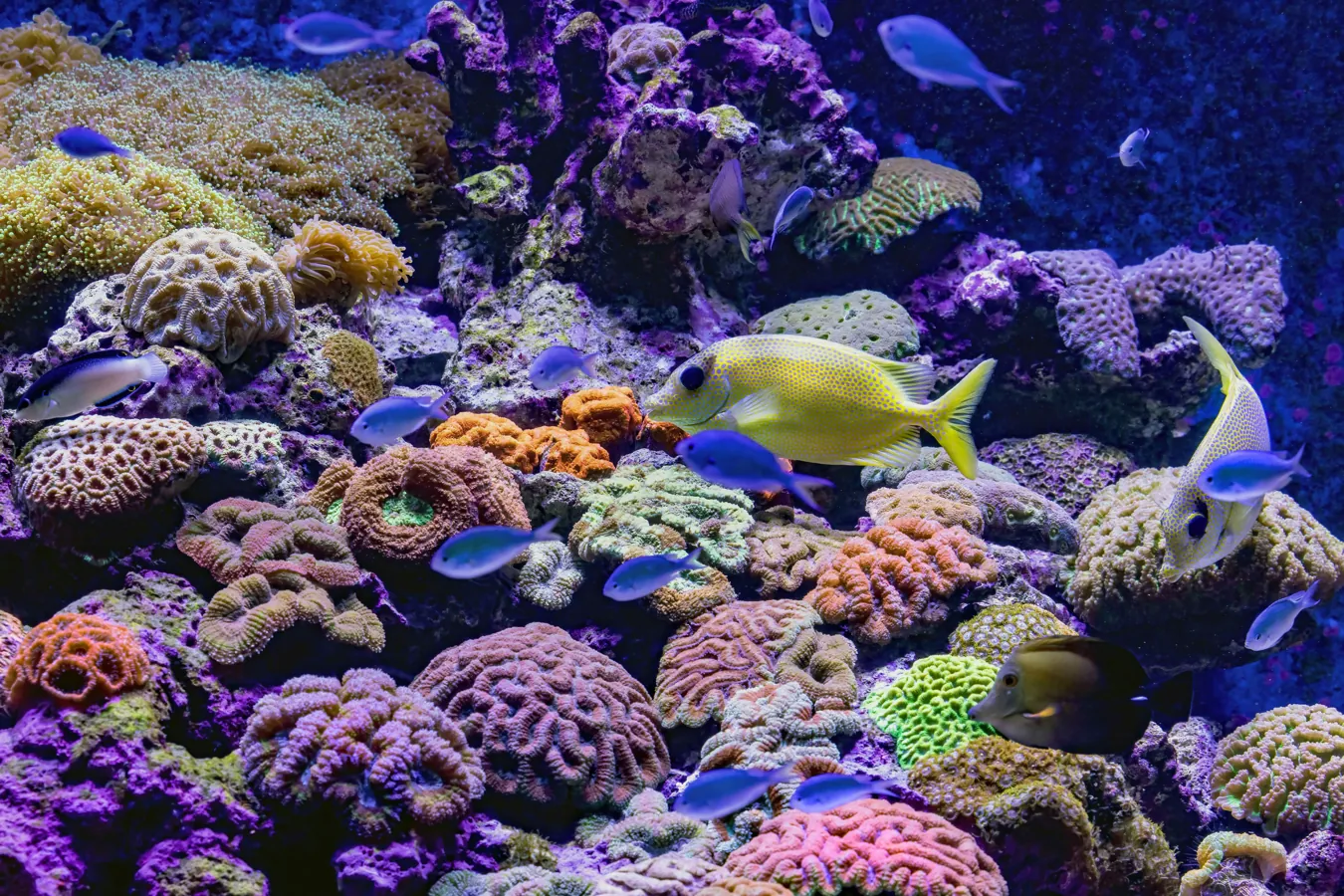
Quick Answer
Blue Green Chromis (Chromis viridis) should ideally be kept in groups of 6 or more in a 55-gallon or larger aquarium. They are peaceful, reef-safe planktivores that prefer stable reef parameters (pH 8.1–8.4, temp 72–80°F, SG 1.020–1.026) and a varied diet. They are one of the few peaceful damselfish and make excellent community fish.
Quick Facts
| Scientific Name | Chromis viridis |
|---|---|
| Common Names | Blue Green Chromis |
| Type | Saltwater |
| Temperament | peaceful |
| Care Difficulty | beginner |
| Maximum Size | Up to 4 in (10 cm) |
| Diet | Planktivore |
| Temperature | 72–80°F (22–27°C) |
| pH | 8.1–8.4 |
| Minimum Size | 55 gallons |
Key Takeaways
- Peaceful temperament, unusual among damselfish.
- Recommended: 55+ gallons for a school of 6 or more.
- Best kept in groups of 6 or more to reduce stress and promote natural behavior.
- Reef-safe and compatible with most peaceful species.
Health
Marine Ich (Cryptocaryon irritans)
A common parasitic infection causing white spots on the skin and gills.
- White spots (1–2 mm) on body, fins, and gills; rapid breathing; scratching against objects; lethargy.
Stress, poor water quality, introduction of infected fish.
Quarantine new arrivals; maintain stable water parameters; minimize stress.
Marine Velvet (Amyloodinium ocellatum)
A highly contagious parasitic infection that can be rapidly fatal.
- Fine golden-brown dust on skin, clamped fins, rapid breathing, loss of appetite, hiding.
Stress, sudden temperature fluctuations, introduction of carriers.
Strict quarantine; maintain optimal water quality; avoid overcrowding.
Flukes (Monogenean trematodes)
Flatworm parasites that attach to skin and gills, causing irritation.
- Excessive mucus, scratching, flashing, labored breathing, pale gills.
Introduction of infected fish; poor hygiene.
Quarantine and prophylactic treatment (e.g., praziquantel) for new arrivals.
Breeding
Blue Green Chromis are substrate spawners. The male prepares a nest site on sand, rubble, or dead coral and courts females with an elaborate swimming display. Several females may deposit eggs in a single male’s nest; each spawning event can produce several thousand eggs (reported ranges vary widely). The male guards and aerates the eggs, removing unfertilized ones. Eggs hatch in approximately 2–3 days at around 27°C (81°F). The larvae are planktonic and require specialized care, including rotifers and phytoplankton. While spawning occurs regularly in captivity, successfully rearing larvae to settlement is challenging and requires dedicated effort.
Compatible Tank Mates






Species Comparison
| Species | Adult Size | Temperament | Minimum Tank Size | Diet | Social Behavior |
|---|---|---|---|---|---|
| Blue Green Chromis (Chromis viridis) | 10 cm (4 in) TL | Peaceful | 55 gal (208 L) for school; 30 gal for single | Planktivore | Schooling |
| Black Axil Chromis (Chromis atripectoralis) | 12 cm (4.7 in) TL | Peaceful | 75 gal (284 L) for school; 40 gal for single | Planktivore | Schooling |
| Blue Chromis (Chromis cyanea) | 15 cm (6 in) TL | Peaceful | 90 gal (341 L) for school; 55 gal for single | Planktivore | Schooling |