Quick Answer
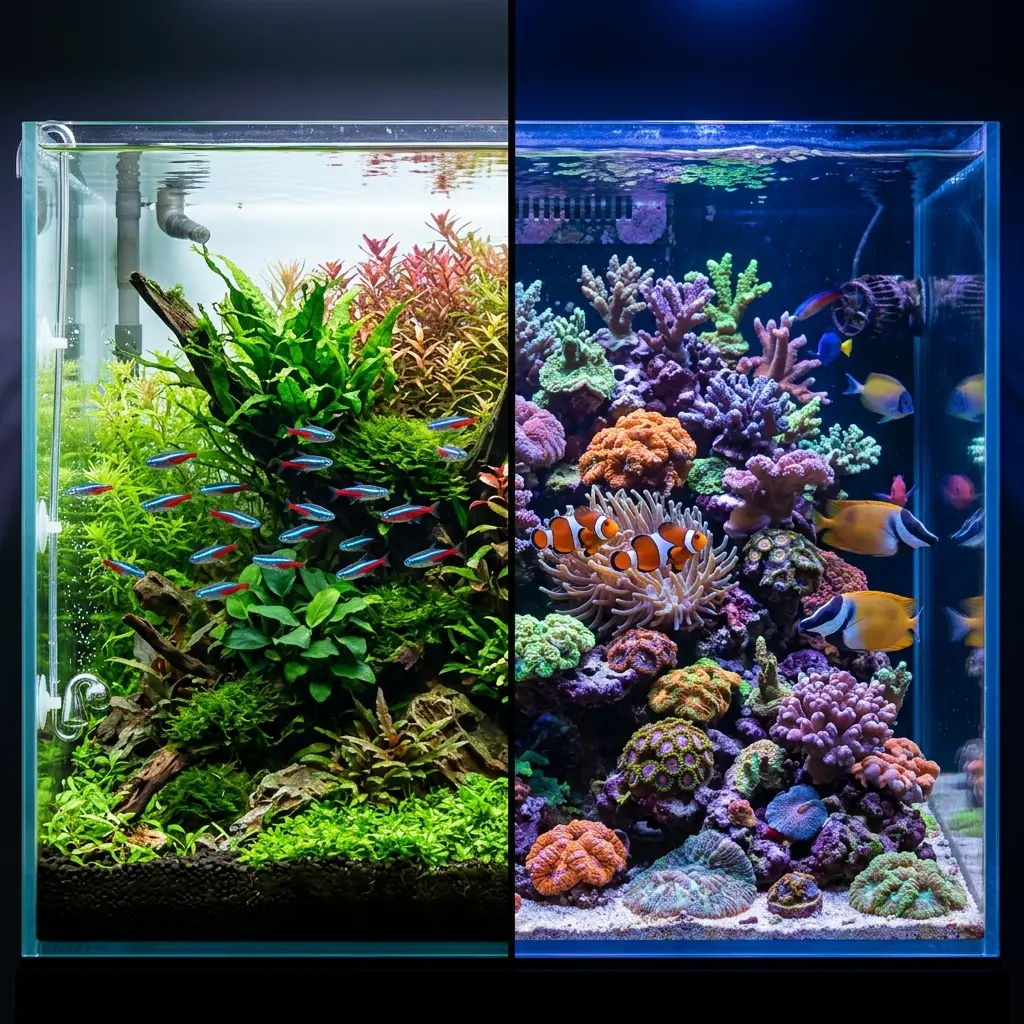
Freshwater aquariums are easier to set up, less expensive, and more forgiving, making them the best choice for beginners. Saltwater aquariums offer vibrant marine fish and coral reefs but require higher costs, specialized equipment, and stricter water chemistry. If your priority is an easy, affordable aquarium, choose freshwater. If you want reef fish and are prepared for more maintenance, choose saltwater.
Key Takeaways
- Determine the best aquarium type for your lifestyle by recognizing that freshwater tanks require far less time, money, and complex equipment than demanding saltwater setups.
- Protect your budget and sanity as a beginner by starting with a forgiving, affordable freshwater community tank before ever attempting a sensitive marine reef environment.
- Prevent disastrous algae blooms and invertebrate deaths in saltwater aquariums by strictly utilizing only purified RO/DI water mixed with high-quality marine salt, never tap water.
- Support the delicate needs of vibrant coral reefs and exotic marine fish by investing heavily in essential saltwater equipment like protein skimmers, powerheads, and powerful lighting.
- Avoid the most common beginner regret by purchasing the largest aquarium your space and budget allow, as larger water volumes remain significantly more chemically stable.
There's no single "better" aquarium—it all depends on what you want. Freshwater tanks are the classic entry point: affordable, low-maintenance, and filled with vibrant community fish. Saltwater aquariums open the door to coral reefs, clownfish, and tangs, but demand a bigger investment of money and time. This guide compares every major factor to help you decide with confidence.
Saltwater vs Freshwater: Quick Decision Guide
| Factor | Freshwater | Saltwater |
|---|---|---|
| Beginner Friendly | ⭐⭐⭐⭐⭐ | ⭐⭐ |
| Initial Cost (20 gal) | $100–$200 | $400–$800+ |
| Monthly Cost | $15–$30 | $40–$80+ |
| Maintenance Effort | Low (20–30 min/week) | High (1–2 hrs/week) |
| Equipment Complexity | Simple (heater, filter) | Advanced (skimmer, powerhead, sump) |
| Fish Variety | Excellent | Excellent |
| Coral | No | Yes |
| Plants | Yes (many options) | No (macroalgae only) |
| Water Stability | Forgiving | Sensitive |
| Power Consumption | Low | Higher |
| Recommended Tank Size | 10+ gallons | 30–40+ gallons |
| Best For | Beginners, kids, low budgets | Enthusiasts, reef lovers, experienced keepers |
Do you want coral or marine fish?
YES → Saltwater → Is your budget above $500 and can you commit 1–2 hrs/week?
YES → Start with a 30+ gallon saltwater tank.
NO → Consider waiting until you have more resources.
NO → Freshwater → Your budget and time are flexible?
YES → Enjoy a planted community tank or even a high‑tech aquascape.
NO → A simple 10‑gallon betta or tetra tank is perfect.
Difficulty Ratings
| Category | Freshwater | Saltwater |
|---|---|---|
| Setup | ⭐⭐ | ⭐⭐⭐⭐⭐ |
| Maintenance | ⭐⭐ | ⭐⭐⭐⭐ |
| Cost | ⭐ | ⭐⭐⭐⭐⭐ |
| Learning Curve | ⭐⭐ | ⭐⭐⭐⭐⭐ |
Freshwater vs Saltwater: Key Differences
- Water chemistry: Freshwater uses dechlorinated tap water; saltwater needs RO/DI water mixed with a high-quality marine salt.
- Equipment: Saltwater tanks almost always require a protein skimmer and powerheads for flow; freshwater tanks often need only a heater and a hang-on-back filter.
- Cycling: Both tanks must establish a nitrogen cycle, but saltwater cycling often involves live rock that introduces beneficial bacteria and tiny organisms.
- Livestock cost: A freshwater neon tetra costs a few dollars; a marine clownfish is $20–$50, and corals can range from $10 to hundreds.
Pros and Cons at a Glance
Freshwater Aquariums
- Pros: Affordable setup and operation, wide range of hardy fish, forgiving of minor mistakes, easy to plant and aquascape, suitable for small tanks.
- Cons: Cannot keep coral or marine invertebrates, fewer truly exotic “centerpiece” fish, some species (like discus) still require advanced care.
Saltwater Aquariums
- Pros: Breathtaking colors and diversity, ability to create a full reef ecosystem, unique behaviors (anemone/clownfish symbiosis), endless variety of invertebrates.
- Cons: High initial and ongoing costs, more demanding maintenance, sensitive to parameter swings, not recommended for beginners, limited plant options.
Who Should Choose Freshwater? Who Should Choose Saltwater?
Choose a freshwater aquarium if:
- You’re setting up your first aquarium.
- Your budget is under $300.
- You want a low‑maintenance, forgiving setup.
- You enjoy planted tanks and community fish.
- You’re setting up a tank for kids or a classroom.
Choose a saltwater aquarium if:
- You dream of keeping coral reefs and marine fish.
- You’re willing to invest more time and money.
- You enjoy testing and adjusting water chemistry.
- You want a vibrant, ocean‑themed display.
- You have at least 6 months of aquarium experience.
Who Should NOT Choose Freshwater? Who Should NOT Choose Saltwater?
Who Should Avoid Freshwater?
- You only want coral reefs – freshwater can’t replicate them.
- You want exotic marine fish like tangs or lionfish – they require saltwater.
- You enjoy advanced reef chemistry – that’s a saltwater domain.
Who Should Avoid Saltwater?
- Your budget is below $500 – the setup alone costs more.
- This is your first aquarium – freshwater offers a smoother start.
- A child will be the primary caretaker – saltwater demands consistency.
- You have limited weekly time – freshwater is far less demanding.
Cost Breakdown: Setup, Monthly & First‑Year Ownership
Typical Setup Costs
| Equipment / Supply | Freshwater | Saltwater |
|---|---|---|
| Tank (20 gal) | $20–$60 | $50–$150 (reef‑ready) |
| Filter | $15–$40 (HOB) | $100–$250 (sump + skimmer) |
| Heater | $15–$30 | $25–$50 |
| Lighting | $30–$100 (LED) | $100–$400 (reef LED) |
| Substrate | $10–$30 | $20–$40 (aragonite sand) |
| Live Rock | Not needed | $50–$150 |
| Protein Skimmer | Not needed | $100–$250 |
| RO/DI System | Optional | $100–$200 |
| Salt Mix | Not needed | $20–$40 per bucket |
| Test Kits | $20–$40 | $50–$100+ |
| Total Setup | $110–$300 | $615–$1,580 |
Typical Monthly Expenses
| Monthly Cost | Freshwater | Saltwater |
|---|---|---|
| Food | $5–$10 | $10–$20 |
| Water Conditioner / Salt | $2–$5 | $10–$20 |
| Electricity | $3–$8 | $10–$25 |
| Test Kits / Supplements | $5–$10 | $10–$25 |
| Replacement Media | $3–$5 | $5–$15 |
| Total Monthly | $18–$38 | $45–$105 |
Estimated First‑Year Ownership Cost
| Freshwater | Saltwater | |
|---|---|---|
| Setup (one‑time) | $200 | $800 |
| 12 months of operation | $336 (avg $28/mo) | $840 (avg $70/mo) |
| First‑Year Total | ~$536 | ~$1,640 |
Time Commitment Comparison
| Task | Freshwater | Saltwater |
|---|---|---|
| Water change | Weekly, 20 min | Weekly, 45–60 min |
| Water testing | Every 2–4 weeks | Weekly (or more) |
| Glass cleaning | Weekly, 5 min | 2–3 times/week, 10 min |
| Filter maintenance | Monthly | Bi‑weekly |
| Dosing (Ca/Alk/Mg) | Not needed | Often daily or automated |
| Top‑off (freshwater) | Optional | Daily (or auto top‑off) |
| Total Weekly Time | 20–30 min | 1–2 hours |
Maintenance Calendar
| Task | Freshwater | Saltwater |
|---|---|---|
| Feed fish | 1–2 times daily | 1–2 times daily |
| Top off evaporated water | As needed (weekly) | Daily (with freshwater) |
| Test water parameters | Monthly | Weekly |
| Perform water change | Weekly (20–30%) | Weekly (10–20%) |
| Clean glass | Weekly | 2–3 times/week |
| Clean/replace filter media | Monthly | Every 2 weeks |
| Deep clean (gravel vac, equipment check) | Monthly | Monthly |
Why Freshwater Tanks Remain the Most Popular
Freshwater aquariums are the backbone of the hobby for good reason. They forgive small mistakes in water changes or parameter swings that would crash a reef tank. A simple 10‑gallon setup with a betta or a school of tetras is an excellent way to learn the fundamentals of water chemistry, filtration, and the nitrogen cycle without overwhelming cost or complexity. For a complete walkthrough, see our freshwater tank setup guide.
Planted freshwater tanks offer a unique aesthetic, combining lush greenery with hardscape. Advanced setups using CO₂ injection and high‑intensity lighting can rival the beauty of a reef, yet remain far more affordable. For most beginners, a freshwater tank is the clear starting point.
What Saltwater Tanks Offer (and What They Demand)
A saltwater aquarium is the closest you can get to owning a piece of the ocean. The colors of coral, the symbiotic relationship between clownfish and anemones, and the diversity of invertebrates are unmatched. However, this beauty requires discipline. You'll need to:
- Mix saltwater to a precise salinity (1.024–1.026 specific gravity).
- Test and maintain calcium, alkalinity, and magnesium levels for coral growth.
- Invest in a quality protein skimmer, live rock, and strong lighting.
- Perform regular partial water changes with pre‑mixed saltwater.
A "fish-only with live rock" (FOWLR) saltwater tank reduces some complexity by omitting corals, but still demands more routine than most freshwater systems. If you're ready to take the plunge, our saltwater tank setup guide walks you through every step.
Can Beginners Start with Saltwater?
Yes, many beginners successfully keep saltwater tanks, but they must be prepared for a steeper learning curve, higher costs, and stricter water testing. A fish‑only with live rock (FOWLR) setup is the best entry point. If you’re willing to learn and follow a disciplined maintenance routine, a marine aquarium can be extremely rewarding. That said, most experienced aquarists recommend mastering a freshwater tank first, as the skills transfer directly and increase your chances of long‑term success with saltwater.
Can I Upgrade from Freshwater to Saltwater Later?
Yes, you can convert a freshwater tank to saltwater, but it’s rarely a simple swap. Almost every piece of equipment needs to be replaced: filters, lights, and heaters must be saltwater‑safe, and you’ll need to add live rock, a protein skimmer, and possibly a sump. The tank must be thoroughly cleaned of any residual freshwater chemicals, and a completely new nitrogen cycle must be established with marine bacteria. Because of the cost and effort, most hobbyists eventually buy a dedicated saltwater setup rather than converting an existing tank.
Which Fish Are Best for Beginners?
Best freshwater beginner fish:
- Betta
- Guppy
- Platy
- Corydoras catfish
- Zebra danio
- Neon tetra
Best saltwater beginner fish:
- Ocellaris clownfish
- Royal gramma
- Firefish goby
- Watchman goby
- Banggai cardinalfish
- Chromis
Common Beginner Mistakes (and How to Avoid Them)
- Buying fish immediately: The tank must complete the nitrogen cycle first. Test water before adding any livestock.
- Skipping quarantine: New fish can carry diseases—always quarantine for 4–6 weeks.
- Overstocking: Avoid relying on generic inch‑per‑gallon rules. Instead, research the adult size, swimming behaviour, territorial needs, and filtration requirements of each species before adding fish.
- Overfeeding: Uneaten food rots and pollutes the water. Feed sparingly, once daily.
- Using tap water in saltwater: Only RO/DI water and marine salt are safe.
- Choosing a nano reef as a first tank: Small volumes are unstable; start with 30 gallons or more.
- Ignoring water changes: Regular partial water changes are non‑negotiable for fish health.
- Cheap unreliable heater: A malfunctioning heater can cook or freeze your tank. Invest in a quality one.
Common Saltwater Aquarium Problems (and How to Prevent Them)
| Problem | Common Cause | Prevention |
|---|---|---|
| Algae bloom | Excess nutrients (phosphates/nitrates) | Use RO/DI water, avoid overfeeding, regular water changes |
| Coral bleaching | Unstable temperature, lighting, or water chemistry | Maintain stable parameters, proper lighting |
| High nitrate | Overfeeding, insufficient filtration | Reduce feeding, increase water changes, use a skimmer |
| Salinity swings | Evaporation topped off with saltwater | Top off with freshwater (RO/DI), use auto top‑off |
| Disease outbreaks | Introducing new livestock without quarantine | Quarantine all new fish for 4–6 weeks |
Real‑World Scenarios
Example 1: College Student – Budget $250, Apartment
Recommendation: 20‑gallon freshwater community tank. A simple setup with a betta or a small school of tetras, a basic LED light, and a hang‑on‑back filter keeps costs low and maintenance minimal. Perfect for learning the nitrogen cycle without financial stress.
Example 2: Homeowner – Budget $1,500, Dedicated Fish Room
Recommendation: 40‑gallon reef aquarium. With ample space and budget, you can invest in a quality protein skimmer, reef‑ready tank, live rock, and strong LED lighting. This setup will support corals, clownfish, and a clean‑up crew, rewarding you with a stunning slice of the ocean.
Example 3: Family with Young Children
Recommendation: 29‑gallon freshwater planted aquarium. Hardy fish like platies and corydoras are forgiving, and plants add beauty while helping to maintain water quality. Children can participate in feeding and simple maintenance under supervision.
The Most Common Beginner Regret
Experienced aquarists consistently report the same regret: “I bought too small a tank.” A larger aquarium is actually easier to keep stable because water parameters don’t swing as wildly. If space and budget allow, start with at least a 20‑gallon freshwater or a 40‑gallon saltwater tank.
Final Checklist
- Decide which livestock excites you most.
- Calculate your total budget (setup + monthly).
- Assess your weekly time availability.
- Choose a tank size that fits your space and goals.
- Research the full equipment list for your chosen type.
- If new to the hobby, start with a hardy freshwater tank.
- Bookmark our freshwater setup or saltwater setup guide.
Recommended Next Reading
- Freshwater Tank Setup: Step‑by‑Step Guide
- Saltwater Tank Setup: Complete Reef Starter Kit
- The Nitrogen Cycle Explained
- Why RO/DI Water Matters for Your Aquarium
- Protein Skimmers: Do You Really Need One?
- Live Rock: The Foundation of a Marine Aquarium
- Choosing the Right Aquarium Size
Choose freshwater if…
✓ Budget under $300
✓ First aquarium
✓ Limited time
✓ Want easy success
✓ Love lush planted tanks
Choose saltwater if…
✓ Love coral reefs and marine fish
✓ Budget above $600
✓ Enjoy technical hobbies
✓ Ready for weekly testing
✓ Accept the higher maintenance commitment
Helpful Tool: Use our Salt Dosing Calculator for precise planning.