
Firefish Goby (Nemateleotris magnifica)
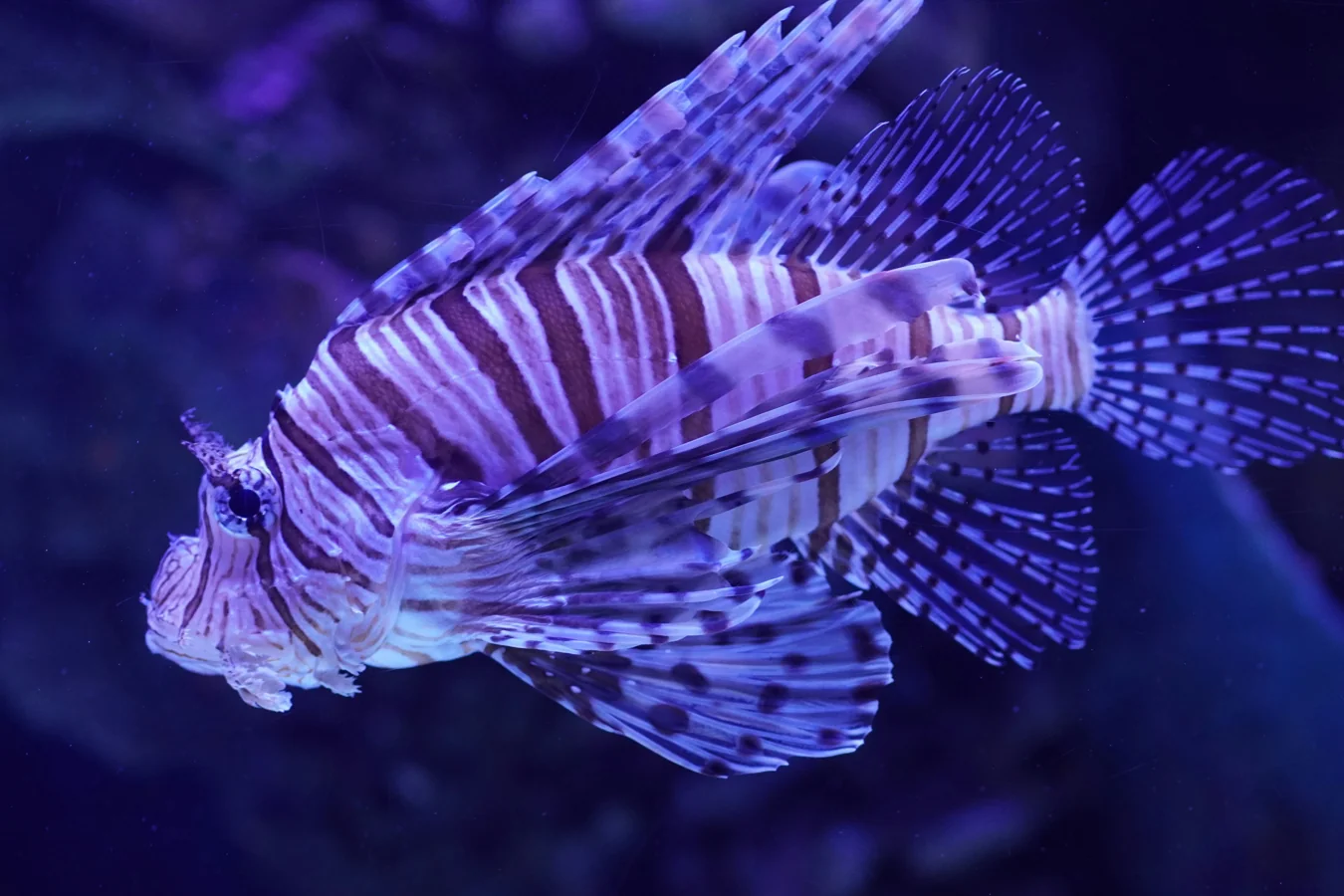
Quick Answer
Firefish Goby (Nemateleotris magnifica) is a beginner-friendly, reef-safe saltwater dartfish reaching 3 inches (7.6 cm). It requires a minimum 20 gallon (76 liter) aquarium with standard reef parameters (pH 8.1-8.4, SG 1.023-1.025, 72-80°F / 22-27°C), a tight-fitting lid to prevent jumping, and peaceful tank mates. This carnivorous planktivore occupies the bottom and middle water zones and makes an excellent dither fish for shy reef species.
Quick Facts
| Scientific Name | Nemateleotris magnifica |
|---|---|
| Common Names | Firefish Goby |
| Family | Microdesmidae |
| Genus | Nemateleotris |
| Type | Saltwater |
| Temperament | peaceful |
| Care Difficulty | beginner |
| Lifespan | 3 years |
| Maximum Size | Up to 3 in (8 cm) |
| Diet | Carnivore |
| Temperature | 72–80°F (22–27°C) |
| pH | 8–8.4 |
| Hardness | 7–12 dGH |
| Minimum Size | 20 gallons |
Key Takeaways
- Requires a completely secure, tight-fitting lid with no gaps over 0.2 inches (5 mm)—this species is an accomplished jumper.
- Needs a minimum 20 gallon (76 liter) tank for one specimen; 30+ gallons (114+ liters) for a mated pair.
- Reef-safe: does not bother corals, invertebrates, or shrimp.
- Peaceful toward other species but territorial toward conspecifics (same species) unless a bonded pair.
- Acts as a dither fish, encouraging shy tank mates to emerge from hiding.
- Inhabits deeper reef zones; prefers low to moderate lighting with shaded hiding spots.
- Possesses an elongated first dorsal spine used for signaling and as a locking device in crevices.
- Breeding is rare in captivity; produces pelagic larvae requiring specialized rearing conditions.
Overview
Species Overview
The Firefish Goby (Nemateleotris magnifica), also known as the Fire Goby, Fire Dartfish, or Magnificent Dartfish, is one of the most popular and visually striking nano reef fish in the marine aquarium hobby. Its brilliant coloration—featuring a bright yellow head, silvery-white anterior body, and fiery red-orange posterior with black-edged fins—makes it instantly recognizable and a perennial favorite among both beginner and experienced saltwater aquarists.
Native to the Indo-Pacific region from the eastern coast of Africa to the Hawaiian Islands, this species inhabits reef zones at depths of 20 to 230 feet (6 to 70 meters). In the wild, they are typically observed hovering just above the reef substrate, facing into the current to feed on passing zooplankton. Their unique body plan includes an extraordinarily elongated first dorsal fin spine that can be nearly as long as the fish itself. This spine serves dual purposes: it acts as a signaling device to communicate with conspecifics through constant flicking, and it functions as a locking mechanism that wedges the fish into reef crevices when threatened, making it nearly impossible for predators to extract them.
Visual Identification
The Firefish Goby possesses a long, slender, almost eel-like body that reaches up to 3 inches (7.6 cm) in length. The head is a brilliant golden-yellow that transitions to a silvery-white anterior half. The posterior half of the body deepens to a vibrant red-orange that extends into the caudal fin. The dorsal, anal, and caudal fins are highlighted with distinct black margins. The first spine of the first dorsal fin is dramatically elongated—often as long as the body—and flicks back and forth continuously. This fin flicking is believed to be a form of intraspecific communication. A swim bladder allows them to hover motionless in the water column for extended periods, giving them a characteristic dartfish appearance.
Behavioral Highlights
Firefish Gobies are diurnal, active fish that spend their days flitting around the aquarium, hovering in the water column, and suddenly diving into cover when startled. They are natural dither fish—their constant, confident presence in open water encourages other shy species to emerge from hiding. When comfortable, they will hover in one location with their head pointed upward, using their swim bladder to maintain position with minimal effort. However, newly introduced specimens may hide for days or even weeks before feeling secure enough to display openly.
Diet
Dietary Requirements
Firefish Gobies are carnivorous planktivores. In their natural habitat, they hover in the water column facing into the current, feeding on small crustaceans, zooplankton, and other tiny prey items that drift by. They are not active hunters but rather opportunistic feeders that rely on water flow to bring food within striking distance. This feeding ecology must be replicated in captivity through appropriate food selection and presentation.
Nutritional Composition
Target a diet comprising approximately 55% protein, 15% fat, and 30% algae/plant matter from gut-loaded prey. High protein levels maintain vibrant coloration and support their active metabolism. Vitamin enrichment is critical—foods should be fortified with vitamins C and E to support immune function and color intensity.
Recommended Foods
- Primary frozen foods: Mysis shrimp, enriched brine shrimp, copepods, and cyclops. These should form the staple of the diet.
- Freeze-dried options: Krill and plankton-based foods. Soak in tank water or vitamin supplement before feeding to prevent gut expansion.
- Prepared foods: High-quality marine flakes and small pellets (0.5-1 mm) that are vitamin-enriched. Some specimens may need time to learn to accept prepared foods.
- Live foods: Live blackworms, adult brine shrimp, and copepods for conditioning or picky eaters.
- Supplementary: Finely chopped fresh or frozen seafood (shrimp, clam, fish) for variety.
Feeding Schedule
Feed small portions 2-3 times daily. Because they have relatively small guts, frequent small feedings are superior to single large meals. Each feeding should be consumed within 3-4 minutes. Target feed with a turkey baster or pipette to ensure shy individuals receive adequate nutrition. Firefish Gobies are not aggressive feeders and may be outcompeted by faster, more boisterous tank mates. Observe carefully during feeding to confirm they are eating.
Expert Tip: Target Feeding
Firefish Gobies often have difficulty learning to feed from the surface. Present food in midwater using a turkey baster or target feeding device. Once they associate the baster with food, they will eagerly swim to it, ensuring they receive adequate nutrition even in tanks with competitive feeders.
Health
Health and Disease Management
Firefish Gobies are generally hardy and resistant to disease when maintained in stable, mature reef systems with appropriate water quality. However, they are susceptible to several common marine fish diseases, particularly when stressed by poor acclimation, aggressive tank mates, or inadequate nutrition. Their small size and timid nature make them vulnerable to bullying and starvation, which are often the root causes of illness in this species.
Medication Sensitivity and Tolerance
This species has a specific medication profile that differs from some other marine fish:
- Copper: Tolerated up to 0.15 mg/L (Cupramine). Standard ich treatments are generally safe at recommended doses. Remove invertebrates before treatment.
- Chloroquine Phosphate: Safe and effective at 15 mg/L for 14 days. This is the preferred treatment for ich and velvet in reef-safe quarantine protocols.
- Formalin: Can be used for external parasites but at reduced concentrations. Formalin baths of 37-40% solution for 45 minutes are effective for Uronema and Brooklynella, followed by transfer to a sterile quarantine tank.
- Hyposalinity: Never use hyposalinity below 1.018 specific gravity. Firefish Gobies are sensitive to low salinity and will suffer osmotic stress. Freshwater dips should be avoided or used with extreme caution and short duration (under 5 minutes).
- Metronidazole: Safe for internal parasites and flagellate infections. Can be administered via food (with a binder such as Seachem Focus) or in the water column at 5 mg/L.
- Praziquantel: Safe for flukes and worm parasites.
- Acriflavine: Safe for bacterial infections and Uronema treatment in quarantine tanks.
Quarantine Protocol
Quarantine all new Firefish Gobies for a minimum of 3-4 weeks in a separate 10-20 gallon (38-75 liter) tank with a mature biological filter. Observe for feeding response, signs of ich, velvet, or Uronema, and behavioral abnormalities. Use chloroquine phosphate prophylaxis at 15 mg/L during quarantine to prevent ich and velvet introduction. Drip acclimation over 45-60 minutes is mandatory—sudden parameter shifts stress this species and trigger disease outbreaks.
Marine Ich (Cryptocaryon irritans)
A ciliated protozoan parasite that presents as white salt-grain spots on body and fins. The marine equivalent of freshwater ich, it is highly contagious and can decimate an entire tank if untreated.
- White cysts 0.5-1.0 mm in diameter on fins, body, and gill covers; fish flashing against decor; rapid gill movement; clamped fins; reduced appetite; reclusive behavior; heavy breathing.
Introduced via infected fish, live rock, or equipment; triggered by temperature fluctuations, poor water quality, stress from aggressive tank mates, or inadequate hiding spots.
Quarantine all new additions for 4 weeks with chloroquine phosphate prophylaxis; maintain stable temperature within 72-80°F (22-27°C); avoid temperature swings exceeding 2°F (1.1°C) in 24 hours; provide secure hiding spots to reduce stress; use UV sterilization on quarantine tanks.
Marine Velvet (Amyloodinium ocellatum)
A dinoflagellate parasite that appears as a fine gold or rust-colored dust on skin, often described as a velvety coating. It is photosynthetic, extremely lethal, and can kill fish within 48-72 hours of visible symptoms.
- Gold or rust-colored dust visible under flashlight at sharp angles; rapid breathing; scratching against substrate; lethargy; fin clamping; refusal to eat; fish hiding in dark corners; skin sloughing in advanced cases.
Introduced via infected stock; proliferates in warm water with strong lighting. Stress from transport, poor acclimation, or bright aquarium lighting triggers outbreaks.
Quarantine new fish for 4 weeks with chloroquine phosphate; dim lighting for 3 days after introducing new stock; maintain pristine water quality with protein skimming and regular changes; use UV sterilization on quarantine tanks; avoid introducing fish from tanks with visible velvet outbreaks.
Uronema marinum (Uronema Disease)
A free-swimming ciliate parasite that affects the skin and gills of marine fish. While most commonly seen on Chromis and damselfish, it can infect any marine species including Firefish Gobies. It has a direct life cycle and spreads rapidly without a host, making it particularly dangerous.
- Red or pinkish lesions or sores on the body; thickening of skin mucus layer; frayed or brittle fins; scales may appear loose; rapid breathing; fish hanging at the surface or bottom; refusal to eat; pale or washed-out coloration; acute symptoms can appear rapidly with fish going from healthy to near-death in hours.
Free-swimming parasite introduced via infected fish, live foods, or contaminated water. Requires no host to survive in the water column. Stress from poor water quality, overcrowding, or transport triggers outbreaks.
Quarantine all new fish for 4 weeks; avoid introducing fish from systems with known Uronema outbreaks; maintain excellent water quality with heavy protein skimming; do not return treated fish to the infected display tank—Uronema can persist in the water column without hosts.
Brooklynella (Clownfish Disease)
A ciliated protozoan parasite (Brooklynella hostilis) that primarily affects clownfish but can infect other marine species. It attacks the skin and gills, producing a heavy mucus coating.
- Thick, milky-white mucus coating on skin and gills; rapid breathing; lethargy; clamped fins; refusal to eat; skin sloughing; fish hanging near the surface gasping.
Introduced via infected fish or equipment; triggered by stress from poor water quality, temperature fluctuations, or aggressive tank mates. Common in newly imported fish that have not been quarantined.
Quarantine all new arrivals for 4 weeks; maintain stable water parameters; avoid temperature swings; provide adequate hiding spots to reduce stress; formalin baths are effective for treatment if caught early.
Head and Lateral Line Erosion (HLLE)
A condition characterized by pitting and erosion of the skin along the head and lateral line. While more common in tangs and angelfish, it can occur in any marine fish with poor nutrition or inadequate water quality.
- Pitting, erosion, or discoloration along the lateral line and around the eyes and head; faded coloration; lethargy; reduced appetite in advanced cases.
Poor nutrition lacking vitamins C and E; inadequate water quality with high nitrates or phosphates; activated carbon use (some studies suggest carbon dust contributes); lack of vegetable matter in diet; stress from poor environment.
Feed vitamin-enriched foods including spirulina and marine algae; maintain nitrates below 10 ppm and phosphates below 0.03 ppm; use high-quality activated carbon and rinse thoroughly before use; provide a varied diet with fresh and frozen foods; ensure stable water parameters.
Bacterial Fin Rot
Bacterial erosion of fin tissue caused by Vibrio or Aeromonas species. Can occur secondary to physical damage from aggressive tank mates, rough handling, or poor water quality.
- Ragged, fraying fin edges with white or translucent margins; receding fin tissue progressing toward the body; red streaks in advanced cases; listlessness; reduced activity.
Physical damage from fin-nipping tank mates or rough decor combined with poor water quality (elevated nitrates, phosphates, or organic waste). Secondary bacterial infection invades damaged fin tissue.
House only with peaceful, non-nipping species; remove sharp-edged decorations; maintain nitrates below 10 ppm through regular water changes and protein skimming; feed fresh, vitamin-rich foods to maintain immune function; treat water with appropriate antibiotics (Kanamycin, Maracyn) if detected early.
Breeding
Breeding Firefish Gobies
Breeding Firefish Gobies in captivity is rare and considered extremely difficult due to their shy nature, the challenge of sexing individuals, and the specialized requirements for raising pelagic larvae. Successful breeding has been documented in large, mature reef systems where bonded pairs form naturally, but controlled breeding for commercial production remains limited.
Sexing and Pair Formation
There are no reliable external characteristics to distinguish male from female Firefish Gobies. Sexing is only possible through observation of spawning behavior or internal examination. If two fish form a pair and engage in spawning, they are assumed to be male and female. Attempting to force a pair by adding two random individuals to a tank usually results in aggression rather than bonding. The best approach is to introduce 3-4 juveniles to a large tank (75+ gallons) and allow natural pair formation over several months, then remove the excess fish.
Conditioning Breeders
Condition a confirmed bonded pair with heavy feedings of live and frozen foods for 4-6 weeks. Feed enriched brine shrimp, mysis shrimp, copepods, and blackworms 3-4 times daily. Maintain pristine water quality with weekly 15% water changes. Ensure the pair has a secure, reinforced burrow or cave that will not collapse during spawning.
Spawning Setup
No special spawning tank is required if a bonded pair is kept in a mature reef aquarium. The pair will naturally select a burrow site under live rock or in a sandy substrate area. The burrow should be at least 6 inches (15 cm) deep with a reinforced ceiling that will not cave in. Provide dim lighting in the spawning area—bright light discourages spawning and stresses the guarding male.
Spawning Process
Spawning typically occurs in the evening or early morning within the security of the burrow. The female deposits 50-150 adhesive eggs on the ceiling or walls of the burrow. The male then assumes exclusive parental care, guarding the eggs aggressively and fanning them with his pectoral fins to maintain water circulation and oxygen supply. The male will not leave the burrow during this period and must be fed by target feeding at the burrow entrance.
Incubation and Hatching
Eggs incubate for 5-7 days at 75°F (24°C). The male continues to guard and fan throughout this period. When ready to hatch, the male may assist by fanning more vigorously. The eggs hatch into tiny pelagic larvae that immediately swim up into the water column and drift with the current. This pelagic stage makes larval rearing extremely challenging.
Larval Rearing
Larval rearing is not recommended for hobbyists without specialized larval rearing systems. The larvae require:
- First feeding: Rotifers (Brachionus plicatilis) and phytoplankton (Nannochloropsis) for the first 10-14 days
- Days 10-20: Gradual introduction of copepod nauplii and larger rotifers
- Days 20-40: Newly hatched brine shrimp and copepods
- Metamorphosis: Occurs at approximately 0.5 inches (1.2 cm) around day 30-40
Larvae are extremely sensitive to water quality, lighting, and flow. A dedicated larval rearing tank with gentle circular flow, dim green lighting, and pristine water conditions is essential. Mortality rates are high even under expert care. Commercial breeding operations use specialized round larval tanks with controlled photoperiods and automated feeding systems.
Tips
Common Mistakes
Expert Tips
Compatible Tank Mates






Species Comparison
| Feature | Firefish Goby | Purple Firefish | Helfrichi Firefish | Royal Gramma |
|---|---|---|---|---|
| Maximum Size | 3 inches (7.6 cm) | 3.5 inches (9 cm) | 2.4 inches (6 cm) | 3 inches (7.6 cm) |
| Temperament | Peaceful; territorial to conspecifics | Peaceful; territorial to conspecifics | Peaceful; territorial to conspecifics | Peaceful; semi-territorial |
| Minimum Tank Size | 20 gallons (76 L); 30+ gal for pair | 20 gallons (76 L); 30+ gal for pair | 10 gallons (38 L); nano suitable | 30 gallons (114 L) |
| Lighting Preference | Low to moderate; deep water species | Low to moderate; deep water species | Low; deep water species (40-130 ft) | Moderate; reef standard |
| Diet Type | Carnivore (planktivore) | Carnivore (planktivore) | Carnivore (planktivore) | Carnivore (planktivore) |
| Reef Safety | Completely reef-safe | Completely reef-safe | Completely reef-safe | Completely reef-safe |
| Jumping Tendency | Extreme; tight lid mandatory | Extreme; tight lid mandatory | Extreme; tight lid mandatory | Moderate; lid recommended |
| Coloration | Yellow head, white body, red tail | Purple head, silver body, red/blue fins | Yellow head, purple body, yellow tail | Purple front, yellow rear |
| Price Range | $10 - $20 USD | $30 - $70 USD | $150 - $250 USD | $20 - $40 USD |