
Bloodfin Tetra (Aphyocharax anisitsi)
Quick Answer
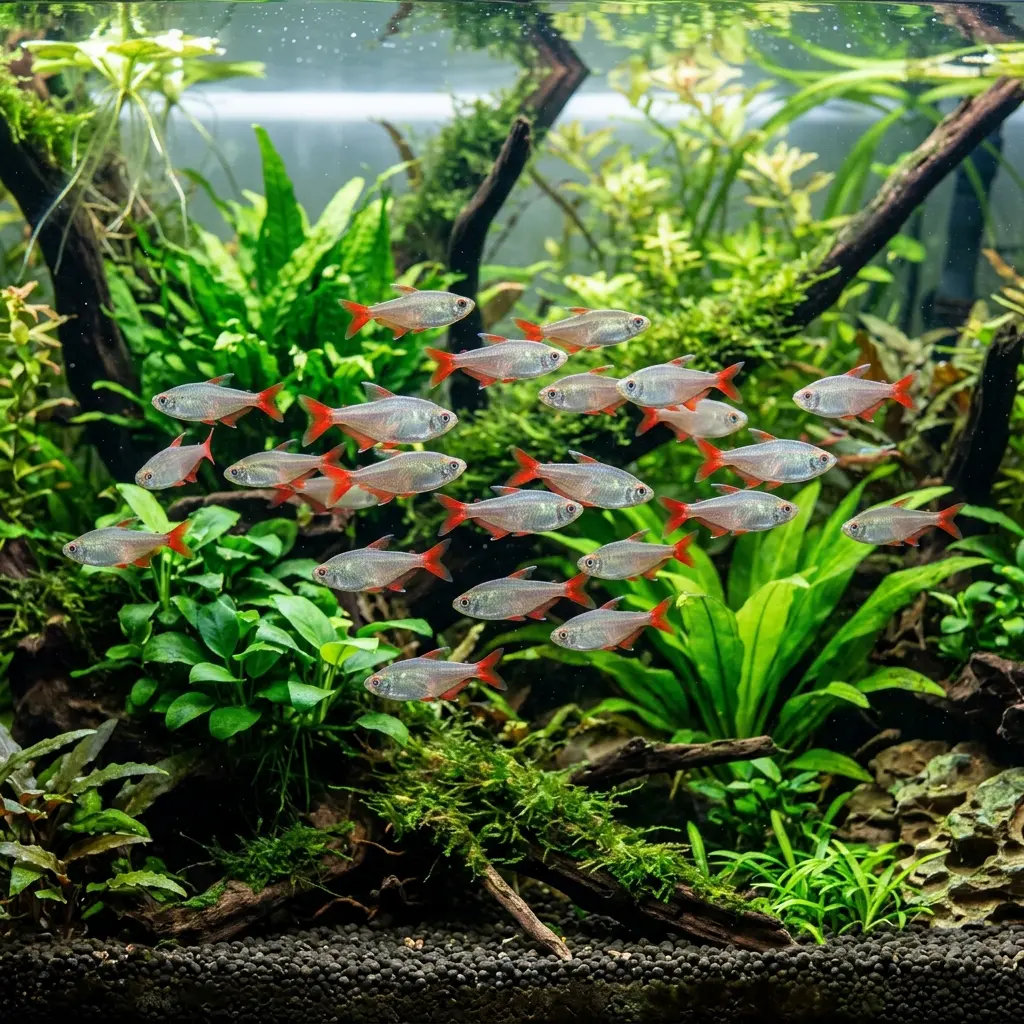
Bloodfin Tetra (Aphyocharax anisitsi) is an exceptionally hardy, long-lived South American characin reaching 2.2 inches (5.5 cm). It requires a minimum 20 gallon (76 liter) aquarium with a wide tolerance for water parameters (pH 6.0-8.0, 64-82°F / 18-28°C, 3-25 dGH), making it suitable for unheated tanks. This omnivorous surface feeder occupies the middle and top water zones and must be kept in schools of 8+ for optimal behavior and color display.
Quick Facts
| Scientific Name | Aphyocharax anisitsi |
|---|---|
| Common Names | Bloodfin Tetra |
| Family | Characidae |
| Genus | Aphyocharax |
| Type | Freshwater |
| Temperament | peaceful |
| Care Difficulty | beginner |
| Lifespan | 7 years |
| Maximum Size | Up to 2.2 in (6 cm) |
| Diet | Omnivore |
| Temperature | 64–82°F (18–28°C) |
| pH | 6–8 |
| Hardness | 3–25 dGH |
| Minimum Size | 20 gallons |
Key Takeaways
- Requires a minimum school of 8 individuals; 10-12 is ideal for spectacular schooling displays.
- Needs a 20 gallon (76 liter) long tank minimum; 30-40 gallons (114-151 liters) recommended for larger schools.
- Exceptionally long-lived: 5-7 years typical, with reports of 10+ years in well-maintained tanks.
- Cold-water tolerant down to 64°F (18°C), making them suitable for unheated indoor tanks.
- Wide water parameter tolerance: pH 6.0-8.0, hardness 3-25 dGH, temperature 64-82°F (18-28°C).
- Tight-fitting lid is mandatory—they are accomplished jumpers.
- May nip long fins (bettas, angelfish, fancy guppies) especially in schools under 8.
- Completely plant-safe—unlike their relative the Buenos Aires tetra, they do not eat vegetation.
- Males develop tiny hook-like structures on pelvic and anal fin rays—a unique identifier among common tetras.
Overview
Species Overview
The Bloodfin Tetra (Aphyocharax anisitsi) is a classic South American characin that has been a staple of the aquarium hobby for over a century. First described by Eigenmann and Kennedy in 1903 from specimens collected near Asunción, Paraguay, this species has earned a reputation as one of the most forgiving, long-lived, and undemanding tetras available to aquarists of all experience levels. Its understated beauty—a sleek, semi-translucent silver body accented by vivid blood-red fins—develops and deepens with age, making it a slow-burn species that rewards patient keepers with increasingly spectacular displays.
Native to the Paraná, Paraguay, and Uruguay river drainages of southern South America, Bloodfin Tetras inhabit subtropical river basins that experience seasonal temperature fluctuations, including cool winters. This natural exposure to variable conditions has endowed them with an exceptionally wide tolerance for water parameters that few other tetras can match. They can thrive in unheated tanks, tolerate pH swings from acidic to alkaline, and adapt to soft or moderately hard water with equal ease. It is this remarkable adaptability, combined with a lifespan that rivals many cichlids, that makes the Bloodfin Tetra a genuinely exceptional community fish.
Visual Identification
Bloodfin Tetras possess a streamlined, slightly elongated body that is more slender and athletic than many other common tetras. The base coloration is a polished silvery-blue with a subtle iridescent sheen that catches light as they swim. The body is semi-translucent, allowing the backbone and internal organs to be faintly visible—an adaptation that contributes to their common name of Glass Bloodfin. The signature feature, and the source of their common name, is the vivid blood-red coloration of the anal, pelvic, and caudal fins. The dorsal fin often shows red tinting as well, particularly in mature, well-conditioned specimens. When healthy and settled, the contrast between the silver body and deep red fins is genuinely striking.
Sexual Dimorphism
Males are noticeably slimmer and more streamlined than females, with slightly more intense red coloration in the fins. The most reliable identifier comes at maturity: males develop tiny hook-like structures on the rays of their pelvic and anal fins—a unique characteristic among commonly kept tetras. Females are fuller-bodied, especially when carrying eggs, and show slightly less vivid fin color. The two sexes are easily distinguishable when preparing to spawn, as males intensify in color while females become noticeably rounder.
Behavioral Highlights
Bloodfin Tetras are active, fast-swimming fish that occupy the middle and upper water columns. When maintained in proper schools of 8 or more, they engage in tight, synchronized schooling behavior that is mesmerizing to watch. They move as a cohesive unit, rapidly darting across the tank in unison before suddenly changing direction as one. This tight schooling is both a defense mechanism and a social behavior that reduces stress and encourages full color display. They are diurnal and most active during morning and evening feeding times.
Diet
Dietary Requirements
Bloodfin Tetras are opportunistic omnivores and surface feeders. In their natural habitat, they consume insect larvae, zooplankton, small crustaceans, and some plant matter in lagoon settings. In captivity, they are famously unfussy eaters that will accept virtually any food offered. However, a varied, high-quality diet is essential for developing and maintaining their vivid fin coloration and achieving their exceptional lifespan potential.
Nutritional Composition
Target a diet comprising approximately 40% protein, 10% fat, and 50% plant matter. High protein levels maintain the vibrant red fin coloration and support their active metabolism. Plant matter provides essential fiber and vitamins. Because they are surface feeders, foods that float or sink slowly are most readily accepted.
Recommended Foods
- Primary dry foods: High-quality tropical flakes or micro-pellets that float on the surface. Bloodfins are surface feeders and prefer foods that remain in the upper water column. Choose flakes high in crude protein for optimal coloration.
- Live foods: Brine shrimp, bloodworms, mosquito larvae, and daphnia. These provide essential proteins and trigger natural hunting behavior.
- Frozen options: Frozen brine shrimp, bloodworms, daphnia, and cyclops—thaw and rinse before feeding.
- Vegetable matter: Spirulina flakes or blanched spinach offered twice weekly. While not primarily herbivorous, they benefit from the vitamins and fiber.
Feeding Schedule
Feed small portions 2-3 times daily. Each feeding should be consumed within 2-3 minutes. Bloodfins are enthusiastic eaters and will quickly consume floating flakes from the surface. Remove uneaten food to prevent ammonia spikes and algae growth. Because they are surface feeders, ensure food is presented at the water surface or allowed to sink slowly. Sinking pellets that drop immediately to the substrate may be missed.
Expert Tip: Color Development
The blood-red fin coloration develops and deepens with age and diet quality. Fish fed exclusively on basic flakes show noticeably duller fin color within 4-6 weeks. Supplementing with carotenoid-rich foods such as spirulina, krill, and high-quality protein sources significantly enhances the intensity of the red pigmentation. By year 3 or 4, well-fed specimens display a depth of color that rivals much more expensive tetra species.
Health
Health and Disease Management
Bloodfin Tetras are exceptionally hardy and resistant to disease when maintained in stable aquariums with appropriate water quality. Their wide parameter tolerance and robust constitution make them one of the most disease-resistant tetras available. However, they are not invincible—stress from inadequate schooling numbers, poor water quality, or inappropriate tank mates is the primary trigger for illness. Prevention through proper school size, consistent maintenance, and careful tank mate selection is the best medicine.
Medication Sensitivity and Tolerance
Bloodfin Tetras have a favorable medication profile compared to more sensitive species:
- Copper: Tolerated up to 0.2 mg/L. Standard ich treatments are generally safe at recommended doses.
- Formalin: Tolerated at standard doses for external parasites.
- Malachite Green: Sensitive to high doses; use at half-strength to prevent gill irritation.
- Aquarium Salt: Tolerated up to 5 ppt (parts per thousand) for short-term therapeutic baths. Standard salt treatments of 1 tablespoon per 5 gallons are safe for this species.
- Safe Options: Praziquantel for internal parasites and flukes, Methylene Blue for fungal issues, Kanamycin and Erythromycin for bacterial infections, and broad-spectrum antibiotics mixed into food for fin rot.
Quarantine Protocol
Quarantine all new Bloodfin Tetras for a minimum of 2-3 weeks in a separate 10-gallon (38 liter) tank with a mature sponge filter. Observe for feeding response, fin condition, and signs of ich or velvet. While hardy, newly imported fish may carry parasites from wholesale systems. Standard drip acclimation over 30-45 minutes is sufficient for this adaptable species.
Ich (White Spot Disease)
A protozoan parasite (Ichthyophthirius multifiliis) that presents as white salt-grain spots on body and fins. The most common disease in Bloodfin Tetras, usually triggered by sudden temperature drops during water changes or transport.
- White cysts 0.5-1.0 mm in diameter on fins, body, and gill covers; fish flashing against decor; rapid gill movement; clamped fins; reduced appetite; fish breaking from the school.
Introduced via infected fish, plants, or equipment; triggered by temperature drops below 68°F (20°C), poor water quality, or stress from inadequate schooling numbers or aggressive tank mates.
Quarantine all new additions for 2-3 weeks; maintain stable temperature within 64-82°F (18-28°C); avoid temperature swings exceeding 5°F (3°C) during water changes; ensure school size of 8+ to reduce stress; use a heater with thermostat even in unheated tanks to prevent nighttime temperature drops.
Velvet (Gold Dust Disease)
A dinoflagellate parasite (Oodinium pilularis) that appears as a fine gold or rust-colored dust on skin. Photosynthetic and lethal to fish if untreated within 48-72 hours of visible symptoms.
- Gold or rust-colored dust visible under flashlight at sharp angles; rapid breathing; scratching against substrate; lethargy; fin clamping; refusal to eat; fish hiding in dark corners.
Introduced via infected stock; proliferates in warm water with strong lighting. Stress from transport or poor acclimation triggers outbreaks in newly purchased fish.
Quarantine new fish for 2-3 weeks; dim lighting for 3 days after introducing new stock; maintain pristine water quality with weekly changes; use UV sterilization on quarantine tanks.
Fin Rot (Bacterial)
Bacterial erosion of fin tissue caused by Aeromonas, Pseudomonas, or Flexibacter species. Can occur secondary to fin-nipping damage from tank mates or poor water quality.
- Ragged, fraying fin edges with white or translucent margins; receding fin tissue progressing toward the body; red streaks in advanced cases; listlessness; reduced schooling behavior.
House only with peaceful, non-nipping species; maintain nitrates below 20 ppm through weekly water changes; feed fresh, vitamin-rich foods to maintain immune function; treat early with broad-spectrum antibiotics in food (Kanamycin, Erythromycin) or salt baths at 3-5 ppt.
Columnaris (Mouth Fungus)
A bacterial infection caused by Flavobacterium columnare that spreads rapidly in warm water. Often mistaken for fungal infections due to cotton-like appearance around the mouth and gills.
- White or grayish patches around mouth and gills; saddleback lesion behind dorsal fin; frayed fins; rapid breathing; loss of appetite; lethargy; fish isolating from the school.
Stress from temperature fluctuations above 5°F (3°C) in 24 hours; overcrowding; poor water quality; introduction via infected fish or equipment; low dissolved oxygen levels.
Maintain stable temperature with quality heater; avoid overcrowding (stock no more than 1 inch of fish per 2 gallons in tanks under 30 gallons); sterilize nets and equipment between tanks; ensure adequate aeration and surface agitation; quarantine new arrivals for 2-3 weeks.
Swim Bladder Disorder
A dysfunction of the swim bladder causing buoyancy issues. Common in Bloodfin Tetras when overfed with dry foods that expand in the gut or when experiencing rapid temperature fluctuations.
- Fish floating at surface, sinking to bottom, or swimming at odd angles; difficulty maintaining position in water column; bloated abdomen; fish swimming head-down or tail-up.
Overfeeding with dry foods that expand in the gut; constipation from low-fiber diet; physical trauma from jumping or rough handling; bacterial infection secondary to poor water quality.
Feed small portions 2-3 times daily rather than single large meals; soak dry foods before feeding; include vegetable matter and spirulina in diet; maintain pristine water conditions; avoid startling fish with sudden movements near the tank.
Internal Parasites (Hexamita / Nematodes)
Protozoan or worm parasites in the intestinal tract, often introduced through contaminated live foods or poor quarantine practices.
- Emaciation despite normal feeding; stringy white feces; sunken belly; lethargy; faded colors; reduced activity; fish hanging near the surface.
Feeding contaminated live foods; introduction via infected tank mates; poor quarantine practices; stress from poor water quality weakening immune function.
Source live foods from reputable suppliers; rinse frozen foods thoroughly before feeding; quarantine all new fish for 2-3 weeks; treat live food cultures with praziquantel prophylactically; maintain stable water conditions to support immune function.
Breeding
Breeding Bloodfin Tetras
Bloodfin Tetras are relatively easy to breed and make an excellent first breeding project for aspiring aquarists. They are egg scatterers that spawn readily with minimal conditioning, producing large numbers of eggs that hatch quickly. The primary challenges are protecting the eggs from parental predation and raising the tiny fry through their delicate first weeks.
Conditioning Breeders
Select 8-10 mature fish at least 9-12 months old. Condition them for 2 weeks in a separate tank with heavy feedings of live blackworms, baby brine shrimp, and high-quality flakes. During conditioning, males will intensify their red fin coloration while females become noticeably plumper and rounder. Sexing is straightforward: males are slimmer with more vivid fins and tiny hook-like structures on the anal and pelvic fin rays; females are fuller-bodied with slightly duller coloration.
Spawning Setup
Prepare a dedicated 10-gallon (38 liter) breeding tank with:
- Water depth of 4-6 inches (10-15 cm) to concentrate fry food
- Soft, slightly acidic water: pH 6.5, 4 dGH (71 ppm), temperature 75°F (24°C)
- A spawning mop made of acrylic yarn or dense Java moss
- Dim lighting—eggs and fry are highly sensitive to bright light
- An air-powered sponge filter set to gentle bubble output
- No substrate for easy cleaning and egg collection
Fill the tank with reverse osmosis or aged tap water treated to the specified parameters. A dark bottom (black paper or dark substrate) makes eggs easier to spot.
Spawning Process
Transfer the conditioned group to the breeding tank in the evening. Simulate dawn the next morning by gradually increasing light intensity over 30 minutes. Spawning typically occurs in the morning hours. The male pursues the female, nudging her toward the spawning mop or fine-leaved plants. The female releases 300-500 slightly adhesive eggs that scatter among the plants, fall to the substrate, or float to the surface. The eggs are clear and approximately 1 mm in diameter. Remove the parents immediately after spawning is observed, as they will consume eggs and fry without hesitation.
Incubation and Hatching
Eggs hatch in 24-30 hours at 75°F (24°C). This is significantly faster than many other tetra species. The newly hatched fry are extremely small, measuring approximately 0.08 inches (2 mm). They will initially cling to surfaces using a sticky secretion on their heads, often attaching to the aquarium glass, plants, or equipment in shaded areas. After 3-5 days, they become free-swimming and begin searching for food. Keep the tank dark for the first 5 days to reduce stress and encourage feeding.
Fry Rearing
Bloodfin Tetra fry grow at a moderate rate compared to other tetras:
- Days 1-3: Feed infusoria and green water. The fry are too small for most commercial foods at this stage.
- Days 3-7: Introduce microworms and vinegar eels. Continue infusoria as a backup.
- Days 7-14: Newly hatched baby brine shrimp (Artemia nauplii) can be introduced. Some fry may not accept them immediately.
- Week 2+: Gradually introduce powdered flake food and crushed high-quality pellets.
Perform daily 10-15% water changes using water from the parents' tank. Use airline tubing to siphon waste without removing fry. By 3-4 weeks, the fry will be large enough to accept standard fry foods. By 2-3 months, they reach 0.75-1 inch (2-2.5 cm) and begin showing juvenile coloration. Sexual maturity is reached at approximately 9-12 months.
Tips
Common Mistakes
Expert Tips
Compatible Tank Mates






Species Comparison
| Feature | Bloodfin Tetra | Neon Tetra | Serpae Tetra | Buenos Aires Tetra |
|---|---|---|---|---|
| Maximum Size | 2.2 inches (5.5 cm) | 1.5 inches (3.8 cm) | 1.8 inches (4.5 cm) | 2.8 inches (7 cm) |
| Temperament | Peaceful; may nip long fins | Peaceful, calm | Semi-aggressive; nips fins | Semi-aggressive; active; eats plants |
| Minimum Tank Size | 20 gallons (76 L) | 10 gallons (38 L) | 20 gallons (76 L) | 30 gallons (114 L) |
| School Size Requirement | 8-10 minimum; 12+ ideal | 6-10 individuals | 6-8 individuals | 6-8 individuals |
| Diet Type | Omnivore (surface feeder) | Omnivore (small foods) | Omnivore (small foods) | Omnivore (eats plants) |
| Temperature Range | 64-82°F (18-28°C); cold tolerant | 72-82°F (22-28°C) | 72-82°F (22-28°C) | 64-82°F (18-28°C); cold tolerant |
| Plant Safety | Completely plant-safe | Completely plant-safe | Completely plant-safe | Will eat plants |
| Typical Lifespan | 5-7 years; up to 10+ | 3-5 years | 3-5 years | 3-5 years |
| Special Considerations | Long-lived; tight lid required; surface feeder | Extremely sensitive to parameter swings | Notorious fin nipper; avoid long-finned fish | Boisterous; outcompetes smaller fish; plant eater |