
Common Goldfish Care Guide (Carassius auratus)
Quick Answer
Common Goldfish is a hardy, intelligent cold-water fish that outgrows small setups fast. Plan for at least a 30-40 gallon tank (ideally larger, or a pond) rather than a bowl or small aquarium.
Quick Facts
| Scientific Name | Carassius auratus |
|---|---|
| Common Names | Common Goldfish |
| Family | Cyprinidae |
| Type | Freshwater |
| Temperament | peaceful |
| Care Difficulty | beginner |
| Lifespan | 10-20 years |
| Maximum Size | Up to 12 in (30 cm) |
| Diet | Omnivore |
| Temperature | 65–72°F (18–22°C) |
| pH | 7–8.4 |
| Hardness | 8–15 dGH |
| Minimum Size | 30 gallons |
Key Takeaways
- Known for its peaceful, social temperament and surprising intelligence.
- Adults commonly reach 8-12 in (20-30 cm) and need at least a 30-40 gallon tank or, ideally, a pond.
- Can live 10-20+ years with proper care, but poor housing shortens lifespan dramatically.
Overview
The Common Goldfish (Carassius auratus) is one of the most recognizable and historically significant freshwater fish in the world. Originally bred in ancient China for ornamental purposes, they have remained a staple of the aquatic hobby for centuries.
Unlike their fancy goldfish cousins, Common Goldfish have a sleek, streamlined body designed for fast swimming and immense growth. They are incredibly hardy, but due to their massive adult size (up to 12 inches or more) and heavy biological waste load, they require significant filtration and are often best suited for large indoor aquariums or outdoor ponds.
Ideal For
- Aquarists who have the space for a massive, heavily filtered tank or an outdoor pond.
- Keepers looking for a highly interactive, intelligent, and long-lived pet that thrives in cold water.
Appearance
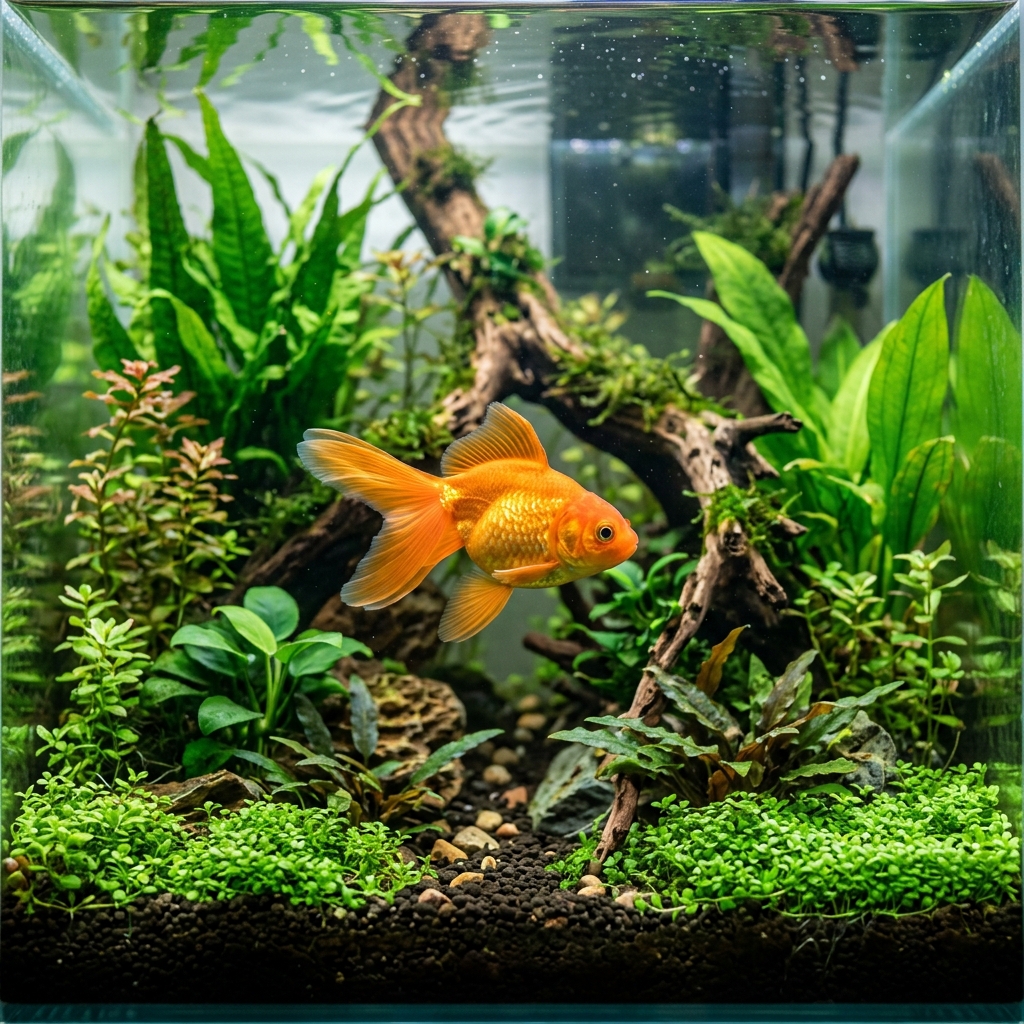
Common Goldfish have a classic, torpedo-shaped body with short, stiff fins. They lack the exaggerated features (like double tails, wen growths, or telescope eyes) found in Fancy Goldfish. While traditionally bright orange or metallic orange-red, they can also be found in yellow, white, olive-green, or mixed calico patterns.
Natural Habitat
The Common Goldfish is a domesticated form of wild Carassius auratus populations native to East Asia, primarily China (with related wild Carassius populations also found in Japan and Korea). Their wild ancestors inhabited slow-moving rivers, lakes, and ponds, where they experienced significant seasonal temperature changes and foraged along muddy bottoms.
Care
Housing & Pond Requirements
The biggest misconception about the Common Goldfish is that they can live in small bowls. An adult Common Goldfish can exceed 12 inches (30 cm) and produce massive amounts of ammonia. A single adult requires an absolute minimum of a 30 to 40-gallon tank, though a 55 to 75-gallon setup is strongly recommended. For groups, outdoor ponds or tanks exceeding 100 gallons are required. Because they are messy eaters and heavy waste producers, robust mechanical and biological filtration (canister filters or pond sumps) is mandatory.
Water Parameters
Common Goldfish are extremely adaptable and hardy, but they require clean, well-oxygenated water.
Temperature
Maintain 65-72°F (18-22°C). They are cold-water fish and do not require a heater in most indoor setups. They can even survive in outdoor ponds that freeze over, provided the pond is deep enough and has a hole kept open in the ice for gas exchange.
pH
Maintain 7.0-8.4. They prefer slightly alkaline water. Ensure your KH (carbonate hardness) is high enough to prevent dangerous pH crashes due to their heavy bio-load.
Hardness (GH)
Maintain 8-15 dGH. They do well in moderately hard to hard water, which provides essential minerals for bone and scale development.
Diet
Goldfish are omnivores with a hearty appetite. They lack a true stomach, meaning their digestive tract processes food continuously.
- Staple Diet: Feed a high-quality sinking pellet designed specifically for goldfish. Sinking foods prevent them from gulping air at the surface, which can lead to buoyancy issues.
- Vegetables: They require significant vegetable matter. Blanched peas (shelled), spinach, zucchini, and romaine lettuce are excellent for their digestive health.
- Live/Frozen: Occasional treats of bloodworms, brine shrimp, or daphnia provide excellent protein.
Feed small amounts 1-2 times daily, and never more than they can consume in 2 minutes.
Health
Due to their hardiness, most health issues in Common Goldfish stem from poor water quality (ammonia/nitrite poisoning) in tanks that are too small. Always ensure adequate filtration and perform weekly 30-50% water changes.
Ich (White Spot Disease)
- White, salt-like grains on the body and fins.
- Flashing or rubbing against decor.
The Ichthyophthirius multifiliis parasite, often triggered by stress or sudden temperature drops.
Quarantine new additions. Treat effectively with aquarium salt and slowly raising the temperature, or a commercial ich medication used per the product label.
Swim Bladder Disorder
- Floating upside down
- sinking to the bottom
- struggling to maintain buoyancy.
Constipation from poor diet (floating flakes), swallowing air, or bacterial infection.
Feed sinking pellets and blanched, shelled peas to clear the digestive tract.
Ammonia Poisoning
- Black smudges or red streaks on fins
- gasping at the surface
- lethargy.
Keeping goldfish in uncycled or undersized aquariums (like bowls).
Maintain appropriate tank size (30+ gallons) and robust biological filtration.
Breeding
Breeding Common Goldfish is relatively easy in a pond setting. It is usually triggered by the water warming up in the spring after a cold winter period. Males will develop breeding tubercles (small white bumps) on their gill covers and pectoral fins, and will aggressively chase the female. The female will scatter thousands of adhesive eggs over aquatic plants (like hornwort) or spawning mops. The parents will consume the eggs and fry, so the breeding material must be moved to a separate rearing tank if you wish to raise the young.
Tips
Common Mistakes
Goldfish bowls are death traps. They lack the water volume to dilute toxic ammonia and restrict the immense growth of the fish, leading to stunting and premature death.
Common Goldfish prefer cold water (65-72°F) and produce massive amounts of waste. Tropical fish require warmer water (78°F+) and cannot handle the goldfish’s bioload.
Common Goldfish are incredibly fast swimmers and voracious eaters. If kept with slow, clumsy Fancy Goldfish (like Orandas or Ranchus), the fancies will be outcompeted for food and may get bullied.
Expert Tips
Use pool filter sand or smooth, large river rocks as substrate. Goldfish love to sift through the bottom, and sharp gravel can get lodged in their mouths.
If keeping live plants, choose tough, thick-leaved species like Anubias, Java Fern, or Crinum. Goldfish will rapidly consume soft-leaved plants like duckweed or cabomba.
Compatible Tank Mates
Species Comparison
| Variety | Body Shape | Typical Size | Care Level | Notes |
|---|---|---|---|---|
| Common Goldfish (Carassius auratus) | Slim, torpedo-shaped | Up to 12 in (30 cm) | Beginner (needs large space) | Fast swimmer; base wild-type form |
| Comet Goldfish | Slim, torpedo-shaped with longer fins | Up to 10-12 in (25-30 cm) | Beginner (needs large space) | Similar hardiness and speed to Common; longer, more flowing fins |
| Shubunkin | Slim, torpedo-shaped, calico-patterned | Up to 10-12 in (25-30 cm) | Beginner (needs large space) | Same body type as Common/Comet but with mottled calico coloration |
| Fancy Goldfish (e.g., Oranda) | Rounded, egg-shaped body with elaborate finnage | Typically 6-8 in (15-20 cm) | Intermediate | Slower swimmer, more delicate; generally incompatible in the same tank as fast, competitive Common Goldfish |