
Coral Banded Shrimp (Stenopus hispidus)
Quick Answer
Coral Banded Shrimp (Stenopus hispidus) is a hardy, semi-aggressive marine invertebrate suitable for beginner saltwater aquarists. It requires a minimum 20 gallon reef aquarium with standard marine parameters (pH 8.1-8.4, specific gravity 1.023-1.025, temperature 72-78 degrees F). This nocturnal bottom-dweller functions as a cleaner shrimp and bristle worm predator but must be kept alone or as a mated pair due to extreme intraspecies aggression.
Quick Facts
| Scientific Name | Stenopus hispidus |
|---|---|
| Common Names | Coral Banded Shrimp |
| Family | Stenopodidae |
| Genus | Stenopus |
| Type | Saltwater |
| Temperament | semi-aggressive |
| Care Difficulty | beginner |
| Lifespan | 3 years |
| Maximum Size | Up to 2.5 in (6 cm) |
| Diet | Omnivore |
| Temperature | 72–78°F (22–26°C) |
| pH | 8.1–8.4 |
| Hardness | 8–12 dGH |
| Minimum Size | 20 gallons |
Key Takeaways
- Requires a minimum 20 gallon reef aquarium with stable marine parameters.
- Must be kept alone or as a verified mated pair; will kill all other shrimp species.
- Extremely sensitive to copper and heavy metals; lethal at 0.01 mg/L.
- Functions as a cleaner shrimp and highly effective bristle worm predator.
- Weekly iodine, calcium, and magnesium testing is critical for molting success.
- Nocturnal cave-dweller that requires multiple hiding spots in live rock.
Overview
Species Overview
The Coral Banded Shrimp, scientifically known as Stenopus hispidus, is one of the most recognizable and popular ornamental invertebrates in the marine aquarium hobby. Commonly called the Banded Boxer Shrimp, Banded Cleaner Shrimp, or Barber Pole Shrimp, this species commands attention with its striking red and white banded carapace, oversized pincer claws, and extraordinarily long white antennae that wave constantly as it surveys its territory.
Native to the tropical Indo-Pacific and Western Atlantic oceans, Stenopus hispidus inhabits coral reefs, rocky outcrops, and reef rubble from the Red Sea and South Africa across to Hawaii, Easter Island, and the Tuamotu Archipelago. In the Atlantic, its range extends from North Carolina and Bermuda through the Caribbean Sea to São Paulo, Brazil. It is found at depths from 1 to 200 feet (0.3 to 61 meters), typically dwelling in deep crevices, under overhangs, and within natural depressions in reef formations.
Natural Behavior and Ecology
In the wild, Coral Banded Shrimp serve a dual ecological role. They are active cleaners, setting up stations where they remove parasites, dead tissue, and mucus from client fish including tangs, groupers, and even moray eels. They are also opportunistic scavengers and predators, feeding on bristle worms, small crustaceans, detritus, and leftover food particles. Their nocturnal nature means they are most active after dark, though well-acclimated specimens may venture out during daylight hours in the aquarium.
Why This Species Stands Out
Unlike many delicate marine invertebrates, Coral Banded Shrimp are remarkably hardy and forgiving of minor parameter fluctuations, making them an excellent choice for beginner marine aquarists. They are highly effective at controlling bristle worm populations, perform visible cleaning behavior on fish, and add constant motion and color to the lower regions of a reef tank. However, their semi-aggressive territoriality toward other shrimp species is a critical consideration that many generalist guides understate.
Diet
Diet and Feeding Requirements
Coral Banded Shrimp are opportunistic omnivores with a strong carnivorous bias. Their natural diet includes parasites removed from fish, bristle worms, small crustaceans, mollusks, detritus, and algae. In captivity, they are enthusiastic eaters that will accept a wide range of foods, but target feeding is essential to prevent competition from faster fish.
Staple Foods
The foundation of their diet should be high-quality frozen marine foods. Feed frozen mysis shrimp, enriched brine shrimp, chopped krill, squid, and clam meat. Marine sinking pellets and invertebrate-specific wafers are also accepted. These shrimp are notorious food thieves and will snatch pellets intended for bottom-dwelling fish.
Specialized Feeding Behaviors
Coral Banded Shrimp are among the most effective natural bristle worm predators available to aquarists. A single specimen will systematically hunt and consume nuisance bristle worms, making them a biological control agent in reef tanks. They also perform cleaning behavior on fish, removing external parasites and dead skin, though this is less common in well-fed aquariums than in the wild.
Feeding Schedule and Technique
Feed 3-4 times per week. Use a feeding stick, turkey baster, or Julian's Thing tool to deliver food directly to the shrimp's cave entrance. This prevents faster fish from stealing all the food and ensures the shrimp receives adequate nutrition. If you observe the shrimp picking at corals, anemones, or attempting to clean fish during the day, it is a clear sign of hunger and underfeeding.
Common Dietary Mistakes
- Relying solely on leftover fish food, which is insufficient for long-term health.
- Feeding only flake food, which lacks the protein density and marine-derived nutrients shrimp require.
- Overfeeding, which degrades water quality and can trigger aggressive food-hoarding behavior.
- Ignoring the need for iodine supplementation, which is critical for successful molting.
Health
Health, Disease, and Treatment Protocols
Coral Banded Shrimp are generally hardy, but their crustacean physiology creates specific vulnerabilities that generalist marine guides often overlook. Molting failure, copper toxicity, and physical trauma from fights are the primary health concerns.
Critical Medication and Chemical Sensitivity
All crustaceans are extraordinarily sensitive to copper and heavy metals. Copper is lethal to shrimp at concentrations as low as 0.01 mg/L, and even trace amounts from tap water, medications, or algaecides can cause rapid death. Never use copper-based medications, ich treatments containing copper, or copper sulfate algaecides in tanks housing shrimp. Formalin is also toxic to crustaceans. If treating fish for disease, remove the shrimp to a separate invertebrate-safe hospital tank before dosing.
Molting: The Most Critical Health Event
Molting is the most dangerous period in a shrimp's life. Before molting, the shrimp absorbs water to swell and crack the old exoskeleton. After shedding, the new shell is soft and the shrimp is defenseless for 12-24 hours. Failed molts are caused by insufficient calcium (below 400 ppm), low magnesium (below 1200 ppm), inadequate iodine (below 0.04 ppm), or rapid salinity and pH shifts. A white ring appearing around the body is a warning sign of impending molting failure. Test and correct parameters immediately if observed.
Preventive Healthcare
Maintain stable water parameters with minimal fluctuation. Perform small, frequent water changes (10-15% weekly) rather than large, infrequent ones. Dose iodine weekly. Test calcium, alkalinity, and magnesium weekly. Quarantine all new livestock in a separate system before introduction to prevent disease and parasite transfer.
Failed or Stuck Molt
A life-threatening condition where the shrimp cannot shed its old exoskeleton completely, leading to entrapment, exhaustion, and death.
- White ring visible around the carapace before molting; partial shedding with old shell fragments attached; inability to free legs or antennae; lethargy; hiding for extended periods; death within 24-48 hours if unresolved.
Insufficient calcium below 380 ppm; low magnesium below 1200 ppm; inadequate iodine below 0.04 ppm; rapid salinity or pH changes during water changes; old age; genetic weakness.
Maintain calcium at 400-450 ppm, magnesium at 1250-1350 ppm, and iodine at 0.06 ppm. Dose iodine weekly. Perform small, frequent water changes. Provide a varied diet rich in marine-derived minerals. Test parameters weekly without exception.
Copper Toxicity
Acute or chronic poisoning from copper exposure, which destroys crustacean respiratory tissue and organ function.
- Rapid breathing; erratic swimming; loss of balance; discoloration of the shell; convulsions; death within hours of exposure.
Copper-based fish medications; copper sulfate algaecides; copper plumbing in water source; contaminated salt mixes; residual copper in used equipment.
Never use copper-based treatments in shrimp tanks. Use reverse osmosis deionized water to eliminate copper from source water. Test for copper before adding shrimp to any system that has previously been medicated.
Physical Trauma from Combat
Injuries sustained during territorial fights with other shrimp, resulting in torn limbs, cracked carapaces, or severed antennae.
- Missing legs or claws; cracked or chipped shell; shortened antennae; hiding behavior; refusal to eat; secondary bacterial infection at wound sites.
Housing multiple Coral Banded Shrimp together; introducing new shrimp to an established shrimp’s territory; attempting to pair unbonded individuals.
Keep only one shrimp per tank, or a single verified mated pair. Never mix with other shrimp species. Provide ample caves so the shrimp can retreat and avoid confrontation if tank mates harass it.
Bacterial Shell Disease
A secondary bacterial infection of the exoskeleton, often following physical trauma or a failed molt, caused by opportunistic bacteria such as Vibrio species.
- Black, brown, or green discoloration spots on the shell; soft or eroded patches on the carapace; foul odor; lethargy; loss of appetite.
Physical injury exposing tissue; poor water quality with elevated nitrates or organic waste; stress from improper acclimation; introduction via contaminated live foods.
Maintain pristine water quality with nitrates below 10 ppm. Acclimate new shrimp slowly over 1-2 hours using the drip method. Isolate injured shrimp in a hospital tank and treat with broad-spectrum antibiotics safe for invertebrates at reduced dosage.
White Ring Disease (Molting Warning)
A visible white band that forms around the junction of the carapace and abdomen, indicating the shrimp is struggling to initiate the molting process.
- Distinct white ring encircling the body at the carapace-abdomen junction; reduced activity; refusal to eat; delayed molting beyond the normal cycle.
Inadequate iodine levels; low calcium or magnesium; osmotic stress from rapid parameter changes; old age weakening the molting hormone response.
Dose iodine immediately upon observing the white ring. Test and correct calcium, magnesium, and alkalinity. Perform a small water change with stable, aged saltwater. Increase target feeding with calcium-rich foods such as krill and mysis.
Breeding
Breeding Coral Banded Shrimp
Breeding Coral Banded Shrimp in the home aquarium is possible but exceptionally challenging due to the planktonic larval stage and high mortality rates. Successful reproduction requires a bonded mated pair, pristine water stability, and a dedicated larval rearing system.
Pre-Breeding Requirements
Begin with a verified mated pair in a mature reef tank of at least 40 gallons (150 liters) with stable parameters for 6 months or longer. The pair must be bonded; introducing two random individuals results in combat, not mating. Condition the pair with high-quality frozen mysis, krill, and enriched brine shrimp daily for 2 weeks prior to expected mating.
Mating and Egg Production
Mating occurs at night, triggered by the female's post-molt pheromone release. The male grasps the female, and fertilization is internal. The female then extrudes 500 to 2000 eggs and cements them to her abdominal pleopods (swimmerets), where she carries them for 16-20 days at 75 degrees F (24 degrees C). Gravid females are easily identified by the large greenish egg mass visible beneath the abdomen. During this period, the female remains hidden and does not feed regularly.
Hatching and Larval Rearing
Upon hatching, larvae are released as free-swimming zoeae measuring approximately 2-3 mm. They are immediately vulnerable to predation by fish and filtration systems. You must either move the female to a larval rearing tank before hatching or use a larval trap to collect zoeae.
The larval rearing tank requires gentle aeration, constant temperature at 78-80 degrees F (25-27 degrees C), and salinity at 1.023-1.025. Feed newly hatched rotifers enriched with Nannochloropsis phytoplankton 3-4 times daily for the first 2 weeks. Transition to larger rotifers and newly hatched brine shrimp by week 3. Metamorphosis to the juvenile crawling stage occurs after 30-40 days. Mortality rates exceed 90% without precise feeding, water changes, and isolation from predators.
Common Breeding Mistakes
- Attempting to pair unbonded shrimp, resulting in fatal aggression rather than mating.
- Failing to separate larvae from adult tank mates and filtration, causing total loss within hours.
- Using insufficiently enriched rotifers, leading to larval starvation by day 5.
- Performing large water changes in the larval tank, causing osmotic shock and mass die-offs.
Compatible Tank Mates






Species Comparison
| Feature | Coral Banded Shrimp | Skunk Cleaner Shrimp | Peppermint Shrimp | Blood Red Fire Shrimp |
|---|---|---|---|---|
| Scientific Name | Stenopus hispidus | Lysmata amboinensis | Lysmata boggessi / L. wurdemanni | Lysmata debelius |
| Adult Size | 2.5 in (6.4 cm) body; 4 in (10 cm) with claws | 2 in (5 cm) | 1.5-2 in (3.8-5 cm) | 2 in (5 cm) |
| Temperament | Semi-aggressive; territorial toward shrimp | Peaceful; can be kept in groups | Peaceful; can be kept in colonies | Peaceful; shy and reclusive |
| Minimum Tank Size | 20 gal (75.7 L); 40 gal for mated pair | 10 gal (37.9 L) | 10 gal (37.9 L) | 10 gal (37.9 L) |
| Temperature Range | 72-78 degrees F (22-26 degrees C) | 75-82 degrees F (24-28 degrees C) | 72-78 degrees F (22-26 degrees C) | 72-78 degrees F (22-26 degrees C) |
| Diet | Omnivore; frozen mysis, krill, pellets, bristle worms | Carnivore; parasites, dead tissue, mysis, pellets | Carnivore; aiptasia, detritus, small meaty foods | Carnivore; parasites, mysis, pellets |
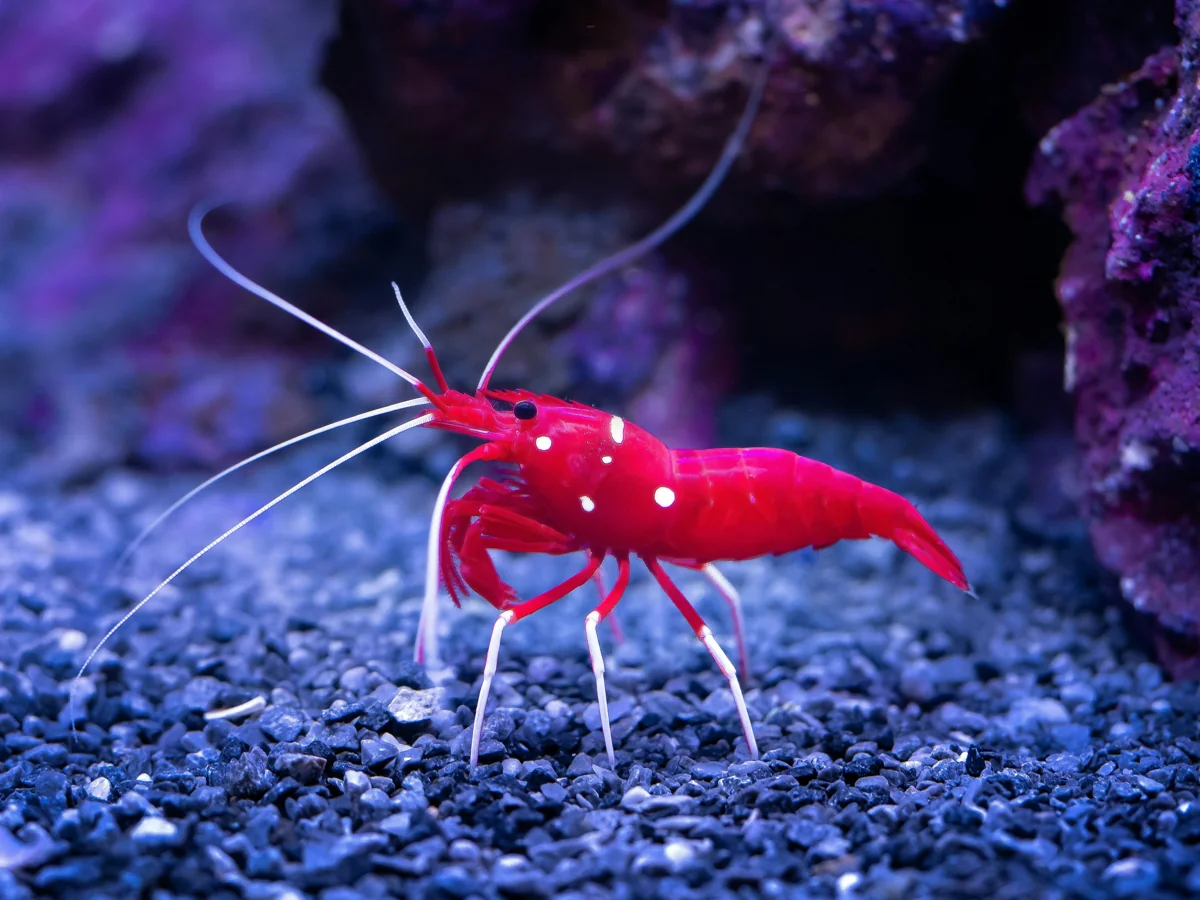
| Distinctive Trait | Red and white banded body; large claws; long white antennae | White stripe down back; active cleaner behavior | Translucent body with red stripes; aiptasia predator | Brilliant blood-red body with white spots |
| Reef Safety | Reef safe with caution; may steal coral food | Reef safe; may steal coral food | Reef safe with caution; may pick at corals | Reef safe; stays hidden, minimal coral contact |